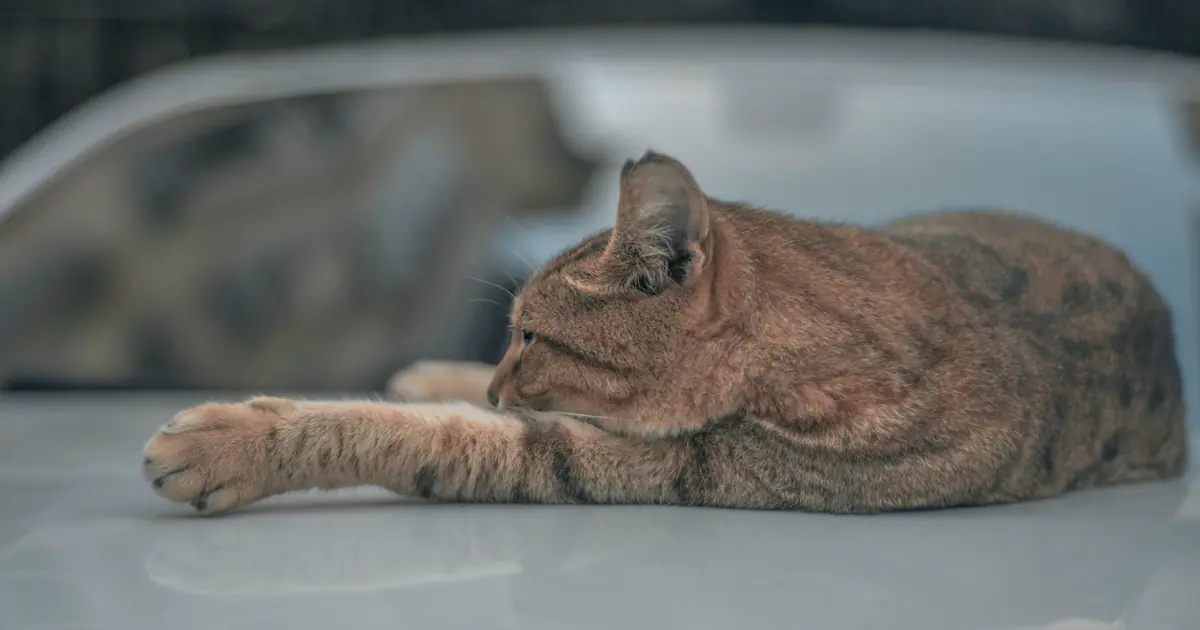
You walk into the room and your cat rolls off the couch, arches into a long, wobbly-legged stretch, and looks right at you. It’s almost theatrical. Is she saying hi? Is she hungry? Or is this just what cats do after a nap?
The honest answer is a little bit of all three. Cats are careful about where they let their guard down, and stretching is one of the most vulnerable positions a cat can be in. If your cat is willing to do it a few feet from your shoes, that’s not nothing. Let’s break down what’s actually going on in that stretch, and why it usually means good things for you and your cat.
- A cat stretching in front of you is usually a sign of trust, comfort, and a social greeting, not a random habit.
- Stretching leaves a cat briefly unable to flee quickly, so cats mostly do it around people and animals they feel safe with.
- Cats have interdigital scent glands between their paw pads, and a deep stretch with extended claws can release their scent onto a surface.
- Cats sleep 12 to 16 hours a day on average, which is exactly why they stretch so often, since every nap needs a wake-up routine.
- A stretch that looks stiff, hunched, or paired with a hunched “prayer” position and belly sensitivity is worth mentioning to a vet.
Why Do Cats Stretch in Front of You?
Cats stretch in front of you because they feel comfortable enough to be a little vulnerable near you, and because it doubles as a friendly greeting. A full-body stretch, the kind where the front paws dig forward and the spine curves like a bow, leaves a cat slower to react if something startled them. A cat only does that near people or animals it trusts. On top of that, a stretch often kicks off a little routine: stretch, walk toward you, maybe a head bump or a meow, then a request for food, pets, or a lap to sit on.
So it’s rarely just one thing. It’s part biology (their muscles genuinely need it), part social signal (you’re safe to do this around), and part conversation starter (I’m up, I see you, let’s talk about breakfast).
Is Stretching Near You a Sign of Trust?
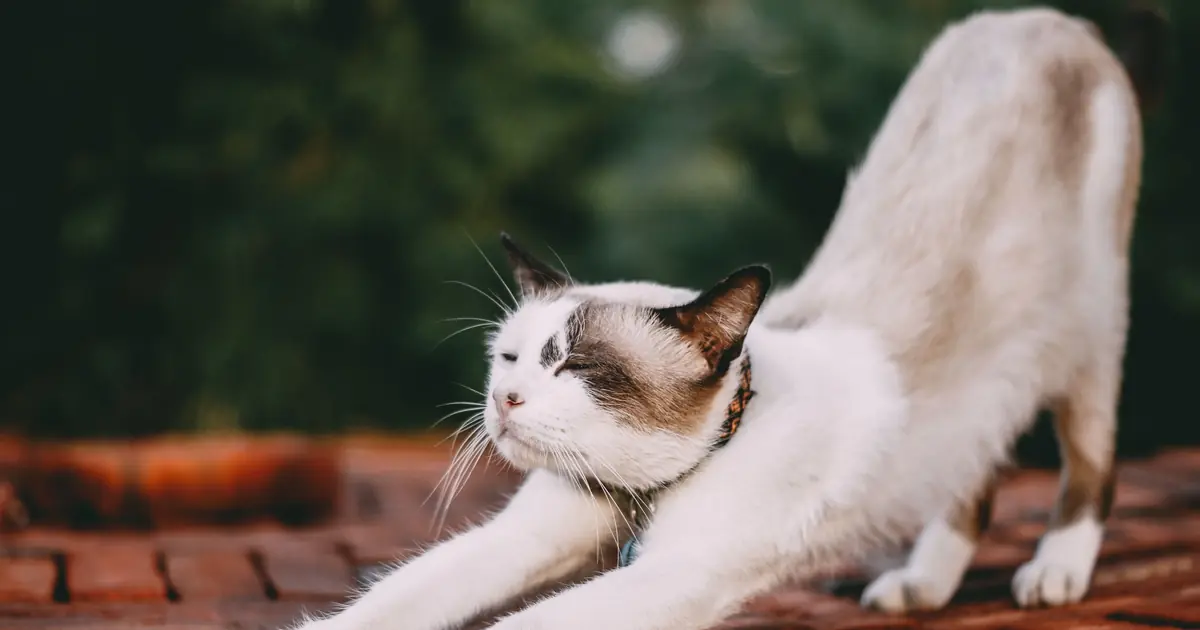
Yes. Stretching close to a person is one of the clearer trust signals in cat body language, because it puts the cat in a physically exposed position. A cat mid-stretch has its belly open, its legs extended, and its balance compromised for a second or two. Anxious or unfamiliar cats avoid this around anyone they’re not sure of. A relaxed cat, on the other hand, will stretch out fully a foot from your chair without a second thought.
This sits in the same category as other relaxed behaviors, like a slow blink, a head bump, or flopping over to show their belly. International Cat Care’s guide to cat communication notes that a fully relaxed cat will often stretch its body right out when it feels safe in its environment, the same posture you’d see if it rolled onto its back for a belly stretch. If you’ve ever wondered whether your cat actually loves you, a stretch aimed your direction is one of the good signs to add to the list.
What Physical Reasons Make Cats Stretch So Much?
Cats stretch constantly because their bodies genuinely need it, not because it’s a habit for show. The average cat sleeps 12 to 16 hours a day, and every one of those naps leaves muscles stiff and blood flow sluggish. A stretch does real work here.
- Wakes up the muscles. A full stretch lengthens muscle fibers that have been curled up for an hour or more, easing them back into action.
- Boosts circulation. Extending the legs and spine gets blood moving after a long, still nap.
- Maintains flexibility. Cats have an unusually flexible spine and no rigid collarbone, which is part of why cats are so flexible in the first place, and regular stretching keeps that range of motion intact.
- Preps the body to move. A stretch right before play or a jump works a lot like an athlete’s warmup, readying muscles for a quick sprint or pounce.
Since cats nap so often through the day, you end up seeing this “warmup” routine a dozen times or more, and a good chunk of those stretches happen to be aimed right at you.
Does a Stretch Leave Scent Behind Too?
Yes, a deep stretch can release scent, especially when it involves the paws. Cats have interdigital glands tucked between the pads on each foot, and pressing or flexing the paws releases pheromones from those glands. When a cat stretches forward with claws extended and paws pressing into the floor or a scratching post, it isn’t only working out muscles. It’s leaving a small chemical calling card that says “I was here” to any cat who sniffs around later.
This is part of why stretching and scratching often happen back to back. International Cat Care explains that scratching sheds the outer claw sheath while depositing scent from those same paw glands, and the stretching motion that comes with it keeps paws and claws limber at the same time. A stretch aimed at your favorite scratching post, in other words, is doing double duty.
Is a Cat’s Stretch Actually a Greeting?
Often, yes. Many cats greet their favorite people with a stretch-and-approach combo: stretch first, then walk over for a head bump, a rub against your leg, or a meow. VCA Hospitals describes rubbing, head bunting, and similar affectionate gestures as some of the clearest ways cats express fondness for the people they trust. A stretch is often the opening move in that little performance.
And let’s be honest, it’s frequently followed by a request. Your cat stretches, ambles over, and then sits by an empty food bowl looking personally wronged. That’s not a contradiction. A greeting and a request for something can both be true at once, the same way a person might say hello and immediately ask for coffee. If your cat follows the stretch with rubbing against your legs, that’s worth reading into as well, since a cat rubbing against you is its own dedicated affection signal.
| Stretch Context | What It Likely Means |
|---|---|
| Right after waking from a nap, alone | Routine muscle warmup and circulation boost, not aimed at anyone |
| Stretching in full view of you specifically | Comfort and trust; your cat feels safe enough to be briefly vulnerable |
| Stretch followed by approach, meow, or head bump | A greeting, often the opening move before asking for food or pets |
| Deep stretch with claws extended, pressing paws down | Scent marking through the interdigital glands in the paw pads |
| Stiff, hesitant, or repeated stretch with signs of discomfort | Possible pain or stiffness; worth a vet visit if it continues |
Why Does My Cat Stretch Right Before Asking for Food, Pets, or Play?
Cats often build stretching into a morning routine, and that routine tends to end with a request. Picture the scene: you sit up in bed, your cat sits up too, does a long spine-curling stretch, and immediately starts walking toward the kitchen. That’s not a coincidence. Cats are creatures of habit, and once a stretch-then-ask pattern gets your attention a few times, it sticks.
Some of this is even social mirroring. Cats that are bonded to their humans will sometimes stretch when they see you stretch, or wake up on a similar schedule to yours simply because you’re the most reliable, food-dispensing, door-opening presence in the house. A stretch aimed at you, followed by a trot toward the food bowl or the door, is your cat’s version of “good morning, now let’s get moving.” If your cat also kneads before or after this routine, that’s another comfort behavior from the same relaxed, trusting mindset.
Is a Stretch Ever a Sign Something’s Wrong?
Usually not, but it can be in specific cases. A normal stretch is smooth, unhurried, and the cat looks perfectly comfortable doing it. A stretch that looks stiff, cut short, or paired with a hunched “prayer” position (front legs and head down, rear end up, belly tucked) can be a sign of abdominal pain, and deserves a vet visit rather than a guess. A cat that suddenly avoids stretching altogether, favors one leg during a stretch, or cries out while doing it is also telling you something is off, not just being dramatic.
This article is educational and not a substitute for a veterinary exam. If your cat’s stretching pattern has changed, or you’re noticing stiffness, limping, or a hunched belly-guarding posture along with it, it’s worth getting checked out rather than waiting to see if it passes on its own.
How Should You Respond When Your Cat Stretches at You?
The simplest answer is to greet it back. A calm word, a slow blink, or a gentle scratch under the chin tells your cat the trust is mutual. If the stretch is clearly a bid for attention, a few minutes of play or a scheduled feeding time reinforces the behavior in a good way, since your cat learns that stretching near you gets a warm response instead of being ignored.
You don’t need to make a big production of it. Cats aren’t looking for applause. A relaxed response, the kind you’d give a friend who just said good morning, is exactly the right amount of enthusiasm.
Frequently Asked Questions
Q: Why does my cat stretch and stare at me?
A cat that stretches while looking at you is usually combining a muscle warmup with a direct social check-in. Eye contact plus a stretch is often a cat’s way of getting your attention before asking for food, pets, or play.
Q: Is it a compliment when a cat stretches in front of you?
Yes. Stretching leaves a cat briefly off balance and unable to react quickly, so cats mostly do this around people they feel safe with. A cat choosing to stretch a few feet from you is a genuine sign of trust.
Q: Why does my cat stretch right before walking away from me?
This is usually just the tail end of a rest period. Cats often stretch the moment they decide to get moving again, whether that’s toward you, the food bowl, or a sunny windowsill. It’s a transition move, not a rejection.
Q: Do cats stretch to show they trust you?
Stretching close to a person is one of several trust signals cats use, alongside slow blinking, head bumping, and exposing their belly. A cat that only stretches fully when a specific person is nearby is showing a real preference for that person.
Q: Why does my cat stretch every single time I wake up?
Cats often sync part of their routine to yours, especially around wake-up time when food and attention are on the table. The stretch marks the end of rest and the start of a routine your cat has learned leads to breakfast or pets.
Q: Can stretching mean my cat is in pain?
Occasionally. A stiff, hesitant stretch, one cut short, or a hunched “prayer” posture with the belly tucked and rear end raised can point to abdominal discomfort. If you notice this pattern, a veterinary check is the right next step rather than waiting it out.
Q: Why does my cat stretch and then meow at me?
This combination is almost always a request. The stretch signals the cat is awake and comfortable, and the meow that follows is usually aimed at getting food, attention, or a door opened.
Q: Do all cats stretch the same way?
Not exactly. Most cats do a full-body stretch with an arched back and extended front legs, but the length, frequency, and drama of the stretch varies by individual cat, and older or stiffer cats may stretch more slowly or less often than kittens and young adults.

Hello and welcome to The Ideal Cat!
We are some passionate cat owners from different professions. We love our cats and have a lot of experience in how to care for our pets. We are incredibly excited to share our knowledge, experience, and research with you. So you can take good care of your loving cat. We will answer most of the common questions about owning cats, taking care of them, etc. If you have any question contact with us. Thanks for visiting! Enjoy the content.
