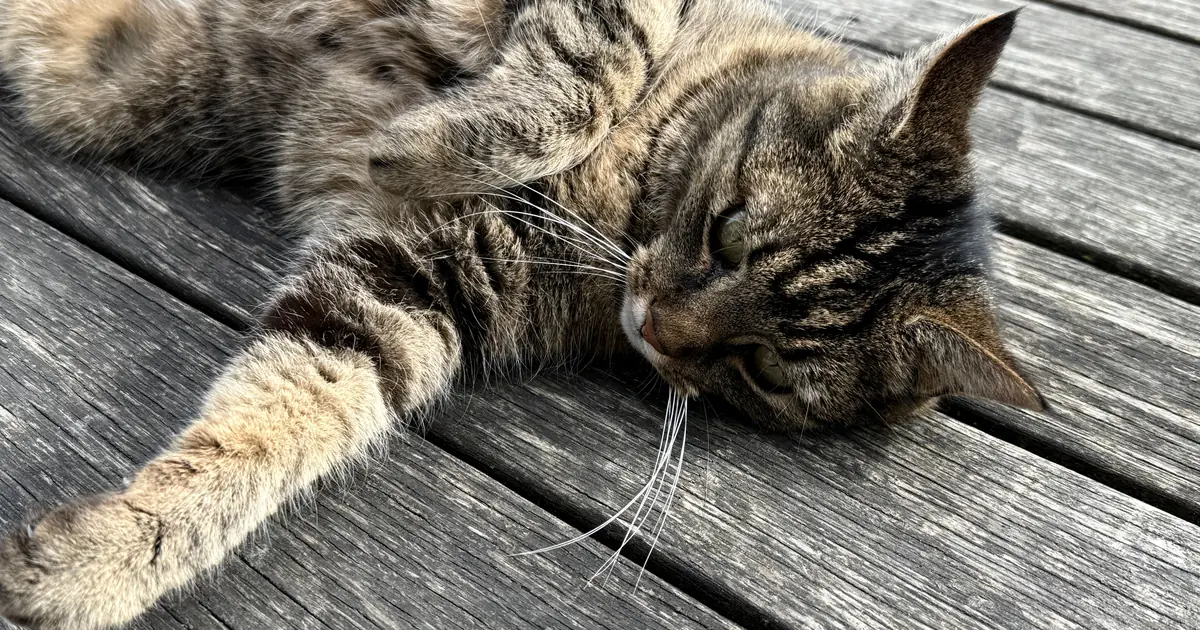
You flop down on the couch and there’s your cat, already there, curled into a loaf and dead to the world. Again. It’s 2pm on a Tuesday and this is the fourth nap you’ve counted. You start to wonder if your cat just… doesn’t do anything.
Here’s the thing: your cat probably isn’t lazy at all. Cats are built to sleep most of the day so they have the energy to hunt in short, explosive bursts. A house cat with a full food bowl still carries that same biology, even if the only thing she’s stalking is a dust bunny under the couch. Still, real lethargy, the kind caused by pain or illness, looks different from normal catnaps, and knowing the difference matters.
- Cats sleep 12 to 16 hours a day on average, and kittens and senior cats often sleep even more than that.
- Cats are crepuscular, meaning they’re naturally most active at dawn and dusk, so you may sleep through their busiest hours.
- Age, breed, weight, weather, and boredom all shape how energetic a cat looks during the day.
- A bored cat still perks up for a wand toy or a treat bag rattle; a truly lethargic cat won’t respond much at all.
- Sudden lethargy, hiding, or skipped meals can point to illness such as arthritis, hyperthyroidism, or infection, and calls for a vet visit.
Why Is My Cat So Lazy?
Your cat isn’t lazy, she’s conserving energy the way her wild ancestors had to. Cats evolved as solitary hunters who might need to make ten or more kills a day just to eat enough, and each hunt takes a burst of speed and focus. Sleeping 12 to 16 hours a day is how a cat’s body banks the energy for those short, intense sprints, even when the “prey” is a laser dot or a crumpled receipt.
That instinct doesn’t switch off just because dinner shows up in a bowl. A well-fed indoor cat still has a body wired for feast-or-famine hunting, so resting is the default setting, not a character flaw.
Is My Cat Actually Lazy, or Is This Normal Cat Behavior?
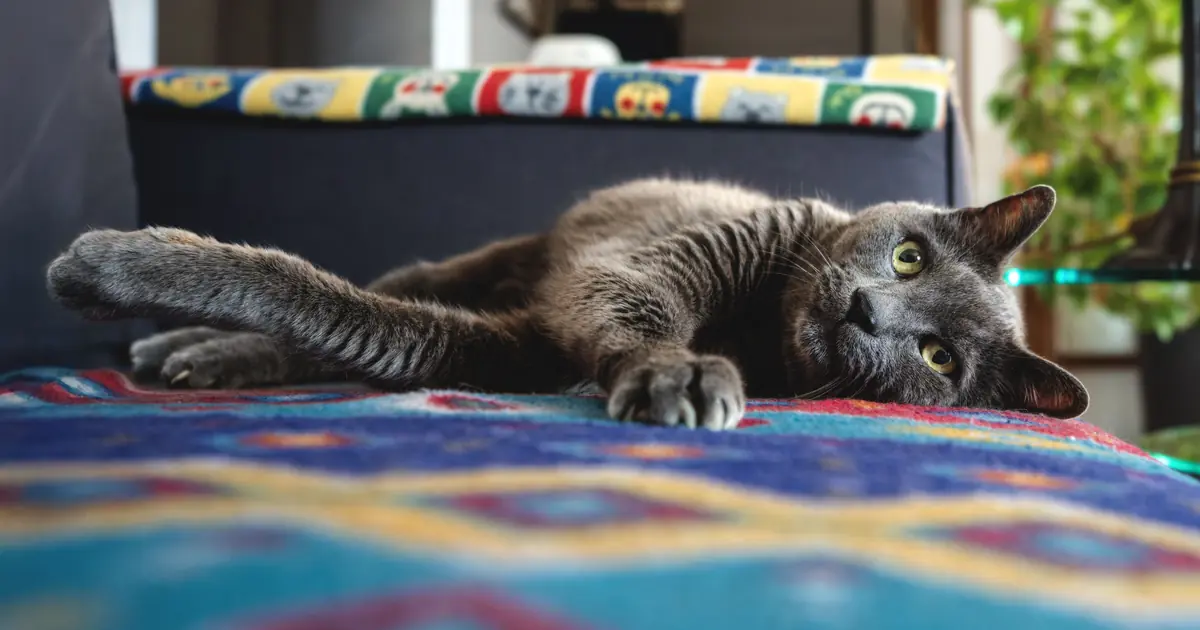
For the vast majority of cats, this is completely normal behavior, not laziness. Cats are crepuscular, meaning they’re wired to be most active at dawn and dusk, the hours when their prey (mice, birds, bugs) tends to move around too. If you’re at work at 6am and asleep by 10pm, you’re missing your cat’s two liveliest windows of the day. That sudden sprint through the hallway at midnight? That’s not random, it’s your cat cashing in the energy she saved up all day, and it’s the same instinct behind the zoomies a lot of cats get after a nap or a litter box trip.
So before you worry, ask yourself: does your cat still get up to eat, use the litter box, groom herself, and greet you at the door? If yes, you likely have a completely healthy, completely normal cat who just happens to be a champion napper.
What Affects How Active My Cat Is?
A cat’s energy level depends on a mix of age, breed, weight, and environment, and none of these mean anything is wrong. Here’s how each one plays out.
Age
Kittens burn hot and crash hard: expect a wild 20-minute play session followed by a nap that could stretch for hours. Once a cat reaches the point of being considered a senior, usually around age 11, slowing down is expected too. Older joints move less, naps get longer, and that’s normal aging, not a sign of a lazy cat.
Breed
Some breeds are just built mellower. Persians and Ragdolls tend to be calm, low-energy lap cats by nature. Bengals, Abyssinians, and Siamese, on the other hand, are famously busy and need a lot more stimulation before they’ll settle. If you adopted a laid-back breed expecting a Bengal’s energy, you’re not dealing with a lazy cat, you’re dealing with the breed doing exactly what it’s built to do.
Weight
Extra weight makes moving harder and less appealing, which turns into a cycle: less activity leads to more weight gain, which leads to even less activity. According to the Cornell Feline Health Center, feline obesity is generally defined as body weight 20 percent or more above a healthy weight, and it’s linked to arthritis and diabetes, both of which can make a cat look sluggish.
Weather and Boredom
Hot, humid days sap a cat’s motivation to move just like they sap ours, and a lot of cats nap more in cold winter months too. Boredom plays a role as well. A cat with nothing to chase, climb, or investigate has no reason to burn energy, so she simply won’t.
How Do I Tell Boredom From Real Lethargy?
The easiest test is response to stimulation: a bored cat perks up when you offer something interesting, a lethargic cat mostly doesn’t. Grab a wand toy, crinkle a treat bag, or open a can of food. A bored cat will usually snap to attention, even if she was flat out asleep a second ago. A cat dealing with real lethargy from pain or illness often stays flat, shows little interest in food, and may not even lift her head.
Watch for other clues too. Boredom usually comes with normal eating, grooming, and litter box habits. Lethargy tends to show up alongside skipped meals, hiding, scruffy fur from not grooming, or avoiding the litter box altogether. If your cat is hiding and not eating, treat that combination as a red flag, not a mood.
What Medical Conditions Cause Real Lethargy in Cats?
Several health conditions can make a cat genuinely low-energy, and most of them are treatable once diagnosed. The most common culprits include:
- Obesity: extra weight makes every movement harder and raises the risk of joint problems and diabetes.
- Arthritis: painful joints, especially common in cats over 10, make jumping and playing uncomfortable, so a cat simply stops trying.
- Hyperthyroidism: this is actually more likely to cause restlessness and weight loss in cats than sluggishness, but as the disease progresses some cats become weak and lethargic.
- Diabetes: unmanaged blood sugar leaves cats tired, unusually thirsty, and prone to weight changes.
- Anemia: a low red blood cell count means less oxygen reaching the muscles, which shows up as pale gums and low energy.
- Infection or fever: almost any infection can flip a cat’s energy switch to off until it clears up.
- Stress or depression: a stressed cat can withdraw and rest more than usual, similar to how some signs of stress in cats show up as hiding or reduced activity rather than obvious anxiety.
| Sign | Normal Cat Rest | Concerning Lethargy |
|---|---|---|
| Energy for play | Perks up fast for toys, treats, or food | Little to no interest even in favorite toys or treats |
| Appetite | Eats normally at mealtimes | Skipping meals or eating much less than usual |
| Other signs | Normal grooming, litter box habits, and greeting behavior | Hiding, scruffy coat, vomiting, limping, or breathing changes |
| What to do | Nothing, this is typical cat behavior | Call or visit a veterinarian promptly |
How Can I Get My Lazy but Healthy Cat Moving More?
Short, frequent play sessions do more for a healthy but sedentary cat than one long workout ever will. Cats respond best to hunting-style play in small bursts, so aim for two or three 5 to 10 minute sessions a day rather than one marathon session.
- Use a wand toy that mimics prey (feathers, a dangling mouse) and let your cat stalk and pounce rather than just batting at it.
- Add a puzzle feeder so meals require some work instead of a free handout.
- Give your cat vertical space with a cat tree or window perch. Climbing burns energy that pacing on the floor never will.
- Rotate toys every week or two so nothing goes stale. Cats lose interest fast in the same old mouse.
- Try a few interactive cat toys that move on their own, which can tempt even a couch-potato cat to chase something when you’re not around to hold the wand.
The ASPCA notes that environmental enrichment, things like DIY toys, window perches, and rotating novel objects, helps prevent boredom and keeps cats mentally sharp as they age. A cat with more to do during the day naturally moves more too.
When Should I See a Vet for a Lazy Cat?
Book a vet visit if your cat’s energy drop is sudden, or if the low energy comes paired with any other symptom. A gradual slowdown as a cat ages is expected. A cat who was bouncing around yesterday and won’t lift her head today is not.
Red flags that warrant a same-day or next-day vet visit include:
- Sudden, dramatic drop in energy or activity
- Weakness, wobbliness, or trouble standing
- Not eating or drinking for more than 24 hours
- Hiding far more than usual
- Vomiting, diarrhea, or labored breathing alongside the tiredness
- Pale or yellow-tinged gums
A sudden drop in energy, or lethargy paired with not eating, hiding, or other symptoms, warrants a vet visit to rule out illness. This article is educational and isn’t a substitute for a real exam. When in doubt, a quick call to your vet costs a lot less peace of mind than waiting it out. For more on recognizing subtle illness signals, the VCA guide to recognizing signs of illness in cats is a solid reference.
Frequently Asked Questions
Q: How many hours a day do cats normally sleep?
Most adult cats sleep 12 to 16 hours a day, and some sleep as much as 18 to 20 hours. This is normal feline biology, not a sign of illness or boredom on its own.
Q: Why does my cat sleep all day and get active at night?
Cats are crepuscular, meaning they’re naturally programmed to be most active at dawn and dusk. If you work during the day and sleep at night, you’re simply missing the hours your cat is naturally wired to be busiest.
Q: Are some cat breeds lazier than others?
Yes. Persians and Ragdolls are known for being calm, low-energy lap cats, while breeds like Bengals, Abyssinians, and Siamese tend to be much more active and need more daily stimulation.
Q: Can boredom make my cat act lazy?
Yes. A cat with nothing to chase, climb, or investigate has little reason to move, so she rests more. The fix is usually more playtime, puzzle feeders, and rotating toys, not a vet visit.
Q: Is it normal for older cats to slow down?
Yes. Senior cats, generally those around 11 years and older, naturally sleep more and play less as joints stiffen and metabolism slows. Gradual slowing with age is expected, but a sudden change still deserves a vet check.
Q: What are signs my “lazy” cat might actually be sick?
Watch for skipped meals, hiding, no interest in favorite toys or treats, vomiting, limping, or changes in litter box habits. A healthy but bored cat still perks up for food or play; a sick cat often won’t.
Q: Can obesity make a cat seem lazy?
Yes. Cornell’s Feline Health Center defines feline obesity as body weight 20 percent or more above normal, and the extra weight makes movement harder, creating a cycle of less activity and more weight gain.
Q: How much playtime does a lazy cat need each day?
Two to three play sessions of 5 to 10 minutes each, using a wand toy or something that mimics prey, is usually enough to keep a healthy adult cat active and engaged throughout the day.

Hello and welcome to The Ideal Cat!
We are some passionate cat owners from different professions. We love our cats and have a lot of experience in how to care for our pets. We are incredibly excited to share our knowledge, experience, and research with you. So you can take good care of your loving cat. We will answer most of the common questions about owning cats, taking care of them, etc. If you have any question contact with us. Thanks for visiting! Enjoy the content.
