
You’re vacuuming the couch and there it is: one long, stiff, curved whisker sitting right there on the cushion. Your first thought is probably “wait, is that supposed to happen?”
Good news: it is. Cats shed whiskers the same way they shed fur, just a lot more slowly and a lot less often. Here’s what’s actually normal, how many whiskers a cat has to begin with, and the specific signs that mean it’s time to call your vet instead of shrugging it off.
- Most cats have about 24 whiskers on their face, 12 on each side of the muzzle, arranged in 4 rows.
- Whiskers grow through the same three-stage hair cycle as fur (growth, transition, rest), so shedding one occasionally is normal.
- Losing one or two whiskers every few months is typical; losing several at once is not.
- Shed whiskers usually regrow within 6 weeks to 3 months.
- Whiskers are sensory organs, not just decoration, so they should never be cut or trimmed.
Do Cats Shed Whiskers?
Yes, cats shed whiskers, and it’s a normal part of how their bodies work. A cat’s whiskers, called vibrissae, grow out of hair follicles just like the rest of their coat, so they follow the same basic life cycle: grow, rest, fall out, regrow. The difference is timing. Regular fur sheds constantly and in bulk, especially during seasonal changes. Whiskers shed one at a time, on their own schedule, so you’ll rarely notice more than a stray whisker here and there.
If you’ve been worried that finding a whisker means something is wrong with your cat, you can relax. According to VCA Animal Hospitals, whiskers are specialized sensory hairs, and like any hair, they have a natural lifespan before they fall out and get replaced.
Why Do Whiskers Fall Out?
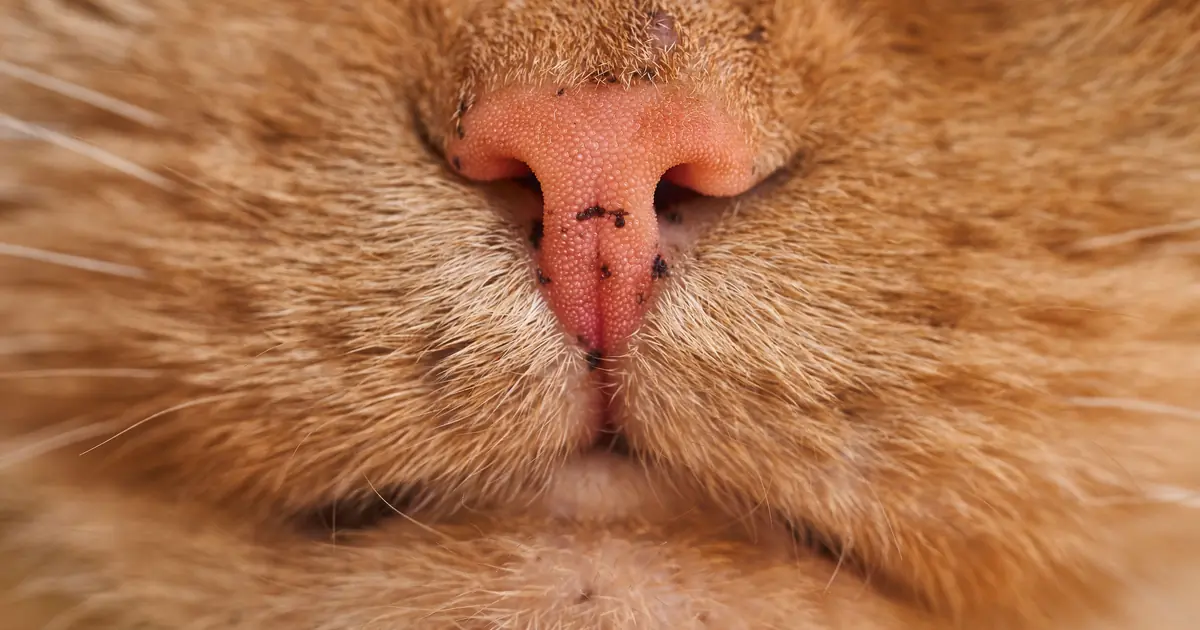
Whiskers fall out because every whisker follicle cycles through three growth phases, just like the hair follicles on a cat’s body. Vets call these anagen (active growth), catagen (a short transition phase), and telogen (a resting phase that ends with the whisker releasing). Once a whisker finishes its cycle, it detaches, and the follicle starts growing a new one in its place.
This is a completely different process from trauma or illness. A whisker that sheds naturally has finished its job for that cycle. It comes out clean, at the root, and a new one is usually already forming underneath it. That’s why you’ll typically only ever notice one whisker missing at a time; the rest of your cat’s whiskers are at different points in their own individual cycles.
How Often and How Many Whiskers Is It Normal to Lose?
It’s normal for a cat to lose about one or two whiskers every couple of months, not several at once. Since each whisker cycles independently, your cat isn’t shedding a whole “batch” the way they might shed fur in spring. You might go weeks without spotting a single stray whisker, then find one on the cat bed the next day. That’s the pattern working exactly as it should.
Most cats have roughly 24 whiskers on their muzzle, 12 on each side, arranged in four horizontal rows. They also have a smaller number of whiskers above the eyes, on the chin, and on the backs of the front legs. With that many whiskers cycling on their own timelines, the occasional loss is easy to miss unless you’re specifically looking for it.
Do Shed Whiskers Grow Back?
Yes, whiskers that shed naturally grow back, typically within 6 weeks to 3 months, depending on your cat’s age and overall health. The follicle stays intact after a whisker falls out, so a replacement whisker starts growing almost immediately. Younger cats and kittens often regrow whiskers a bit faster than senior cats.
If you want the full breakdown on whisker regrowth timelines, what affects the speed, and what to expect if a whisker breaks instead of sheds naturally, check out our dedicated guide on whether cat whiskers grow back.
Should You Ever Cut or Trim a Cat’s Whiskers?
No, you should never cut, trim, or pluck a cat’s whiskers. Whiskers aren’t just hair; they’re sensory organs wired directly into a dense network of nerves at the follicle. Cutting them doesn’t hurt the way cutting skin would, but it does temporarily disorient your cat, the same way covering your own eyes would throw off your balance.
Whiskers help cats judge distances, sense air currents, navigate in low light, and figure out whether they’ll actually fit through a tight gap. VCA Animal Hospitals notes that whiskers act almost like a radar system, and cutting them strips away that sense until they grow back. If you’re grooming your cat’s face for mats or trimming fur near the muzzle, work carefully around the whiskers and leave them alone completely.
When Is Whisker Loss a Red Flag?
Whisker loss becomes a red flag when a cat loses several whiskers at once, develops bald patches around the muzzle, or has whiskers that look broken and brittle instead of falling out cleanly. Sores, redness, swelling, or scabbing at the base of the whiskers are also signs something beyond normal shedding is going on.
A few underlying causes can trigger abnormal whisker loss:
- Mites, including mange or feline scabies, which irritate the skin around the follicles
- Ringworm, a fungal infection that weakens the hair shaft so whiskers snap off instead of shedding intact
- Allergies, food-related or environmental, which cause itching that leads to excessive face rubbing and scratching
- Bacterial or fungal skin infections around the muzzle
- Stress-related overgrooming, where a cat rubs or scratches its face raw
According to International Cat Care, cats that over-groom due to skin irritation, allergies, or stress can develop patches of broken or sparse hair, sometimes with visible damage to the skin underneath, which is exactly the kind of pattern worth having a vet check out around the face and whiskers.
Normal Whisker Shedding vs. Abnormal Whisker Loss
| Sign | Normal Shedding | Abnormal Loss (See a Vet) |
|---|---|---|
| How many | One or two whiskers | Several whiskers at once |
| Pattern | Random, scattered over weeks or months | Clustered, patchy, or all on one side |
| How it looks | Whisker comes out whole, at the root | Whisker looks broken, bent, or brittle |
| Skin at the base | Smooth, no irritation | Redness, swelling, scabs, or sores |
| Other symptoms | None | Itching, face rubbing, hair loss elsewhere |
What Should You Do If You Find Whiskers Everywhere?
If you’re only finding one or two whiskers scattered around your home over weeks or months, there’s nothing to do. It’s normal shedding, and your cat’s whiskers will regrow on their own timeline. Keep doing what you’re already doing.
If you’re finding a noticeable pile of whiskers, or you look at your cat’s face and it looks visibly sparser than usual, take a closer look at the skin around the muzzle. Check for redness, bald patches, scabs, or areas where your cat has been scratching. Snap a photo if you can, and book a vet visit. A quick exam, and sometimes a simple skin scraping, is usually all it takes to figure out whether you’re dealing with mites, ringworm, allergies, or something else. This article is educational and isn’t a substitute for a hands-on veterinary exam, so don’t guess at a diagnosis or treatment on your own.
While you’re keeping an eye on your cat’s coat and skin, it’s worth knowing what else is normal versus what isn’t. If your cat’s shedding seems excessive everywhere, not just around the whiskers, or you’re noticing flaky skin, our guide on getting rid of cat dandruff covers the most common causes. And if bald patches show up in other spots on the body, not just near the whiskers, take a look at our article on why cats go bald.
Frequently Asked Questions
Q: Is it normal to find a cat whisker on the floor?
Yes, finding one whisker on the floor every so often is completely normal. Whiskers shed individually as part of a cat’s natural hair cycle, so one stray whisker just means that particular follicle finished its cycle and is already growing a replacement.
Q: How many whiskers does a cat have?
Most cats have about 24 whiskers on their muzzle, 12 on each side, arranged in four rows. Cats also have smaller whiskers above their eyes, on their chin, and on the backs of their front legs.
Q: How long does it take for a shed whisker to grow back?
A naturally shed whisker usually grows back within 6 weeks to 3 months. The exact timing depends on the cat’s age, health, and how far along that follicle was in its growth cycle when the old whisker fell out.
Q: Can I cut my cat’s whiskers to tidy up their face?
No, whiskers should never be cut or trimmed for grooming. They’re sensory organs connected to nerve-rich follicles that help cats judge space and navigate their surroundings, and cutting them temporarily disrupts that sense even though it doesn’t cause pain.
Q: Why is my cat losing a lot of whiskers at once?
Losing several whiskers at once isn’t normal shedding and usually points to an underlying issue like mites, ringworm, allergies, or a skin infection. A vet visit is the best next step, especially if you also notice redness, scabs, or bald patches near the muzzle.
Q: Do kittens shed their whiskers too?
Yes, kittens shed and regrow whiskers just like adult cats, and their whiskers often regrow a bit faster thanks to their overall faster growth rate. Losing an occasional whisker as a kitten grows is nothing to worry about.
Q: What’s the difference between a shed whisker and a broken whisker?
A shed whisker falls out cleanly at the root as part of the normal growth cycle, while a broken whisker snaps partway along its length, often leaving a jagged or bent stub. Broken whiskers can point to trauma, brittle hair from illness, or a fungal infection like ringworm.
Q: Does losing a whisker hurt my cat?
No, a whisker falling out through natural shedding doesn’t hurt, the same way a strand of fur falling out doesn’t hurt. If your cat seems bothered, is pawing at their face, or the area looks irritated, that points to something other than routine shedding.

Hello and welcome to The Ideal Cat!
We are some passionate cat owners from different professions. We love our cats and have a lot of experience in how to care for our pets. We are incredibly excited to share our knowledge, experience, and research with you. So you can take good care of your loving cat. We will answer most of the common questions about owning cats, taking care of them, etc. If you have any question contact with us. Thanks for visiting! Enjoy the content.
)