You’re brushing your cat and a whisker falls right into your hand. Or you spot a short, stubby one poking out where a long one used to be. Your stomach drops a little. Did something happen? Is your cat okay?
Take a breath. Finding an occasional stray whisker is usually nothing to worry about, and yes, cat whiskers grow back on their own. The question of do cat whiskers grow back comes up a lot, because whiskers look so different from regular fur, and losing one feels like a bigger deal than it usually is. Here’s what’s actually going on, and when a missing whisker is worth a second look.
- Cat whiskers (vibrissae) grow back after natural shedding or breakage, typically within 6 to 12 weeks, occasionally taking up to 4 months for a full-length regrowth.
- Whiskers shed naturally as part of a normal hair growth cycle, so finding one or two on the floor or couch is usually not a red flag.
- Whiskers are rooted three times deeper than regular fur and packed with nerve endings, which is why you should never cut, trim, or pluck them.
- Several broken or missing whiskers at once can point to over-grooming, stress, fighting, or a skin or fungal condition, and it’s worth a vet visit.
- Whisker fatigue, mild stress from whiskers brushing a narrow bowl’s sides, may ease up with a wide, shallow food dish, though vets are still divided on how real it is.
Do Cat Whiskers Grow Back After Falling Out?
Yes. A whisker that falls out on its own, or breaks off, grows back from the same follicle, usually within 6 to 12 weeks. Some cats show a new whisker poking through in as little as three weeks, while others take three to four months to reach full length again. Think of it like a plant regrowing from an intact root: as long as the follicle underneath the skin is healthy, the whisker will come back.
Whiskers pulled or damaged right at the root can take longer to regrow than ones that simply broke partway down the shaft. Either way, there’s no cream, supplement, or trick that speeds it up. Patience is the whole plan.
Why Do Cats Even Have Whiskers?
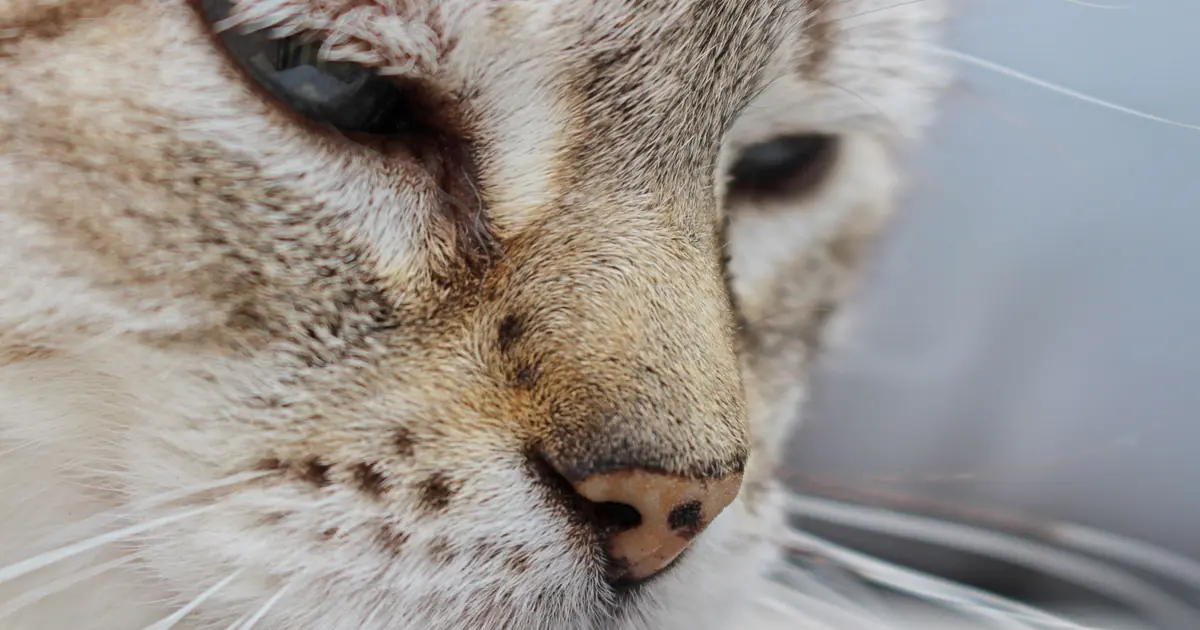
Whiskers, technically called vibrissae, are thick, stiff hairs rooted about three times deeper than ordinary fur, surrounded by a dense cluster of nerve endings and blood vessels. That deep root is what makes them sensory tools, not decoration.
Your cat uses whiskers to feel changes in air currents, judge whether a gap is wide enough to slip through, navigate in dim light, and stay balanced while jumping or hunting. The whiskers on the face, above the eyes, and on the backs of the front legs send constant signals to the brain, almost like built-in radar antennae. Whisker position tells you something about mood too: relaxed and out to the sides usually means a calm cat, while whiskers pulled tight against the face can signal fear or aggression. You can read more about what whisker position and other cat body language cues mean when you’re trying to figure out how your cat feels in the moment.
Is It Normal for Cats to Shed Whiskers Naturally?
Yes, occasional whisker shedding is completely normal. Whiskers grow, rest, and eventually fall out to make room for a new one, the same growth cycle regular fur goes through. Most cats lose a whisker here and there every few weeks, and you’ll rarely even notice it happening.
What you shouldn’t see is a cat losing several whiskers at once, or whiskers that look bent, curled, or broken off short instead of tapering to a fine point. A single stray whisker on the couch cushion? Totally normal. A whole cluster missing from one side of the face? That’s worth paying attention to, which we’ll get into below.
Why Should You Never Trim or Pluck a Cat’s Whiskers?
You should never cut, trim, or pluck a cat’s whiskers on purpose, because doing so removes a working sensory organ your cat relies on every day. It’s not like a haircut. Each whisker is wired directly into the nervous system, and cutting it doesn’t hurt the way pulling human hair might, but it does strip away real information your cat’s brain expects to receive.
A cat with freshly cut whiskers often seems disoriented. You might notice clumsiness, hesitation around furniture, misjudged jumps, or a cat that seems jumpier and more anxious than usual. That disorientation sticks around until the whiskers grow back to a functional length, which, again, can take weeks to months. There’s simply no upside to trimming them, even if they look a little uneven or “in the way.” For more on the anatomy your cat relies on day to day, our guide on how many teeth a cat has covers another part of feline anatomy people tend to underestimate.
What’s Normal Whisker Loss vs. When Should You Worry?
A whisker or two shedding naturally is normal. Several broken, bent, or missing whiskers at the same time is not, and it’s a good reason to call your vet. The table below breaks down the difference.
| Situation | What It Usually Means |
|---|---|
| One whisker found on the floor or furniture | Normal shedding, part of the regular hair growth cycle |
| A single whisker looks slightly shorter than the rest | Likely mid-regrowth after a natural shed |
| Several whiskers missing from one side of the face | Possible fight injury, trauma, or friction against something (a carrier, a fence) |
| Whiskers look chewed, stubby, or broken in clusters | Possible over-grooming from stress, allergies, or pain elsewhere on the body |
| Missing whiskers plus red, flaky, or crusty skin near the muzzle | Possible fungal infection (like ringworm) or other skin disease, needs a vet look |
Cats groom themselves a lot, up to half their waking hours in some cases, and most of that grooming is completely healthy. But when grooming turns compulsive, from stress, boredom, or an underlying medical issue, whiskers can get chewed or broken along with fur. If your cat’s coat is looking rough on top of whisker changes, it may be time to look at their grooming and coat care routine and rule out skin issues together with your vet.
What Is Whisker Fatigue and Should You Worry About It?
Whisker fatigue is mild overstimulation some cats may experience when their whiskers repeatedly brush the sides of a narrow, deep food
or water bowl. The idea is that constant contact sends a flood of sensory signals to the brain, which can make mealtime stressful instead of relaxing. Cats dealing with it sometimes paw food out onto the floor, pace around the bowl, or act hungry without actually eating.
It’s fair to say this one’s debated. Whisker fatigue isn’t backed by much formal research, and not every vet agrees it’s a real, distinct condition. Still, the fix costs nothing and can’t hurt: switch to a wide, shallow bowl that gives whiskers room to breathe. If your cat suddenly eats more comfortably, you’ve got your answer either way. Cats also lean on their whiskers for spatial awareness during those sudden bursts of energy, which ties into why your cat gets the zoomies and navigates tight turns around furniture without a scratch.
A quick vet note: this article is meant to help you understand what’s normal, not replace a professional exam. If you notice several broken or missing whiskers, skin changes near the muzzle, or a cat that seems off-balance or disoriented, get your vet to take a look. It’s better to ask and be told it’s nothing than to miss something that needed attention.
How Can You Help Your Cat’s Whiskers Stay Healthy?
The best thing you can do for your cat’s whiskers is leave them alone. Don’t trim them, don’t tug on loose ones (let them fall out on their own), and skip the “whisker haircut” trend some groomers still push. Keep sharp-edged carriers, tight tunnels, and narrow cat trees in mind too, since repeated rubbing against tight spaces can snap whiskers over time.
Feeding from a wide, shallow bowl instead of a deep, narrow one is a simple, low-effort swap that protects whiskers from unnecessary friction at every meal. And during regular brushing or petting sessions, just be gentle around the face. You don’t need to do anything special to help whiskers regrow. Good nutrition and a stress-free home do most of the work on their own, according to guidance from the Cornell Feline Health Center and International Cat Care.
Frequently Asked Questions
Q: Do cat whiskers grow back after being cut?
Yes, whiskers that are accidentally or intentionally cut do grow back, usually within 6 to 12 weeks. Your cat may seem clumsy or disoriented in the meantime, since the whisker’s sensory function is gone until it regrows to a working length.
Q: How long does it take for a cat’s whisker to grow back?
Most whiskers regrow within 6 to 12 weeks, though some appear in as little as 3 weeks and others take up to 4 months for full length. Whiskers damaged at the root tend to take longer than ones that simply broke partway down.
Q: Is it bad if my cat loses a whisker?
No, losing a single whisker is a normal part of the natural shedding cycle, just like regular fur. It only becomes a concern if you notice several whiskers missing or broken at the same time.
Q: Can I trim my cat’s whiskers to make them look neater?
No, you should never trim a cat’s whiskers for cosmetic reasons. Whiskers are sensory organs rooted deep in nerve-rich follicles, and cutting them disorients your cat and removes their ability to sense nearby objects and air currents.
Q: Why does my cat have short, stubby whiskers?
A single short whisker is usually just one that’s mid-regrowth after a natural shed. Several stubby or broken whiskers at once can point to over-grooming, stress, or a skin condition, so it’s worth mentioning to your vet.
Q: Do kittens lose their whiskers as they grow?
Kittens can shed and regrow individual whiskers just like adult cats, since it’s part of the same natural hair cycle. There’s no dramatic “whisker molt” separate from normal shedding as they mature.
Q: What does it mean if my cat loses whiskers on only one side?
Whiskers missing from just one side of the face often point to physical friction or trauma, like rubbing against a fence, carrier, or another animal during a scuffle. It’s worth checking that side of the face and body for scratches or soreness.
Q: What is whisker fatigue and is it real?
Whisker fatigue describes possible overstimulation when a cat’s whiskers repeatedly touch the sides of a narrow bowl during meals. It’s a debated topic among vets with limited formal research behind it, but switching to a wide, shallow bowl is a low-risk way to see if it helps your cat.

Hello and welcome to The Ideal Cat!
We are some passionate cat owners from different professions. We love our cats and have a lot of experience in how to care for our pets. We are incredibly excited to share our knowledge, experience, and research with you. So you can take good care of your loving cat. We will answer most of the common questions about owning cats, taking care of them, etc. If you have any question contact with us. Thanks for visiting! Enjoy the content.
