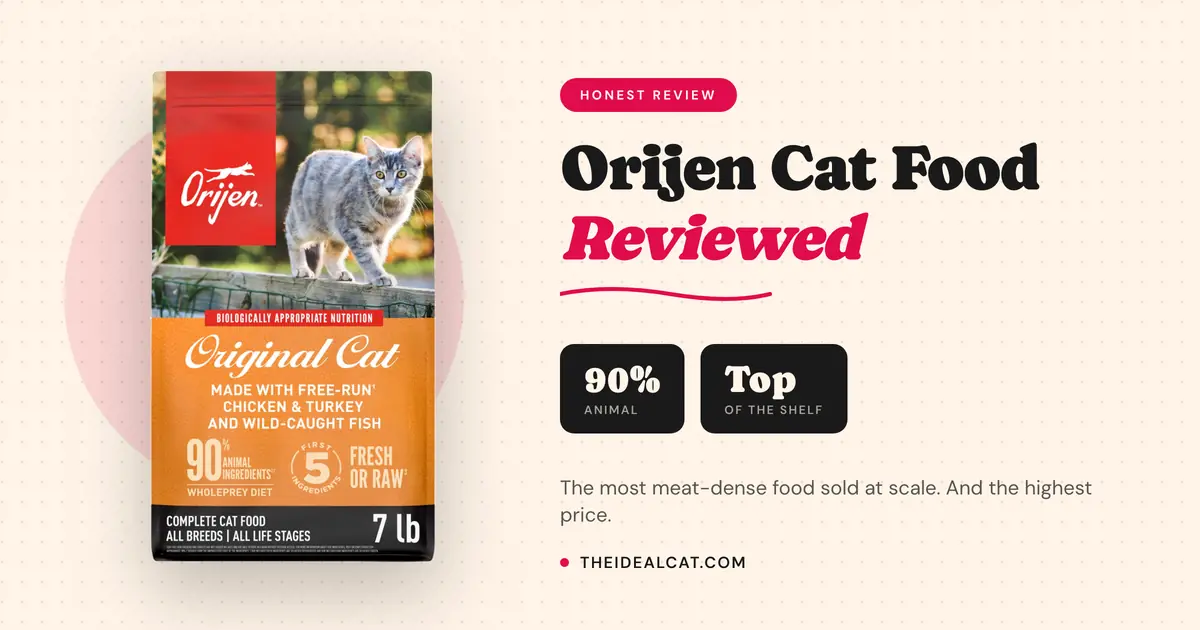
Ninety percent animal ingredients. That is the number on the bag, and as far as mainstream cat food goes, nothing beats it.
For comparison, budget kibble often runs closer to thirty percent meat with the rest made up of corn, wheat, and potato. Orijen has inverted that almost entirely.
So this is the top of the shelf, and it is priced accordingly. The honest question is not whether it is good food, because it is. It is whether your cat needs the last few percentage points.
The 90 percent figure is an up-to number, and it varies by bag. Original, Six Fish and Guardian 8 are listed at up to 90 percent animal ingredients, Fit & Trim at up to 85 percent, and the kitten pate in bone broth at up to 95 percent. Original and Six Fish are also formulated for all life stages, so they can feed a kitten too.
On price, Orijen Original is about $7.43 a pound on Chewy, against about $5.40 for Acana Indoor at 75 percent animal ingredients. That is roughly 38 percent more money for about 15 more percentage points of animal content.
Orijen recipes, by animal content and cost
| Recipe | Bag | Animal ingredients | Price | Unit cost | Pick it if |
|---|---|---|---|---|---|
| Original | Dry, 7 lb | Up to 90% | $51.99 | $7.43/lb | You want the flagship, for an adult cat or a kitten. |
| Six Fish | Dry, 7 lb | Up to 90% | $55.99 | $8.00/lb | Your cat prefers fish. Rotate it rather than feed it forever. |
| Fit & Trim | Dry, 7 lb | Up to 85% | $54.99 | $7.86/lb | Your cat needs to lose weight slowly, with your vet. |
| Guardian 8 | Dry, 10 lb | Up to 90% | $70.99 | $7.10/lb | You want eight proteins in one bag. The cheapest per pound. |
| Guardian Senior | Dry, 10 lb | Not stated | $70.99 | $7.10/lb | Your cat is older and healthy. Kidney disease changes this. |
| Kitten Chicken & Salmon Pate | Wet, 24 x 3 oz | Up to 95% | $62.16 | $0.86/oz | You have a kitten and want to add moisture. |
What does WholePrey actually mean?
WholePrey is Orijen’s term for including the parts of an animal a cat would actually eat catching one, rather than muscle meat alone.
A cat eating a mouse does not get a chicken breast. It gets liver, kidney, heart, tripe, bone, and cartilage. Those tissues carry nutrients that muscle does not in the same concentration. Taurine concentrates in heart. Calcium and phosphorus come from bone. Vitamin A comes largely from liver.
The practical consequence is that a food built this way needs fewer synthetic vitamins added back in, because the nutrients arrive in the ingredients themselves. That is a real formulation advantage rather than a marketing line, and it is the clearest argument for the price.
Whether it makes a visible difference to your individual cat is a different question, and honestly the answer is often no. Plenty of cats live long healthy lives on far cheaper food. The AAFCO nutrient profiles that all complete foods must meet exist precisely so cheaper foods are still adequate.
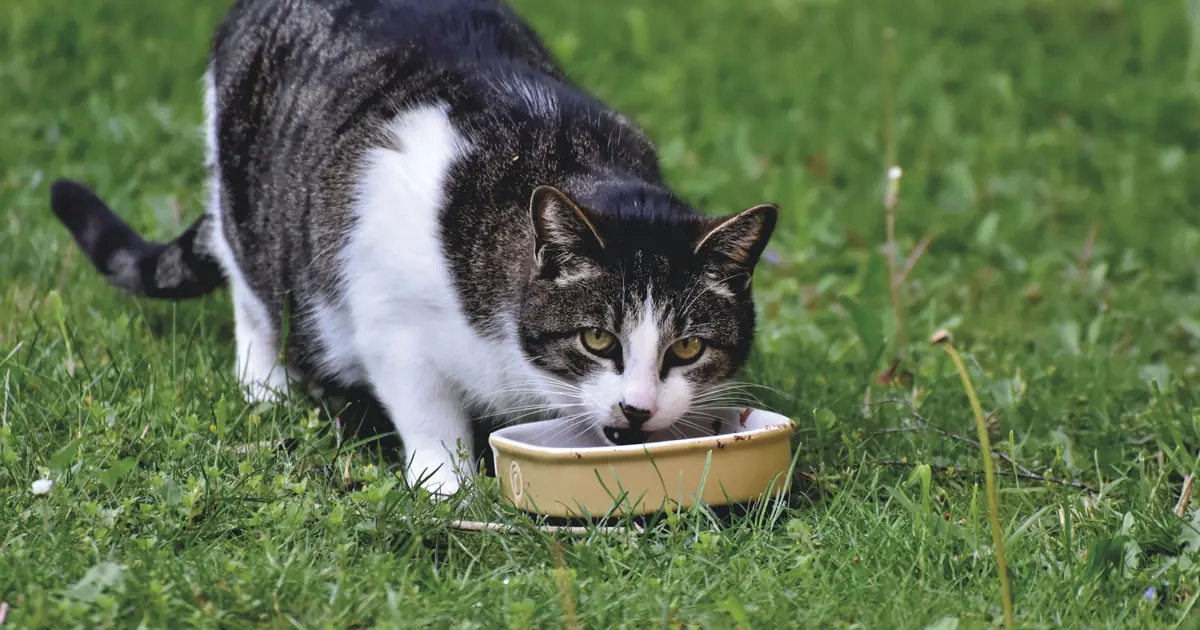
Orijen vs Acana: same company, real difference
Both brands are made by Champion Petfoods, which confuses a lot of shoppers standing in front of both bags.
Orijen runs at 90 percent animal ingredients. Acana runs between 65 and 85 percent depending on the recipe, and costs meaningfully less.
Same philosophy, same manufacturer, same WholePrey approach. Orijen is simply the higher-concentration expression of it. For most healthy cats, Acana delivers the great majority of the benefit for a good deal less money, and our Acana review covers that range in detail.
On recalls: Orijen was recalled once, in 2008. Acana has never been recalled. Both records are good; Acana’s is marginally cleaner. Check current status yourself in the FDA recall database.
When Orijen is the wrong choice
- Chronic kidney disease. Cats with diagnosed CKD are usually placed on controlled protein and phosphorus diets. A 90 percent animal food is not that. Your vet decides.
- Abrupt switching. Moving a cat from budget kibble to this overnight commonly causes diarrhea. Transition across ten days or more, slower than usual because the jump is larger.
- Multi-cat households on a budget. The cost multiplies fast, and a cheaper complete food fed consistently beats a premium one you ration.
- Cats who simply refuse it. Some cats raised on carbohydrate-heavy kibble reject rich food outright. That is not a failure of the food.
Is Orijen worth the money?
Buy it if you have one or two healthy cats, the budget genuinely allows, and you want the closest thing to a prey-based diet available in a bag. Kittens and lean active cats justify it most easily.
Otherwise buy Acana and put the difference towards wet food, which does more for most cats than upgrading kibble does. Our guides to the best dry cat food and the best wet options cover the alternatives across budgets.
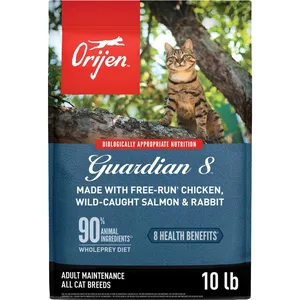
Orijen is, on formulation alone, about as good as commercial cat food gets. Ninety percent animal ingredients, whole prey composition, named proteins, and a manufacturer with a near-spotless record.
It is also the most expensive way to feed a cat short of raw, and the gap between Orijen and its own cheaper sibling Acana is smaller than the gap in price. If you want to try it, ORIJEN Original Grain-Free High-Protein Premium Dry Cat Food, 7-lb bag is the bag to start with. This article is educational rather than veterinary advice, and cats with kidney or liver conditions should have diets set by a vet.
Orijen questions
Q: Is Orijen a good cat food?
Orijen is one of the highest quality cat foods available. It contains 90 percent animal ingredients using a WholePrey approach that includes organs, cartilage, and bone, and names its protein sources rather than using generic meals. Its drawback is a very high price.
Q: What does 90% animal ingredients mean in Orijen?
It means 90 percent of the recipe by weight comes from animal sources, including muscle meat, organs, cartilage, and bone, with only 10 percent from plant material. Typical budget kibble contains closer to 30 percent animal ingredients.
Q: Has Orijen cat food been recalled?
Orijen was recalled once, in 2008. Sister brand Acana, made by the same company, Champion Petfoods, has never been recalled. Check the FDA recall database for current status on any brand.
Q: Is Orijen or Acana better?
Both are made by Champion Petfoods with the same WholePrey philosophy. Orijen contains 90 percent animal ingredients while Acana ranges from 65 to 85 percent at a lower price. For most healthy cats Acana delivers most of the benefit for meaningfully less.
Hello and welcome to The Ideal Cat!
We are some passionate cat owners from different professions. We love our cats and have a lot of experience in how to care for our pets. We are incredibly excited to share our knowledge, experience, and research with you. So you can take good care of your loving cat. We will answer most of the common questions about owning cats, taking care of them, etc. If you have any question contact with us. Thanks for visiting! Enjoy the content.
