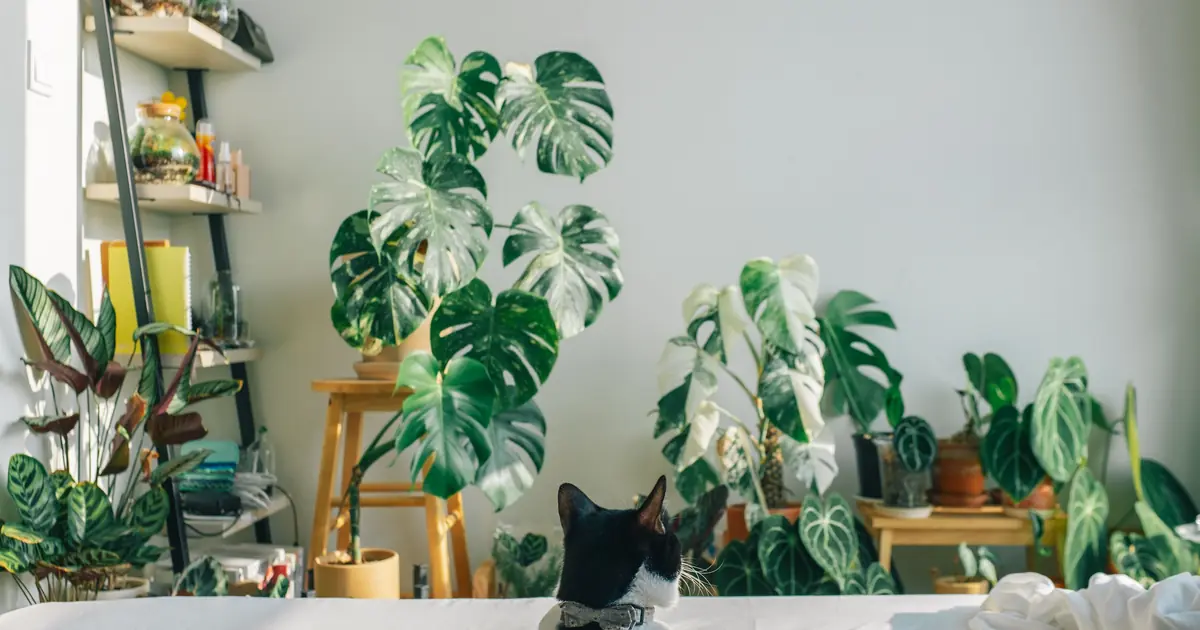
You just brought home a gorgeous new plant, set it on the windowsill, and turned around to find your cat already sniffing it. Sound familiar? Cats and houseplants have a complicated relationship, and as the plant parent, you’re the referee.
The good news is you don’t have to choose between a leafy home and a safe cat. Loads of popular houseplants are completely non-toxic. A handful, though, can send your cat to the emergency vet, and one group can kill. Here’s exactly which plants are safe, which to keep out of the house entirely, and what to do if your cat takes a bite.
This article is educational and isn’t a substitute for veterinary care. If you think your cat ate a toxic plant, call your vet or a poison hotline right away.
- True lilies (Lilium) and daylilies (Hemerocallis) are the deadliest plants for cats, and even pollen, petals, or vase water can cause fatal kidney failure.
- Cat-safe houseplants include spider plants, parlor and areca palms, Boston ferns, calathea, prayer plant, African violet, money tree, and cat grass.
- Common toxic houseplants to avoid include pothos, philodendron, dieffenbachia, sago palm, aloe, snake plant, ZZ plant, peace lily, and monstera.
- Signs of plant poisoning include drooling, vomiting, mouth pawing, loss of appetite, and lethargy, sometimes within minutes.
- If your cat eats any lily, call the ASPCA Animal Poison Control Center at (888) 426-4435 or your vet immediately, because treatment within 18 hours is critical.
What houseplants are safe for cats?
Safe houseplants for cats are species the ASPCA lists as non-toxic, meaning they won’t poison your cat if she nibbles a leaf. Great cat-friendly picks include spider plants, parlor palms, Boston ferns, calathea, prayer plant, African violets, money tree, and cat grass. These add greenery to your home without the risk of a middle-of-the-night vet run.
Here’s the honest caveat: “non-toxic” doesn’t mean “eat all you want.” Any plant material can cause mild tummy upset or a bit of vomiting if your cat goes to town on it. Non-toxic just means no dangerous poison. That’s the line that matters.
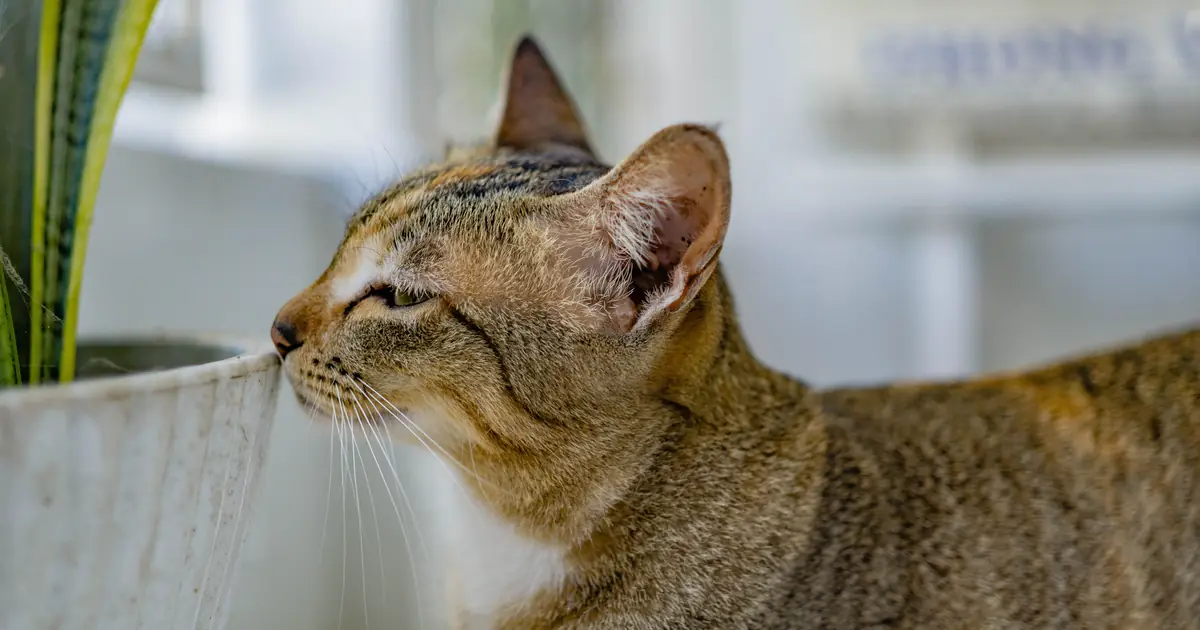
The best cat-safe houseplants, and why cats like them
These are the popular, easy-care plants you can keep without worry. All are on the ASPCA non-toxic list.
- Spider plant (Chlorophytum comosum): The classic cat-safe plant. Fun fact: cats are weirdly drawn to it, and those dangly leaves are basically a free toy. Totally non-toxic.
- Parlor palm (Chamaedorea elegans): A lush, low-light palm that’s safe and hard to kill. A great swap if you love the palm look.
- Areca palm and bamboo palm: Both are non-toxic palms that bring big, feathery height without any danger.
- Boston fern (Nephrolepis exaltata): Soft, arching fronds and completely cat-safe. Loves humidity, so it’s happy in a bathroom.
- Calathea and prayer plant (Maranta): Show-stopping patterned leaves, pet-safe, and perfect for lower-light corners.
- African violet (Saintpaulia): One of the few safe flowering houseplants, with blooms in purple, pink, and white.
- Money tree (Pachira aquatica): A braided-trunk favorite that’s non-toxic and forgiving.
- Swedish ivy (Plectranthus): A fast-growing trailer for hanging baskets, safely up and out of paw’s reach.
- Baby’s tears (Soleirolia soleirolii): A dense, mossy carpet of tiny leaves, non-toxic and cute.
- Cat grass and catnip: Grown on purpose for cats to munch. Giving your cat her own snack plant can steer her away from the ones you’d rather she left alone.
Which houseplants are toxic to cats?
Many common houseplants are toxic to cats, and a few are genuinely dangerous. The most serious are true lilies and daylilies, which cause deadly kidney failure. Others, like sago palm and aloe, damage organs, while pothos, philodendron, dieffenbachia, and monstera contain calcium oxalate crystals that burn the mouth and throat. Keep every plant on this list out of your home or fully out of reach.
Below is a quick side-by-side so you can scan safe versus toxic at a glance. When in doubt, always check the free ASPCA toxic and non-toxic plant list before buying.
| Cat-safe (non-toxic) | Toxic (keep away) |
|---|---|
| Spider plant | Lily (true lily and daylily): deadly |
| Parlor palm | Sago palm: liver failure |
| Areca palm / bamboo palm | Pothos (devil’s ivy) |
| Boston fern | Philodendron |
| Calathea / prayer plant | Dieffenbachia (dumb cane) |
| African violet | Peace lily |
| Money tree | Monstera (Swiss cheese plant) |
| Swedish ivy | Aloe vera |
| Baby’s tears | Snake plant |
| Cat grass / catnip | ZZ plant |
Why are lilies so dangerous for cats?
Lilies are dangerous because true lilies (Lilium species) and daylilies (Hemerocallis species) can cause sudden, fatal kidney failure in cats, and it takes shockingly little exposure. Every part is toxic: the petals, leaves, stem, pollen, and even the water in the vase. A cat can be poisoned just by brushing against the pollen and grooming it off her fur.
This is not a “watch and wait” situation. According to the U.S. Food and Drug Administration, a cat that eats even a small amount of a true lily can develop kidney failure within a few days. The ASPCA warns that survival depends on fast treatment, and outcomes drop sharply if care is delayed beyond about 18 hours after exposure. Bottom line: don’t bring these into a home with cats. No bouquet is worth it.
Dangerous true lilies and daylilies include Easter lily, Asiatic lily, tiger lily, stargazer lily, Oriental lily, Japanese show lily, rubrum lily, wood lily, and the common orange daylily.
Are peace lilies and calla lilies the same danger?
No, and this trips up a lot of cat parents. Peace lilies and calla lilies are not true lilies, so they don’t cause the deadly kidney failure that real lilies do. Instead, they contain insoluble calcium oxalate crystals that irritate the mouth, causing drooling, pawing at the face, and trouble swallowing. That’s painful and worth a vet call, but it’s rarely life-threatening. Still, they’re toxic, so keep them away too.
Other seriously toxic houseplants to know
A few more common plants deserve a hard “no” in a cat home. Here’s what each one does.
- Sago palm (Cycas revoluta): One of the most dangerous. It contains cycasin, which causes severe liver damage. Even with aggressive treatment, survival is only around 50%, and the seeds are the most toxic part.
- Aloe vera: The gel is soothing for human skin, but the plant’s saponins cause vomiting, diarrhea, and lethargy in cats.
- Pothos, philodendron, dieffenbachia, and monstera: All pack insoluble calcium oxalate crystals. Chewing them causes intense mouth burning, drooling, swelling, and vomiting.
- Snake plant (Sansevieria): Contains saponins that trigger nausea, vomiting, and diarrhea.
- ZZ plant (Zamioculcas): Calcium oxalate crystals again, causing mouth irritation, drooling, and stomach upset.
What are the signs of plant poisoning in cats?
Signs of plant poisoning in cats include drooling, vomiting, diarrhea, pawing at the mouth, loss of appetite, and lethargy. Some symptoms show up within minutes, others take a day or two. If you know your cat chewed a plant, don’t wait for symptoms to appear before you act.
Call your vet or a poison hotline right away if you notice:
- Drooling, foaming, or pawing at the mouth
- Vomiting or diarrhea
- Loss of appetite or refusing water
- Lethargy, weakness, or hiding
- Swelling of the mouth, tongue, or lips
- Difficulty breathing or swallowing
- Increased thirst and urination, then less urination (a red flag for lily-related kidney injury)
- Tremors, a wobbly walk, or seizures
Because plant poisoning can look a lot like an ordinary upset stomach at first, it helps to know what’s normal for your cat. If she’s vomiting or has diarrhea and you can’t rule out a plant, treat it as a possible poisoning and call for advice.
What should I do if my cat eats a toxic plant?
If your cat eats a toxic plant, act fast and call for help immediately, especially with any lily. Don’t try to make your cat vomit at home, because that can do more harm than good. Instead, follow these steps.
- Remove your cat from the plant. Gently take away any plant pieces from her mouth, paws, and fur so she can’t swallow or groom off more.
- Identify the plant. Snap a photo and grab the plant tag or a leaf sample. Knowing the exact species helps the vet act quickly.
- Call a poison hotline or your vet now. Reach the ASPCA Animal Poison Control Center at (888) 426-4435 or the Pet Poison Helpline at (855) 764-7661. Both are staffed 24/7 (a consultation fee may apply).
- Don’t wait for symptoms. With lilies especially, treatment started early gives the best shot at survival. Kidney damage can be silent until it’s advanced.
- Follow the expert’s instructions. They may send you straight to an emergency clinic for IV fluids and monitoring. Bring the plant sample with you.
Keep both hotline numbers somewhere easy to find, like a fridge magnet or your phone’s notes. In an emergency you won’t want to be searching for them.
How do I keep my cat away from houseplants?
The safest approach is to only keep non-toxic plants, then make them less tempting to chew. Cats explore with their mouths, so a curious nibble is normal. A few small changes go a long way toward keeping paws off your greenery.
- Go high. Put plants on tall shelves, in hanging baskets, or in rooms your cat can’t access. Remember cats jump, so “high” means truly out of reach.
- Give her a legal snack. Grow cat grass or catnip nearby. A cat with her own plant to munch is far less interested in yours.
- Make leaves unappealing. Cats dislike citrus. A few orange or lemon peels on the soil, or a light citrus scent near the pot, can act as a natural deterrent.
- Cover the soil. Large pebbles or stones on top stop diggers and litter-box wannabes.
- Redirect the boredom. A lot of plant-chewing is just an under-stimulated cat. More play, climbing spots, and toys can cut it way down.
Even with safe plants and every trick in the book, the surest protection is simple: never bring a true lily into your home. For a room-by-room approach to what’s safe to display, our guide on which flowers are cat-safe covers cut bouquets and blooms too. And if you’re rethinking what your cat gets into generally, see our rundown of what cats can safely eat.
Cat-safe houseplants FAQ
Q: What is the safest houseplant for cats?
The spider plant is often called the safest and most popular cat-friendly houseplant. It’s completely non-toxic on the ASPCA list, easy to grow, and cats love batting at its dangling leaves. Parlor palms and Boston ferns are close runners-up.
Q: Are all lilies deadly to cats?
True lilies (Lilium) and daylilies (Hemerocallis) are deadly and can cause fatal kidney failure from tiny exposures. Peace lilies and calla lilies are not true lilies, so they don’t harm the kidneys, but they still irritate the mouth and are toxic. Keep all of them away from cats.
Q: Can cats be poisoned just by lily pollen?
Yes. A cat can be poisoned by brushing against lily pollen and then grooming it off her fur, or by drinking water from a vase that held lilies. Every part of a true lily is toxic, which is why they don’t belong in a cat’s home at all.
Q: Is aloe vera safe for cats?
No. Aloe vera is toxic to cats. The plant contains saponins that can cause vomiting, diarrhea, and lethargy if your cat chews or eats it. Keep aloe out of reach or choose a non-toxic plant instead.
Q: Are snake plants and ZZ plants toxic to cats?
Yes, both are toxic. Snake plants contain saponins that cause nausea, vomiting, and diarrhea. ZZ plants contain calcium oxalate crystals that irritate the mouth and stomach. Neither is deadly like a true lily, but both can make your cat sick.
Q: How do I know if a plant is safe before I buy it?
Check the ASPCA’s free online toxic and non-toxic plant database by searching the plant’s common or scientific name. It’s the most trusted source and covers hundreds of species. When a plant isn’t listed or you’re unsure, treat it as unsafe.
Q: Why does my cat eat plants if she’s not hungry?
Cats nibble plants out of curiosity, boredom, or instinct, not just hunger. Chewing greenery is normal feline behavior. Offering safe cat grass and more playtime usually satisfies the urge and protects your other plants.
Q: What number do I call if my cat eats a poisonous plant?
Call the ASPCA Animal Poison Control Center at (888) 426-4435 or the Pet Poison Helpline at (855) 764-7661. Both operate 24/7. Contact your regular vet or an emergency clinic too, especially if a lily was involved.
Bottom line: you can absolutely have a green, plant-filled home and a safe cat. Stick to non-toxic picks like spider plants, palms, and ferns, keep the tempting ones up high, and give your cat her own cat grass to chew. Just draw one hard line: no true lilies, ever. When something looks off after a nibble, call your vet or a poison hotline right away. It’s always better to check early than to wait.

Hello and welcome to The Ideal Cat!
We are some passionate cat owners from different professions. We love our cats and have a lot of experience in how to care for our pets. We are incredibly excited to share our knowledge, experience, and research with you. So you can take good care of your loving cat. We will answer most of the common questions about owning cats, taking care of them, etc. If you have any question contact with us. Thanks for visiting! Enjoy the content.
