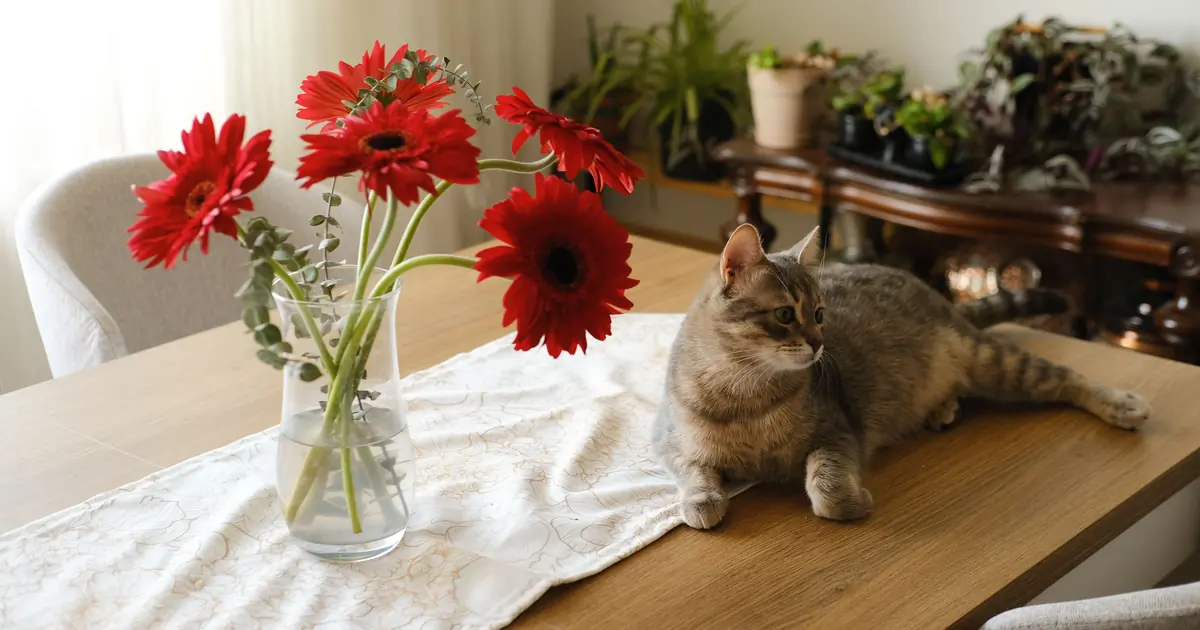
You just got a gorgeous bouquet, and your cat is already eyeing it from across the room. Sweet, right? But here is the worry that creeps in: are those flowers safe? Some blooms are completely harmless. Others, like lilies, can quietly kill a cat. This guide walks you through exactly what flowers are cat safe, which ones to keep far away, and what to do if your cat sneaks a bite.
- Roses, sunflowers, orchids, gerbera daisies, and snapdragons are non-toxic to cats according to the ASPCA.
- True lilies and daylilies are deadly to cats: even pollen on the fur or a sip of vase water can cause fatal kidney failure within 3 days.
- Lily poisoning treatment must usually begin within 18 hours of exposure to save a cat’s kidneys.
- Tulips, daffodils, hyacinth, chrysanthemums, lily of the valley, and carnations are all toxic to cats and should be kept out of the home.
- Even cat-safe flowers can cause mild stomach upset if a cat eats a lot, so keep all bouquets out of reach.
- If your cat contacts a lily or any toxic flower, call your vet or ASPCA Animal Poison Control at 888-426-4435 right away.
This article is educational and not a substitute for veterinary care. Cat poisoning can move fast, so when in doubt, call your vet.
What Flowers Are Cat Safe?
Cat-safe flowers are blooms the ASPCA lists as non-toxic to cats, meaning they will not cause poisoning if your cat sniffs, brushes against, or nibbles them. Safe picks include roses, sunflowers, gerbera daisies, orchids, snapdragons, asters, freesia, alstroemeria (Peruvian lily), lisianthus, statice, and zinnias. These flowers let you enjoy fresh blooms without risking your cat’s health.
Here is the catch worth knowing: “non-toxic” does not mean “no reaction at all.” A cat who eats a big mouthful of any plant material can still get a mildly upset stomach, with some vomiting or diarrhea. That is irritation, not poisoning, and it usually passes. Still, the safest move is to keep even friendly flowers somewhere your cat cannot reach.
Cat-Safe Flowers at a Glance
| Cat-Safe Flower | Good to Know |
|---|---|
| Roses | Petals, leaves, and stems are non-toxic. Strip the thorns first so your cat (or you) does not get poked. |
| Sunflowers | Cheerful and completely non-toxic to cats and dogs. |
| Gerbera daisies | Non-toxic per the ASPCA. Not the same as toxic chrysanthemums, despite the daisy look. |
| Orchids | Non-toxic and long-lasting. A safe centerpiece choice. |
| Snapdragons | Non-toxic and safe around curious cats. |
| Asters | Listed as non-toxic to cats by the ASPCA. |
| Freesia | Fragrant and safe for homes with cats. |
| Alstroemeria (Peruvian lily) | Not a true lily. May cause mild tummy upset but no organ damage. |
| Lisianthus | Non-toxic and a pretty, rose-like alternative. |
| Statice | Non-toxic, often used as filler in bouquets. |
| Zinnias | Colorful, easy to grow, and non-toxic to pets. |
Want safe greenery too? Spider plants, Boston ferns, basil, rosemary, and areca palms are all cat-friendly options the ASPCA marks as non-toxic.
Why Are Lilies So Dangerous for Cats?
Lilies are dangerous because true lilies and daylilies cause sudden, often fatal kidney failure in cats, and it takes shockingly little exposure. The entire lily plant is toxic to cats: petals, leaves, stem, pollen, and even the water in the vase. A cat does not have to eat the flower. Licking a few grains of pollen off the fur or taking one sip of vase water can be enough to trigger kidney damage.
This is the single most important thing to take away from this whole article. If you remember nothing else, remember that lilies and cats do not mix, ever.
The “true lilies” (genus Lilium) include Easter, Tiger, Stargazer, Oriental, and Asiatic lilies. Daylilies (genus Hemerocallis) are just as deadly. According to the ASPCA and the FDA, all parts of these plants are toxic, and poisoning is often fatal if treatment is delayed beyond about 18 hours after exposure.
Early signs of lily poisoning show up within 0 to 12 hours and include drooling, vomiting, low energy, and a sudden lack of interest in food. Without fast treatment, kidney failure can set in within 1 to 3 days. There is no antidote, so speed matters more than almost anything.
Not Every “Lily” Is a True Lily
Some flowers carry the word “lily” but are not the deadly kind. Peace lily, calla lily, and Peruvian lily (alstroemeria) are not true lilies and do not cause kidney failure. Peace lily and calla lily contain calcium oxalate crystals that can sting a cat’s mouth and cause drooling or vomiting, but serious harm is rare. Peruvian lily may cause only mild stomach upset.
That said, the names look alike and the stakes are high. If you are not 100 percent sure which “lily” you have, treat it as toxic and keep it away from your cat.
Which Flowers Are Toxic to Cats?
Toxic flowers for cats range from deadly to merely irritating, and many common bouquet and garden blooms make the list. Beyond lilies, cats should avoid tulips, daffodils, hyacinth, chrysanthemums, lily of the valley, carnations, and oleander. Some cause stomach upset, while others affect the heart or kidneys, so it helps to know which is which.
| Toxic Flower | How Bad and Main Symptoms |
|---|---|
| True lilies and daylilies | Deadly. Kidney failure from any part, including pollen and vase water. Drooling, vomiting, no appetite. |
| Lily of the valley | Severe. Cardiac glycosides affect the heart. Vomiting, irregular heartbeat, weakness, possible collapse. |
| Tulips | Moderate. Toxins concentrate in the bulb. Drooling, vomiting, diarrhea; large bulbs risk blockage. |
| Daffodils | Moderate to severe, worst in the bulb. Vomiting, diarrhea, drooling, tremors, possible seizures. |
| Hyacinth | Moderate, worst in the bulb. Drooling, vomiting, diarrhea similar to tulips. |
| Chrysanthemums (mums) | Mild to moderate. Contain pyrethrins. Vomiting, diarrhea, drooling, wobbliness, skin irritation. |
| Carnations | Mild. Vomiting, diarrhea, mild skin irritation. |
| Oleander | Severe. Affects the heart and can be fatal. Vomiting, abnormal heart rate, weakness. |
A quick note on look-alikes: gerbera daisies are safe, but chrysanthemums (which look daisy-ish) are toxic. When a florist mixes blooms, one toxic stem can hide in an otherwise friendly bouquet, so check every flower.
Are Roses Safe for Cats?
Yes, roses are safe for cats. The petals, leaves, and stems of a true rose are non-toxic, so a curious nibble will not poison your cat. The only real hazard with roses is physical: the thorns. A sharp thorn can poke a cat’s paw, mouth, or face, or even get stuck in the skin.
If you bring roses home, strip the thorns from the stems before you put them in a vase. That keeps both your cat and your fingers safe. And as with any flower, watch for the rare case where a cat eats a lot of petals and gets a briefly upset tummy.
What Should You Do If Your Cat Eats a Toxic Flower?
If your cat eats or contacts a toxic flower, act fast and call for help right away. Do not wait for symptoms, especially with lilies, because the window to protect the kidneys is short. Quick action gives your vet the best chance to help your cat.
Here is what to do, step by step:
- Move your cat away from the flower and gently wipe any pollen off the fur, face, or paws with a damp cloth.
- Identify the flower if you can. Take a photo or save a piece so your vet knows exactly what you are dealing with.
- Call your veterinarian, the nearest emergency animal hospital, or ASPCA Animal Poison Control at 888-426-4435 (a fee may apply).
- Do not try to make your cat vomit unless a vet specifically tells you to. The wrong move can make things worse.
- Get to the clinic quickly if told to. For lilies, treatment within about 18 hours is often what saves a cat’s life.
Red-flag symptoms that mean go now: repeated vomiting, drooling, hiding, refusing food, weakness, trouble breathing, seizures, or any change in how much your cat is peeing. These can signal serious poisoning.
What Flowers Are Cat Safe to Keep at Home?
You can keep flowers and cats safe together by choosing non-toxic blooms and placing them where your cat cannot reach. A little planning lets you enjoy fresh flowers without the worry. The goal is simple: friendly flowers, out of paw’s reach, with zero lilies in the house.
- Buy only cat-safe flowers like roses, sunflowers, orchids, and gerbera daisies.
- Tell your florist “no lilies” out loud, since lilies sneak into mixed bouquets often.
- Place vases on high shelves, inside closed rooms, or anywhere a determined cat cannot jump.
- Empty and rinse vases that held questionable flowers so your cat never drinks the water.
- Sweep up dropped petals and pollen, which a cat can step in and later groom off.
- Give your cat its own greens, like a pot of cat grass, to satisfy the urge to chew.
If your cat is a relentless plant-muncher, cat grass can be a real peace-keeper. It gives them something safe to nibble and may steer them away from your bouquet.
Frisco Natural Cat Grass Growing Kit
This is an all-in-one kit with seeds and soil that sprouts fresh, fiber-rich grass in about a week with just water. It gives indoor cats a safe green to nibble, which can take the temptation off your flowers and houseplants. Best for plant-chewers and cats who like a little salad with their day.
Frequently Asked Questions
Q: What is the safest flower to give someone with a cat?
Roses, sunflowers, and orchids are among the safest flowers for a home with a cat, since all three are non-toxic per the ASPCA. Roses are a popular gift choice; just ask that the thorns be removed. Always confirm the bouquet contains no lilies before gifting it.
Q: Are all lilies deadly to cats?
True lilies (genus Lilium) and daylilies (genus Hemerocallis) are deadly to cats and cause kidney failure. Peace lily, calla lily, and Peruvian lily are not true lilies and do not cause kidney failure, though they can cause mouth irritation or mild stomach upset. When unsure which lily you have, treat it as toxic.
Q: Can cats be poisoned just by smelling flowers?
Cats are not usually poisoned by scent alone, but lilies are an exception in practice. Pollen drifts onto a cat’s fur, and the cat swallows it while grooming. So a lily a cat never “ate” can still poison it. This is why lilies should never be in a home with cats.
Q: Are gerbera daisies safe for cats?
Yes, gerbera daisies are non-toxic to cats according to the ASPCA. They are a safe, colorful choice for a cat household. Do not confuse them with chrysanthemums, a similar-looking flower that is toxic to cats.
Q: Are tulips and daffodils toxic to cats?
Yes, both tulips and daffodils are toxic to cats. The toxins are most concentrated in the bulbs, but the whole plant can cause drooling, vomiting, and diarrhea. Daffodils can also cause tremors or seizures in larger amounts, so keep both flowers away from cats.
Q: How fast does lily poisoning affect a cat?
Lily poisoning shows early signs like drooling, vomiting, and low energy within 0 to 12 hours of exposure. Kidney failure can develop within 1 to 3 days. Treatment usually must begin within about 18 hours to protect the kidneys, so contact a vet immediately if you suspect any lily exposure.
Q: What flowers can I plant in a garden where cats roam?
Cat-safe garden flowers include sunflowers, zinnias, asters, snapdragons, and roses (mind the thorns). These are non-toxic to cats per the ASPCA. Avoid planting lilies, daylilies, daffodils, tulips, hyacinth, and lily of the valley anywhere outdoor cats can reach.
Q: Who do I call if my cat eats a toxic flower?
Call your own veterinarian or the nearest emergency animal hospital first. You can also reach the ASPCA Animal Poison Control Center at 888-426-4435, available 24/7 (a consultation fee may apply). For any lily exposure, do not wait, because every hour counts.
Knowing what flowers are cat safe lets you keep a beautiful, fresh home without putting your cat at risk. Stick with roses, sunflowers, orchids, and other non-toxic blooms, keep every lily out of the house, and store flowers out of reach. With those simple habits, your cat and your flowers can happily share the same space.

Hello and welcome to The Ideal Cat!
We are some passionate cat owners from different professions. We love our cats and have a lot of experience in how to care for our pets. We are incredibly excited to share our knowledge, experience, and research with you. So you can take good care of your loving cat. We will answer most of the common questions about owning cats, taking care of them, etc. If you have any question contact with us. Thanks for visiting! Enjoy the content.
)