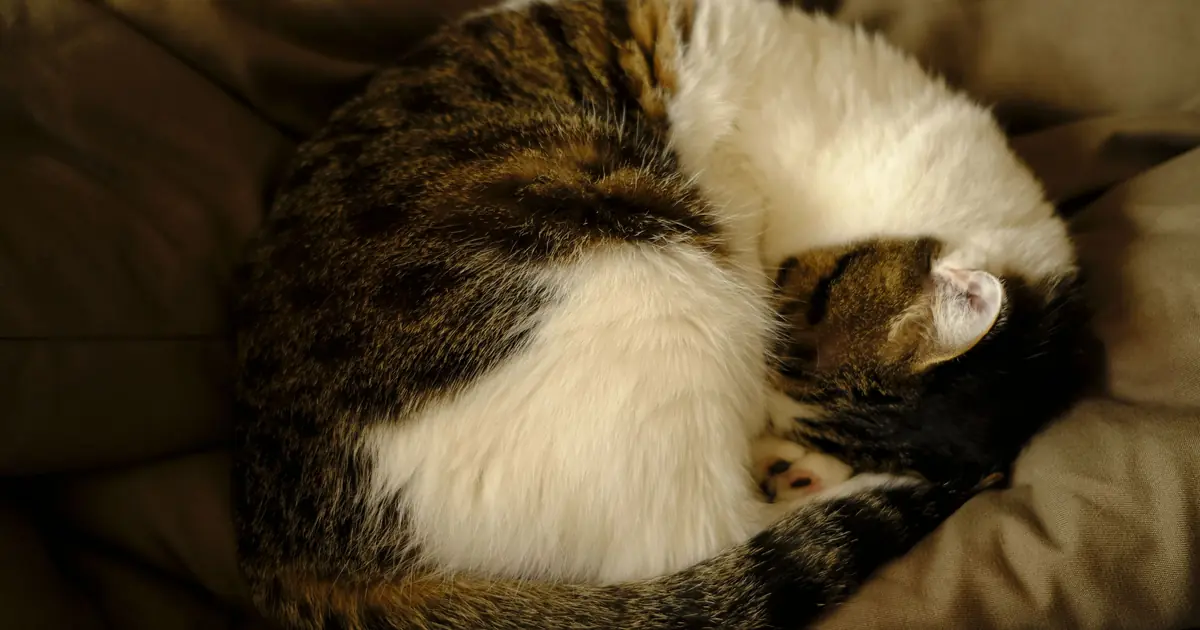
Your sleeping cat lets out a tiny squeak, a paw twitches, maybe there’s a soft snore. It’s ridiculously cute, and you might wonder: is my cat dreaming, or is something up?
Most sleep sounds are just a dreaming cat being adorable. Here’s what’s normal and the few signs worth watching.
- Cats commonly chirp, squeak, meow, twitch, and snore in their sleep, mostly during REM (dream) sleep.
- These sounds are usually normal and a sign your cat is deeply, comfortably asleep.
- Light snoring is common, especially in flat-faced breeds like Persians, and often harmless.
- New, loud, or labored breathing, or open-mouth breathing while resting, is a red flag.
- See a vet if sleep sounds change suddenly or come with breathing effort or other symptoms.
Do cats make noises when they sleep?
Yes, cats often make noises while sleeping, and it’s usually completely normal. Soft chirps, squeaks, little meows, and snoring are common, along with twitching paws, whiskers, or ears. Most of these happen during REM sleep, the dream stage, and simply mean your cat is deeply asleep. A noisy sleeper is often just an active dreamer.
Why do cats twitch and squeak in their sleep?
Those twitches and sounds come from dreaming during REM sleep. Like humans, cats cycle through light sleep and deep REM sleep, and in REM the brain is active while the body is mostly relaxed. Little escaping meows, paddling paws, and facial twitches are the visible edges of that dream activity. It’s the same deep-sleep state behind whether cats can sleepwalk, and it’s why cats can drop off so fast and sleep so much.
Is it normal for a cat to snore?
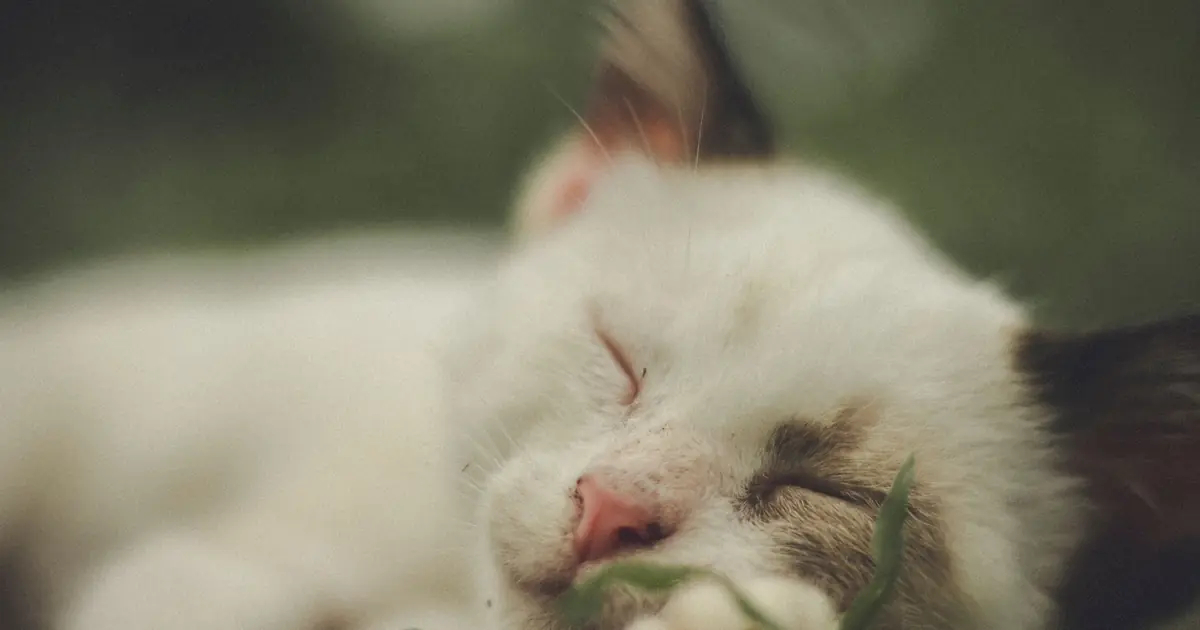
Light snoring is common and usually harmless. It happens when a cat sleeps in a curled or scrunched position that partly relaxes the airway. Flat-faced (brachycephalic) breeds like Persians and Himalayans snore more often because of their short nasal passages. An occasional soft snore from a relaxed, healthy cat is nothing to worry about.
Which sleep sounds are normal versus concerning?
The key is whether your cat is breathing easily. Use this guide.
| Usually normal | See a vet |
|---|---|
| Soft chirps, squeaks, dream meows | Loud, harsh, or wet-sounding breathing |
| Twitching paws, whiskers, or ears | Visible effort or fast breathing at rest |
| Light, occasional snoring | New or worsening snoring, especially with weight gain |
| Cat wakes rested and normal | Open-mouth breathing while sleeping; gasping or waking distressed |
When do sleep noises signal a problem?
Sleep sounds become concerning when breathing is the issue, not dreaming. New or worsening snoring, loud or labored breathing, wheezing, or open-mouth breathing at rest can indicate airway problems, respiratory infection, asthma, obesity, or (rarely) something more serious. Open-mouth breathing in a resting cat is an emergency, we explain why in can cats breathe through their mouths. Loud nighttime vocalizing while awake is different and covered in why cats make weird noises at night.
When should you see a vet?
See a vet if your cat’s sleep breathing becomes loud, harsh, or labored, if snoring is new or worsening, or if you ever see open-mouth or fast breathing at rest. Also check in if sleep sounds come with coughing, nasal discharge, weight changes, or low energy. This article is educational and not a substitute for veterinary care. Cornell’s Feline Health Center and the VCA on breathing difficulty are reliable references.
Frequently Asked Questions
Q: Is it normal for cats to make noises in their sleep?
Yes. Chirps, squeaks, dream meows, twitches, and light snoring are all common and usually happen during REM (dream) sleep. They typically mean your cat is deeply, comfortably asleep.
Q: Why does my cat squeak or meow while sleeping?
Those little sounds are usually dream-related, escaping during REM sleep when the brain is active. It’s normal and often paired with twitching paws or whiskers. A dreaming cat is a healthy sign.
Q: Is it normal for a cat to snore?
Light, occasional snoring is normal, especially in curled positions or in flat-faced breeds like Persians. New, loud, or worsening snoring, particularly with weight gain or breathing effort, should be checked by a vet.
Q: When is my cat’s sleep breathing a concern?
Be concerned if breathing is loud, harsh, wet, fast, or labored, or if your cat breathes with an open mouth at rest. These can signal airway, respiratory, or heart issues, and open-mouth breathing is an emergency.
Q: Do cats dream when they twitch in their sleep?
Very likely. Twitching, paddling, and soft sounds happen during REM sleep, the dream stage, when the brain is active. It’s a normal, healthy part of a cat’s sleep cycle.
Q: Should I wake my cat if it’s making noises while sleeping?
No, let a dreaming cat sleep, waking it can startle or disorient it. Only step in if you notice genuine breathing distress like gasping or open-mouth breathing, which calls for a vet, not just waking.

Hello and welcome to The Ideal Cat!
We are some passionate cat owners from different professions. We love our cats and have a lot of experience in how to care for our pets. We are incredibly excited to share our knowledge, experience, and research with you. So you can take good care of your loving cat. We will answer most of the common questions about owning cats, taking care of them, etc. If you have any question contact with us. Thanks for visiting! Enjoy the content.
