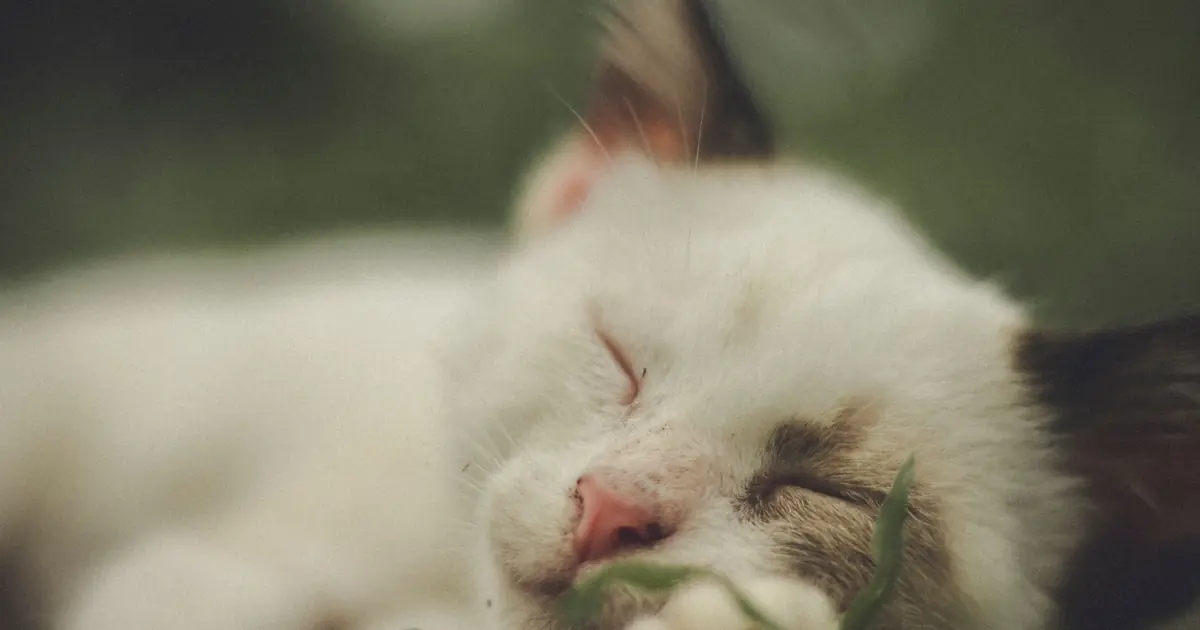
You’re half asleep on the couch when your cat’s back paw kicks like she’s chasing something invisible across the ceiling. Her whiskers twitch. She lets out a tiny, muffled chirp. For a second, you wonder: is she sleepwalking?
It’s a fair question, and a fun one. Cats spend 12 to 16 hours a day asleep, so you’ve had plenty of chances to watch this little show. The good news is that what you’re seeing almost always has a simple explanation, and it isn’t your cat wandering around half-conscious. Let’s get into what’s actually happening in that fuzzy little head.
- True sleepwalking, where a cat gets up and moves around a room while still asleep, is extremely rare and usually linked to a brain abnormality.
- Most “sleepwalking” cats are simply dreaming during REM sleep, which shows up as twitching paws, flicking whiskers, tail flicks, and soft vocal sounds.
- A brainstem mechanism called REM atonia normally keeps a sleeping cat’s muscles relaxed so she can’t act out her dreams.
- Gentle dream-twitching wakes a cat easily and she acts completely normal afterward, unlike a seizure.
- Stiff, rigid, or violently paddling movements, unresponsiveness, or confusion after an episode are red flags that need a vet visit, not a wait-and-see approach.
Can Cats Actually Sleepwalk?
Not really, no. True sleepwalking, medically called somnambulism, means getting up and moving through a physical space while the brain is still mostly asleep. In cats, this is extremely rare and, when it does happen, it’s usually a sign of an underlying neurological problem rather than a normal part of feline sleep.
What people usually mean when they ask “can cats sleepwalk” is something much more common and much less worrying: dreaming. Cats twitch, paddle their feet, flick their tails, and even make small sounds while they’re deeply asleep. It looks dramatic. It’s also completely normal.
What Happens During a Cat’s Sleep Cycle?
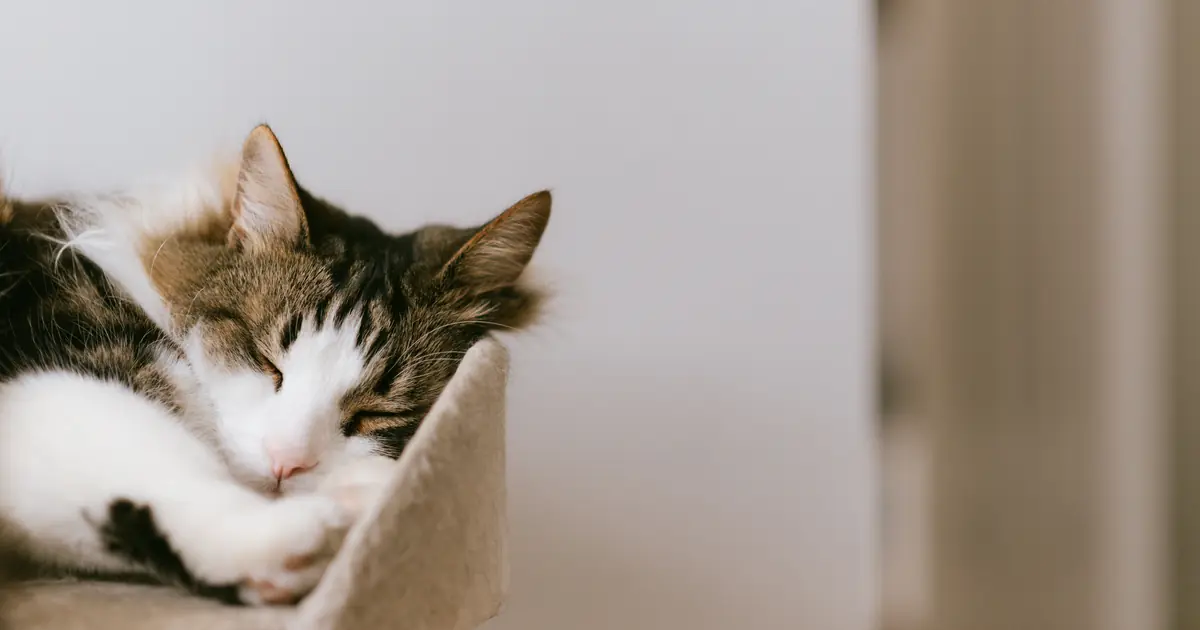
A cat’s sleep moves through two main stages: light sleep and REM sleep, and she cycles between them many times a day. Understanding this cycle explains almost everything cat parents notice about their sleeping cats.
Light sleep is the doze you see most often, ears swiveling toward every sound, ready to snap awake in an instant. After 15 to 30 minutes of that, a cat can drop into REM sleep (rapid eye movement sleep), the deeper stage where dreaming happens. You’ll notice the difference: breathing gets more irregular, eyes move behind closed lids, and that’s when the twitching show usually starts. If you’ve ever wondered how cats fall asleep so fast in the first place, it comes down to this same relaxed, always-ready sleep system built for a predator that also gets hunted.
Why Doesn’t a Dreaming Cat Get Up and Move Around?
Cats don’t act out their dreams because a part of the brainstem called the pons temporarily switches off voluntary muscle movement during REM sleep. Vets and sleep scientists call this REM atonia, and it’s the reason a cat can dream about chasing a mouse while her body stays put on the sofa.
We actually know this thanks to some famous, decades-old research. In the 1960s, French neurophysiologist Michel Jouvet studied cats with small lesions in this exact brainstem region and found that, without a working “off switch,” the cats would stand up, arch their backs, stalk, and pounce, all while still asleep and dreaming. Their eyes even tracked invisible prey. That research helped map out how REM atonia works in mammals generally, cats included (NCBI’s overview of sleep-stage physiology covers how REM sleep and muscle atonia work together in more detail).
In other words, the twitching you see is the leak. The stillness is the system working exactly as it should.
Is It Sleepwalking, or Is Your Cat Just Dreaming?
In almost every case, it’s dreaming, not sleepwalking. A dreaming cat stays lying down, and only small, contained parts of her body move: paws paddling gently, whiskers twitching, a tail flick, ears rotating, eyelids fluttering. She might let out a soft meow, chirp, or even a little growl.
What she’s doing while she sleeps mirrors what she’d do awake, just muted. A cat that chases a lot during the day tends to “chase” in her sleep too. For more on the paw-and-whisker version of this, why cats twitch in their sleep covers it in detail. None of it means she’s up and walking, and none of it needs your intervention. It’s kind of adorable, honestly.
Dream Twitches vs. Seizures: What’s the Real Difference?
Gentle dream-twitching and a seizure can look similar for a split second, but they behave very differently once you watch closely. A dreaming cat twitches softly, wakes up easily, and acts completely normal right after. A seizing cat goes rigid or paddles hard, doesn’t respond to you, and often seems dazed or wobbly once it’s over.
| Sign | Dream Twitching | Seizure |
|---|---|---|
| Movement | Gentle paw paddling, whisker or tail twitches, small sounds | Stiff, rigid limbs or violent, uncontrolled paddling; sometimes the whole body convulses |
| Responsiveness | Wakes easily to a soft voice or touch | Unresponsive to voice, touch, or sound during the episode |
| After the episode | Acts totally normal right away | Often confused, wobbly, drooling, or disoriented (sometimes for several minutes) |
| What to do | Nothing, just let her sleep | Keep her safe from falls, don’t put your hands near her mouth, time the episode, and call your vet |
A single, brief seizure isn’t necessarily a full-blown emergency, but any cat having one should still be seen by a vet, especially if it’s a first episode, lasts more than a couple of minutes, or happens in a cluster. Seizures are one of the primary signs of a nervous system problem in cats, alongside things like tremors, lack of coordination, and behavior changes, and causes can range from epilepsy to head injury to a metabolic problem like low blood sugar (the Merck Veterinary Manual’s overview of nervous system disorders in cats lists seizures as a hallmark warning sign). Despite how dramatic a seizure looks, a cat isn’t in pain during one, though she’ll often feel confused and even panicked once it’s over, and that disoriented, out-of-it look right after is exactly what separates a seizure from a harmless dream (VCA Animal Hospitals’ guide to seizures and epilepsy in cats covers what a seizure looks like and how to keep your cat safe during one).
What Other Behaviors Get Mistaken for Cat Sleepwalking?
A handful of normal or age-related behaviors get lumped in with “sleepwalking” even though they’re something else entirely. Knowing which is which saves you a lot of 2am worrying.
- Myoclonic twitches: The little full-body jerk a cat makes right as she’s drifting off, similar to the “falling” jolt people get. It’s a normal transition between wake and sleep, not sleepwalking.
- Senior cat night wandering: Older cats, especially those over 11, can develop feline cognitive dysfunction, a condition similar to dementia in people. It can cause loud nighttime crying, disorientation, and wandering while fully awake, which is a different problem from anything happening during sleep. If your cat’s night behavior has changed and you’re wondering when a cat is considered a senior, that’s a good next stop, since age matters here.
- Circling or pacing while awake: Sometimes confused for sleep-related movement, but this happens with the cat fully conscious. If you’re dealing with this one, why your cat is walking in circles covers the real causes, from ear infections to neurological issues.
- Stress-driven restlessness: An anxious cat may sleep lightly and startle awake often, which can look like disturbed, sleepwalk-y sleep. Checking for signs of stress in cats is worth doing if the twitching comes with hiding, appetite changes, or extra grooming.
Do Kittens Twitch More Than Adult Cats?
Yes, kittens twitch noticeably more than adult cats because they spend a much bigger share of their sleep in REM. Young kittens are still developing their nervous systems, and that extra REM time means more paw paddles, more whisker flutters, and more tiny sleep-squeaks. It looks chaotic in a kitten pile. It’s just growing up, dream by dream.
When Should You Take Your Cat to the Vet?
Call your vet if your cat’s episode involves stiff or rigid limbs, violent paddling, total unresponsiveness, drooling, loss of bladder or bowel control, or confusion that lingers after she wakes up. Those signs point toward a seizure or another neurological issue, not a dream.
You should also get a senior cat checked out if she’s wandering the house at night, crying loudly, or seeming lost, since that pattern often points to feline cognitive dysfunction rather than anything sleep-related. And if your cat is truly getting up, walking with an odd gait, or bumping into things while apparently still asleep (real sleepwalking), that’s rare enough that it deserves a proper neurological workup, not a shrug.
This article is for general education and isn’t a substitute for veterinary care. Gentle twitching that resolves the moment your cat wakes up is normal and nothing to lose sleep over yourself. But stiff, violent movement, unresponsiveness, or confusion afterward can mean a seizure, and that always calls for a licensed veterinarian, not a guess.
Frequently Asked Questions
Q: Can cats sleepwalk like humans do?
True sleepwalking is extremely rare in cats. Almost all the twitching, paddling, and small sounds you see during sleep are signs of dreaming during REM sleep, not actual sleepwalking.
Q: Why does my cat twitch her paws and whiskers while sleeping?
She’s dreaming. During REM sleep, a cat’s brain is highly active and small muscle movements leak through even though a brainstem mechanism keeps most of her body still.
Q: Is it normal for a cat to meow or chirp in her sleep?
Yes, soft vocal sounds during REM sleep are normal. The vocal cords aren’t fully shut down the way the limbs are, so a dreaming cat can chirp, meow, or growl quietly without waking up.
Q: How can I tell if my cat is having a seizure while sleeping?
Look at the movement and what happens after. A seizure involves stiff or violently paddling limbs, no response to your voice or touch, and confusion or wobbliness once it ends, unlike a dream, which resolves the moment she wakes up.
Q: Do kittens twitch more than adult cats while sleeping?
Yes. Kittens spend a much larger share of their total sleep time in REM sleep than adult cats do, which means more visible paw paddling, whisker twitching, and tiny sleep sounds.
Q: Why does my senior cat wander and cry at night?
This is usually feline cognitive dysfunction, an age-related condition similar to dementia, not sleepwalking. It happens while the cat is awake and often needs a vet visit to manage.
Q: Should I wake up a cat who is twitching in her sleep?
You don’t need to. Dream-twitching is harmless and a cat in this state wakes up easily on her own if something startles her. A gentle word is fine if you’re worried, but there’s no need to interrupt her.
Q: What is REM atonia and why does it matter for cats?
REM atonia is a brainstem mechanism, centered in the pons, that temporarily relaxes a cat’s voluntary muscles during dreaming sleep so she can’t physically act out what she’s dreaming. Research on cats with damage to this brain region, dating back to Michel Jouvet’s studies in the 1960s, is part of how scientists first identified this mechanism.

Hello and welcome to The Ideal Cat!
We are some passionate cat owners from different professions. We love our cats and have a lot of experience in how to care for our pets. We are incredibly excited to share our knowledge, experience, and research with you. So you can take good care of your loving cat. We will answer most of the common questions about owning cats, taking care of them, etc. If you have any question contact with us. Thanks for visiting! Enjoy the content.
