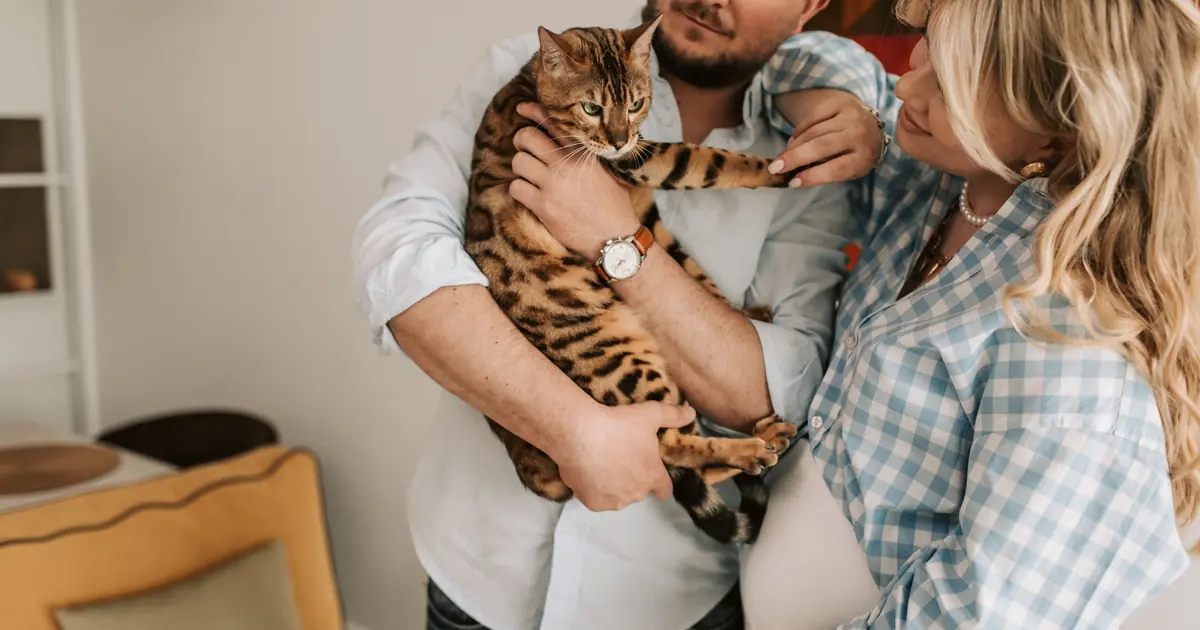
You just found out you’re pregnant. Congratulations. And then someone (a coworker, your aunt, a random comment online) says the words that make your stomach drop: “You’ll have to get rid of the cat.”
Take a breath. You almost certainly do not need to rehome your cat.
The worry is real, but it’s also widely misunderstood. The actual risk is a parasite called toxoplasmosis, and once you know how it spreads (and how it doesn’t), the whole thing gets a lot less scary. Here’s the honest, no-panic version.
This article is educational and isn’t medical advice. Toxoplasmosis affects pregnancy, so talk to your OB or doctor about your specific situation, and your vet about your cat.
- The real concern with cat poop and pregnancy is toxoplasmosis, an infection caused by the parasite Toxoplasma gondii.
- You cannot get toxoplasmosis from petting, cuddling, or living with your cat. It spreads through swallowing the parasite from feces, soil, or undercooked meat.
- About half of Toxoplasma infections in the U.S. come from food, not cats. Raw meat and gardening are bigger risks than the litter box.
- Oocysts (the parasite’s eggs) in cat poop aren’t infectious for the first 1 to 5 days, so scooping daily removes them before they can make you sick.
- Health authorities including the CDC say pregnant people do not need to give up their cats. Simple litter-box precautions handle the risk.
What is toxoplasmosis, and why does cat poop matter?
Toxoplasmosis is an infection caused by a microscopic parasite called Toxoplasma gondii. Cats matter because they are the only animals that shed the parasite’s egg-like form, called oocysts, in their poop. A cat usually only sheds these oocysts once in its life, for about 1 to 2 weeks, shortly after it first gets infected (typically from hunting and eating an infected rodent or bird).
Here’s the part that changes everything: those oocysts are not infectious the moment they land in the litter box. They need time in the open air to “ripen,” a process called sporulation. That takes at least 24 hours and usually 1 to 5 days. Scoop before then, and the parasite never gets its chance.
For most healthy adults, catching toxoplasmosis is no big deal. Your immune system handles it, often without a single symptom. The concern is specifically a first-time infection during pregnancy, because the parasite can cross the placenta and affect the baby.
Can you get toxoplasmosis from petting your cat?
No. You cannot get toxoplasmosis from petting, holding, cuddling, or sharing your home with your cat. The parasite doesn’t live in your cat’s fur or saliva in a way that infects you through touch. This is the single most important myth to let go of.
Toxoplasmosis only spreads when you accidentally swallow the parasite. That happens by touching contaminated cat feces or soil and then touching your mouth, or by eating undercooked meat or unwashed produce. Your cat sitting on your lap is not a route of infection. Neither is a scratch, a lick, or a shared couch.
How do people actually get toxoplasmosis?
Most people get toxoplasmosis from food, not from their cat. In the U.S., roughly half of infections come from eating undercooked or raw meat and unwashed fruits and vegetables. Gardening in contaminated soil is another common route. The litter box is real but ranks lower than people expect.
| Ways you CAN get toxoplasmosis | Ways you CANNOT get it |
|---|---|
| Eating undercooked or raw meat (pork, lamb, venison, beef) | Petting, holding, or cuddling your cat |
| Eating unwashed fruits and vegetables | Getting scratched or licked by your cat |
| Gardening or touching soil, then touching your mouth | Being around your cat or sharing a home |
| Handling infectious cat feces (poop left 1 to 5+ days), then touching your mouth | Your cat’s fur or saliva |
| Drinking unpasteurized (raw) milk or untreated water | Scooping fresh poop right away with gloves and handwashing |
See the pattern? Toxoplasmosis is a “hand to mouth” infection. That’s why food handling and hand washing matter as much as, or more than, the litter box.
How risky is it really, and do I need to rehome my cat?
You do not need to rehome your cat. Health authorities including the CDC, ACOG, and the Cornell Feline Health Center all agree that pregnant people can safely keep their cats with basic precautions. Giving up a beloved pet does nothing to lower a risk that comes mostly from food and soil anyway.
The risk is real but small and very manageable. A few things stack in your favor. Many people were exposed to Toxoplasma before pregnancy and already have some immunity. Cats usually shed oocysts only once, briefly, so most house cats aren’t shedding at all right now. And an indoor cat that eats only commercial cat food has a very low chance of ever carrying the parasite, because it never hunts infected prey.
When a first-time infection does happen during pregnancy, it can be serious for the baby, which is why the precautions matter. Between one-third and one-half of babies born to mothers newly infected during pregnancy become infected too, and effects can include vision or hearing problems and other complications. The goal isn’t panic. It’s a few easy habits that make the risk tiny.
If you’re mapping out your cat’s care during pregnancy, it also helps to know how long a cat pregnancy lasts and how to tell if your cat is pregnant, especially in a household where both of you might be expecting.
Safe litter box practices during pregnancy
The safest move is simple: have someone else scoop the litter box for the whole pregnancy. If a partner, roommate, or family member can take it over, that’s the easiest way to remove the risk entirely. If you have to do it yourself, a few rules keep you protected.
- Let someone else scoop if you can. This is the top recommendation from the CDC and ACOG. No litter contact, no risk.
- Scoop daily, every single day. Oocysts take 1 to 5 days to become infectious. Removing poop within 24 hours means it can’t infect you, even if the parasite is present.
- Wear disposable gloves. If you must scoop, glove up every time. A barrier between the litter and your skin is a big help.
- Wash your hands thoroughly afterward. Soap and warm water, right away, even if you wore gloves. This is your last line of defense.
- Keep the box clean. Ask someone to periodically empty and disinfect it with near-boiling water. Cool water won’t kill oocysts.
A clean, well-managed setup helps in general, not just for toxoplasmosis. If you’re not sure you have enough boxes for a smooth-running home, here’s the rule on how many litter boxes per cat you actually need. And if daily scooping ever reveals your cat is going outside the litter box, that’s worth sorting out early too.
How to lower your cat’s risk of carrying the parasite
You can shrink the risk further by keeping your cat from ever getting infected in the first place. A cat only sheds Toxoplasma after it eats infected prey or raw meat, so cutting off that source keeps your cat (and you) in the clear.
- Keep your cat indoors. An indoor cat can’t hunt infected rodents or birds, which is the main way cats catch Toxoplasma.
- Feed commercial or well-cooked food only. Skip raw meat diets and raw scraps during pregnancy. Canned and dry commercial cat food is safe.
- Don’t adopt or handle stray or sick cats while pregnant, since their exposure and shedding status are unknown.
- Cover outdoor sandboxes and wear gloves when gardening, because outdoor cats may use soil and sandboxes as a toilet.
None of this means loving your cat any less. It just means being a little more thoughtful about what goes in the food bowl and where your cat roams for these nine months.
Symptoms, testing, and when to call your doctor
Most people with toxoplasmosis have no symptoms at all. When symptoms do show up, they’re usually mild and flu-like: swollen lymph nodes, muscle aches, tiredness, and a low fever that can last a few weeks. Because it’s so easy to miss, you can’t rely on how you feel to know if you’ve been infected.
If you’re worried about your exposure, talk to your OB. A simple blood test can check for Toxoplasma antibodies and often tell whether an infection is old (which usually means immunity) or recent. Routine screening isn’t standard for everyone in the U.S., so this is a conversation to have based on your history and any symptoms.
Call your doctor if you’re pregnant and develop persistent swollen glands, flu-like symptoms that won’t quit, or if you know you handled infectious cat feces, raw meat, or soil without protection. Toxoplasmosis that’s caught during pregnancy can be treated with medication that lowers the risk to the baby, so speaking up early genuinely helps.
For the deepest reading straight from the experts, the CDC’s toxoplasmosis guidance, ACOG’s advice on keeping a cat during pregnancy, and the Cornell Feline Health Center all cover this in plain language and agree on the bottom line: keep your cat, take a few precautions, and don’t panic.
Cat poop and pregnancy FAQ
Q: Can I get toxoplasmosis just from living with my cat?
No. You can’t get toxoplasmosis from petting, cuddling, or sharing a home with your cat. The parasite only infects you if you swallow it, usually from handling infectious feces or soil, or from eating undercooked meat. Simply living with a cat is not a route of infection.
Q: Do I have to rehome my cat while pregnant?
No. The CDC, ACOG, and feline health experts all agree pregnant people can keep their cats. Because most infections come from food and soil, not from living with a cat, rehoming your pet doesn’t meaningfully lower your risk. Basic litter-box precautions handle it instead.
Q: How often should the litter box be scooped during pregnancy?
Scoop at least once a day, every day. Toxoplasma oocysts in cat poop take 1 to 5 days to become infectious, so removing waste within 24 hours means it can’t infect you even if the parasite is present. Ideally, have someone else do the scooping altogether.
Q: Is an indoor cat safer during pregnancy?
Yes. An indoor cat that eats only commercial cat food has a very low chance of carrying Toxoplasma, because it never hunts infected prey. Cats mainly catch the parasite from eating infected rodents, birds, or raw meat, so keeping your cat indoors and off raw diets lowers the risk.
Q: What are the symptoms of toxoplasmosis in people?
Most people have no symptoms at all. When symptoms appear, they’re usually mild and flu-like: swollen lymph nodes, muscle aches, fatigue, and a low fever lasting a few weeks. Because it’s easy to miss, a blood test through your doctor is the reliable way to check for infection.
Q: Can I still get toxoplasmosis if my cat never goes outside?
It’s very unlikely from your cat, but still possible from other sources. An indoor cat rarely carries the parasite. However, you can still catch toxoplasmosis from undercooked meat, unwashed produce, or gardening in soil, which is why food safety and hand washing matter as much as litter-box care.
Q: What happens if I get toxoplasmosis while pregnant?
A first-time infection during pregnancy can pass to the baby and, in some cases, cause vision, hearing, or developmental problems. Between one-third and one-half of babies born to newly infected mothers become infected. Medication can lower this risk, so contact your OB right away if you’re concerned.
Q: Should I get tested for toxoplasmosis before or during pregnancy?
Ask your OB. A blood test can show whether you’ve had toxoplasmosis before (which usually means some immunity) or recently. Routine screening isn’t standard for everyone in the U.S., so testing is decided based on your history, symptoms, and known exposures. Your doctor can guide you.
Bottom line: cat poop and pregnancy get lumped together with a lot of fear, but the truth is reassuring. The real risk is toxoplasmosis, you can’t catch it from loving your cat, and a few small habits (someone else scoops, scoop daily, gloves, wash hands, keep the cat indoors on cooked food) make it a non-issue. Keep your cat. Keep your peace of mind. And check in with your OB and vet if anything feels uncertain.

Hello and welcome to The Ideal Cat!
We are some passionate cat owners from different professions. We love our cats and have a lot of experience in how to care for our pets. We are incredibly excited to share our knowledge, experience, and research with you. So you can take good care of your loving cat. We will answer most of the common questions about owning cats, taking care of them, etc. If you have any question contact with us. Thanks for visiting! Enjoy the content.
