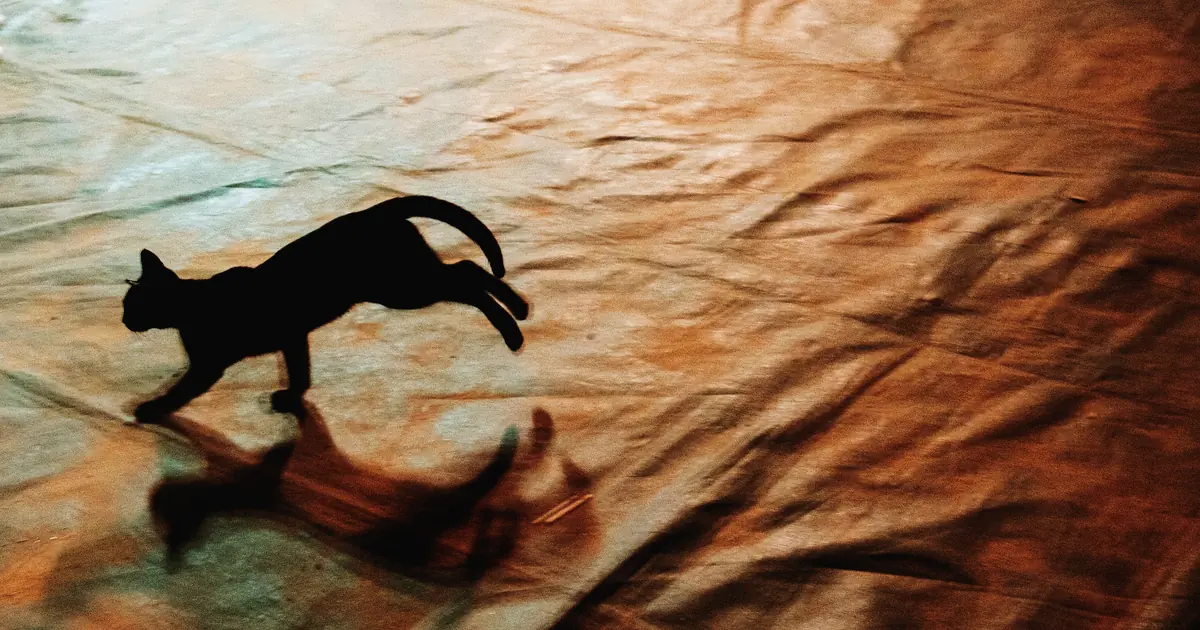
You start jogging after your cat down the hallway, half expecting a joyful game of tag. Instead, your cat flattens against the floor, bolts under the bed, and refuses to come out for twenty minutes. Sound familiar?
It’s a common mix-up. Cats look like they’re having the time of their lives when they’re darting around the living room, so it’s easy to assume chasing them is fun for everyone. The truth is a little more nuanced, and knowing the difference can save your cat a lot of stress, and save you a few scratches.
- Cats are both predator and prey by nature, so being chased can flip on a real fear response, not just excitement.
- In healthy cat play, the cat controls the action: it runs, hides, and then pounces on its own terms.
- Signs a cat is enjoying a chase include a loose, bouncy body and coming back for more.
- Signs a cat is scared include flattened ears, a puffed tail, hissing, and hiding after the game ends.
- Kids repeatedly chasing a cat can teach that cat to fear people, which can lead to defensive scratching or bites.
Do Cats Like Being Chased?
No, most cats do not enjoy being chased by a person. Cats are predators, but they’re also small enough to be prey for bigger animals, and that dual identity shapes how they react to being pursued. When something bigger runs at a cat, its brain tends to read that as danger first and fun second, if at all.
That doesn’t mean cats hate movement or excitement. A cat that looks like it’s “enjoying the chase” while playing with a toy on a string is usually enjoying something very different: the thrill of stalking and pouncing on its own schedule. The distinction matters more than it might seem.
Why Does Being Chased Feel Threatening to a Cat?
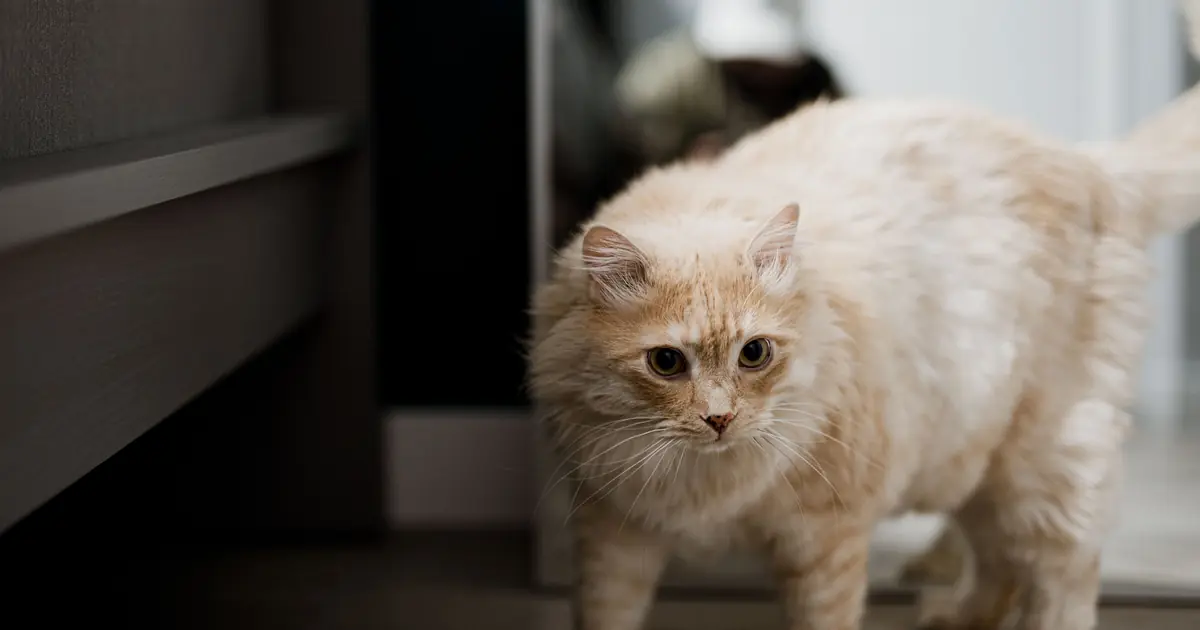
Being chased feels threatening because it removes a cat’s sense of control over its own safety. Cats survive in the wild by staying alert to bigger predators, and a fast-moving human or dog closing in from behind can trigger the same flight response a rabbit or squirrel would have.
According to International Cat Care, cats rely heavily on choice and predictability to feel safe, and sudden, uncontrolled pursuit removes both. A cat that’s cornered or chased into a tight space can also feel trapped, which raises the odds of a defensive swat or bite, not because the cat is being mean, but because it feels it has no other option.
What’s the Difference Between Chasing a Cat and Play?
The difference comes down to who’s in control. In real cat play, the cat decides when to run, when to freeze, when to hide, and when to pounce. A person or another animal chasing a cat takes all of that control away, which turns a fun game into a stressful chase.
Watch a cat play with a wand toy or interactive cat toy and you’ll notice a pattern: stalk, wiggle, pause, pounce, repeat. That wiggle before the leap is a real behavior, not just cute quirkiness. If you’re curious about it, this piece on why cats wiggle before pouncing breaks down exactly what’s happening in that split second. The cat is rehearsing a hunt it’s fully in charge of, and that’s the fun part.
Do Some Cats Actually Like Chase Games?
Yes, some cats genuinely enjoy a version of chase, especially confident, high-energy cats who trust the person or cat they’re playing with. This usually looks like the cat initiating the game, running a short distance, then turning around to swat or pounce, then doing it again.
This is common between bonded cats and littermates, and it can happen between a cat and a trusted human too, as long as the human follows the cat’s lead rather than the other way around. The key word is confident. A shy, anxious, or newly adopted cat is far less likely to see a chase as a game, even from someone it likes.
How Can You Tell if a Cat Is Having Fun or Feeling Scared?
You can tell by reading the cat’s body language during and after the chase. A relaxed, playful cat has a loose body, ears forward or lightly to the side, and often comes back for another round. A scared cat shows flattened ears, a puffed or thrashing tail, dilated pupils, and usually hides once it’s over instead of returning to play.
The ASPCA notes that fearful cats often freeze, flee, or hiss as a first line of defense before ever resorting to a scratch or bite. If you want a full rundown of what a stressed cat looks like beyond the chase scenario, signs of stress in cats covers the broader picture.
| Chase Scenario | Does the Cat Like It? | Signs to Watch For |
|---|---|---|
| A person chases the cat on foot | Usually no | Flattened ears, bolting, hiding, hissing |
| Cat chases a wand toy or ball | Usually yes | Loose body, pouncing, wiggling hindquarters, repeated play |
| Two bonded cats chase each other | Often yes | Taking turns, short bursts, no yowling or biting hard |
| Cat gets cornered mid-chase | No | Crouching low, puffed tail, growling, swatting |
Why Is Kids Chasing Cats a Problem?
Kids chasing cats is a problem because it teaches the cat to associate people with unpredictable, scary pursuit instead of safety. Cats that are repeatedly chased by children often start avoiding that child entirely, or they learn to swat first as a defense before things escalate.
It’s worth saying plainly: this isn’t about blaming kids, who are usually just excited and don’t know better. It’s on the adults in the house to supervise and step in. A quick redirect toward a toy the child can drag along the floor gives the cat something fun to chase (or be chased playfully by) without the fear factor.
How Do You Play Chase With a Cat the Right Way?
The right way to play chase with a cat is to let the cat do the chasing, not the person. Use a wand toy, a piece of string dragged along the floor, or even your hand moving under a blanket, and let your cat stalk and pounce on it while you stay mostly still.
- Pick a toy the cat can chase, like a feather wand or a small ball, instead of chasing the cat yourself.
- Move the toy in short, erratic bursts, mimicking how real prey moves.
- Let the cat catch the toy every so often. A hunt that never succeeds gets frustrating fast.
- Give your cat a clear escape route at all times. Never play in a way that boxes it into a corner.
- Stop right away if you see flattened ears, hissing, or a puffed tail, and let your cat come back on its own terms.
If your cat still seems jumpy or overstimulated after regular play, a look at general zoomies and sudden bursts of energy can help you tell normal excitement apart from stress.
Do Cats Chase Each Other for Fun?
Yes, cats that are friendly or littermates often chase each other purely for fun, and it’s a normal part of feline social play. You’ll typically see them swap roles, so the chaser becomes the chased a minute later, with pauses in between and no lasting tension afterward.
The line between play and an actual fight can blur fast, though. Real aggression usually includes loud yowling, fur flying, or one cat trying to flee and not being allowed to. The VCA Hospitals guide on feline aggression is a solid resource if you’re not sure whether your two cats are playing or genuinely fighting. Cats that hiss mid-play isn’t automatically a red flag either. If that sounds familiar, do cats hiss when they play walks through what’s normal and what isn’t.
A quick, important note: never corner or chase a cat that’s already frightened. If a cat hides, hisses, or flees from normal interaction, stop and give it space rather than pushing further. This article is for general education, not a substitute for veterinary advice. If your cat suddenly becomes fearful of everyday interaction it used to tolerate, or seems anxious for no clear reason, it’s worth a vet check to rule out pain or illness, since cats often hide discomfort behind behavior changes. For calming techniques in the moment, how to calm a scared cat has practical, gentle steps.
Frequently Asked Questions
Q: Why does my cat run away when I try to play chase?
Your cat likely reads being chased as a genuine threat rather than a game, since cats are wired to flee from anything bigger closing in fast. Try switching to a wand toy so your cat can be the one doing the chasing instead.
Q: Is it bad to chase my cat around the house?
Yes, regularly chasing your cat can teach it to associate you with stress instead of safety, and it may lead to hiding or defensive scratching. It’s better to let your cat chase a toy while you stay still or move it for them.
Q: Why does my cat run away then come back to play?
A cat running a short distance and then turning back to pounce or swat is usually a sign of confident, controlled play, not fear. This back-and-forth pattern is common between bonded cats and trusted humans, as long as the cat initiated it.
Q: How do I know if my cat is scared during a chase game?
Watch for flattened ears, a puffed or thrashing tail, dilated pupils, hissing, or hiding once the game stops. A cat enjoying itself usually has a loose body and comes back for more instead of retreating.
Q: Can chasing a cat cause it to bite or scratch?
Yes, a cat that feels cornered or unable to escape during a chase may swat or bite as a defensive reaction, not out of aggression. Always leave your cat a clear escape route during any kind of active play.
Q: Do kittens like being chased more than adult cats?
Kittens are generally more tolerant of rough, fast-moving play than adult cats, partly because they’re still learning social boundaries through play with littermates. Even so, a kitten that hides or hisses should be left alone rather than pursued further.
Q: What should I do instead of chasing my cat for play?
Use a wand toy, a dragged string, or a laser pointer paired with a real toy to catch at the end, so your cat gets to stalk and pounce under its own control. This taps into the same hunting instinct without the fear that comes from being pursued.
Q: Why does my cat chase my other cat around the house?
Cats that are bonded or littermates often chase each other as a normal form of play, usually swapping who’s chasing and who’s being chased. If it includes yowling, fur flying, or one cat clearly trying to escape and being blocked, that’s a sign it’s turned into real conflict, not play.

Hello and welcome to The Ideal Cat!
We are some passionate cat owners from different professions. We love our cats and have a lot of experience in how to care for our pets. We are incredibly excited to share our knowledge, experience, and research with you. So you can take good care of your loving cat. We will answer most of the common questions about owning cats, taking care of them, etc. If you have any question contact with us. Thanks for visiting! Enjoy the content.
