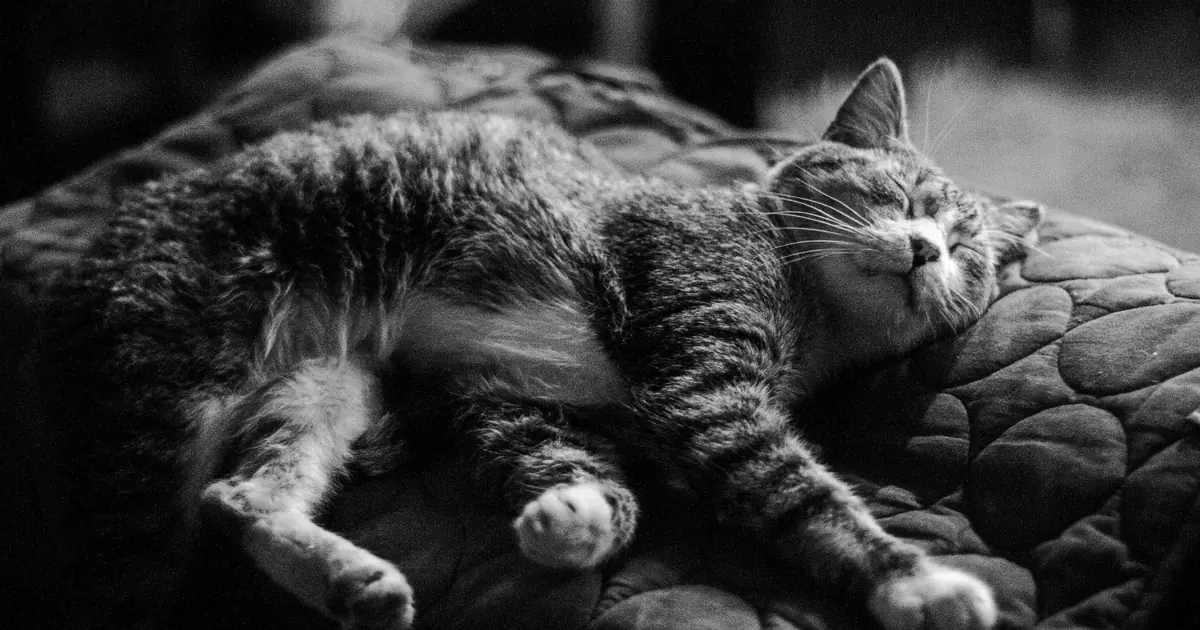
If your young female cat has suddenly started yowling, rolling on the floor, and rubbing on everything in sight, you are probably wondering one thing: how often does a cat go into heat, and when will it stop? Here is the short version. An unspayed female cat goes into heat every 2 to 3 weeks during her breeding season, and each heat lasts about a week. Let’s walk through the whole cycle so you know exactly what to expect.
- An unspayed female cat goes into heat roughly every 2 to 3 weeks during her breeding season.
- Each individual heat (estrus) lasts about 5 to 7 days on average, with a range of 1 to 21 days.
- Cats are seasonally polyestrous, meaning they cycle repeatedly during longer-daylight months, usually spring through fall in the Northern Hemisphere.
- A female cat can have her first heat as young as 4 months old, though around 6 months is typical.
- Cats do not go through menopause, so an unspayed female keeps cycling for life until she mates or is spayed.
A quick, friendly note before we dive in: this article is educational, not a substitute for veterinary advice. If your cat seems genuinely unwell rather than just hormonal, check in with your vet.
How often does a cat go into heat?
A cat goes into heat about every 2 to 3 weeks during her active breeding season. That is the part most people mean when they ask how often cats cycle. If a female cat does not mate, she does not get a long break. She simply rests for a short stretch and then comes right back into heat, over and over, for months.
Here is the thing that surprises a lot of new cat parents. The frequency is not random. A full feline estrous cycle averages around 3 weeks, and the “in heat” portion is only one slice of that. The rest is a quiet gap before the next heat begins. Veterinary sources like VCA Animal Hospitals describe these cycles repeating at roughly 14 to 21 day intervals during the season.
How long does each heat last?
Each heat lasts about 5 to 7 days on average, though the range runs from 1 to 21 days. So when your cat is actively yowling and presenting, that intense window usually wraps up within a week. If she is not bred during that window, she goes quiet for a bit and then the next heat arrives.
Some cats are dramatic for the full week. Others have a milder, shorter heat that is easy to miss. Both are normal. The length of any single heat can shift from cycle to cycle in the same cat, which is part of why the pattern can feel unpredictable at first.
What are the stages of a cat’s heat cycle?
A cat’s heat cycle has several stages, and only one of them is the loud “in heat” phase you notice. The full feline estrous cycle moves through proestrus, estrus, interestrus, and anestrus. Knowing the stages helps explain why heats come back so quickly.
| Stage | Typical Length | What Happens |
|---|---|---|
| Proestrus | Less than 1 to 2 days | Early hormonal buildup. Often missed because signs are subtle and brief. |
| Estrus (“in heat”) | About 5 to 7 days (range 1 to 21) | The loud, affectionate, mating-ready phase. This is what most people call “heat.” |
| Interestrus | About 1 to 2 weeks | The quiet gap between heats when no mating occurs. The cat acts normal. |
| Anestrus | Weeks to months | A seasonal resting phase with no cycling, usually in the short-daylight months. |
One stage only appears if your cat mates. Cats are induced ovulators, which means a female cat usually releases eggs only after mating. If she mates but does not get pregnant, she can enter a phase called diestrus, a longer hormonal pause of several weeks. No mating means no ovulation, so she skips straight back toward the next heat. That mechanic is the real reason an unbred queen cycles again and again.
Why are cats called “seasonally polyestrous”?
Cats are seasonally polyestrous, which means they have many heat cycles packed into a breeding season tied to daylight. “Poly” means many and “estrous” refers to heat cycles, so the term simply means many heats per season. Cats respond to longer days, so heats ramp up as daylight increases.
In the Northern Hemisphere, the feline breeding season generally runs from late winter into fall, often around February through October, and tends to peak in spring. Cats are sometimes called long-day breeders for this reason. As the days shorten in late fall and winter, many outdoor and indoor-outdoor cats slip into anestrus and stop cycling for a while.
How often do indoor cats go into heat?
Indoor cats often go into heat year-round, not just in spring and summer. The reason is light. Constant artificial lighting indoors can mimic long summer days, which tricks a female cat’s body into staying in breeding mode through the calendar.
So if you have a strictly indoor unspayed female, do not be surprised if she cycles every few weeks even in December. This is one of the most common things cat parents miss. An indoor cat in a brightly lit home may never get the natural winter break that an outdoor cat gets.
At what age does a cat first go into heat?
A female cat usually has her first heat around 6 months of age, but it can happen as early as 4 months. Some cats, often longer-haired breeds, may not cycle until closer to 12 months. The trigger is a combination of age, body weight, breed, and the time of year she reaches puberty.
That early timing catches a lot of people off guard. A kitten can absolutely get pregnant during her very first heat. If a young female reaches breeding age during peak season, she may go into heat sooner than the textbook 6-month mark. This is why many vets recommend planning a spay before the first heat arrives.
How many times a year does a cat go into heat?
An unspayed female cat can go into heat many times a year, often more than 5 cycles and sometimes a dozen or more during a long season. Because heats repeat every 2 to 3 weeks across a breeding season that can stretch several months, the cycles add up fast.
Do a little math and it clicks. A breeding season lasting roughly February to October is about 8 months. At a cycle every 2 to 3 weeks, that is easily 10 or more heats in a single year for a cat who never mates. Indoor cats cycling year-round can rack up even more. All those repeated heats are also why an unspayed cat can have multiple litters in one year.
What are the signs your cat is in heat?
The signs a cat is in heat are mostly loud, affectionate, and attention-seeking behaviors rather than physical symptoms. Most cats do not bleed during heat, which is one of the biggest differences from dogs. If you notice these signs returning every couple of weeks, that rhythm is your clue she is cycling.
- Loud, persistent yowling or “calling,” often worse at night
- Extra affection, rubbing against you, furniture, and floors
- Rolling around on the floor and acting restless
- Raising her hindquarters and treading with her back paws when touched near the base of the tail
- Trying to escape outdoors, even if she normally never does
- Spraying small amounts of urine to mark, and grooming the genital area more
- A slight dip in appetite during the heat
Here is a reassuring detail. A cat in heat is uncomfortable and hormonal, but heat itself is not painful or dangerous. The yowling can sound distressing, yet she is not sick. That said, if you see actual vaginal bleeding, discharge, a swollen belly, lethargy, vomiting, or refusal to eat, those are not normal heat signs and deserve a vet visit.
Does a cat’s heat cycle ever stop on its own?
No, a cat’s heat cycle does not permanently stop on its own, because cats do not go through menopause. An unspayed female keeps cycling for life, slowing somewhat in old age but never fully retiring. The only reliable ways the cycling ends are pregnancy, which pauses it, or spaying, which ends it for good.
Spaying, the surgical removal of the ovaries and usually the uterus, stops heat cycles entirely. Many veterinarians recommend spaying around 5 to 6 months of age, before or just as the first heat would begin. Beyond ending the yowling, spaying also greatly lowers the risk of certain reproductive cancers and a serious uterine infection called pyometra. Talk with your vet about the best timing for your individual cat.
Cat Heat Cycle at a Glance
Here is the quick reference for how often a cat goes into heat and what each number means.
| Question | Answer |
|---|---|
| How often does a cat go into heat? | About every 2 to 3 weeks during breeding season |
| How long does each heat last? | About 5 to 7 days (range 1 to 21 days) |
| First heat age | Around 6 months; as early as 4 months |
| Breeding season (Northern Hemisphere) | Roughly February to October, peaking in spring |
| Indoor cats | May cycle year-round due to artificial light |
| Heats per year | Often 5 or more; sometimes a dozen or more |
| When it stops | Only with pregnancy (pause) or spaying (permanent) |
Frequently Asked Questions
Q: How often does a cat go into heat if not spayed?
An unspayed cat goes into heat about every 2 to 3 weeks during her breeding season. Because cats are induced ovulators, a female that does not mate keeps returning to heat over and over. Without spaying, this pattern continues for her whole life.
Q: How long does a cat stay in heat each time?
A cat stays in heat for about 5 to 7 days on average, with a range of 1 to 21 days. If she is not bred during that window, she goes quiet for a week or two and then comes back into heat. The length can vary from cycle to cycle in the same cat.
Q: Do cats bleed when they are in heat?
Most cats do not bleed when they are in heat, which is a key difference from dogs. A cat in heat shows behavior changes like yowling and rolling rather than visible blood. If you see vaginal bleeding or discharge, that is not normal heat and you should call your vet.
Q: At what age do cats first go into heat?
Cats usually have their first heat around 6 months of age, though some start as early as 4 months. Certain longer-haired breeds may not cycle until closer to 12 months. A cat can get pregnant during her very first heat, so timing a spay early matters.
Q: How many times a year does a cat go into heat?
An unspayed cat often goes into heat 5 or more times a year, and sometimes a dozen or more. Heats repeat every 2 to 3 weeks across a breeding season that can last 8 months or longer. Indoor cats exposed to constant light may cycle year-round.
Q: Why does my indoor cat go into heat in winter?
Indoor cats can go into heat in winter because artificial lighting mimics the long days of summer. Cats are seasonally polyestrous and respond to daylight, so a brightly lit indoor home can keep a female cycling year-round instead of resting in the dark months.
Q: Is a cat in heat in pain?
A cat in heat is not in pain, even though the loud yowling can sound distressing. She is hormonal and restless, but heat itself is not a medical emergency. If your cat seems truly sick, with lethargy, vomiting, or a swollen belly, contact your vet promptly.
Q: How do I stop my cat from going into heat?
The only permanent way to stop a cat from going into heat is spaying, the surgical removal of the ovaries. Many vets recommend spaying around 5 to 6 months of age. Spaying also lowers the risk of uterine infection and certain reproductive cancers.
So, how often does a cat go into heat? About every 2 to 3 weeks during her breeding season, with each heat lasting roughly a week, repeating until she mates or is spayed. Once you understand the rhythm, those middle-of-the-night yowls make a lot more sense, and you can make a calm, informed plan with your vet.
This article is for educational purposes and is not a substitute for professional veterinary care. Always consult a licensed veterinarian about your individual cat’s reproductive health and the right time to spay.

Hello and welcome to The Ideal Cat!
We are some passionate cat owners from different professions. We love our cats and have a lot of experience in how to care for our pets. We are incredibly excited to share our knowledge, experience, and research with you. So you can take good care of your loving cat. We will answer most of the common questions about owning cats, taking care of them, etc. If you have any question contact with us. Thanks for visiting! Enjoy the content.
