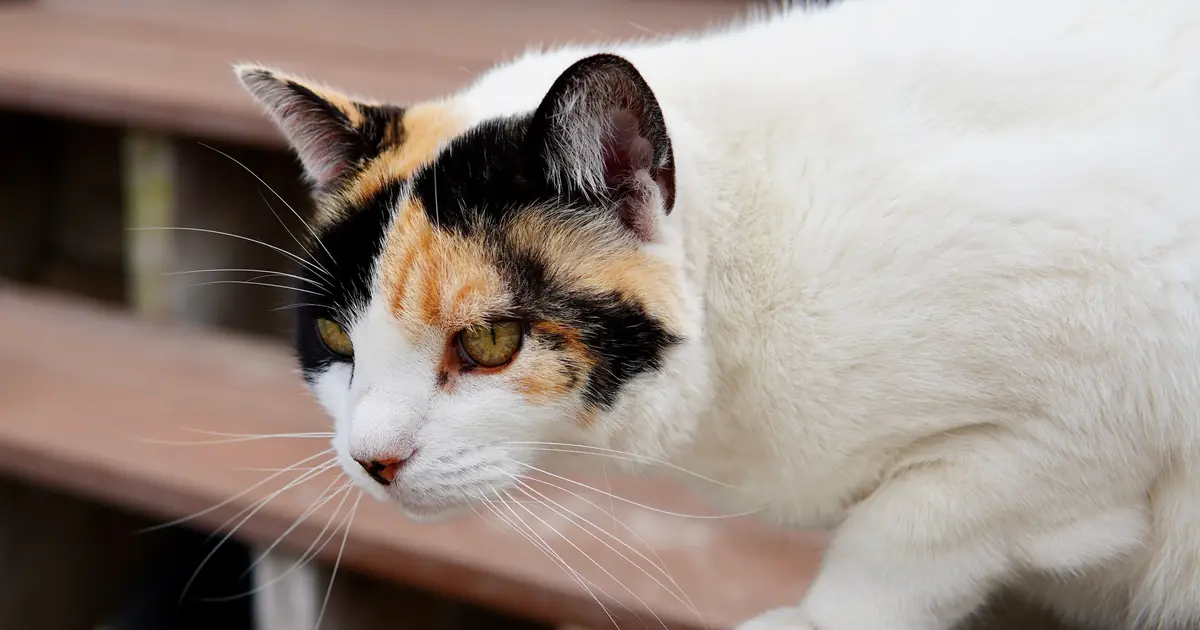
You spot her at the shelter and stop cold. White chest, one orange ear, a black splotch over one eye like she got dressed in the dark. No two panels match. You’re smitten.
Calico kittens have a way of doing that. Those bold, patchy, tri-color coats look hand-painted, and every single one is different. But there’s real science and a little bit of legend tucked inside that fur. Here’s everything worth knowing before (or right after) one moves in.
- Calico is a coat pattern, not a breed: white plus black/gray plus orange/red, in clearly separated patches.
- Nearly all calico kittens are female because the orange and black color genes sit on the X chromosome.
- A male calico is very rare, about 1 in 3,000, usually carries an extra X chromosome (XXY), and is almost always sterile.
- Many breeds can be calico, including Maine Coon, Persian, British Shorthair, Japanese Bobtail, and everyday domestic shorthairs.
- Coat color does not set lifespan or personality: a calico’s health and temperament come from her breed, care, and individual nature.
What is a calico kitten?
A calico kitten is a kitten with a coat made of three colors: white, black (or a diluted gray), and orange (or a diluted cream). The white patches are usually large and clearly separated from the colored ones, which is what gives calicos that bold, patchwork look. On most calicos, white covers somewhere between 25% and 75% of the body.
Here’s the part that surprises people: calico is not a breed. It’s a color pattern that can appear across dozens of breeds and in plain old mixed-breed cats. So a “calico kitten” tells you what she looks like, not what she is. If you’re trying to figure out the actual breed underneath the pattern, our guide on how to tell what breed your cat is walks you through it.
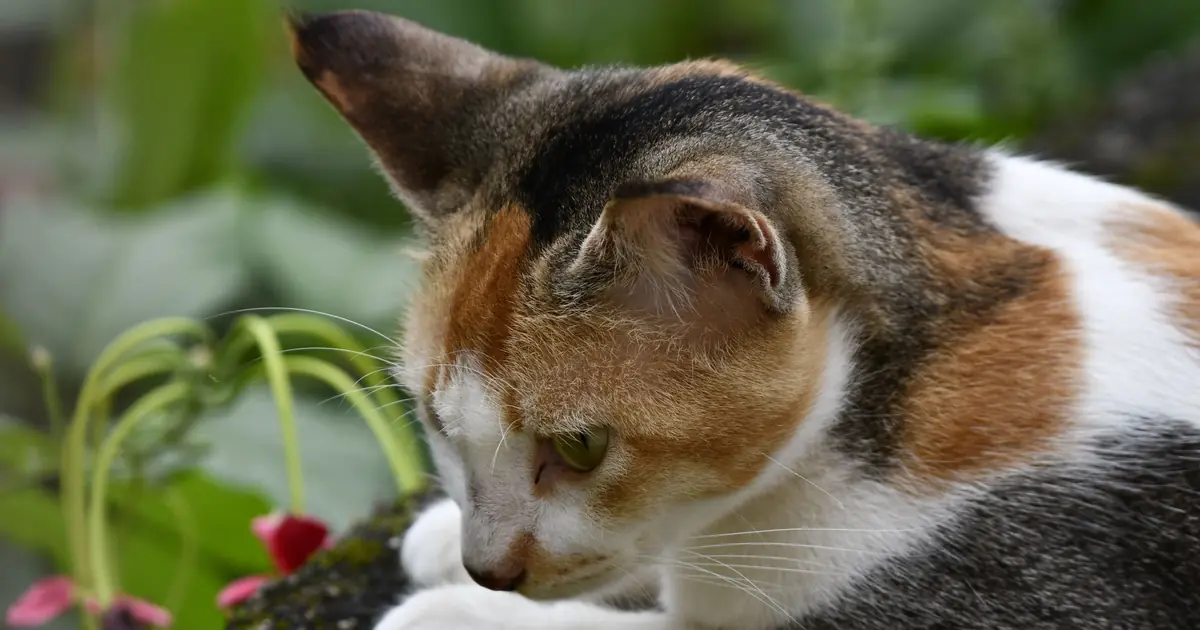
Calico colors: from classic to dilute
Calicos come in two main color moods. A classic (or standard) calico wears crisp white, deep black, and vivid orange. A dilute calico wears softer versions of the same idea: white, gray or blue-gray, and cream instead of bright orange. Same pattern, gentler palette. You may also hear “caliby,” which is a calico whose orange and black patches carry faint tabby stripes.
Why are almost all calico kittens female?
Almost all calico kittens are female because the genes for orange and black fur are carried on the X chromosome. Female cats have two X chromosomes (XX), so they can carry an orange gene on one and a black gene on the other. Males have one X and one Y (XY), so they usually get to be orange or black, not both. No two colors, no calico.
There’s one more piece of magic behind the patches. Early in development, every female kitten’s cells randomly switch off one of their two X chromosomes, a process called X-inactivation. In some patches of skin the orange X stays active, in others the black X does. That’s why calico color comes in bold, separate blocks rather than a smooth blend. The University of Utah’s Genetic Science Learning Center explains this X-inactivation “mosaic” using calico cats as the textbook example. The white, by the way, comes from a completely separate gene that has nothing to do with sex.
Can a calico kitten be male?
Yes, but it’s rare. Roughly 1 in 3,000 calico cats is male, and it happens when a male is born with an extra X chromosome (XXY instead of XY), a condition called Klinefelter syndrome. That second X gives him the room to carry both orange and black. The catch: these males are almost always sterile, so a male calico can’t pass the pattern on. If someone tells you their male calico is worth a fortune at stud, gently break the news. According to the Cornell Feline Health Center, coat-color genetics like these are a classic window into how X-linked traits work.
Calico vs tortoiseshell vs tabby: what’s the difference?
Calico, tortoiseshell, and tabby are three different coat descriptions that people mix up constantly. The short version: a calico has three colors in separate patches with lots of white, a tortoiseshell has two colors blended together with little or no white, and a tabby is a striped or swirled pattern that can be almost any color. Here’s the side-by-side.
| Feature | Calico | Tortoiseshell | Tabby |
|---|---|---|---|
| Colors | White + black/gray + orange/cream | Black + orange, blended (little to no white) | Any color, in a striped or swirled pattern |
| Pattern look | Large, separate patches | Mottled, marbled, mixed together | Stripes, spots, or swirls, often with an “M” on the forehead |
| White amount | A lot (usually 25% to 75%) | Very little or none | Varies |
| Is it a breed? | No, a color pattern | No, a color pattern | No, a coat pattern |
| Typical sex | Almost always female | Almost always female | Male or female, equally |
One handy tell: that “M” marking on the forehead belongs to tabbies, not calicos. Want the deeper dives? We have full guides on what a tortoiseshell cat is and what makes a cat a tabby. And since orange comes up so often in this genetics story, our orange tabby cat guide explains why most orange cats swing male, the exact mirror image of the calico story.
Which breeds can be calico?
Lots of them. Because calico is a pattern rather than a breed, any breed whose genetics allow both orange and black plus white spotting can produce a calico. You’ll find calicos among Maine Coons, Persians, British Shorthairs, American Shorthairs, Siberians, Turkish Vans, Cornish Rex, and the Japanese Bobtail, plus a huge share of everyday domestic shorthairs and longhairs.
A few breeds where calicos really stand out:
- Japanese Bobtail: the “mi-ke” (three-fur) calico is prized in Japan and tied to good-luck lore.
- Maine Coon: big, fluffy calicos with dramatic contrast.
- Persian: long, soft calico coats that need daily brushing.
- British Shorthair: plush, patchy calicos in both standard and dilute.
What this means for you: your calico kitten’s grooming needs, energy, and health tendencies come from her breed, not her color. A calico Persian and a calico domestic shorthair are two very different cats under the same pattern.
What is a calico kitten’s personality like?
Honestly? It depends on the cat, not the coat. Calicos have a fun reputation for being sassy, bold, and a little strong-willed, a trait fans lovingly call “tortitude” (calicos and torties get lumped together here). You’ll meet calicos who are total divas and calicos who are marshmallows.
Here’s the straight talk: there’s no solid scientific evidence that coat color sets personality. Some surveys hint that owners describe calicos and torties as feistier, but that may be as much reputation as reality. So enjoy the legend, but judge your kitten by her actual behavior. Early socialization, gentle handling, and plenty of play shape her far more than her patches do.
How do you care for a calico kitten?
You care for a calico kitten exactly like any other kitten, with attention to whatever breed she is underneath. There’s nothing about the calico pattern itself that needs special handling. The basics that matter most:
- Feed a kitten-formula, protein-rich diet. Growing kittens need food made for their life stage, usually until about 12 months.
- Book early vet visits. Vaccines, deworming, and a first checkup set the foundation. Ask about spaying, which for female calicos lowers the risk of reproductive cancers later.
- Match grooming to her coat length. A shorthaired calico needs a quick weekly brush, while a longhaired one (Persian, Maine Coon) needs daily attention to prevent mats.
- Play, a lot. Kittens burn energy in wild bursts. Wand toys and short daily play sessions build a confident, well-adjusted cat.
- Keep the litter box clean and easy to reach. Small kittens need low-sided boxes they can climb into.
Planning to breed or expecting a litter of your own? Since calico coloring is passed down in specific ways, our guide on how many kittens a cat has the first time is a helpful next read.
How long do calico kittens live, and are they healthy?
Female calico cats live about 12 to 16 years on average, and many reach their late teens with good care. That range comes from their breed and lifestyle, not their color, since calico is just a pattern. A well-cared-for indoor calico can absolutely hit 18 to 20.
Female calicos are as healthy as any cat. Rare male calicos are the exception. Because most carry that extra X chromosome (XXY), they can face fertility problems and a higher risk of certain health issues, so a male calico deserves an especially attentive vet relationship. Groups like International Cat Care are good resources on kitten sexing and early-life health. As always, this article is educational and isn’t a substitute for your veterinarian’s advice.
Are calico cats lucky? The famous calico lore
In many cultures, yes, calicos are seen as little bundles of good luck. Their rarity (especially those one-in-thousands males) gave them a charmed reputation across the world, and a couple of famous examples cemented it.
- Maneki-neko: Japan’s beckoning “lucky cat” figurine, the one with the raised paw you see in shops, is traditionally modeled on a calico. Sailors once kept calicos aboard ships to ward off trouble.
- Maryland’s state cat: The calico became Maryland’s official state cat in 2001, chosen because its orange, black, and white echo the colors of the Baltimore Oriole, the state bird.
- “Money cats”: In parts of the U.S., calicos have long been nicknamed money cats and thought to bring fortune to the household.
Do we think a calico will actually pay your rent? No. But watching one nap in a sunbeam does feel like winning something.
Calico kitten FAQ
Q: Is calico a cat breed?
No. Calico is a coat color pattern, not a breed. It describes a cat with white plus black (or gray) and orange (or cream) patches, and it appears across many breeds, from Maine Coons to plain domestic shorthairs.
Q: Why are calico cats almost always female?
The genes for orange and black fur sit on the X chromosome. Female cats have two X chromosomes, so they can carry both colors, while males usually have only one X and can be just one color. That’s why nearly every calico is female.
Q: How rare is a male calico kitten?
Very rare, roughly 1 in 3,000 calicos. A male calico usually has an extra X chromosome (XXY), which lets him show both colors, and he’s almost always sterile as a result.
Q: What’s the difference between a calico and a tortoiseshell?
A calico has three colors in large, separate patches with plenty of white. A tortoiseshell has black and orange blended or mottled together with little or no white. Both are almost always female.
Q: How much does a calico kitten cost?
A calico from a shelter or rescue usually costs an adoption fee of about $50 to $175. A calico of a specific pedigree breed, like a Maine Coon or Persian, can run several hundred to a couple thousand dollars, based on the breed, not the color.
Q: Do calico kittens have a special personality?
Calicos have a reputation for being sassy and bold, sometimes called “tortitude,” but there’s no strong scientific proof that coat color sets personality. Your kitten’s temperament depends on her individual nature and early socialization.
Q: How long do calico cats live?
Female calicos typically live 12 to 16 years, and many reach their late teens with good care. Lifespan depends on breed, health, and lifestyle, not the calico pattern itself.
Q: Are calico cats really lucky?
Many cultures think so. Japan’s maneki-neko “lucky cat” figurine is modeled on a calico, sailors once kept them for safe voyages, and the calico is Maryland’s official state cat. It’s charming folklore rather than fact, but calico fans happily embrace it.
Bottom line: a calico kitten is a walking work of art with a great genetics story behind every patch. She’s almost certainly a girl, she’s not a breed, and she’ll grow into whatever the cat under that gorgeous coat was always going to be. Love her for who she is, keep up with the vet, and enjoy the luck she supposedly brings.

Hello and welcome to The Ideal Cat!
We are some passionate cat owners from different professions. We love our cats and have a lot of experience in how to care for our pets. We are incredibly excited to share our knowledge, experience, and research with you. So you can take good care of your loving cat. We will answer most of the common questions about owning cats, taking care of them, etc. If you have any question contact with us. Thanks for visiting! Enjoy the content.
