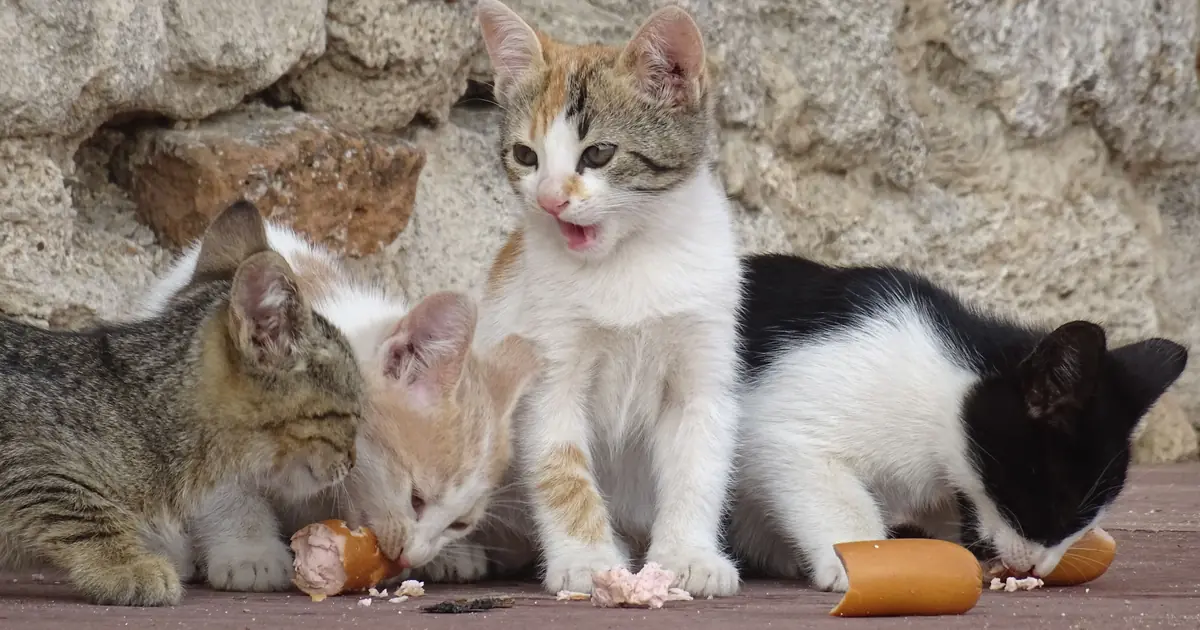
You’re scrolling your phone, you spot a photo of a Maine Coon, and you glance at the giant fluffball asleep on your keyboard. Same big ears. Same bushy tail. So… is your cat secretly a purebred?
Here’s the honest, slightly unglamorous answer most websites won’t lead with: probably not. And that’s not bad news at all. Let’s figure out what your cat actually is, bust a few myths along the way, and show you how to read the real clues.
- About 95% of cats in North America are mixed-breed, not purebred, so most cats are domestic shorthairs or domestic longhairs.
- “Domestic shorthair” is not a breed; it’s the catch-all label for a cat of unknown, mixed ancestry with short fur.
- Tabby, calico, and tuxedo are coat colors and patterns, not breeds. A tabby can be almost any breed or none.
- A cat that looks like a Maine Coon is almost always a mixed-breed look-alike unless it came from a breeder with a pedigree.
- Cat DNA tests show similarity to breed groups, not a family tree, and won’t confirm that a parent was purebred.
- Breed has surprisingly little to do with your individual cat’s personality, so how they were raised matters more.
What breed is my cat, really?
If you didn’t buy your cat from a registered breeder, your cat almost certainly doesn’t have a breed. It’s a mixed-breed cat, and that’s the norm, not the exception. Somewhere around 95% of domestic cats in North America are random-bred, and worldwide the estimate for non-pedigree cats is a whopping 98 to 99%, according to breed registries and cat welfare groups. Fewer than 2% of cats come from breeders with an actual pedigree.
So when people ask “what breed is my cat,” the truest answer for most cats is: a domestic shorthair or domestic longhair. Affectionately, International Cat Care calls these cats moggies. They’re the beautiful, one-of-a-kind mutts of the cat world, and they make up the overwhelming majority of pets.
That doesn’t mean your cat has zero purebred ancestry way back somewhere. It just means you can’t reliably name it from looks alone. Purebred status comes from documented parents, not a vibe.
What does “domestic shorthair” actually mean?
Domestic shorthair (DSH) is the label for a short-furred cat of mixed or unknown ancestry. It is not a breed, even though shelters and vet records list it like one. Think of it as the feline version of “mixed breed” plus “short coat.” Its longer-furred cousins get called domestic longhair (DLH) or domestic medium hair.
Here’s a common mix-up worth clearing up. The British Shorthair and American Shorthair are real, recognized breeds with pedigrees. A plain “domestic shorthair” is not the same thing, even though the names sound almost identical. Your chunky gray tabby from the shelter is a domestic shorthair, not a British Shorthair, unless paperwork says otherwise.
Is a tabby, calico, or tuxedo a breed?
No. Tabby, calico, and tuxedo are coat colors and patterns, not breeds. This is easily the biggest myth in cat identification, so let’s put it to rest. A pattern describes what your cat is wearing; a breed describes what your cat is.
A tabby is any cat with the classic striped, swirled, or spotted coat and that little “M” on the forehead. Tabby cats show up in dozens of breeds and in millions of mixed-breed cats. Curious about the pattern itself? Our guide on what a tabby cat actually is goes deep, and if yours is ginger, don’t miss our piece on the orange tabby cat.
A calico is a cat with patches of white, black, and orange. A tuxedo is a black-and-white cat that looks dressed for a wedding. Both are color patterns that appear across many breeds and, most often, in moggies. So “my cat is a calico” tells you the coloring, not the breed.
How can I tell what breed my cat might be?
You can make an educated guess by reading a handful of physical clues together, never just one. No single feature names a breed, because most traits are shared across many breeds and mixed cats. Look at the whole picture: body, coat, face, ears, tail, eyes, and size.
The clues worth checking
- Body type: Is your cat stocky and cobby (round, solid, short legs) or long and lean and “foreign” in build? Cobby leans toward Persian or British Shorthair types; slender and athletic leans Siamese or Oriental types.
- Coat length and texture: Short, long, curly, or almost hairless. Long, flowing fur hints at Persian, Maine Coon, or Ragdoll ancestry. For more on the fluffy end, see our roundup of long-haired cat breeds.
- Face shape: A flat, pushed-in face (brachycephalic) points to Persian or Exotic lines. A long, wedge-shaped face points to Siamese types. A sweet, round face is common in many domestics.
- Ears: Big and tufted, small and rounded, or folded forward. Folded ears suggest Scottish Fold ancestry; oversized tufted ears suggest Maine Coon influence.
- Tail: Long and plumed, short, or a natural bob. A stubby or absent tail can point to Manx or Bobtail lines.
- Eye color and shape: Deep blue almond eyes are a Siamese calling card, though blue eyes alone prove nothing.
- Size: Cats range from 4-pound dwarves to Maine Coons topping 20 pounds. Big alone doesn’t equal purebred, but it’s a data point.
Traits and the breeds they suggest
This table maps common physical clues to the breeds they hint at. Read it as a starting point for a guess, not a diagnosis. A mixed-breed cat can show any of these traits without carrying that breed’s pedigree.
| What you notice | Breeds it may suggest | Reality check |
|---|---|---|
| Very large, tufted ears, bushy tail, shaggy coat | Maine Coon, Norwegian Forest Cat, Siberian | Usually a mixed-breed look-alike, not purebred |
| Flat, pushed-in face, long fur | Persian, Exotic Longhair, Himalayan | Face shape is shared across several lines |
| Blue almond eyes, pointed coat, talkative | Siamese, Balinese, Ragdoll | Color-point genes exist in many domestics too |
| Long silky coat, blue eyes, floppy when held | Ragdoll, Birman | Only a pedigree confirms a true Ragdoll |
| Folded ears | Scottish Fold | Strong clue, but still needs breeder papers |
| Short or missing tail | Manx, American Bobtail, Japanese Bobtail | Bobbed tails also appear randomly in moggies |
| Curly or wavy coat | Devon Rex, Cornish Rex, Selkirk Rex | Rare; genuinely uncommon in random-bred cats |
| Short coat, no standout features, mixed markings | Domestic shorthair (mixed breed) | This is most cats, and that’s perfectly great |
If you love the fluffy giants, our full Maine Coon cat guide and Ragdoll cat guide walk through the true breed standards, so you can compare your cat side by side.
My cat looks exactly like a Maine Coon. Isn’t it one?
Almost certainly not, and here’s why. A purebred Maine Coon must come from a registered breeder with a documented pedigree. A random stray or shelter cat has no better odds of being a purebred Maine Coon than of being a purebred Persian or Bengal. Looks are not lineage, and registries like The International Cat Association (TICA) only recognize a purebred through documented parentage.
Tons of mixed-breed cats grow big, fluffy, and majestic. Those Maine Coon traits (tufted ears, ruff around the neck, long bushy tail) exist scattered throughout the general cat population. A cat can look extremely Maine Coon-ish and carry zero recent Maine Coon ancestry. Some experts estimate only around 3% of house cats are purebred at all.
So a “Maine Coon mix” from a shelter is usually just a big, gorgeous domestic longhair that happens to hit the aesthetic. And honestly? That’s something to celebrate, not correct. You got the look without the breeder price tag. If you’re drawn to the unusual, our guide to rare cat breeds shows how genuinely uncommon the real thing is.
Can a cat DNA test tell me my cat’s breed?
Sort of, but not the way you’d hope. A cat DNA test compares your cat’s genetic markers to a reference panel of known breeds and reports similarity, not a clean family tree. Popular kits like Basepaws show how similar your cat is to breed groups (for example Western, Eastern, Persian, and Exotic lines), rather than telling you “your mom was a Maine Coon.”
That distinction matters. Genomic similarity is not the same as ancestry. In fact, some owners of documented purebreds have run these tests and gotten surprisingly low breed-match percentages, like a Norwegian Forest Cat scoring only around 20% similar to its own breed. The tests are useful, just not a birth certificate.
What a cat DNA test can and can’t do
| A cat DNA test CAN | A cat DNA test CANNOT |
|---|---|
| Show similarity to breed groups and gene pools | Prove a parent was a specific purebred |
| Screen for 40+ genetic health markers (like PKD and HCM) | Guarantee your cat will or won’t get those diseases |
| Flag traits and carrier status | Replace a pedigree from a registered breeder |
| Give fun, general ancestry insight | Give a precise “40% Siamese” breakdown you can bank on |
Bottom line on DNA: it’s a fun, sometimes genuinely useful window into health risks and rough ancestry. Treat the breed results as an interesting estimate, not a final verdict. Talk to your vet about which health markers actually matter for your cat.
Does my cat’s breed decide its personality?
Not nearly as much as you’d think. Breed nudges some tendencies, but your individual cat’s personality is shaped far more by genetics as an individual, early socialization, and how it’s raised and treated. A “Maine Coon mix” can be shy, and a supposedly aloof breed can be a lap-loving cuddler.
Breed averages are real but loose. Siamese types often are chatty. Ragdolls often go limp when held. But those are trends across many cats, not promises about yours. Plenty of moggies out-cuddle, out-talk, and out-play their fancy purebred cousins.
The takeaway: love the cat in front of you, not the label. Your cat’s quirks, the 3am zoomies, the specific spot it demands scratches, the way it greets you, those come from your cat, not a registry.
Why breed matters less than you think
For everyday cat care, knowing your cat’s exact breed barely changes anything. Nutrition, litter, vet visits, play, and love look about the same whether your cat is a champion-line Persian or a shelter tabby. What matters is your specific cat’s age, weight, health, and personality.
Breed knowledge helps in a few narrow cases: some purebreds have known health risks worth screening for, and some coat types need specific grooming. Beyond that, your domestic shorthair deserves exactly the same great care as any pedigreed cat. And it’ll give you exactly the same purrs.
What breed is my cat: FAQ
Q: What breed is my cat if I got it from a shelter?
If you adopted from a shelter or found a stray, your cat is almost certainly a mixed-breed domestic shorthair or domestic longhair, not a purebred. Around 95% of cats in North America are random-bred. Only cats from a registered breeder with a pedigree are true purebreds.
Q: Is a tabby cat a breed?
No. Tabby is a coat pattern, not a breed. Tabby cats have striped, swirled, or spotted coats with an “M” marking on the forehead, and this pattern appears across dozens of breeds and in countless mixed-breed cats.
Q: How can I tell if my cat is part Maine Coon?
You can’t confirm it from looks alone. Big size, tufted ears, and a bushy tail hint at Maine Coon influence, but these traits are common in ordinary mixed-breed cats. Only a pedigree from a breeder, or to a lesser degree a DNA test, gives any real answer, and most look-alikes are simply large domestic longhairs.
Q: Are cat DNA tests accurate for breed?
Cat DNA tests are reasonably good for general ancestry and health screening but should not be treated as definitive for breed. They report similarity to breed groups rather than a precise family tree, and even documented purebreds sometimes get low match scores.
Q: What is the difference between a domestic shorthair and an American Shorthair?
A domestic shorthair is a mixed-breed, short-furred cat of unknown ancestry, and it is not a breed. An American Shorthair is a recognized purebred with a documented pedigree. The names sound similar, but only one comes from a breeder.
Q: Does my cat’s breed affect its personality?
Only a little. Breed can nudge general tendencies, but an individual cat’s personality is shaped mostly by its own genetics, early socialization, and how it’s raised. A mixed-breed cat can be just as affectionate, playful, or talkative as any purebred.
Q: Can a vet tell me my cat’s breed?
A vet can offer an educated guess based on physical features, but even vets usually label mixed cats as domestic shorthair or domestic longhair. Without breeder paperwork, no one can name a breed with certainty from appearance alone.
Q: Is my calico or tuxedo cat a special breed?
No. Calico (white, black, and orange patches) and tuxedo (black with white markings) are coat colors and patterns, not breeds. Both appear in many breeds and, most commonly, in mixed-breed domestic cats.
So, what breed is your cat? For most of us, the honest answer is a wonderful, unrepeatable mixed-breed moggy, and that’s a win. Read the clues for fun, run a DNA test if you’re curious, but don’t let a label define the cat curled up next to you. Purebred or not, your cat is one of a kind.
This article is educational. For breed-specific health screening or DNA test results, talk with your veterinarian.

Hello and welcome to The Ideal Cat!
We are some passionate cat owners from different professions. We love our cats and have a lot of experience in how to care for our pets. We are incredibly excited to share our knowledge, experience, and research with you. So you can take good care of your loving cat. We will answer most of the common questions about owning cats, taking care of them, etc. If you have any question contact with us. Thanks for visiting! Enjoy the content.
)