Your cat marches to the litter box, lets out a loud meow (or three), and then does their business. Every single time. It’s a quirky little ritual, and usually nothing to worry about.
But because litter box behavior can hint at health, it’s worth knowing the harmless reasons from the ones that mean “call the vet.”
- Most pre-poop meowing is harmless: announcing, seeking attention, or plain habit.
- Some cats vocalize as a territorial “I was here” signal around toileting.
- Meowing while straining or crying in the box can mean constipation or pain, which is a red flag.
- Litter box dislikes (dirty, cramped, wrong spot) can also trigger vocal protest.
- See a vet if meowing comes with straining, hard or absent stool, blood, or frequent trips.
Why do cats meow before they poop?
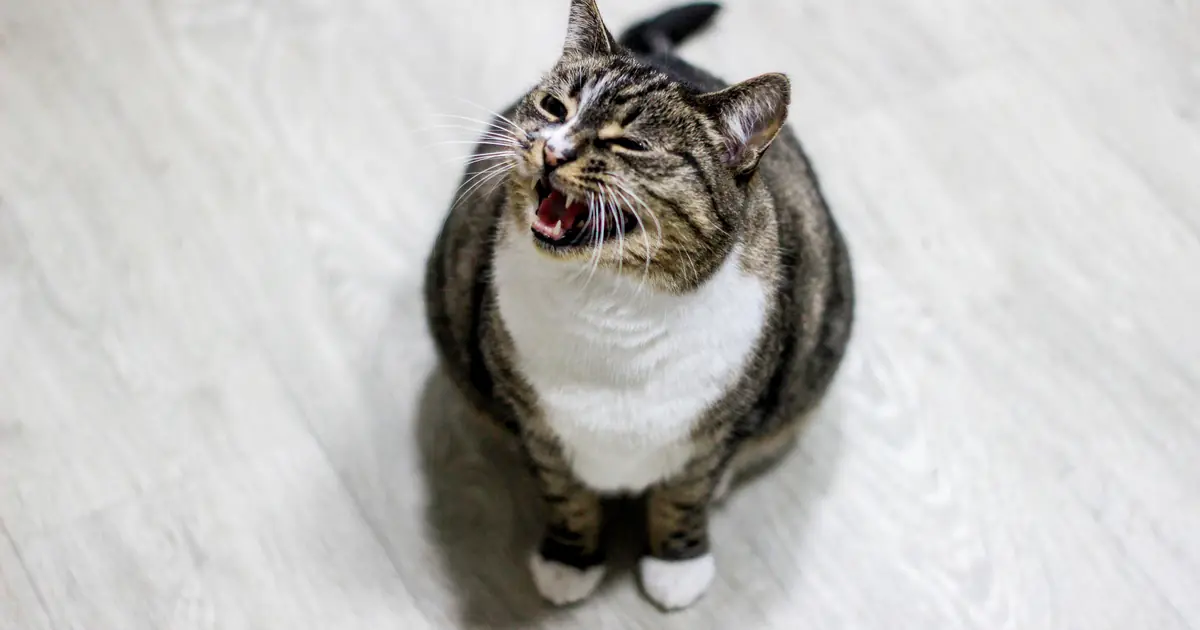
Most cats meow before pooping for simple, harmless reasons, they’re announcing the trip, seeking your attention, or just following a habit. Some cats are naturally chatty about their routines and narrate everything, including bathroom visits. If your cat meows, poops normally, and strolls off happily, it’s almost always behavioral, not medical.
Is my cat just “announcing” the trip?
Often, yes. Plenty of cats vocalize around the litter box as a kind of announcement or attention-seeking, especially cats that are closely bonded to their people. Some seem to want you to know they’re going, or even want privacy or praise. If your cat is otherwise healthy and the poop looks normal, this narration is a personality quirk, not a problem.
Could it be a territorial or instinctive signal?
Sometimes the meow is tied to marking behavior. In the wild, eliminating is a vulnerable moment and also a scent-marking one, so some cats vocalize around toileting as an instinctive “this is mine” signal. This links to the same instincts behind why cats bury their poop, covering their scent in some contexts and broadcasting it in others.
When does meowing before pooping mean pain?
Meowing turns into a warning sign when it happens while your cat strains or seems uncomfortable. Crying, hunching, or repeated trips with little result can indicate constipation or pain. Here’s how to tell harmless from concerning.
| Likely harmless | See a vet |
|---|---|
| One meow, then normal poop | Meowing/crying while straining |
| Cat relaxed, leaves happily | Repeated trips producing little or nothing |
| Normal, formed stool | Hard, dry, or absent stool; blood or mucus |
| Otherwise healthy and playful | Hunching, hiding, or appetite loss |
Straining with vocalizing can point to constipation, which our guide on how to tell if a cat is constipated covers, and checking the stool itself helps, see what cat poop should look like.
Could the litter box be the problem?
Yes, a disliked box can prompt vocal protest. If the litter is dirty, the box is too small or covered, it’s in a noisy or high-traffic spot, or you’ve changed the litter type, your cat may complain, hesitate, or meow before reluctantly using it. Keeping the box clean, spacious, and in a quiet location often quiets the complaints. Nighttime crying near the box has its own overlap with why cats meow at night.
When should you see a vet?
See a vet if the meowing comes with straining, crying in the box, hard or absent stool, blood, frequent unproductive trips, or any hunching, hiding, or appetite loss. Those can signal constipation, urinary problems, or pain that needs treatment, and a cat straining to poop or pee can become an emergency. This article is educational and not a substitute for veterinary care. Cornell’s Feline Health Center and PetMD on cat constipation are reliable references.
Frequently Asked Questions
Q: Is it normal for a cat to meow before pooping?
Yes, for many cats it’s a harmless habit, announcing the trip, seeking attention, or narrating their routine. If the poop is normal and your cat acts fine afterward, it’s usually just behavior.
Q: Why does my cat cry loudly in the litter box?
Occasional meowing can be attention-seeking, but crying while straining or making repeated unproductive trips can signal constipation, pain, or a urinary issue. Painful vocalizing warrants a prompt vet visit.
Q: Can constipation make a cat meow before pooping?
Yes. A constipated cat may vocalize while straining and produce hard, dry, or little stool. If you notice straining, crying, or few results, have your vet check for constipation.
Q: Why does my cat meow at me before using the litter box?
Many cats simply want your attention or seem to announce the trip, especially bonded, chatty cats. As long as elimination is normal and pain-free, this is a personality quirk, not a concern.
Q: Could my litter box be making my cat meow?
Possibly. A dirty, cramped, covered, or poorly placed box can prompt hesitation and vocal protest. Keeping the box clean, large, uncovered, and in a quiet spot often reduces the complaints.
Q: When is meowing in the litter box an emergency?
Treat it as urgent if your cat cries while straining and can’t produce stool or urine, especially with hunching, hiding, or appetite loss. A cat straining to urinate, in particular, can be a life-threatening emergency.

Hello and welcome to The Ideal Cat!
We are some passionate cat owners from different professions. We love our cats and have a lot of experience in how to care for our pets. We are incredibly excited to share our knowledge, experience, and research with you. So you can take good care of your loving cat. We will answer most of the common questions about owning cats, taking care of them, etc. If you have any question contact with us. Thanks for visiting! Enjoy the content.
