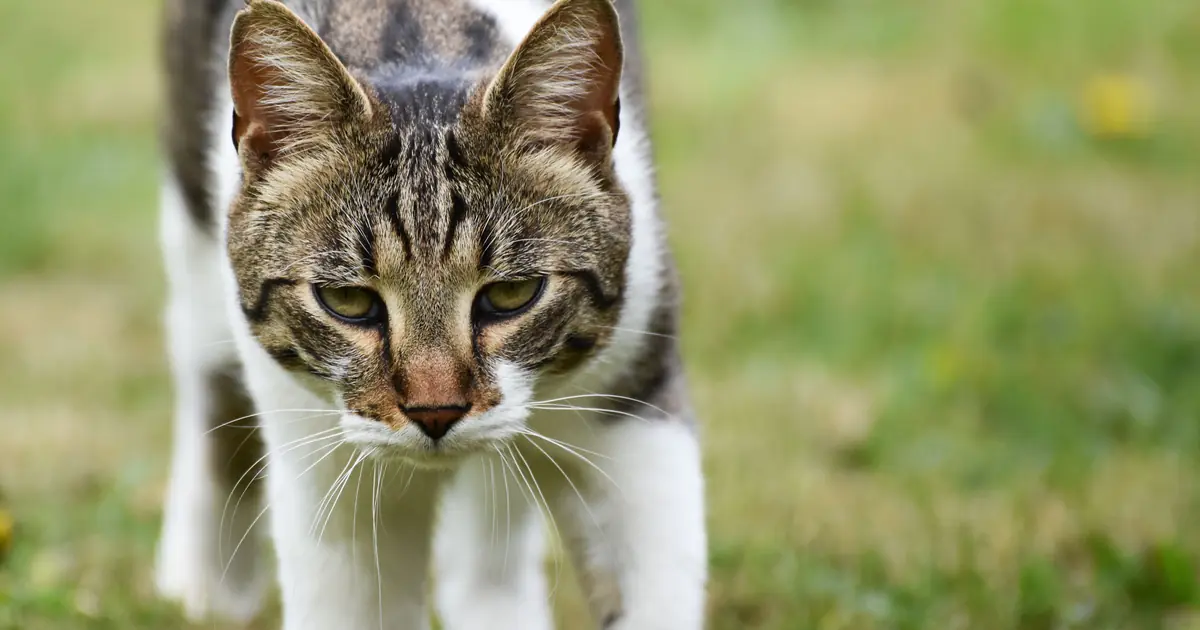
You spot glowing eyes in the yard at night and realize your cat is nose to nose with a possum by the food bowl. Cue the panic: is this about to turn into a brawl?
Usually not. Here’s what really happens when cats and possums cross paths.
- Cats can attack possums but rarely do, since opossums are similar in size and avoid conflict.
- Opossums are non-aggressive and often bluff, hiss, bare teeth, or “play dead” instead of fighting.
- Most cats and possums coexist or ignore each other, especially around shared outdoor food.
- Kittens, small cats, and cornered animals face higher risk if a fight does happen.
- Remove outdoor food at night and supervise pets to prevent encounters and disease exposure.
Do cats attack possums?
Cats can attack possums, but it’s uncommon. An adult opossum is roughly the same size as a house cat, so a cat doesn’t see it as easy prey the way it would a mouse or bird. Most cats treat possums with wary curiosity or simply ignore them, and possums avoid trouble in return. Attacks do happen occasionally, especially involving kittens or a cornered animal, but a full-blown fight is the exception, not the rule.
Are possums dangerous to cats?
Possums pose little direct danger to healthy adult cats, since they’re gentle and non-confrontational by nature. When threatened, an opossum would rather bluff, hiss, show its teeth, or collapse and “play dead” than fight. It can bite or scratch if truly cornered, so a scuffle isn’t impossible, but possums don’t hunt or target cats. The bigger risks are to small kittens and from disease or parasites rather than aggression.
Will a possum fight back or play dead?
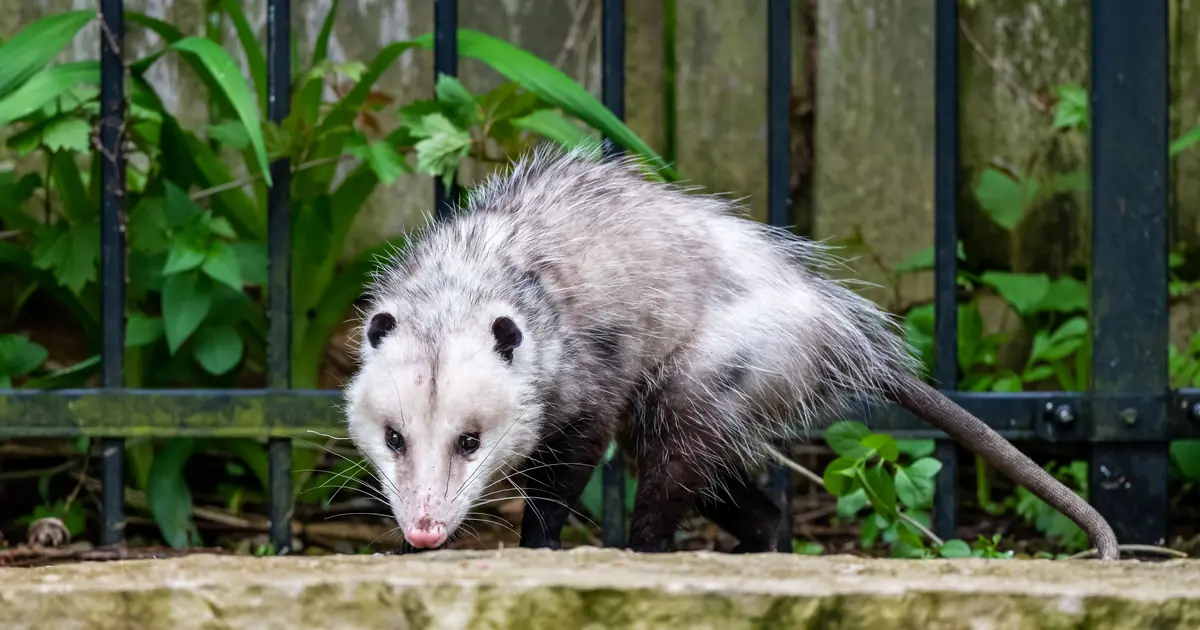
A cornered possum is far more likely to play dead than to fight. This famous defense, “playing possum,” is an involuntary response where the animal goes limp, appears lifeless, and may even smell foul to deter predators. Before that, a possum will try to look scary: hissing, drooling, and baring its 50 sharp teeth as a bluff. It’s mostly for show. Given the choice, a possum flees or freezes rather than picking a fight with a cat.
What happens when a cat meets a possum?
Most cat-possum encounters end without violence, usually a standoff or mutual avoidance. Here’s the typical range of outcomes.
| Encounter | What usually happens |
|---|---|
| Cat and possum at a food bowl | Wary sharing or one leaves; fights are rare |
| Cat approaches a possum | Possum bluffs, flees, or plays dead |
| Adult cat vs adult possum | Standoff; neither wants to fight an equal-sized animal |
| Kitten or small cat involved | Higher risk; supervise and intervene |
How do you keep cats and possums apart?
The best way to prevent encounters is to remove what attracts possums and limit your cat’s night roaming. Try these steps:
- Bring in food and water bowls at night, outdoor food is the main draw.
- Secure trash and compost so possums don’t forage nearby.
- Keep cats indoors at night, when both animals are most active.
- Block access under decks and sheds where possums den.
- Supervise outdoor time, especially for kittens and small cats.
Reducing roaming also protects your cat in general, as we cover in how far cats roam from home.
Should you worry about disease or injury?
Yes, watch for bites, scratches, and disease more than outright attacks. If your cat has a wound after any wildlife encounter, see your vet, bite wounds can abscess and need treatment. Possums can carry fleas and parasites, and shared food bowls can spread illness, so keep your cat current on parasite prevention and don’t leave food out. This article is educational and not a substitute for veterinary care. For related outdoor risks, see whether cats get sick from eating mice and why cats bring home dead animals. The Humane Society and ASPCA offer solid guidance on wildlife and pets.
Frequently Asked Questions
Q: Will my cat attack a possum?
Probably not. Possums are about the same size as cats and avoid conflict, so most cats treat them with wary curiosity or ignore them. Attacks are uncommon, though kittens and small cats face more risk if a fight occurs.
Q: Are possums a threat to cats?
Not usually. Opossums are gentle and non-aggressive, preferring to bluff or play dead over fighting. They can bite or scratch if cornered, and may carry parasites, but they don’t hunt cats. Kittens are the most vulnerable.
Q: Do possums really play dead around cats?
Yes. When frightened, a possum may involuntarily go limp and appear dead, sometimes emitting a foul smell, to deter predators. Before that, it bluffs by hissing and baring its teeth. It’s a defense, not a prelude to attack.
Q: Can a cat and possum share a food bowl?
They sometimes do, warily, but you shouldn’t allow it. Shared bowls attract possums and can spread disease and parasites. Bring food and water indoors at night to avoid encounters and keep your cat healthy.
Q: What should I do if my cat fought a possum?
Check your cat for bites and scratches and contact your vet, wounds can become infected or abscess. Mention the wildlife contact so your vet can advise on parasite and disease risks and update any needed prevention or care.
Q: How do I keep possums out of my yard?
Remove the attractants: bring in pet food at night, secure trash and compost, and block access under decks and sheds. Keeping cats indoors after dark also reduces encounters, since both possums and cats are most active then.

Hello and welcome to The Ideal Cat!
We are some passionate cat owners from different professions. We love our cats and have a lot of experience in how to care for our pets. We are incredibly excited to share our knowledge, experience, and research with you. So you can take good care of your loving cat. We will answer most of the common questions about owning cats, taking care of them, etc. If you have any question contact with us. Thanks for visiting! Enjoy the content.
