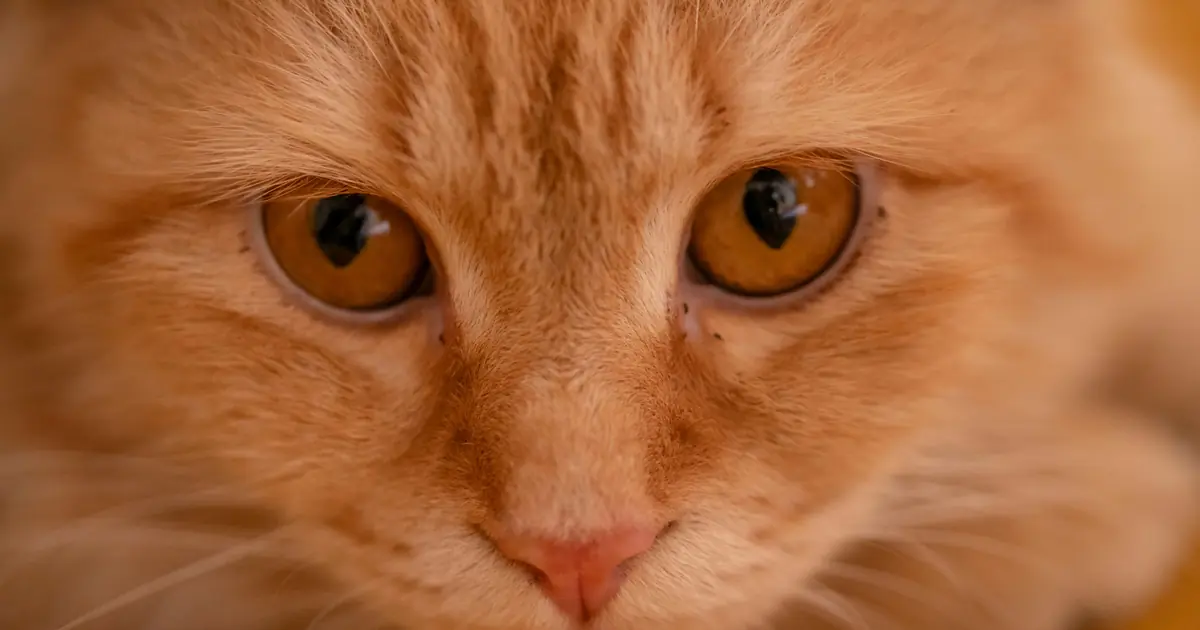
You snap a cute photo of your cat in a sunbeam, and there it is: one glowing red eye staring back like something out of a horror movie. Or maybe there’s no camera involved at all. Your cat’s actual eye looks pink, puffy, and irritated, and you’re wondering if you should worry.
These are two completely different situations. Mixing them up can send you into a panic over a harmless photo, or make you shrug off a real problem that needs a vet. Let’s sort out which one you’re looking at.
- Red eye in flash photos happens when light bounces off the tapetum lucidum, the reflective layer behind a cat’s retina, and comes back red instead of the usual green or yellow glow.
- A genuinely red or bloodshot eye on a cat is always a sign something is wrong, never a normal variation.
- Conjunctivitis, also called pink eye, is the most common cause of real eye redness in cats, according to the Cornell Feline Health Center.
- A sudden, painful red eye, a cloudy eye, or a bulging eye can threaten your cat’s vision and counts as an emergency.
- Human eye drops should never go in a cat’s eye. Only a vet can tell you what’s safe to use after an exam.
Why Do Cats’ Eyes Turn Red?
A cat’s eyes “turn red” for two very different reasons: a camera flash bouncing off the eye, or actual inflammation inside the eye. The photo version is a quirk of light and anatomy. The real version is a medical symptom.
If the redness only shows up in pictures, and the eyes look clear and comfortable in normal light, that’s the flash effect. If the eye itself looks pink, bloodshot, or swollen in person, especially with squinting or pawing, that’s a real problem worth a vet visit.
Why Do Cats’ Eyes Look Red in Flash Photos?
Cats get red eye in photos because flash light bounces off the tapetum lucidum, a mirror-like layer behind the retina, and the reflection comes back red instead of green. This layer is also why cat eyes glow in the dark, a trait called eyeshine. Most cats reflect green, yellow, or blue-green. Red eyeshine happens less often, and depends on camera angle and how dilated the pupil is, but it’s just as harmless.
To get fewer red-eye shots, turn on a room light first, shoot from off to the side of the flash, or use your phone’s red-eye reduction setting. It’s a photography quirk, nothing more, and it tells you nothing about your cat’s actual eye health.
What Actually Causes Red, Bloodshot, or Inflamed Eyes in Cats?
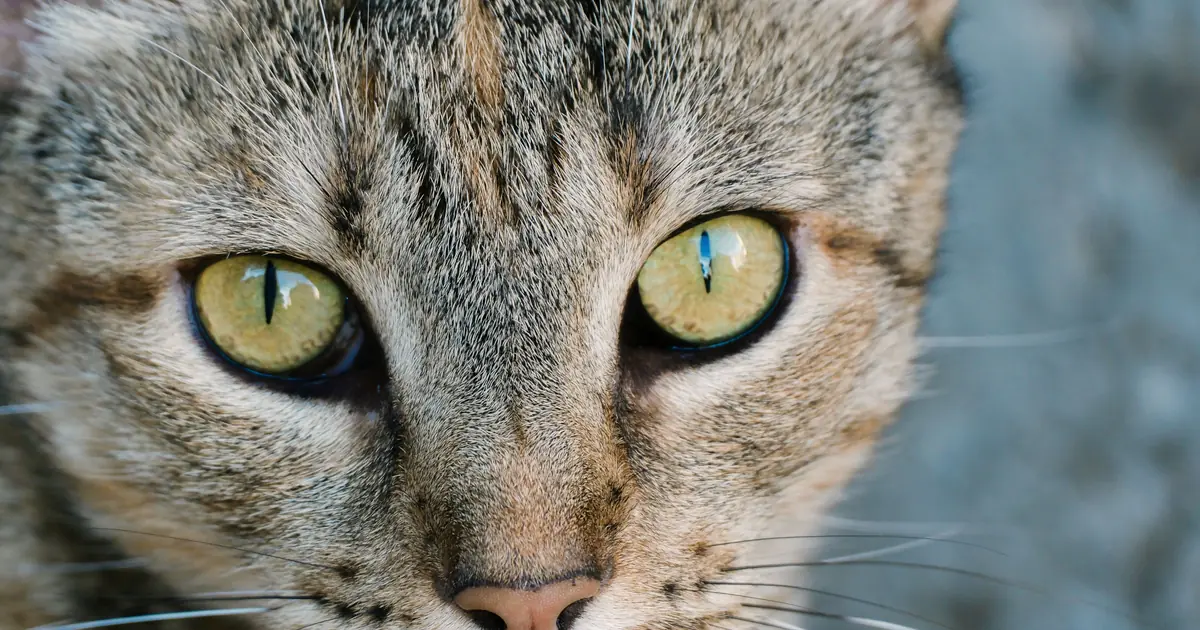
A cat’s eye that’s genuinely red or bloodshot in person, not just in a photo, is almost always inflamed, irritated, or infected. Unlike the harmless flash effect, this redness shows up with or without a camera, and it usually comes with squinting or discharge too.
- Conjunctivitis (pink eye): inflammation of the membrane lining the eyelids and covering the white of the eye. It’s the most common eye problem in cats, and it can affect one or both eyes.
- Upper respiratory infection (cat flu): viruses like feline herpesvirus and calicivirus often cause red, watery eyes along with sneezing and a runny nose.
- Corneal ulcer or injury: a scratch from a fight, a plant poke, or debris can damage the eye’s clear surface, causing pain and redness in usually just one eye.
- Uveitis: inflammation inside the eye affecting the iris and surrounding tissue, which VCA Animal Hospitals notes can stem from infection, trauma, or immune disease.
- Glaucoma: a dangerous rise in eye pressure that causes redness, pain, and blindness if it isn’t treated fast.
- High blood pressure: especially in older cats, this can cause bleeding or damage inside the eye that looks like redness.
- Allergies, a foreign object, or dry eye: pollen, dust, a stray hair under the eyelid, or low tear production can all irritate the eye enough to turn it red.
If your cat also has crusty eye boogers or a runny nose, that combination points toward an upper respiratory infection rather than an isolated eye injury. Curious whether the reverse is true? Here’s whether you can get pink eye from a cat.
Red-Eye Type at a Glance
| Type of Red Eye | Other Signs to Watch For | How Urgent |
|---|---|---|
| Flash photo red-eye | Only visible in flash photos; eyes look normal and comfortable in person | Not urgent, this is harmless |
| Conjunctivitis (pink eye) | Pink or red lining around the eye, watery or thick discharge, squinting, often both eyes | See a vet within a day or two |
| Corneal ulcer or injury | Sudden pain, heavy squinting, pawing at the eye, a cloudy or dull spot on the surface, usually one eye | See a vet the same day |
| Glaucoma or uveitis | Cloudy or bluish appearance, dilated or unequal pupils, visible pain, possible bulging eye | Emergency, go now |
What Signs Mean Your Cat Needs to See a Vet?
Your cat needs a vet visit if a red eye comes with squinting, discharge, pawing at the face, cloudiness, swelling, or a visible third eyelid. Any one of these on its own is worth a call. Several together mean don’t wait.
- Squinting or holding one eye partly closed
- Thick, yellow, green, or bloody discharge
- Pawing at or rubbing the eye repeatedly
- A cloudy, hazy, or blue-tinted appearance
- Swelling around the eye or eyelid
- The third eyelid (a pale membrane in the inner corner) staying partly closed
- Bumping into furniture or other signs of poor vision
If your cat is squinting in one eye, that’s already a strong signal something more than simple redness is going on. This article is educational, not a diagnosis: cats hide pain well, so a red eye that lingers past a few hours deserves a real exam, not a wait-and-see approach.
Is a Red Eye in Cats an Emergency?
Yes, a sudden, painful red eye, a cloudy eye, or a bulging eye can be a real emergency, because conditions like glaucoma and severe uveitis can permanently damage vision within hours to days. That’s different from a mild pink eye that’s uncomfortable but not sight-threatening.
Get to an emergency vet right away for an eye that’s obviously bulging, suddenly cloudy, or paired with a pupil much larger or smaller than the other one. According to VCA Animal Hospitals, glaucoma can cause blindness in as little as 24 to 48 hours if it isn’t treated. When in doubt, treat a painful red eye as urgent.
What Will a Vet Do About a Red Eye?
A vet will examine the eye closely, often using a special stain to check for scratches or ulcers, and may measure the pressure inside the eye to rule out glaucoma before treating the cause. This matters because conjunctivitis, an ulcer, and glaucoma can all start out looking like simple redness.
- A full eye exam checking the surface, pupil, and internal structures.
- A fluorescein stain test: a dye that highlights scratches or ulcers invisible to the naked eye.
- Tonometry, a quick test that measures eye pressure to check for glaucoma.
- Blood pressure screening in older cats, since hypertension can cause eye damage that mimics other conditions, per the Merck Veterinary Manual.
- Targeted treatment: antibiotic or antiviral drops, anti-inflammatory medication for uveitis, or emergency care for glaucoma.
Cats with recurring eye issues may get checked for feline herpesvirus, a common trigger for chronic conjunctivitis according to the Cornell Feline Health Center.
Can You Treat a Cat’s Red Eye at Home?
No, don’t try to treat a genuinely red or inflamed eye at home. A vet needs to identify the exact cause first, since what looks like simple pink eye could be an ulcer or early glaucoma, and treating the wrong thing can make it worse.
Never put human eye drops, saline, or any over-the-counter remedy in a cat’s eye without a vet’s direction. Steroid-containing drops can worsen a corneal ulcer to the point of rupturing the eye. The only safe home step is gently wiping discharge away with a clean, damp cotton pad, wiping outward, while you wait for your appointment.
You can lower the odds of future trouble by keeping the eye area clean, staying current on vaccines that guard against the respiratory viruses linked to conjunctivitis, and booking regular checkups (twice yearly for senior cats) that include a quick eye exam. Watching a senior cat’s blood pressure helps too, since changes in eye appearance can be an early clue to hypertension.
Frequently Asked Questions
Q: Are red eyes in cat photos dangerous?
No. It’s just light reflecting off the tapetum lucidum, the mirror-like layer behind a cat’s retina. If the eyes look normal in person, the red glow in a photo is nothing to worry about.
Q: Why do some cats have red eyeshine and others have green?
Eyeshine color depends on camera angle, how dilated the pupil is, and small differences in eye pigmentation. Most cats reflect green, yellow, or blue-green, while red is less common but still normal.
Q: Can allergies make a cat’s eyes red?
Yes. Pollen, dust, mold, or household chemicals can trigger allergic conjunctivitis, causing redness, watering, and mild swelling. It’s less common than infectious causes but worth mentioning to your vet if it’s seasonal.
Q: Can stress cause a cat’s eyes to turn red?
Not directly, but stress can trigger a feline herpesvirus flare-up in cats who already carry it, and that flare-up causes conjunctivitis and red, watery eyes. Mention timing like a recent move to your vet.
Q: Is cat conjunctivitis contagious to humans?
The most common causes, feline herpesvirus and calicivirus, are species-specific and don’t spread to people. A few bacterial causes carry a very small risk, so wash your hands after handling your cat’s eyes.
Q: Can a cat’s eye turn red from a scratch or fight?
Yes. A scratch or sharp object can cause a corneal ulcer or injury, showing up as sudden redness, squinting, and pain in usually one eye. This needs same-day vet attention since ulcers can worsen fast.
Q: How long does conjunctivitis last in cats?
Mild cases often clear up within a week to ten days once treatment starts, though herpesvirus-linked cases can recur during stress or illness. A vet-prescribed course of eye medication gives the best odds of full resolution.
Q: Can high blood pressure cause red eyes in cats?
Yes, especially in older cats. High blood pressure can damage blood vessels inside the eye, leading to bleeding or sudden vision loss that shows up as redness. Senior cats benefit from regular blood pressure checks.

Hello and welcome to The Ideal Cat!
We are some passionate cat owners from different professions. We love our cats and have a lot of experience in how to care for our pets. We are incredibly excited to share our knowledge, experience, and research with you. So you can take good care of your loving cat. We will answer most of the common questions about owning cats, taking care of them, etc. If you have any question contact with us. Thanks for visiting! Enjoy the content.
