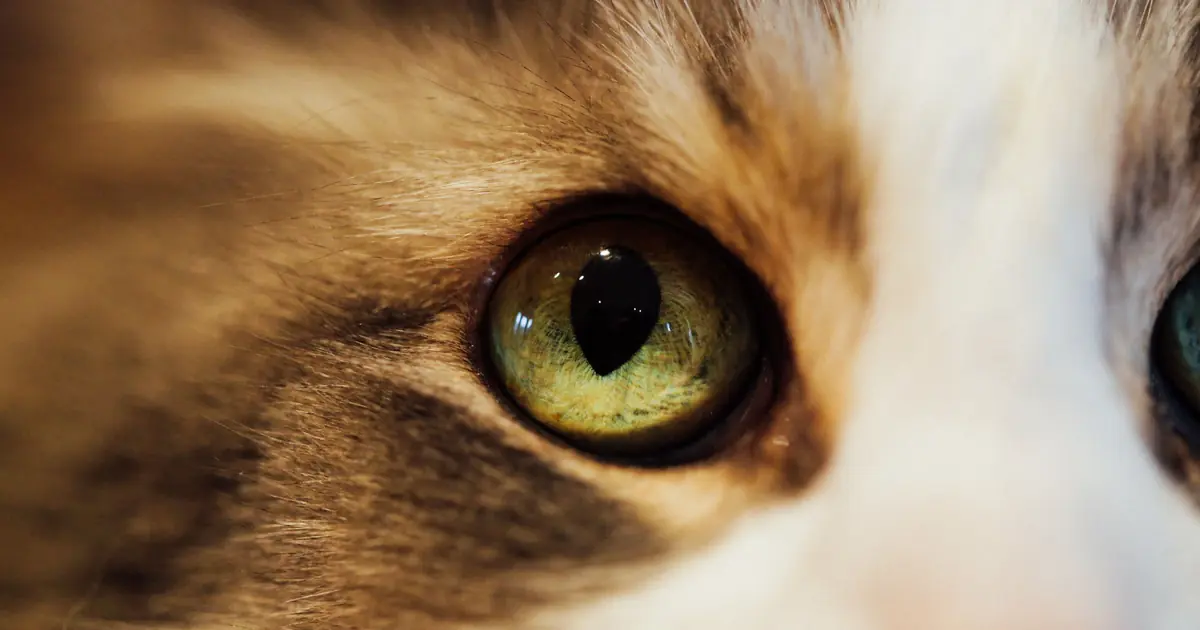
You’re cuddling your cat, you look into those gorgeous eyes, and there it is: a little crusty bit stuck in the corner. Maybe it’s a clear fleck, maybe it’s a rusty reddish-brown smudge. If you’ve ever wondered “why does my cat have eye boogers,” you’re in good company, because almost every cat parent notices this at some point. The good news is that a small amount is usually completely normal. Let’s walk through what’s harmless, what’s worth a vet visit, and how to clean those eye crusties the safe way.
- A small amount of clear or reddish-brown crust in a cat’s eye corner is normal dried tears and mucus, not an infection.
- The reddish-brown color comes from porphyrin, a natural iron-based pigment in cat tears that turns rusty when it dries in the air.
- Yellow or green eye discharge in cats usually points to infection or conjunctivitis and needs a vet.
- Flat-faced breeds like Persians, Himalayans, and Exotic Shorthairs get more eye boogers because their facial shape affects tear drainage.
- To clean cat eye boogers, use a cotton ball dampened with warm water or saline and wipe gently from the inner corner outward.
This article is educational and not a substitute for veterinary care. If your cat’s eye looks painful, swollen, or the discharge is heavy or colored, please contact a licensed veterinarian.
Why does my cat have eye boogers in the first place?
Cats get eye boogers because tears and mucus naturally collect in the corner of the eye and dry into a crust. A cat’s eye is coated by a thin tear film made of water, oils, proteins, salts, and mucus. That film keeps the eye clean and moist. When your cat sleeps and isn’t blinking, some of that mucus settles into the inner corner and dries out, which is why eye crusties are most common first thing in the morning.
Think of it like the “sleep” you find in your own eyes after a nap. It’s the same idea. A healthy cat usually grooms most of it away on their own, so you might only spot a little. A small, dry crust that wipes off easily and doesn’t seem to bother your cat is the everyday, harmless kind.
What’s the difference between normal and worrying cat eye discharge?
Normal cat eye discharge is a small amount of clear or reddish-brown crust that wipes away easily, while worrying discharge is heavy, sticky, yellow, green, or paired with other eye symptoms. The amount, the color, and whether your cat seems uncomfortable are the three things that tell you which camp you’re in.
Here’s a quick way to read what you’re seeing.
| What you see | What it usually means | What to do |
|---|---|---|
| Small clear or watery crust, mostly in the morning | Normal dried tears and mucus | Wipe it gently, no worries |
| Reddish-brown or rust-colored crust in the corner | Normal porphyrin (tear pigment) that browned in the air | Wipe it gently, monitor |
| Yellow or green sticky discharge | Likely infection or conjunctivitis | Call your vet |
| Heavy, constant watering with redness | Allergies, irritation, or a blocked tear duct | Call your vet |
| Discharge with squinting, swelling, or pawing | Pain, injury, or infection | See a vet promptly |
| Discharge plus sneezing or a runny nose | Upper respiratory infection (cat flu) | See a vet |
Why are my cat’s eye boogers reddish-brown or rust-colored?
Reddish-brown eye boogers in cats are usually caused by porphyrin, a natural pigment in tears that turns a rusty color when it dries in the air. Porphyrin contains iron, and it oxidizes when exposed to air and light, a bit like how a sliced apple browns on the counter. So that rusty smudge in the corner often looks scarier than it is. It does not automatically mean blood or infection.
That said, reddish-brown staining that suddenly gets heavier, or that comes with redness or discomfort, is worth a check. Constant tearing keeps the fur damp, and damp fur is where bacteria and yeast like to grow, which can make stains worse over time.
What causes excessive eye boogers or discharge in cats?
Excessive eye discharge in cats is most often caused by infection, allergies, irritation, or a problem with tear drainage rather than normal grooming buildup. When the boogers go from “a little crust” to “constant gunk,” there’s usually an underlying reason worth identifying with your vet. Here are the common ones.
- Upper respiratory infection (cat flu): A viral or bacterial infection of the nose, throat, and eyes. It’s one of the most common causes of cat eye gunk and often comes with sneezing and a runny nose.
- Conjunctivitis: Inflammation of the pink lining around the eye. Conjunctivitis in cats causes redness, swelling, and often yellow or green discharge.
- Allergies and irritants: Pollen, dust, mold, smoke, or strong scents can make a cat’s eyes water and produce more discharge.
- Foreign material or injury: A bit of debris, a scratch, or a corneal ulcer can trigger heavy tearing, squinting, and pawing.
- Blocked tear duct: If tears can’t drain properly, they overflow and crust around the eye and fur.
- Dry eye (KCS): Too little tear production leaves the eye irritated and can cause thick, sticky discharge.
- Facial shape (breed): Flat-faced breeds have shallow eye sockets and compressed tear ducts, which leads to more tearing and crust.
Eye problems in cats can move fast, and several of these causes look similar from the outside. A vet can tell allergies from an infection from a scratch, and the treatment for each is different.
Why does my flat-faced cat get more eye boogers?
Flat-faced cats get more eye boogers because their facial shape changes how tears drain off the eye. Breeds like Persians, Himalayans, and Exotic Shorthairs are brachycephalic, meaning they have short, pushed-in muzzles and shallow eye sockets. That structure can compress the tear ducts and leave the eyes more exposed, so tears overflow onto the fur and crust up instead of draining away normally.
If you share your home with a Persian or another flat-faced cat, gentle daily wiping is often just part of the routine. Frequent crusting in these breeds is common, but a sudden change in color, amount, or comfort still deserves a vet’s eyes.
Should I be worried if only one eye has discharge?
Discharge in just one eye more often points to a local problem like a scratch, a foreign object, or a duct issue in that eye, while both eyes tend to suggest something body-wide like a virus or allergies. One-eye discharge isn’t automatically more serious, but it does narrow down the likely cause.
If one eye is squinting, held shut, red, or clearly painful, treat that as a reason to call your vet sooner rather than later. A single watery or irritated eye can mean a corneal scratch or trapped debris, and those are more comfortable to fix early.
Why does my cat have eye boogers, and how do I safely clean them at home?
To safely clean cat eye boogers, dampen a cotton ball or soft cloth with warm water or plain saline and gently wipe from the inner corner outward, using a fresh pad for each eye. Most healthy cats handle a quick wipe just fine. Here’s the gentle, vet-aligned way to do it.
- Gather your supplies first. Use cotton balls or a soft, clean cloth, plus warm water or plain saline solution. Avoid human eye drops, makeup remover, or harsh pet wipes unless your vet recommends them.
- Settle your cat. Pick a calm moment. Wrapping your cat loosely in a towel (the “purrito”) can help if they wriggle.
- Dampen the pad. Moisten the cotton ball or cloth with warm water or saline so it’s damp, not dripping.
- Soften stubborn crust. Hold the damp pad against a hard crust for a few seconds to loosen it instead of yanking.
- Wipe inner corner to outer. Gently wipe from the inner corner of the eye outward and downward, away from the eyeball. This direction helps avoid pushing debris back in.
- Use a fresh pad per eye. Switch to a clean pad for the second eye so you don’t move germs from one eye to the other.
- Dry and reward. Pat the fur dry if it’s damp, then give a treat so eye-cleaning becomes a no-big-deal habit.
Never put anything sharp near the eye, and never use human medication or leftover drops. If a crust won’t budge or your cat fights it hard, stop and ask your vet. Cleaning ears uses a similar gentle, calm approach, so the same patience pays off there too.
How often should I clean my cat’s eye boogers?
Clean your cat’s eye boogers as needed, which for most cats means a quick wipe every few days or whenever you notice a crust they missed. Cats are excellent self-groomers and clear a lot of it themselves. Flat-faced breeds, kittens, and older cats may need a daily once-over because they tend to build up more crust or can’t reach it as well.
If you suddenly need to clean far more often than usual, that change itself is a clue. A jump in the amount of discharge is a reason to call your vet rather than just wiping more.
When should I take my cat to the vet for eye discharge?
Take your cat to the vet if the eye discharge is yellow, green, heavy, or constant, or if it comes with redness, squinting, swelling, cloudiness, or pawing at the eye. Those signs point to infection, injury, or an eye condition that needs treatment, and eye issues can worsen quickly. When in doubt, a quick vet visit beats waiting it out.
Call your vet promptly if you notice any of these red flags:
- Yellow, green, or pus-like discharge
- A sudden, heavy increase in eye gunk
- Redness, swelling, or a visibly irritated eye
- Squinting, an eye held shut, or pawing and rubbing
- Cloudiness or a change in the surface of the eye
- Discharge plus sneezing, a runny nose, or trouble breathing
- Any sign the eye is painful, or that your cat’s vision seems off
Your vet can figure out whether it’s an infection, allergies, a scratch, or a tear-duct problem, and only a vet should prescribe eye medication. Please don’t use human eye drops or another pet’s medication, since the wrong product can make an eye injury worse.
Can I catch anything from my cat’s eye boogers?
Most causes of cat eye boogers, like normal tear crust, allergies, or feline herpesvirus, do not spread to humans. The main thing worth knowing is that conjunctivitis (pink eye) in cats is usually caused by germs specific to cats, so it rarely jumps to people. Still, basic hygiene matters: wash your hands after cleaning your cat’s eyes, especially before touching your own.
There are rare exceptions where certain bacteria can pass between pets and people, so handwashing is a smart habit, particularly for kids and anyone with a weakened immune system. We cover the human side of this in more detail in our pink eye article.
The bottom line on cat eye boogers
If you’ve been asking why does my cat have eye boogers, the answer is usually simple: tears and mucus dried into a normal little crust, and a clear or rusty reddish-brown fleck is nothing to lose sleep over. What changes the picture is color, amount, and comfort: yellow or green discharge, heavy constant gunk, redness, squinting, or pawing all mean it’s time to call your vet. Keep a damp cotton ball handy, wipe gently from the inner corner out, and you’ll keep those pretty eyes clear and happy.
For trustworthy background reading, the VCA Animal Hospitals and the ASPCA both have solid cat eye-health resources, and your own vet is always the best source for your specific cat.
Frequently Asked Questions About Cat Eye Boogers
Q: Are cat eye boogers normal?
Yes, a small amount of cat eye boogers is normal. They’re dried tears and mucus that collect in the corner of the eye, often overnight, and a clear or reddish-brown crust that wipes off easily is harmless. Heavy, yellow, or green discharge is not normal and should be checked by a vet.
Q: Why are my cat’s eye boogers black or dark brown?
Dark brown or near-black eye boogers in cats are usually dried porphyrin, the natural iron-based pigment in tears that browns as it oxidizes in the air. Dark, dry crust that wipes away and doesn’t bother your cat is typically fine. If it’s thick, sticky, or paired with redness or squinting, see your vet.
Q: What does yellow or green eye discharge in cats mean?
Yellow or green eye discharge in cats usually means an infection, often conjunctivitis or an upper respiratory infection. This kind of discharge is thick and sticky and is different from normal clear crust. Yellow or green eye gunk needs a veterinary visit, since the right treatment depends on the exact cause.
Q: How do I clean my cat’s eye boogers safely?
Clean cat eye boogers by dampening a cotton ball with warm water or plain saline and wiping gently from the inner corner of the eye outward. Use a fresh pad for each eye to avoid spreading germs. Skip human eye drops and harsh wipes, and ask your vet if a crust won’t loosen.
Q: Why does my Persian cat have so many eye boogers?
Persian cats get more eye boogers because they’re a flat-faced (brachycephalic) breed with shallow eye sockets and compressed tear ducts. That shape causes tears to overflow onto the fur and crust up instead of draining normally. Gentle daily wiping helps, but any sudden change in color or amount still warrants a vet check.
Q: Should I worry if only one of my cat’s eyes has discharge?
Discharge in one eye more often points to a local issue like a scratch, foreign object, or duct problem, while both eyes suggest a virus or allergies. One-eye discharge isn’t always serious, but if that eye is squinting, red, or painful, call your vet promptly to rule out an injury.
Q: Can I use human eye drops on my cat’s eyes?
No, you should not use human eye drops on your cat unless your veterinarian specifically tells you to. Many human eye products contain ingredients that can irritate or harm a cat’s eye, and the wrong drop can make an injury or infection worse. Use only plain saline or vet-prescribed products.
Q: Can kittens have eye boogers?
Yes, kittens can have eye boogers, and a little clear crust is normal as their eyes develop. But kittens are prone to upper respiratory infections, so yellow or green discharge, crusted-shut eyes, or swelling in a kitten should be seen by a vet quickly. Young eyes can be damaged fast if an infection goes untreated.

Hello and welcome to The Ideal Cat!
We are some passionate cat owners from different professions. We love our cats and have a lot of experience in how to care for our pets. We are incredibly excited to share our knowledge, experience, and research with you. So you can take good care of your loving cat. We will answer most of the common questions about owning cats, taking care of them, etc. If you have any question contact with us. Thanks for visiting! Enjoy the content.
