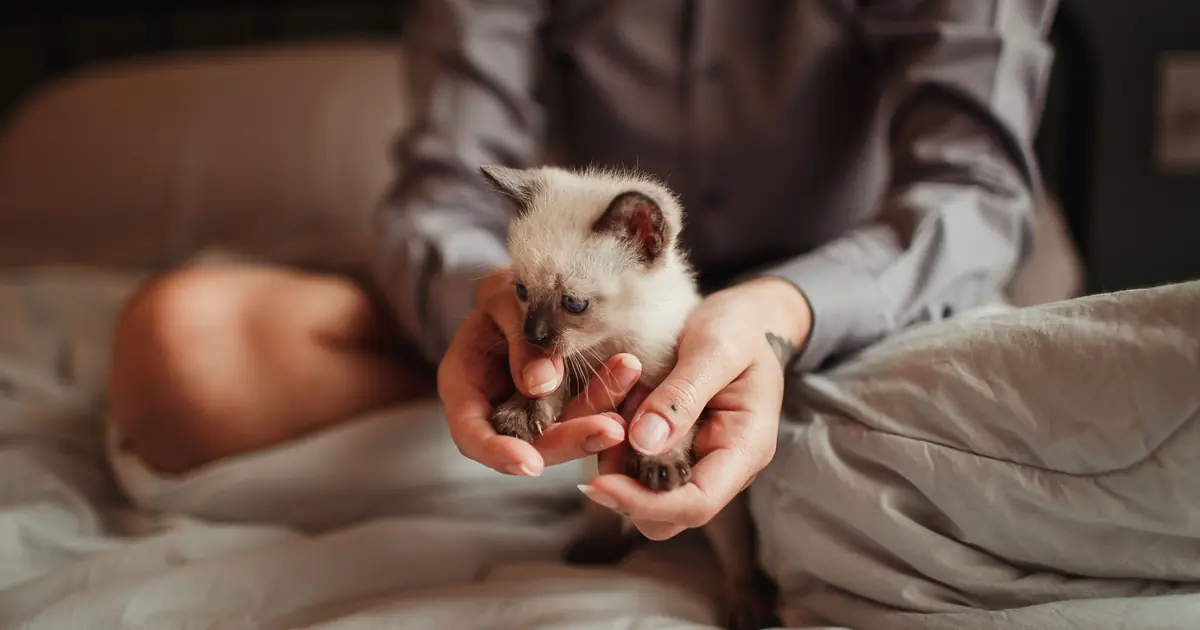
Picture this: it’s 6am, you haven’t even opened your eyes yet, and a very insistent voice is already telling you breakfast is late. That’s life with a Siamese cat. They don’t do subtle, and they definitely don’t do “ignore me for eight hours.”
So are Siamese cats good pets? Honestly, yes, and for a lot of people they’re the best pet they’ve ever owned. But this isn’t a breed for everyone, and we’d rather tell you the truth up front than have you find out the hard way three weeks in. Let’s get into what living with a Siamese cat actually looks like.
Are Siamese Cats Actually Good Pets?
Yes, for the right person, a Siamese cat is one of the best pets you can bring home. They’re smart, funny, endlessly interactive, and genuinely seem to enjoy being part of your daily life instead of just tolerating it.
Here’s the honest part: a Siamese cat is not a cat you leave in a quiet apartment for ten hours a day and expect to find happy and well-adjusted. They want in on everything. If you’re gone a lot, work long hours, or just want a cat that’s content napping alone on a windowsill, a Siamese will probably frustrate both of you. If you want a chatty, clingy, deeply loyal little shadow, you’ll likely fall hard for this breed. For the full picture on their history, body type, and coat colors, our Siamese cat breed guide covers it all in one place.
What Is the Siamese Personality Really Like?
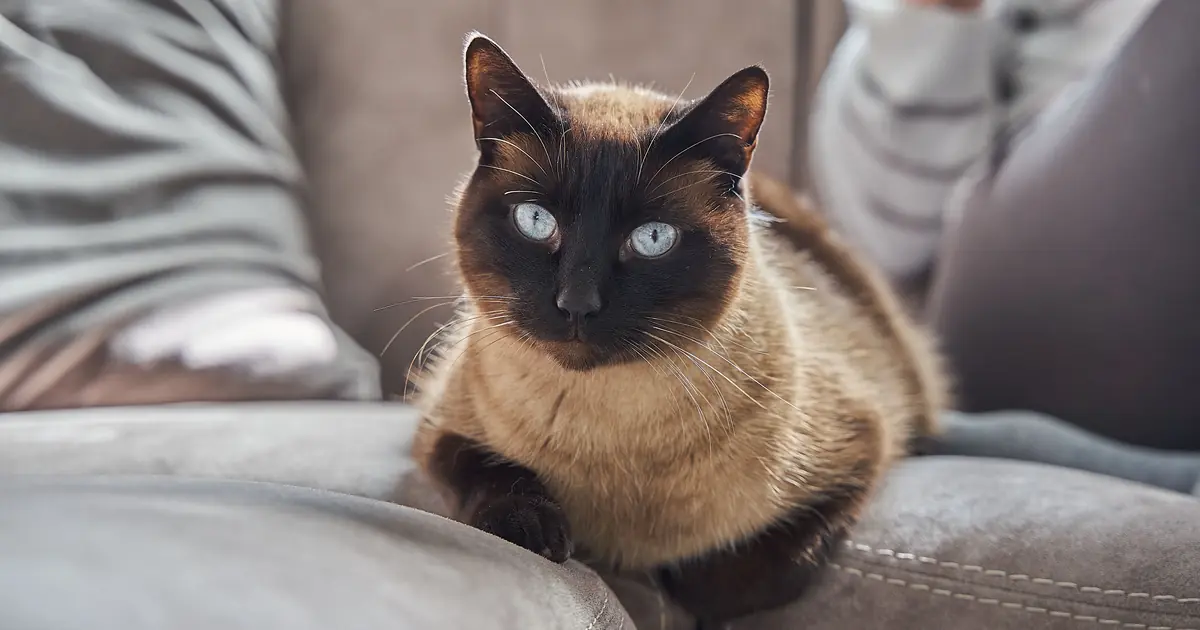
Siamese cats are affectionate, social, intelligent, and playful, with a curious streak that gets them into everything from cabinets to grocery bags. People who live with one often say it acts more like a dog than a cat: it greets you at the door, follows you from room to room, and expects a spot on your lap the second you sit down.
That people-focused streak is what most owners rave about. They’re also fast learners. Many Siamese figure out how to open doors, fetch small toys, or walk on a harness with surprisingly little training.
Why Are Siamese Cats So Vocal and Attention-Hungry?
Siamese cats are famously talkative, using a loud, low-pitched voice (often compared to a crying baby) to comment on pretty much everything: an empty food bowl, a closed door, or just the fact that you left the room. This isn’t a quirk a few Siamese happen to have. It’s a defining trait of the breed.
That same intensity shows up as a need for company. A Siamese left alone for long stretches can get lonely, and a lonely Siamese doesn’t suffer quietly. Some start crying nonstop, others over-groom bald patches into their fur, and a bored one will absolutely find its own entertainment, which is rarely the entertainment you’d pick for it. This trait-by-trait table sums up what to expect:
| Siamese Trait | What It Means for You |
|---|---|
| Affectionate | Expect a genuine lap cat who wants physical closeness, not a hands-off pet |
| Vocal | Regular “conversations,” loud meows, and the occasional 6am wake-up call |
| Smart | Needs puzzle feeders and training, or it’ll invent its own (sometimes destructive) games |
| Social | Wants to be in the room with you, not shut away or ignored for hours |
| Needs company | Does best with an owner who’s home often, a feline companion, or both |
Are Siamese Cats Good With Kids and Other Pets?
Yes, Siamese cats generally do well with kids and other pets when they’re introduced properly and socialized early. Their playful, outgoing nature makes them a good match for households that already have some noise and activity in them.
With children, Siamese cats tend to enjoy the interaction as long as kids are taught to handle them gently and give them space when they want it. With other animals, Siamese cats often do better in pairs than as a lone cat, since a second cat (or a patient dog) gives them an outlet for all that social energy when you’re not around. International Cat Care points out that some cats in a home group together while others prefer to be alone, so watch which pairings actually work and give every cat its own resources, such as separate litter trays.
How Much Attention, Play, and Grooming Does a Siamese Need?
Siamese cats need a lot of daily interaction: think multiple play sessions, puzzle toys, and one-on-one time, not just a toy left on the floor. They’re high-energy and mentally sharp, so a bored Siamese gets destructive fast.
Wand toys, food puzzles, cat trees near windows, and short training sessions all help burn off that energy. A lot of Siamese owners find that getting a second Siamese, or another sociable cat, makes a real difference in how settled their cat feels day to day. The good news is grooming is the easy part here. Siamese cats have a short, fine, single-layer coat that needs just a weekly brush to stay smooth, and they shed noticeably less than many other breeds. Still, no cat is truly non-shedding, so if allergies are a concern for your household, it’s worth reading up on whether Siamese cats are hypoallergenic before you commit. Feeding is fairly standard too; a quality diet suited to their lean, athletic build goes a long way.
How Long Do Siamese Cats Live, and What Health Problems Should You Watch For?
Many Siamese cats live well into their teens, but they aren’t the record-breakers people assume. A 2024 study of UK cats put Siamese life expectancy at birth at about 11.7 years, right around the 11.74-year average for all cats in the study. A long life is a real perk, but it also means a longer window for a handful of genetic conditions the breed is prone to.
Siamese cats are more likely than average to develop dental disease, since their wedge-shaped jaw can crowd teeth and trap plaque. They’re also linked to amyloidosis, a condition where abnormal protein builds up in the liver or kidneys, and progressive retinal atrophy (PRA), an inherited eye disease that causes gradual vision loss with no cure. Some studies also suggest Siamese cats may be predisposed to asthma, though the Cornell Feline Health Center says this hasn’t been definitively proven. None of this means your Siamese will develop these issues, but it’s worth asking a breeder about health testing and keeping up with annual vet checkups and bloodwork. This article is educational, not a substitute for veterinary care, so if your cat ever shows labored breathing, sudden vision changes, or trouble eating, get them to a vet.
Who Should (and Shouldn’t) Get a Siamese Cat?
A Siamese cat is a great fit if you’re home often, want a genuinely interactive pet, and don’t mind a cat that talks back. They’re a fantastic match for people who loved dogs but want a lower-maintenance version of that same loyal, in-your-business companionship.
A Siamese is probably not for you if you travel constantly, work long hours away from home with no one to keep your cat company, or simply want a quiet, independent cat that’s happy doing its own thing. There’s no shame in that. Plenty of wonderful cat breeds are built for a more hands-off lifestyle. A Siamese just isn’t one of them.
If you do decide a Siamese is right for your home, consider adopting two together, or committing to real daily playtime and attention if you go with one. Ask any breeder about health testing for PRA and amyloidosis, and check their price against typical market rates using our guide on how much a Siamese cat is worth. Better yet, look into Siamese-specific rescues first. Purebred cats end up in shelters more often than people expect, and a rescue Siamese still comes with all that famous personality.
More questions about living with a Siamese
Q: Do Siamese cats get attached to one person?
Siamese cats often bond most strongly with one or two people in the household, though they’re usually affectionate with everyone. That deep bond is part of why they struggle when their favorite person is away for long periods.
Q: Do Siamese cats do well in apartments?
Yes, as long as they get enough vertical space, play, and interaction. Siamese cats adapt well to apartment living because it keeps them close to their people, which matters more to them than square footage.
Q: Are Siamese cats good for first-time cat owners?
They can be, but only for first-timers who are ready for an interactive, demanding cat rather than an independent one. A Siamese rewards attention generously, so a first-time owner who’s home often and wants a hands-on relationship tends to do well.

Hello and welcome to The Ideal Cat!
We are some passionate cat owners from different professions. We love our cats and have a lot of experience in how to care for our pets. We are incredibly excited to share our knowledge, experience, and research with you. So you can take good care of your loving cat. We will answer most of the common questions about owning cats, taking care of them, etc. If you have any question contact with us. Thanks for visiting! Enjoy the content.
