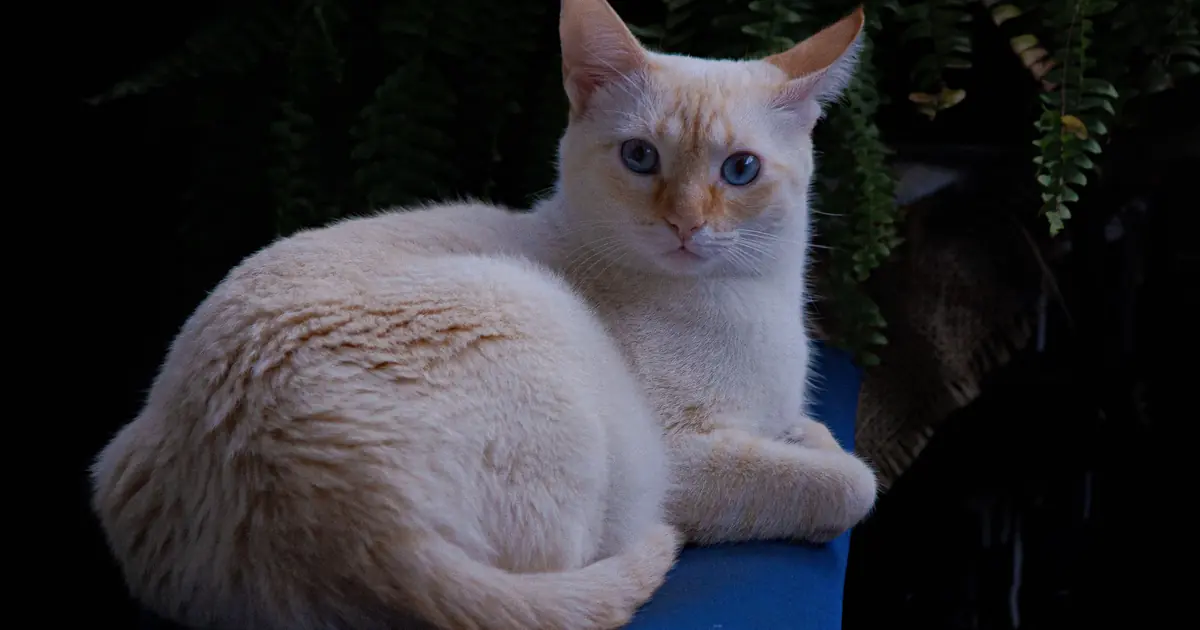
You walk into a breeder’s living room expecting your eyes to start watering within minutes. Instead, a sleek, blue-eyed cat wraps around your ankles, and… nothing happens. No sneezing. No itchy eyes. Just a very chatty cat asking for attention.
This is the exact scene that’s made the Balinese a favorite among cat lovers who thought a cat allergy meant a cat-free life forever. But before you get your hopes up (or your checkbook out), let’s talk honestly about what “hypoallergenic” actually means here, and what’s really going on with these long-haired, Siamese-lookalike cats.
- No cat breed, including the Balinese, is 100% allergen-free. “Hypoallergenic” for cats means lower-allergen, not allergen-free.
- Cat allergies are triggered mainly by Fel d 1, a protein made in a cat’s saliva, skin glands, and to a lesser extent urine, not by the hair itself.
- Balinese cats have a single-layer silky coat with little to no undercoat, so they shed far less than double-coated breeds and spread less dander around the house.
- Breeders and some small studies suggest Balinese may produce somewhat less Fel d 1 than average, though individual cats vary a lot regardless of breed.
- The Balinese is essentially a long-haired Siamese, so its allergen profile tracks closely with the Siamese, another breed people with mild allergies often tolerate well.
Are Balinese Cats Really Hypoallergenic?
Balinese cats are considered a lower-allergen breed, not a hypoallergenic one in the strict sense. “Hypo” means “less than,” so even a truly hypoallergenic cat would still produce some allergen, just less of it. No cat, Balinese included, produces zero Fel d 1, the protein behind most human allergic reactions to cats.
What Balinese cats do have going for them is a combination of traits that add up to fewer allergens around your home: a single-layer coat that sheds less than plush double-coated breeds, plus anecdotal reports from breeders suggesting their saliva may carry less Fel d 1 than average. For a lot of mildly allergic cat parents, that’s enough to live comfortably with one.
What Actually Causes Cat Allergies?
Cat allergies come from a protein called Fel d 1, not from cat hair itself. It’s produced mainly in a cat’s saliva and sebaceous (skin) glands, with smaller amounts in urine. When a cat grooms, that saliva dries on the fur and flakes off as dander, tiny skin particles that drift through the air and settle on furniture and carpet.
According to the American College of Allergy, Asthma and Immunology, cat allergens are so light and sticky they can linger in a home for months after a cat leaves, and travel easily on clothing into allergen-free spaces like schools. So the “hair equals allergies” myth is misleading: hair isn’t the allergen, it’s the delivery system for the dander clinging to it. That’s why some hairless breeds still trigger reactions, and why a lower-shedding coat helps, even though it’s not the root cause.
Why Do Balinese Cats Produce Less Fel d 1?

Balinese cats may produce somewhat lower levels of Fel d 1 than many other breeds, based on breeder observation and limited research, though this isn’t guaranteed for every cat. Fel d 1 output is shaped by genetics, hormones, age, and sex (unneutered males tend to produce more), so breed is only part of the picture.
Where Balinese cats have a clearer advantage is their coat. They carry a recessive gene for long hair but lack the thick undercoat double-coated breeds have. That means less loose fur to vacuum up and less grooming-related saliva spread across a wide coat. Less shed hair generally means less allergen buildup on your floors and furniture, even if the cat’s actual Fel d 1 output is only modestly lower than average.
Is Any Cat Truly Hypoallergenic?
No cat breed is truly hypoallergenic, and anyone telling you otherwise is oversimplifying the science. Every cat produces Fel d 1 to some degree, and how a person reacts depends far more on individual body chemistry, plus the individual cat, than on breed labels. Two Balinese cats from the same litter can produce noticeably different amounts of allergen.
The American Academy of Allergy, Asthma and Immunology notes that pet allergy symptoms range from mild sneezing to serious asthma flare-ups, and severity varies widely person to person. Don’t take “hypoallergenic breed” marketing at face value. Spend real time around the specific cat you’re considering, ideally more than one visit, before you commit.
How Do Balinese Cats Compare to Siamese and Other Low-Allergen Breeds?
The Balinese is, genetically speaking, a long-haired Siamese, so the two breeds share a nearly identical allergen profile with one key difference: coat length and shedding. If you’ve already read up on whether Siamese cats are hypoallergenic, most of that reasoning carries straight over to the Balinese, plus the added benefit of a silkier coat that mats and sheds less than you’d expect from a long-haired cat.
Here’s how the commonly cited “low-allergen” breeds stack up against each other:
| Breed | Why It’s Considered Lower-Allergen | Honest Caveat |
|---|---|---|
| Balinese | Single-layer coat sheds less; some reports of lower Fel d 1 than average | Still produces Fel d 1; individual cats vary |
| Siberian | Most studied breed for naturally lower Fel d 1 levels in saliva | Thick triple coat still sheds and needs regular grooming |
| Russian Blue | Dense but short coat; some owners report lower reactions | Evidence is mostly anecdotal, not well studied |
| Devon Rex | Fine, curly, minimal coat sheds very little visible hair | Still grooms and produces saliva-based dander |
| Sphynx | No fur to trap dander, though skin still produces oils | Needs frequent bathing, which redistributes skin oils |
If you’re weighing breeds against each other, it’s worth comparing them to other popular options too. Cat parents researching a full Balinese cat breed guide often also look at whether Ragdoll cats are hypoallergenic, since Ragdolls are another long-haired favorite, though they carry a plusher double coat that sheds noticeably more than a Balinese does. If shedding volume is your main worry, it also helps to see how much Siamese cats shed compared to their fluffier Balinese cousins.
How Can You Reduce Allergens If You Bring Home a Balinese?
You can meaningfully cut down on allergens from a Balinese cat with a few consistent habits, even though you can’t eliminate them completely. None of these are complicated, they just need to become routine.
- Brush your cat two to three times a week. Regular brushing removes loose hair and dander before it spreads through your home.
- Wipe your cat down with a damp cloth weekly. This removes surface dander without the stress of a full bath.
- Wash your hands after handling your cat, especially before touching your face or eyes.
- Run a HEPA air purifier in the rooms your cat uses most. HEPA filters trap the tiny airborne particles that carry Fel d 1.
- Vacuum with a HEPA-filter vacuum weekly, including upholstery and curtains, not just floors.
- Keep your cat out of your bedroom so you get at least eight allergen-lighter hours a night.
- Wash bedding weekly in hot water to break down settled dander.
Should You Adopt a Balinese Cat If You Have Allergies?
You should adopt a Balinese cat only after spending real, hands-on time with one first, ideally over multiple visits and a few hours each. A quick fifteen-minute meet-and-greet won’t reliably predict how your body reacts over weeks of living together.
If you have a diagnosed cat allergy, talk to your allergist before committing. They may recommend allergy testing, or a trial period with a foster cat, before you adopt. This article is educational, not a substitute for professional medical advice. Reactions range from mild sniffles to serious asthma symptoms, and only a doctor familiar with your health history can tell you how much risk is reasonable for you.
Frequently Asked Questions About Balinese Cats and Allergies
Q: Do Balinese cats shed a lot?
Balinese cats shed far less than most long-haired breeds because they lack a thick undercoat. Their single-layer silky coat still sheds some hair, especially during seasonal changes, but nowhere near as much as breeds like the Maine Coon or Ragdoll.
Q: Are Balinese cats good for people with asthma?
Balinese cats may be easier to live with for some people with mild cat-related asthma, thanks to lower shedding and reportedly lower Fel d 1 output, but asthma is serious and individual. Anyone with asthma should get guidance from an allergist and consider a trial period before adopting.
Q: What’s the difference between a Balinese and a Siamese cat?
A Balinese is essentially a long-haired Siamese, carrying the same body type, blue eyes, and pointed coloring, but with a recessive long-hair gene. Both breeds share a similar temperament and a similar lower-allergen profile compared to average cats.
Q: Can you be allergic to a Balinese cat even though they’re low-allergen?
Yes, you can absolutely still be allergic to a Balinese cat. Fel d 1 production varies by individual cat, not just by breed, so some Balinese cats trigger more of a reaction than others regardless of their breed’s general reputation.
Q: Do male or female Balinese cats produce more allergens?
Unneutered male cats of any breed, including Balinese, tend to produce more Fel d 1 than females or neutered males. Neutering a male Balinese can help lower his allergen output somewhat.
Q: How much do Balinese cats cost?
Balinese kittens from a reputable breeder typically cost between $600 and $1,200, depending on pedigree, coat color, and location. Adoption through a breed-specific rescue is usually far less expensive, often just standard adoption fees.
Q: Is the Siberian cat more hypoallergenic than the Balinese?
Siberian cats are the most extensively studied breed for naturally lower Fel d 1 levels, so they’re often ranked slightly above Balinese cats for allergen sensitivity. Still, individual variation means a specific Balinese could turn out to be an easier fit for an allergic person than a specific Siberian.
Q: Can I test my allergy to a specific Balinese cat before adopting?
Yes, many allergists can run a skin or blood test for cat dander sensitivity, and some breeders and shelters allow supervised foster trials. Spending several hours with the actual cat over more than one visit is the most reliable real-world test you can do.

Hello and welcome to The Ideal Cat!
We are some passionate cat owners from different professions. We love our cats and have a lot of experience in how to care for our pets. We are incredibly excited to share our knowledge, experience, and research with you. So you can take good care of your loving cat. We will answer most of the common questions about owning cats, taking care of them, etc. If you have any question contact with us. Thanks for visiting! Enjoy the content.
