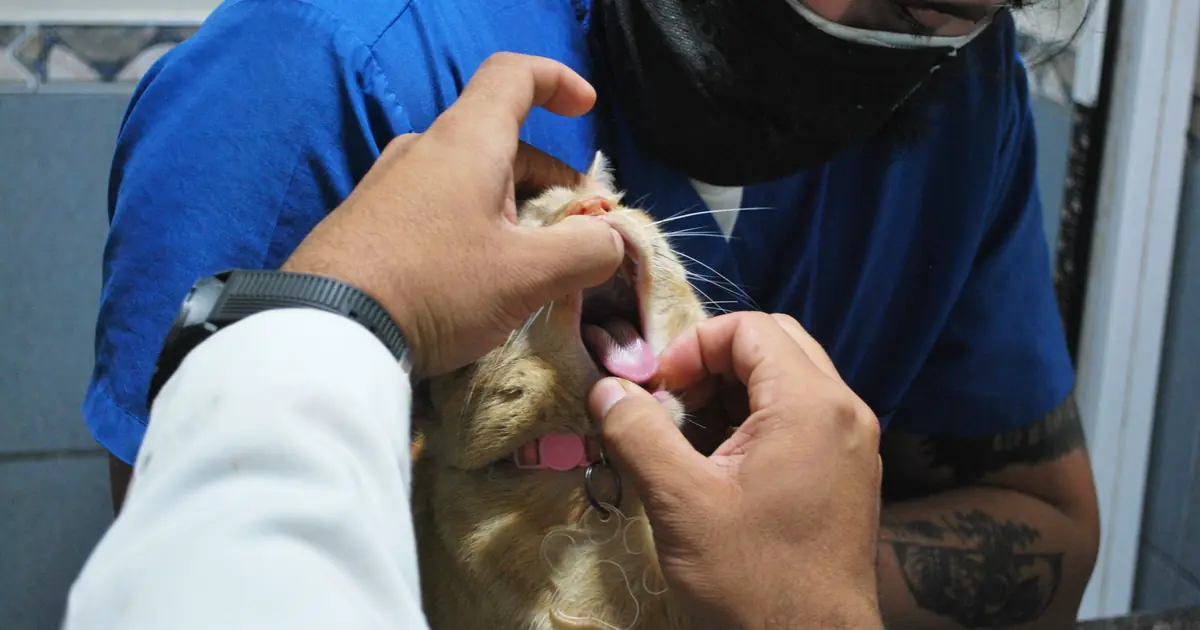
You are petting your cat and your fingers find it: a small bald spot that wasn’t there last week. The skin looks a little flaky. Your stomach drops, and the first thing you type is “what does ringworm look like on a cat.” Take a breath. You are in the right place, and ringworm is very treatable.
- Ringworm in cats most often appears as circular patches of hair loss with flaky, scaly, or crusty skin and short broken hairs around the edges.
- The most common spots for ringworm lesions are a cat’s head, ears, face, front legs, and paws, including the nail beds.
- Ringworm is a fungal infection called dermatophytosis, and more than 90% of feline cases are caused by a fungus named Microsporum canis.
- Ringworm is contagious to people and other pets (zoonotic), so wear gloves, wash your hands, and confirm it with a vet before treating.
- Many cats, especially longhaired breeds like Persians, can carry ringworm with few or no visible signs, which is why a lab test matters.
This guide walks you through exactly what ringworm looks like on a cat, where it shows up, how the patches change over time, and how to tell it apart from other skin problems. A quick, friendly reminder first: this article is here to help you understand what you are seeing, not to replace your vet. Ringworm can look like several other skin conditions, so a real diagnosis comes from your veterinarian.
What Does Ringworm Look Like on a Cat?
Ringworm on a cat typically looks like a round or oval patch of missing fur with dry, scaly, or crusty skin in the middle. The classic lesion is a small bald spot, often with a slightly red border and short, broken “stubbly” hairs around it. The patches usually start small, about the size of a coin, and can slowly grow outward.
Here is the part that surprises a lot of cat parents: ringworm does not always look dramatic. Sometimes it is just a thin patch of dull, broken hair or a little flaky “dandruff” deep in the coat. On some cats it barely shows at all. That mild, easy-to-miss look is one big reason a vet test beats guessing.
The signs below are the ones you are most likely to spot at home.
| Sign | What it looks like on your cat |
|---|---|
| Circular hair loss | Round or oval bald patches, often coin-sized at first, that can slowly spread. |
| Scaly or flaky skin | Dry, gray or whitish flakes, sometimes described as looking like cigarette ash in the fur. |
| Crusty patches or scabs | Rough, crusted skin or small scabs over or around the bald spot. |
| Broken, stubbly hairs | Short, brittle hairs that snap off near the skin, leaving a stubbly look at the edges. |
| Redness or a faint ring | Mild redness or a pink ring around the rim of the patch, with a clearer center. |
| Dull or patchy coat | Thinning fur or a dull, unhealthy-looking coat, sometimes with no obvious bald spot. |
| Crumbly or deformed claws | Rough, flaky, or misshapen nail beds when the fungus infects the claws. |
One myth worth clearing up right away: that “ring” in ringworm. In people, ringworm often makes a neat red ring on the skin. On a furry cat, you usually do not see a perfect ring at all. You see a bald, scaly patch instead, because the fur hides the classic ring shape.
Where Does Ringworm Show Up on a Cat’s Body?
Ringworm shows up most often on a cat’s head, ears, face, front legs, and paws, including the skin around the claws. These are the spots a cat touches and rubs the most, so they pick up and spread the fungus easily. Kittens and longhaired cats tend to be affected more than healthy adult cats.
That said, ringworm can appear anywhere on the body. If your cat has been carrying the fungus for a while, you might find patches along the back, chest, or tail too. Check the face and ear edges first, since early ringworm loves those thin-furred areas.
| Body area | What you might notice |
|---|---|
| Ears and ear edges | Bald, flaky patches along the tips and outer edge of the ears. |
| Face and around the eyes | Thinning or missing fur on the bridge of the nose, cheeks, or above the eyes. |
| Head and around the mouth | Small scaly spots or crusty patches on the top of the head or chin. |
| Front legs and paws | Round bald spots on the legs and rough, flaky skin near the toes. |
| Claws and nail beds | Crumbly, brittle, or deformed claws when the infection reaches the nails. |
| Back, chest, and tail | Scattered patches in longer-standing or more widespread infections. |
What Does Ringworm Look Like in the Early Stages vs Later?
In the early stages, ringworm on a cat is usually subtle: a small patch of thinning or broken hair, maybe a little flaky skin, and not much more. As it progresses, the bald patch grows, the skin gets scalier or crusty, and you may see more redness or several patches at once. Severe or untreated cases can become widespread, inflamed, and occasionally raised or bumpy.
Knowing the difference helps you catch it sooner. Here is roughly how ringworm tends to change as the infection develops.
| Stage | What ringworm tends to look like |
|---|---|
| Early | A small spot of thinning or broken hair, slight flaking, often easy to miss. Little or no redness. |
| Developing | A clearer round bald patch with scaly skin, stubbly hairs at the edge, and a faint pink rim. |
| Advanced or untreated | Larger or multiple patches, more crusting and redness, possible itching, and sometimes raised, inflamed lesions. |
Heads up on timing: after a cat is exposed to the fungus, signs usually take about 7 to 14 days to appear, and sometimes up to 3 to 4 weeks. So your cat can be carrying ringworm before you ever see a patch. That delay is normal and nothing to feel guilty about.
Does Ringworm Itch Cats, and What Does the Skin Feel Like?
Ringworm can itch cats, but it is often only mildly itchy or not itchy at all, which is different from many other skin problems. Some cats over-groom, scratch, or lick the area, while others ignore it completely. The skin in a ringworm patch usually feels dry, rough, scaly, or crusty rather than wet or oozing.
Because the itch can be so mild, do not rule out ringworm just because your cat is not scratching. Heavy, frantic itching points more toward fleas or mites, which we will compare next. If your cat is grooming one bald spot a lot, gently check whether the skin looks scaly and round, and keep your hands washed afterward.
How Is Ringworm Different From Other Causes of a Bald Patch?
Ringworm is one of several reasons a cat gets a bald patch, and you genuinely cannot tell them apart by looks alone. Ringworm tends to be round, scaly, and only mildly itchy. Flea allergy is intensely itchy and centers on the lower back and tail. Mange and other mite problems are usually very itchy with redness and crusting too. A vet test is the only way to know for sure.
Here is a quick side-by-side to help you describe what you are seeing when you call your vet.
| Condition | Typical look and feel | Itch level |
|---|---|---|
| Ringworm (fungal) | Round, scaly bald patches with broken hairs, often on head, ears, and legs. | Mild or none |
| Flea allergy dermatitis | Bumps, scabs, and hair loss focused on the lower back, base of the tail, and rear legs. | Intense |
| Mange or mites | Redness, crusting, and patchy hair loss, often around the neck, ears, and tail. | Usually intense |
| Over-grooming or stress | Smooth bald areas with no scaling, often on the belly or inner legs, skin looks normal. | Varies |
| Allergies or food reaction | Itchy, sometimes red skin, scabs around the head and neck, may come and go. | Moderate to high |
This overlap is exactly why eyeballing it is not enough. Ear mites in particular can look and feel like a skin infection around the ears, but they need a completely different treatment. If the trouble is mostly in or around the ears, it is worth knowing what those look like too.
Read next: What Do Cat Ear Mites Look Like?
What Is Ringworm in Cats, and What Causes It?
Ringworm in cats is a contagious fungal skin infection called dermatophytosis, and it has nothing to do with worms. The fungi behind it are called dermatophytes, and they feed on keratin, the protein in your cat’s hair, skin, and claws. More than 90% of feline ringworm cases are caused by a single fungus named Microsporum canis.
As these fungi grow, they make huge numbers of tiny spores that shed off the cat’s hair and skin. Those spores are how ringworm spreads, and they are tough. Ringworm spores can survive in the environment, on bedding, carpets, brushes, and furniture, for many months, often cited as up to about 18 months.
Cats usually catch ringworm through direct contact with an infected animal, or by contact with contaminated objects and spaces. Kittens, senior cats, and cats with weaker immune systems are more likely to develop a visible infection. Healthy adult cats sometimes shrug off the fungus on their own through grooming.
How Will My Vet Confirm It Is Really Ringworm?
Your vet confirms ringworm with a lab test, not just a look, because so many skin conditions resemble it. The three main tools are a Wood’s lamp (an ultraviolet light), a fungal culture, and a PCR test that looks for fungal DNA. A fungal culture is considered the most reliable, while PCR is the fastest.
Each method has trade-offs, and your vet may use more than one. Here is what to expect.
| Test | How it works | Timing and limits |
|---|---|---|
| Wood’s lamp | An ultraviolet light that can make some infected hairs glow a yellow-green color. | Instant, but not all ringworm fungi glow, so a “no glow” result does not rule it out. |
| Fungal culture | Hairs and skin scrapings are grown on a special medium to see if the fungus develops. | Most reliable, but spores can be slow to grow, so it can take up to about 3 weeks. |
| PCR test | A lab checks the sample for ringworm fungal DNA. | Often back in around 5 days, but can occasionally give false positives or negatives. |
| Microscope exam | Your vet looks at plucked hairs under a microscope for spores. | Quick and helpful, but small or early infections can be missed. |
This is the big reason not to guess: a Wood’s lamp alone misses cases, and home remedies can waste weeks while ringworm spreads through your house. A proper diagnosis gets your cat on the right treatment and protects everyone else under your roof.
Is Cat Ringworm Contagious to Humans and Other Pets?
Yes, cat ringworm is contagious to humans and other pets, which is why it is called a zoonotic infection. You can catch it by petting or handling an infected cat, or by touching contaminated bedding, brushes, or furniture. The good news is that it is usually mild in healthy people and very treatable.
On a person, ringworm caught from a cat often does look like the classic round, red, slightly raised ring with a clearer center, commonly on the hands, arms, or face. Children, older adults, and anyone with a weakened immune system are more likely to pick it up, so they should be extra careful around an infected cat.
A few simple habits go a long way while your cat recovers:
- Wear disposable gloves when handling your cat or cleaning its space, and wash your hands well afterward.
- Keep the infected cat in one easy-to-clean room, away from other pets and from kids if possible.
- Wash bedding, toys, and fabrics often, and vacuum frequently to pick up loose, spore-carrying hairs.
- See your own doctor if you notice a red, ring-shaped, itchy patch on your skin.
None of this means you need to panic or rehome anyone. Ringworm is a temporary, fixable problem, and with treatment and cleaning, your home gets back to normal.
When Should You See a Vet About Possible Ringworm?
You should see a vet any time you find an unexplained bald patch, scaly skin, or broken hairs on your cat, especially if you have other pets, kids, or anyone immune-compromised at home. Because ringworm spreads and looks like other conditions, prompt testing is the safest move. Do not wait for it to “clear up on its own.”
Call your vet sooner rather than later if you notice any of these:
- Round, scaly, or crusty bald patches that are spreading or multiplying.
- A person or another pet in the home developing a red, ring-shaped rash.
- Crumbly, deformed claws or widespread, inflamed, or raised skin lesions.
- A kitten, senior cat, or sick cat with any patchy hair loss, since they are more vulnerable.
Quick reassurance to close this part: even untreated ringworm in an otherwise healthy cat is rarely dangerous, and most cats recover fully. Treatment just makes it faster and stops the spread. Lean on your vet for the diagnosis and the treatment plan, including any medications and how long to continue them.
Frequently Asked Questions About Cat Ringworm
Q: Can I tell if my cat has ringworm just by looking?
No, you cannot reliably diagnose ringworm by sight alone, because round bald patches and scaly skin also show up with mites, flea allergy, and other conditions. Ringworm in cats is confirmed with a lab test such as a fungal culture or PCR. If you spot a suspicious patch, have your vet check it.
Q: Does ringworm on a cat actually look like a ring?
On a cat, ringworm usually does not look like a neat ring, because fur hides the classic shape. Instead you typically see a round, scaly bald patch with broken hairs, often on the head, ears, or legs. The obvious red ring is more common when ringworm spreads to a person’s skin.
Q: Is cat ringworm contagious to humans?
Yes, cat ringworm is contagious to humans and other pets. People usually catch it by touching an infected cat or contaminated bedding and brushes. Children, seniors, and immune-compromised people are most at risk, so wear gloves, wash your hands, and see a doctor if a ring-shaped rash appears.
Q: How long does ringworm take to show up on a cat?
Ringworm signs usually appear about 7 to 14 days after a cat is exposed to the fungus, and sometimes up to 3 to 4 weeks. This means your cat can carry and spread ringworm before any bald patch is visible, which is why early testing and good hygiene matter.
Q: Will ringworm go away on its own in cats?
Ringworm can eventually resolve on its own in some healthy adult cats, but it may take many months and spreads to people and pets the whole time. Most vets recommend treatment to clear it faster and limit contamination. Always follow your veterinarian’s plan rather than waiting it out.
Q: Can a cat have ringworm without any bald spots?
Yes, some cats carry ringworm with few or no visible signs, especially longhaired breeds like Persians. These cats are called asymptomatic carriers, and they can still spread the fungus to other animals and people. A fungal culture or PCR test can detect ringworm even when the coat looks normal.
Q: What does ringworm look like on a kitten?
Ringworm on a kitten often looks like small, round, scaly bald patches on the face, ears, and paws, sometimes spreading quickly. Kittens are especially prone to ringworm because their immune systems are still developing. Any patchy hair loss on a kitten is worth a prompt vet visit to confirm and treat.
The Bottom Line on What Ringworm Looks Like on a Cat
So, what does ringworm look like on a cat? Most often it is a round, scaly patch of hair loss with broken stubby hairs, showing up on the head, ears, face, or legs, sometimes with a faint red rim. Remember that ringworm is a treatable fungus, not a worm, and that it can spread to you and your other pets, so handle your cat with clean hands and a calm head. The smartest next step is a quick vet visit to confirm it with a proper test and start the right treatment.
This article is for general education and is not a substitute for veterinary care. If you think your cat has ringworm or any skin problem, please consult your licensed veterinarian for diagnosis and treatment.

Hello and welcome to The Ideal Cat!
We are some passionate cat owners from different professions. We love our cats and have a lot of experience in how to care for our pets. We are incredibly excited to share our knowledge, experience, and research with you. So you can take good care of your loving cat. We will answer most of the common questions about owning cats, taking care of them, etc. If you have any question contact with us. Thanks for visiting! Enjoy the content.
)