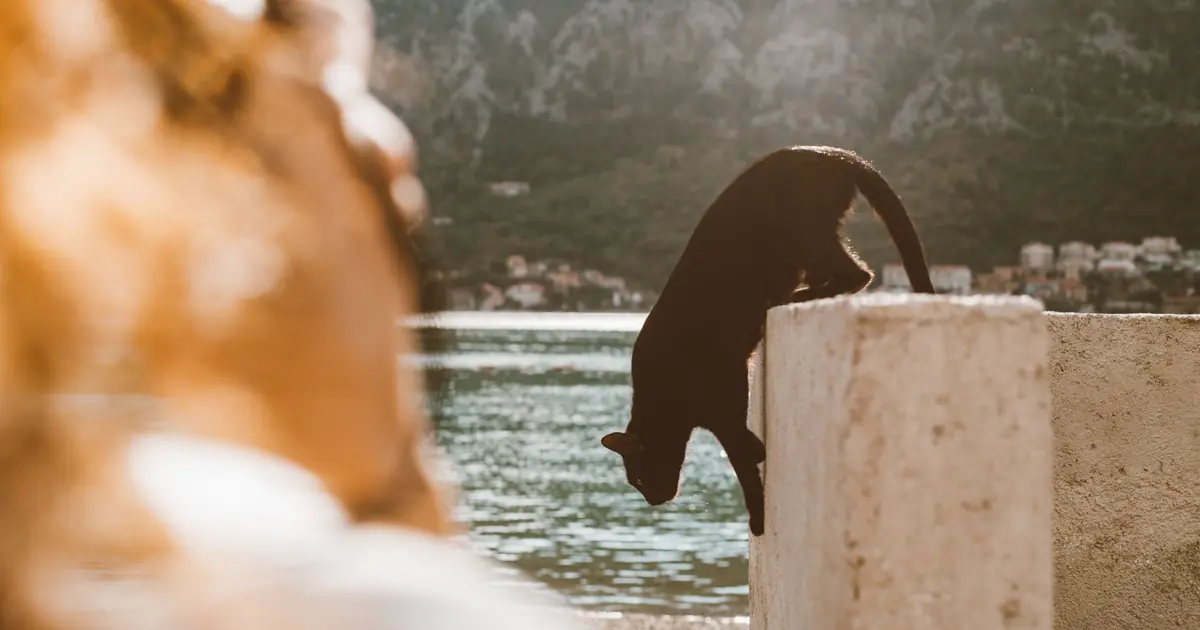
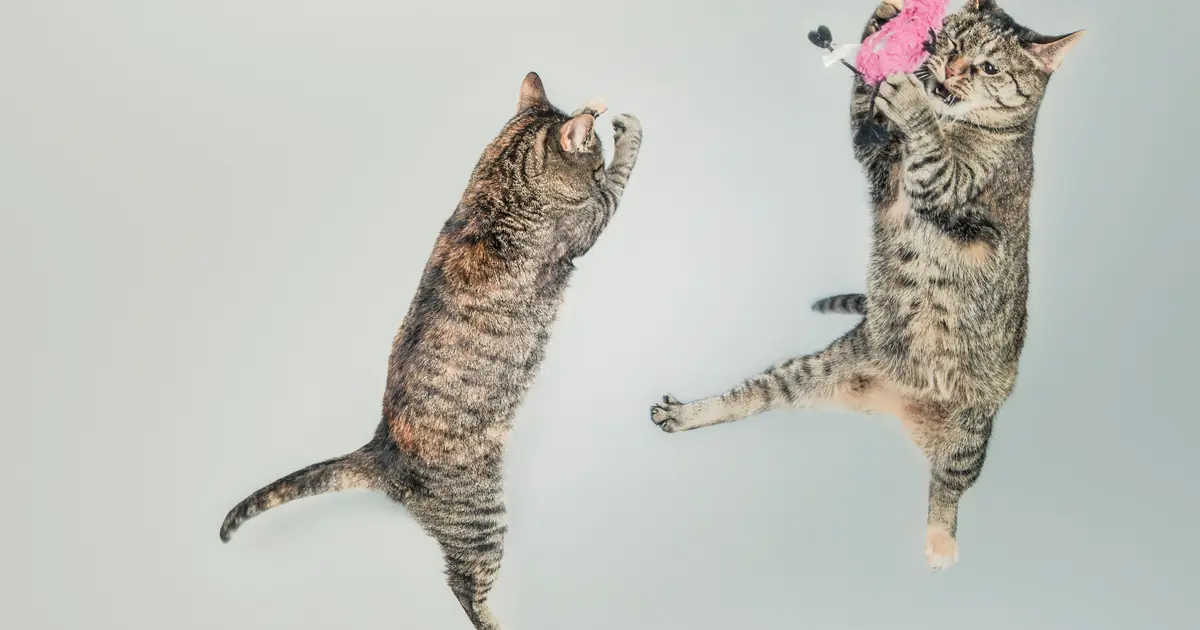
If you’ve ever tossed a toy mouse across the room and watched your cat launch, twist, and land facing the exact opposite direction, you’ve basically seen a backflip. It happens fast. One second your cat is a fluffy loaf on the couch, the next they’re doing something that would make a gymnast jealous.
Here’s the thing: cats aren’t secretly training for the Olympics. Most of their flips are just their bodies doing what they’re built to do. But there’s a real difference between the reflex that keeps a falling cat safe and an actual, on-purpose backflip. We’ll get into both, plus whether you can teach your own cat to do one on command (spoiler: some cats can learn, and it’s pretty fun to watch).
- Not counting the tail, a cat’s spine has about 30 vertebrae versus roughly 24 in a human back, giving them exceptional twist and bend for aerial moves.
- The righting reflex lets a cat twist mid-air to land feet-first, but it’s a survival reflex, not the same thing as a chosen backflip.
- Cats lack a functional collarbone, which frees up their shoulder movement for the kind of rotation a backflip needs.
- Young, athletic, high-energy breeds like Bengals and Abyssinians tend to backflip and leap the most during play.
- Some cats can be trained to do a backflip on cue using positive reinforcement, food rewards, and a target stick, though not every cat is interested or built for it.
Can Cats Actually Do Backflips?
Yes, cats can genuinely do backflips, and plenty of them do it without any training at all. A cat mid-play might launch off the ground, rotate their whole body in the air, and land facing a completely different direction, which is essentially a backflip happening in real time. It usually shows up during a game with a wand toy, a sudden pounce on a bug, or one of those out-of-nowhere startled leaps.
What looks like a “trick” is really just your cat’s normal athletic toolkit on display. Cats are built for sudden, explosive movement, and a flip is one more way that shows up. It’s not a rare circus skill. It’s Tuesday afternoon in your living room.
What Lets a Cat’s Body Flip Like That?
Three things make a cat’s backflip possible: a super-flexible spine, powerful hind legs, and a built-in balance system. Not counting the tail, a cat’s spine has around 30 vertebrae, several more than the roughly 24 in a human back, and the discs between them are thicker and springier. That’s why your cat can twist their upper body in one direction while their hips face another, something most other animals simply can’t do. If you want the full picture on why cats bend the way they do, we’ve covered it in more depth in our guide on why cats are so flexible.
Add in strong hind leg muscles built for explosive jumps (a healthy adult cat can jump five to six times their own body length) and you get serious launch power behind every flip. We break that jumping ability down further in our post on why cats can jump so high. On top of that, a cat’s inner ear works like a built-in level, constantly telling their brain which way is up, which is the final piece that turns a jump into a controlled flip instead of a tumble.
One more quiet advantage: cats don’t have a fully developed collarbone the way we do. As International Cat Care explains, a cat’s shoulder blades attach mostly by muscle rather than bone, which lets the front legs and shoulders rotate further than ours ever could. That extra shoulder freedom is part of what makes a full-body twist look so effortless.
When Do Cats Flip Naturally?
Cats flip naturally during play, hunting, and sudden startle moments, usually without ever meaning to “do a trick.” A wand toy dragged fast across the floor is a classic trigger. Your cat crouches, launches, and rotates mid-air trying to grab it, and the landing often ends up facing a totally different direction than the takeoff.
Hunting instinct plays a big role too. A cat leaping to catch a fly or a moth near the ceiling will often twist and flip trying to track the target with their paws and eyes at the same time. Then there’s the classic “Halloween cat” startle leap, when something spooks your cat and they launch sideways and up all at once, spine arched, back legs firing. And don’t forget the zoomies: that burst of 3am energy where a cat tears through the house, bounces off furniture, and occasionally throws in a flip just because they’ve got the momentum for it. If your cat’s nightly sprint sessions are a regular thing, our piece on why cats get the zoomies explains what’s driving all that energy.
Is a Backflip the Same as the Righting Reflex?
No, a righting reflex and a backflip are not the same thing, even though they look similar. The righting reflex is an automatic survival response: if a cat falls or is dropped, their inner ear and eyes work together to twist the spine and orient the body so the feet land first. It’s not a choice. It happens whether the cat wants it to or not, and it kicks in within a fraction of a second of losing balance.
A backflip, on the other hand, is a deliberate, whole-body rotation a cat performs while pushing off the ground during play, hunting, or excitement. It’s chosen movement, not a reflex firing in response to a fall. Think of the righting reflex as an emergency parachute and a backflip as a dance move. Cornell Feline Health Center notes that this righting ability develops in kittens by around three to four weeks of age and is fully functional by about seven weeks, which is remarkably early for such a complex coordination skill.
| Move | What It Is | When It Happens |
|---|---|---|
| Righting reflex | Automatic mid-air twist that orients the body feet-down | During an accidental fall or drop |
| Play flip | Spontaneous full-body rotation during a game or chase | Playing with toys, chasing bugs, sudden startle |
| Trained backflip | A cued, repeated flip performed on command for a reward | During a training session with a treat or target |
Can You Train a Cat to Do a Backflip?
Yes, some cats can be trained to do a backflip on cue, though it depends heavily on the individual cat’s personality and physical ability. Agile, food-motivated, high-energy cats tend to pick this up fastest. Training usually starts small: teaching a cat to jump through a hoop or over an arm, then gradually raising the challenge and using a treat or target stick held slightly behind and above the cat’s head to encourage the twist.
Positive reinforcement is the only way to do this safely. That means rewarding small steps toward the behavior, never forcing a flip, never tossing a cat to make them rotate, and never punishing a cat who isn’t interested. Some cats genuinely enjoy trick training and will offer a flip on their own once they catch on. Others will look at you like you’ve lost your mind, and that’s a completely valid response too. Keep sessions short, keep jumps low to the ground, and stop the moment your cat seems stressed or tired.
Is It Safe for Cats to Flip and Land Like That?
Generally yes, flipping is safe for healthy adult cats, since their bodies are specifically built to absorb these kinds of landings. Cats land on flexible legs that act like natural shock absorbers, and their light frame relative to their muscle helps cushion the impact. This is the same design that makes cats such famously good jumpers and climbers.
Still, a flip isn’t risk-free for every cat. Hard landings on slick floors like tile or hardwood can cause a slip or a bad angle on landing. Senior cats and cats with arthritis lose some of that spinal flexibility and joint cushioning over time, which makes flips and big jumps riskier for them. Kittens are still building coordination too, so their flips can be a little wobblier and less controlled than an adult cat’s. According to VCA Animal Hospitals, arthritis is common in older cats and often shows up as reluctance to jump onto favorite high spots, so it’s worth watching for signs of stiffness or hesitation as your cat ages.
Which Cats Tend to Backflip the Most?
Young, athletic, high-energy cats backflip and leap the most, and certain breeds are especially prone to it. Bengals, known for their wild-cat ancestry and high prey drive, are frequent flippers during play. Abyssinians, sometimes nicknamed the “Aby-grabby” for their constant motion, are another breed that shows off acrobatic jumps regularly. Oriental Shorthairs and Siamese cats also tend to be unusually athletic and vocal about wanting to play, which often translates into bigger, flashier jumps.
Age matters just as much as breed. Kittens and cats under about two years old are generally at their physical peak for speed and flexibility, so this is when you’ll see the most dramatic flips. As cats move into their senior years, usually around age 11 and up, their joints and spine naturally lose some of that extreme range of motion, and flips become rarer.
How Do You Give a Flip-Happy Cat a Safe Outlet?
The best way to support a cat who loves to flip is to give them safe places to jump and soft spots to land. A sturdy cat tree lets your cat climb, leap, and practice controlled jumps on carpeted or padded surfaces instead of bare floors. Interactive wand toys are great too, since they channel that explosive hunting energy into a game instead of a random 3am sprint across the kitchen counter. Our roundup of best interactive cat toys has some solid options if you want to keep that energy pointed somewhere fun.
A few rugs or a cat mat near favorite jumping spots can also cushion a landing on hardwood or tile. And if your cat’s flips tend to happen mid-zoomie rather than during structured play, a short daily play session can burn off some of that pent-up energy before it turns into a midnight parkour routine.
Flipping is completely normal cat behavior, but it’s worth setting your cat up for safe landings rather than encouraging bigger and bigger jumps off furniture. Skip forcing tricks on kittens, senior cats, or any cat with arthritis or a known joint issue. If your cat ever lands awkwardly and starts limping, favoring a leg, or seems reluctant to jump afterward, it’s best to have a veterinarian take a look. This article is educational and isn’t a substitute for a vet’s exam if your cat seems hurt.
Frequently Asked Questions
Q: Can cats do backflips on purpose?
Yes, cats can flip on purpose during play, hunting, or excitement, and some cats can even be trained to do it on cue using treats and positive reinforcement. It’s a deliberate movement, not just a reflex.
Q: Why does my cat randomly do a backflip?
Most random backflips happen during play, a sudden startle, or a burst of zoomie energy. Your cat’s flexible spine and powerful hind legs let them rotate mid-air while chasing a toy or reacting to a surprise.
Q: Is the righting reflex the same as a backflip?
No. The righting reflex is an automatic response that twists a falling cat’s body so they land feet-first, while a backflip is a chosen, full acrobatic movement performed during play or training, not a fall.
Q: How many bones are in a cat’s spine that let them flip?
Cats have roughly 30 vertebrae in their spine, compared to about 24 in humans, and the discs between them are especially flexible. That extra length and cushioning is a big part of what lets cats twist and flip so easily.
Q: Can kittens do backflips?
Kittens can attempt flips as their coordination develops, but the righting reflex itself isn’t fully functional until around seven weeks of age. Their flips tend to be wobblier than an adult cat’s until they build more muscle and balance.
Q: Are backflips dangerous for older cats?
Backflips can be riskier for senior cats, especially those with arthritis, since aging joints and a stiffer spine reduce their flexibility and shock absorption. It’s best to give older cats low, soft jumping options instead of encouraging big leaps.
Q: What breeds of cats backflip the most?
Bengals, Abyssinians, Oriental Shorthairs, and Siamese cats are known for being especially athletic and are more likely to backflip during play than calmer, less active breeds.
Q: Should I train my cat to do a backflip?
You can, as long as you use positive reinforcement, keep jumps low, and never force or startle your cat into flipping. Some cats enjoy trick training, while others simply aren’t interested, and that’s fine too.

Hello and welcome to The Ideal Cat!
We are some passionate cat owners from different professions. We love our cats and have a lot of experience in how to care for our pets. We are incredibly excited to share our knowledge, experience, and research with you. So you can take good care of your loving cat. We will answer most of the common questions about owning cats, taking care of them, etc. If you have any question contact with us. Thanks for visiting! Enjoy the content.
