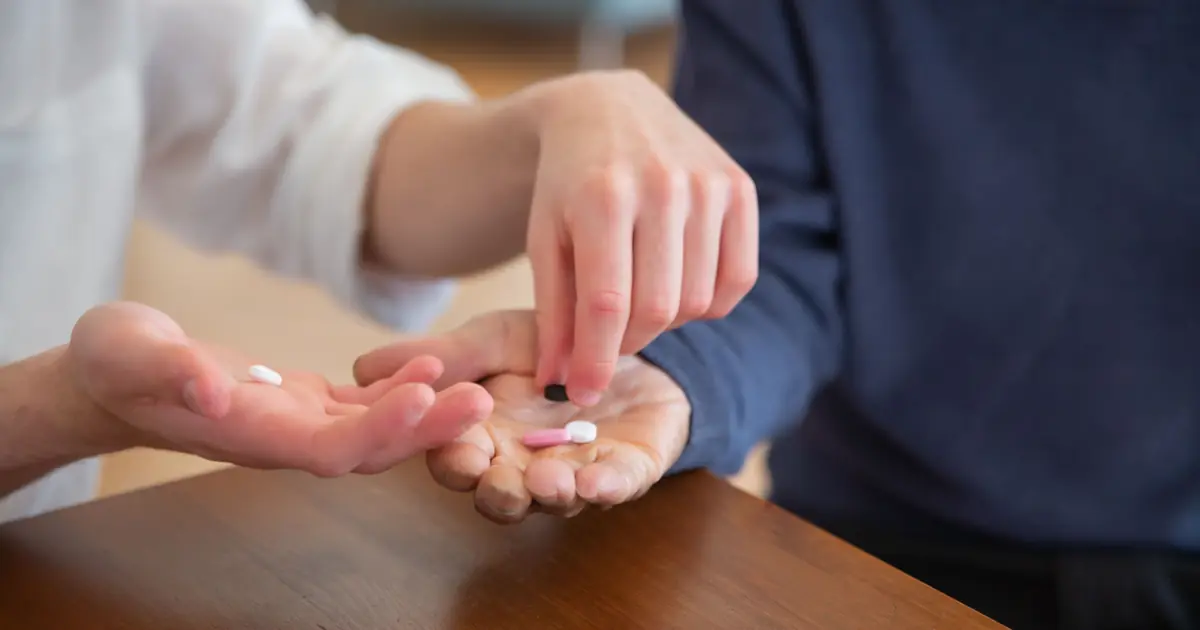
Let’s be honest. Your vet handed you a bottle of pills, said “one twice a day,” and made it look easy. Then you got home, looked at your cat, and your cat looked back like it already knew.
Giving a cat medicine can feel like a two-person job with a cat that only weighs eight pounds. But it doesn’t have to be a wrestling match. With the right grip, the right timing, and a couple of tricks vets use every day, most cats take their meds in under a minute. Here’s exactly how to do it, whether it’s a pill, a liquid, or an ear gel.
This article is educational and isn’t a substitute for veterinary care. Always follow your vet’s exact instructions for your cat’s specific medication.
- The easiest way to give a cat a pill is hidden in a small ball of wet food, but only about half of cats fall for it.
- When pilling by hand, place the pill on the back third of the tongue, then follow with a small syringe of water to protect the esophagus.
- For liquid medicine, aim the syringe into the cheek pouch behind a canine tooth, never straight at the back of the throat, to avoid it going into the lungs.
- Never give your cat human medicine. Acetaminophen (Tylenol), ibuprofen, and aspirin can be fatal to cats.
- Never crush or split a pill without your vet’s okay, since many feline pills are coated, time-released, or too bitter to hide.
- If your cat fights every dose, ask your vet about a flavored liquid, a smaller pill, or a transdermal (ear) version.
What’s the easiest way to give a cat medicine?
The easiest way to give a cat medicine is to hide the pill in food your cat already loves. A pea-sized ball of wet food, a lick of a squeezable treat, or a soft pill pocket lets the medicine go down without any restraint at all. The catch: roughly half of cats accept a hidden pill, and the other half will eat around it and leave the pill sitting there, judging you.
Before you hide anything, ask your vet one question: can this pill be given with food? Most can. A few need an empty stomach, and some should never be crushed. Once you have the green light, food is your best friend.
The three-meatball trick
This is the move vet techs swear by, and it works because it beats a cat’s suspicion. Roll three little balls of wet food. Two are plain, one hides the pill.
- Give your cat the first plain meatball so they relax and start gulping.
- Follow immediately with the pill meatball while they’re still in “yum” mode.
- Hand over the third plain meatball as a chaser, so they don’t stop to inspect anything.
Keep the balls small. A cat that has to chew is a cat that finds the pill. If your cat is picky, a strong-smelling topper like a lick of tuna juice or a squeeze treat can seal the deal.
How do I give my cat a pill by hand?
To give a cat a pill by hand, tilt the head gently up until the jaw relaxes open, drop the pill on the back third of the tongue, then hold the mouth closed and stroke the throat until they swallow. Placing the pill far back triggers an automatic swallow reflex, which is the whole game. This method is called “pilling,” and it’s the go-to when food tricks fail.
Set yourself up first. Have the pill ready in one hand and a syringe of water nearby. Put your cat on a non-slip surface like a towel, with their bottom tucked against your body or into a corner so they can’t back away.
- Cradle the head. Rest your non-dominant hand over the top of the head, thumb on one side of the upper jaw and fingers on the other, right at the cheekbones.
- Tilt the nose to the ceiling. As the nose points up, the lower jaw naturally drops open a little. Don’t force it.
- Open the mouth. Use the middle finger of your pill hand to gently press down on the lower front teeth and open the mouth the rest of the way.
- Place the pill far back. Drop or push the pill onto the back one-third of the tongue. The further back, the faster it goes down.
- Close and encourage. Let the head return to normal, hold the mouth gently closed, and stroke the throat or blow softly on the nose to trigger a swallow.
- Chase it with water. Follow with about 6 ml of water from a syringe (see the safety note below). This washes the pill all the way down.
Watch for the lick. A cat that licks its nose has usually swallowed. A cat that sits there with a suspicious closed mouth may be hiding the pill in a cheek, ready to spit it behind the couch the second you turn around.
Why the sip of water matters more than you think
Always follow a dry pill or capsule with a little water or a lick of food. A cat’s esophagus is narrow and sensitive, and a pill that gets stuck partway down can cause painful irritation or ulcers, a problem vets call erosive esophagitis. A 6 ml water chaser or a bite of wet food pushes the pill safely into the stomach. This one step prevents a surprising amount of trouble, especially with antibiotics like doxycycline.
Should I use a pill popper?
A pill popper is worth it if your cat bites, or if you’d rather keep your fingers out of the danger zone. A pill popper (also called a pill gun or piller) is a plastic wand with a soft tip that holds the pill and releases it at the back of the tongue with a small plunger. It does the same job as your fingers, just from a safer distance.
The technique is the same as hand-pilling: tilt the head up, guide the tip to the back of the tongue, press the plunger, then follow with water. Ask your vet or a tech to demo it once so you get the angle right. If you’re weighing which tool to buy, our guide to the best cat pill popper breaks down what to look for.
How do I give my cat liquid medicine with a syringe?
To give liquid medicine, draw up the dose, slip the syringe tip into the side of the mouth behind a canine tooth, and squeeze slowly so the liquid pools in the cheek and your cat can swallow between sips. The golden rule: aim toward the cheek, never straight down the throat. Squirting liquid at the back of the throat can send it into the lungs, which is dangerous.
Liquids are often easier than pills because there’s no swallowing reflex to fight, and many are flavored to taste like chicken or tuna.
- Prep the dose. Shake the bottle if the label says to, then draw the exact prescribed amount into the syringe.
- Position your cat. Hold them facing away from you on your lap, or sit beside them. A towel wrap helps with wigglers (more on that next).
- Slip the syringe in. Rest your hand on the head, then tuck the syringe tip into the pocket between the cheek and teeth, just behind a canine tooth.
- Go slow. Squeeze out a little at a time, giving your cat time to swallow and breathe between squirts. Don’t dump it all at once.
- Finish kind. Gently hold the mouth closed, stroke the throat, and offer a treat. A happy ending makes tomorrow’s dose easier.
The towel burrito: how to hold a squirmy cat
The towel burrito is the single best trick for a cat that fights medicine. Wrapping your cat snugly in a towel with only the head poking out keeps those back claws tucked away and actually calms many cats, a bit like swaddling a baby. It protects you and lowers everyone’s stress.
- Lay a medium towel flat on a table or the floor.
- Set your cat near one short end, facing away from that edge.
- Bring one side of the towel over the body and tuck it snugly under the far side.
- Wrap the other side over and around, so only the head sticks out. Snug, not tight.
- Keep one hand on the bundle and give the medicine with the other.
Work calmly and fairly quickly. Cats read your energy, so a relaxed voice and steady hands go a long way. If you’re truly stuck, a second person to hold the burrito while you give the dose makes it a ten-second job.
Which medication method works best for each type?
Different medicines call for different methods, and the best one depends on the form your vet prescribed. Here’s a quick map of what works for pills, liquids, and topicals, plus the main thing to watch for with each.
| Medication type | Best method | Key tip |
|---|---|---|
| Pill or capsule | Hidden in wet food, or pilled by hand / pill popper | Always follow with water to protect the esophagus |
| Liquid or suspension | Syringe into the cheek pouch | Aim at the cheek, never the throat; go slow |
| Transdermal gel (ear) | Wipe measured gel on the inner, hairless ear flap | Wear a glove or finger cot so you don’t absorb it |
| Eye drops or ointment | Steady the head, drop onto the eye surface from above | Don’t touch the tip to the eye; wait 5 min between different eye meds |
| Ear drops (for infection) | Lift the ear flap, drop into the canal, massage the base | Let your cat shake, then wipe only the outer ear |
Topical and ear (transdermal) medicine
Transdermal medicine is a gel you rub onto the thin, hairless skin inside your cat’s ear, where it absorbs through the skin instead of the gut. It’s a lifesaver for cats that refuse pills. The most common one is methimazole for overactive thyroid, and some behavior and pain meds come this way too. Always wear a glove or finger cot so the medicine doesn’t absorb into your skin, and alternate ears if you give it twice a day. Ask your vet before assuming a pill can be switched to transdermal, since only certain drugs absorb well this route.
Eye and ear drops
For eye medicine, steady your cat’s head, hold the dropper above the eye (not touching it), and let a drop fall onto the eyeball. For ear drops, lift the ear flap, place the drops into the canal, then gently massage the base of the ear so you hear a soft squish. Then step back, because the head shake is coming. If your cat is on drops for an eye infection tied to a cold, our guide on what to do when your cat won’t stop sneezing covers the bigger picture.
What if my cat spits out the pill or fights every dose?
If your cat spits out the pill, stay calm and check how much came back up. A tiny bit of dissolved coating usually doesn’t need a redo, but if the whole pill lands on the floor or your cat immediately gags the liquid back up, you’ll likely need to repeat that dose. Call your vet if you’re unsure whether it counts.
When every single dose turns into a battle, the answer usually isn’t more force. It’s a different formulation. Here’s what to ask your vet about:
- A compounded flavored liquid. Many pills can be remade by a compounding pharmacy into a chicken, tuna, or salmon-flavored liquid your cat licks up willingly.
- A transdermal (ear) version. For the right drugs, a gel on the ear skips the mouth entirely.
- A smaller pill or different size. Sometimes the pill is just physically too big for a small cat.
- A long-acting injection. Some antibiotics can be given as a single shot at the clinic, so you skip home dosing altogether.
There’s no medal for suffering through this. If you dread it, your cat dreads it more, and a phone call often fixes the whole problem. This is especially worth doing for long courses, like treating a cat parasite infection or a stubborn case of ringworm that runs for weeks.
Mistakes to avoid when medicating your cat
The most dangerous mistake is giving a cat human medicine, so let’s start there. A few common errors turn a simple task into a real problem, and they’re all easy to sidestep.
- Never give human medications. Acetaminophen (Tylenol) is deadly to cats even in tiny amounts, and ibuprofen and aspirin are also toxic. Only give what your vet prescribed for your cat.
- Never crush or split a pill without asking. Many feline pills are enteric-coated, time-released, or so bitter that crushing them makes your cat foam and refuse. Check with your vet or pharmacist first.
- Don’t skip the water chaser on dry pills. A stuck pill can burn the esophagus.
- Don’t stop early. Finish the full course of antibiotics even if your cat seems better, or the infection can bounce back stronger.
- Don’t squirt liquid at the throat. Cheek pouch only, to avoid aspiration into the lungs.
- Don’t force it in a rage. A stressed, fast, angry attempt gets you bitten and teaches your cat to hide at pill time. Calm and quick wins.
Cat bites can get infected fast, so if your cat does bite down and break skin, clean it well and call your doctor. For the how-to itself, veterinary sources like the VCA Animal Hospitals and the Cornell Feline Health Center back up the tilt-and-place technique, and International Cat Care has great low-stress handling tips.
Frequently asked questions about giving cats medicine
Q: How do you give a cat a pill when they fight you?
Wrap your cat in a towel burrito so only the head shows, which controls the claws and calms most cats. Work calmly and quickly: tilt the head up, place the pill on the back of the tongue, hold the mouth closed, and stroke the throat. If the fight happens every time, ask your vet for a flavored liquid or transdermal version instead.
Q: Can I hide my cat’s pill in food?
Usually yes, if your vet confirms the pill can be given with food. Tuck it into a pea-sized ball of wet food or a soft pill pocket, ideally using the three-meatball trick. Keep the portion small so your cat swallows it whole rather than chewing and finding the pill.
Q: Can I crush my cat’s pill and mix it in food?
Not without asking your vet or pharmacist first. Many cat medications are enteric-coated, time-released, or extremely bitter, and crushing them can change how the drug works or make your cat refuse the food entirely. Some pills are fine to crush, so always check before you do.
Q: What can I do if my cat spits out the pill?
Check how much came back. A small bit of dissolved coating usually doesn’t need repeating, but if the whole pill comes out or the liquid is gagged back up, you likely need to redo the dose. When in doubt, call your vet. If it happens every time, ask about a different formulation.
Q: Why do I have to give water after a pill?
A cat’s esophagus is narrow, and a dry pill can get stuck partway down and cause painful irritation or ulcers. Following the pill with about 6 ml of water or a lick of wet food washes it safely into the stomach. This is especially important with antibiotics like doxycycline.
Q: Can I give my cat human medicine like Tylenol?
No, never. Acetaminophen (Tylenol) is fatal to cats even in very small doses, and ibuprofen and aspirin are also toxic. Only ever give medication your veterinarian has prescribed specifically for your cat. If your cat swallows a human pill, call your vet or ASPCA Animal Poison Control at (888) 426-4435.
Q: How do I give liquid medicine to a cat that hates it?
Slip the syringe into the cheek pouch behind a canine tooth and squeeze slowly, giving time to swallow between squirts. Aim at the cheek, never the throat. A towel wrap and a treat afterward help. If your cat still hates it, ask your vet about a better-flavored compounded version.
Q: What is transdermal medication for cats?
Transdermal medicine is a gel you rub onto the hairless inner skin of your cat’s ear, where it absorbs through the skin instead of being swallowed. It’s a great option for cats that refuse pills. Methimazole for thyroid disease is the most common example. Only certain drugs work this way, so ask your vet first.
Here’s the bottom line: giving your cat medicine is a skill, not a talent, and it gets easier fast. Stay calm, work quickly, reward generously, and never be shy about asking your vet for an easier formulation. You’re not failing if pilling is hard. You’re just one phone call away from a version your cat will actually take.

Hello and welcome to The Ideal Cat!
We are some passionate cat owners from different professions. We love our cats and have a lot of experience in how to care for our pets. We are incredibly excited to share our knowledge, experience, and research with you. So you can take good care of your loving cat. We will answer most of the common questions about owning cats, taking care of them, etc. If you have any question contact with us. Thanks for visiting! Enjoy the content.
