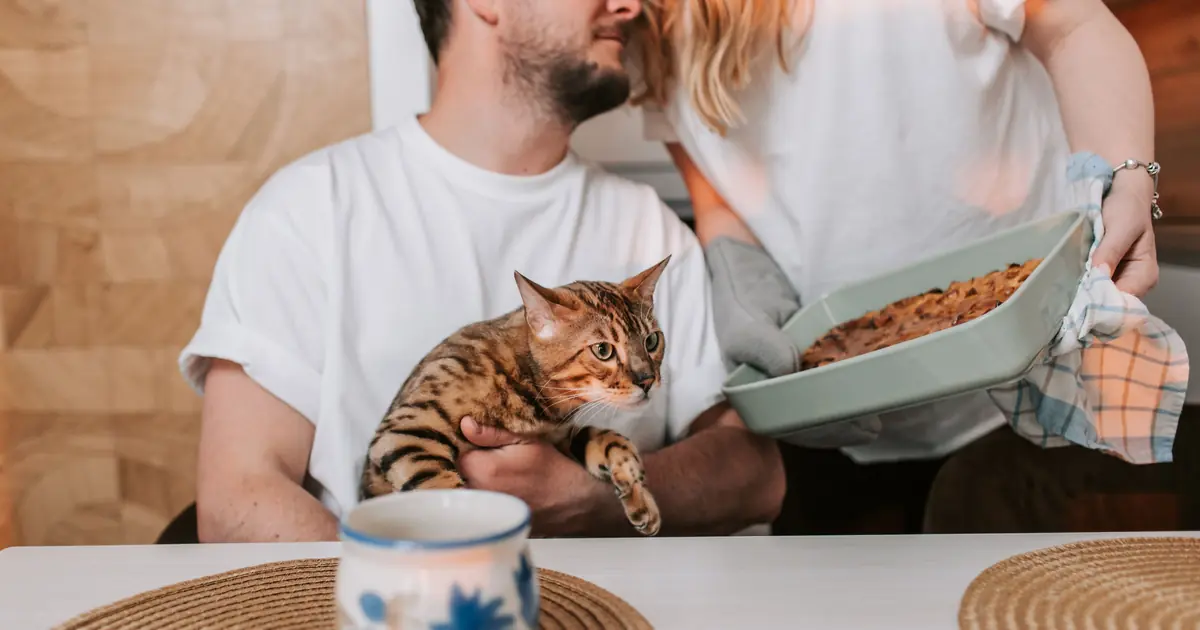
Picture this: you’re halfway through a bowl of ice cream and your cat is suddenly right there, nose twitching, paw creeping toward your spoon. It sure looks like your cat wants a taste of your dessert. Cake frosting, whipped cream, a dropped bit of donut, they all seem to trigger the same pushy, wide-eyed begging.
Here’s the thing, though. Your cat isn’t after the sugar at all. Cats are physically unable to taste sweetness, so something else is driving that begging, and once you know what it is, the behavior makes a lot more sense.
- Cats lack functional sweet taste receptors because the Tas1r2 gene that builds them is nonfunctional, so cats cannot taste sweetness the way people and dogs do.
- When a cat begs for “sweet” foods like ice cream or cake, it’s drawn to the fat, dairy, or protein in the food, not the sugar.
- Cats are obligate carnivores, meaning their bodies are built to run on meat, not carbohydrates or sugar.
- Sugary treats offer cats no nutritional benefit and can contribute to obesity, diabetes, and upset stomachs over time.
- Some sweets are outright toxic to cats, including anything with chocolate, xylitol, raisins, or grapes, and these need a vet call right away.
Why does my cat like sweets?
Your cat doesn’t actually like sweets in the way you’d think, because cats cannot taste sugar at all. Researchers at the Monell Chemical Senses Center found that cats carry a broken version of the Tas1r2 gene, one of the two genes needed to build a working sweet taste receptor. Without it, sweetness is invisible to a cat’s tongue. So that jump onto the counter when you’re eating cake isn’t about the sugar calling out to your cat. Something else in the food is doing the calling, and we’ll get into exactly what below.
What is my cat really tasting in “sweet” foods?
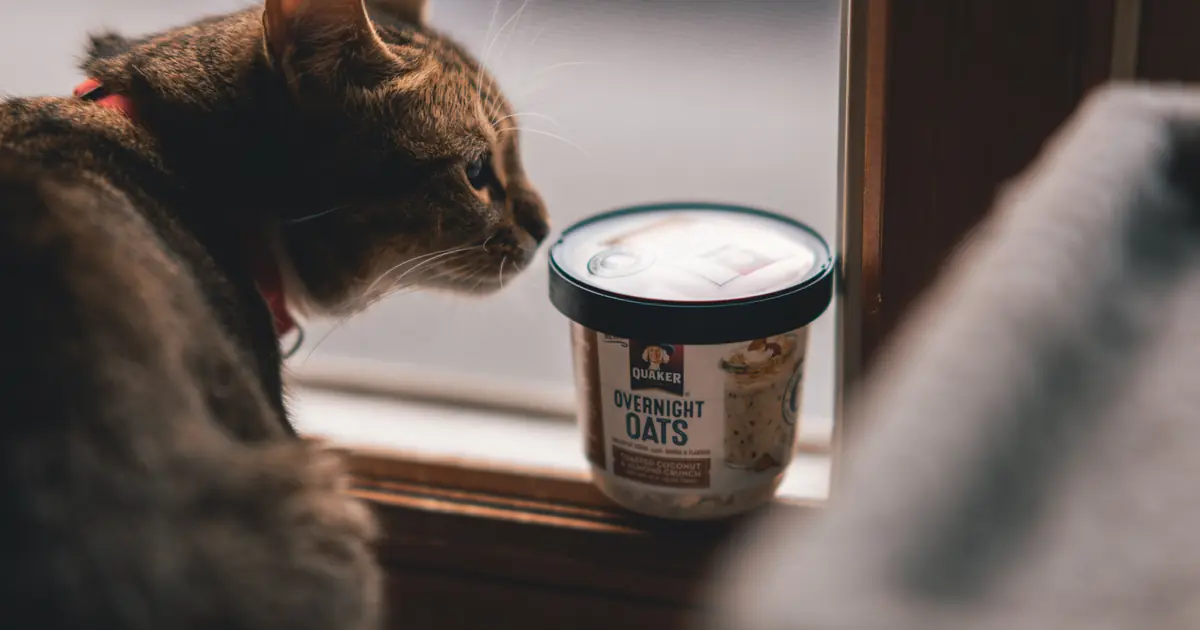
Your cat is tasting fat, dairy, protein, and texture, the things that actually register on a cat’s tongue. A lick of whipped cream isn’t “sweet” to your cat, it’s rich and creamy. A bite of frosted cake isn’t “sugary,” it’s soft, fatty, and smells like butter. Here’s a quick rundown of what’s really grabbing your cat’s attention:
- Fat: Cats have taste receptors tuned to detect fat, and it’s a strong draw on its own.
- Dairy: Milk, cream, and yogurt smell rich and often contain enough fat and protein to interest a cat, even though many adult cats are lactose intolerant.
- Protein: Eggs, meat-based fillings, and even trace bits of animal product baked into a dessert can be the real hook.
- Texture and temperature: Cold, soft, or melty foods like ice cream can simply feel interesting in a cat’s mouth.
- Your attention: If your cat has learned that hovering near your plate gets a reaction (even an annoyed one), that’s its own reward.
Why are cats obligate carnivores wired for meat, not sugar?
Cats are obligate carnivores, which means their bodies evolved to run almost entirely on nutrients from meat, not plants or sugar. Unlike people, who evolved eating a mix of fruit, grains, and meat, cats descended from desert hunters that ate prey almost exclusively. There was no evolutionary reason to develop a taste for sugar, since ripe fruit and sweet plants were never a meaningful part of the ancestral cat’s diet. That’s likely why the sweet receptor gene broke down somewhere along the way and never got selected back in. A cat’s tongue is built to detect amino acids and fat, the flavor markers of meat, not the carbohydrates that make human treats sweet.
So why does my cat beg for ice cream, cake, or donuts?
Your cat begs for these foods because of the fat and dairy inside them, plus plain curiosity about whatever you’re eating. Ice cream is cold, creamy, and loaded with milk fat. Cake frosting is basically butter and sugar, and your cat is smelling the butter. A donut has fried dough and glaze, and the fat content alone is enough to get a cat’s nose twitching. Add in the fact that cats are naturally curious and often want whatever their favorite person is enjoying, and you’ve got a pretty reliable formula for a cat parked next to your dessert plate every single time.
| “Sweet” food | What your cat actually wants | Safe for cats? |
|---|---|---|
| Ice cream | Milk fat and cold, creamy texture | No, skip it (dairy and sugar can upset the stomach) |
| Cake or frosting | Butter and fat in the frosting | No |
| Plain whipped cream | Fat and dairy richness | A tiny lick occasionally is generally not harmful, but not a habit |
| Chocolate cake or brownies | Fat and the smell of the batter | No, toxic (chocolate) |
| Donuts | Fried dough fat and glaze | No |
| Sugar-free candy or gum | Curiosity, texture | No, potentially toxic (xylitol) |
| Plain yogurt (unsweetened) | Protein and dairy fat | A small taste occasionally is usually fine for most cats |
Are sweets safe for cats to eat?
No, sweets aren’t safe for cats and offer no real benefit, and some are genuinely dangerous. Since cats can’t taste sugar, there’s no upside to giving them sweet treats, only downside. Regularly feeding sugary foods can contribute to weight gain, and obesity in cats raises the risk of diabetes, joint problems, and a shorter lifespan. Sugar and dairy can also cause vomiting, diarrhea, or a sore stomach, especially in cats that are lactose intolerant.
More importantly, some ingredients common in sweets are outright toxic to cats:
- Chocolate: Contains theobromine and caffeine, which cats process far more slowly than people do, and can cause vomiting, an elevated heart rate, tremors, or seizures.
- Xylitol: A sugar substitute found in sugar-free candy, gum, and some baked goods, linked to a dangerous drop in blood sugar and liver damage.
- Raisins and grapes: Can cause acute kidney injury in cats, even in small amounts.
- Macadamia nuts: Sometimes baked into cookies or cakes, and known to cause weakness and tremors in pets.
The ASPCA Animal Poison Control Center lists all four of these as serious hazards for cats, so it’s worth reading labels before you let your cat anywhere near a dessert plate.
What can I give my cat instead of sweets?
Give your cat treats built around meat and protein instead, since that’s what actually satisfies a cat’s palate. A few good swaps:
- Offer a small piece of plain, cooked chicken or fish as a treat instead of a bite of cake.
- Pick a commercial cat treat formulated for cats, ideally one that’s meat-based rather than sugar-based.
- If your cat tolerates dairy well, a very occasional lick of plain, unsweetened yogurt is a gentler option than ice cream.
- Redirect begging behavior with a food puzzle toy at mealtime, so your cat has something to do besides staring at your plate.
If your cat also begs at the sight of your milk glass, you’re not alone. Curious about that specific habit? Take a look at why cats like milk even though most are lactose intolerant. The same “fat and curiosity” logic that drives dessert-begging shows up in a lot of other food questions too, like whether cats can drink juice, whether Cheerios are okay as an occasional nibble, or whether a cat can have a bit of watermelon on a hot day.
When should I worry about my cat and sweets?
Worry immediately if your cat has eaten chocolate, anything containing xylitol, raisins, grapes, or macadamia nuts, and call your vet or a pet poison control hotline right away. Don’t wait to see if symptoms show up first. Signs of trouble can include vomiting, diarrhea, weakness, tremors, a racing heart, or unusual lethargy, but with toxic ingredients like these, it’s safer to call before symptoms appear than after. Keep the packaging on hand if you can, since it helps the vet or poison control specialist figure out how much your cat may have gotten into.
This article is educational and isn’t a substitute for veterinary care. If you know or suspect your cat ate something toxic, contact your veterinarian or an animal poison control hotline right away rather than waiting for symptoms to confirm it.
Frequently Asked Questions
Q: Can cats taste sugar at all?
No. Cats lack a functional Tas1r2 gene, one of two genes needed to build a working sweet taste receptor, so they cannot detect sweetness the way humans and dogs do. This has been documented by researchers at the Monell Chemical Senses Center.
Q: Why does my cat try to steal my ice cream if it can’t taste sugar?
Your cat is drawn to the milk fat and creamy, cold texture of ice cream, not the sugar. Fat is a strong flavor trigger for cats, and dairy products naturally contain plenty of it.
Q: Is it okay to give my cat a lick of frosting?
It’s best to skip it. Frosting is mostly fat and sugar with no nutritional value for a cat, and a large amount can cause an upset stomach. If it’s chocolate frosting, it’s also toxic and should never be given to a cat.
Q: What happens if my cat eats chocolate cake?
Chocolate contains theobromine and caffeine, which cats metabolize much more slowly than people, and even a small amount can trigger vomiting, a racing heart, tremors, or seizures. Call your vet or a poison control hotline right away if your cat eats any chocolate product.
Q: Are sugar-free treats safer for cats than regular sweets?
No, sugar-free treats can be more dangerous. Many use xylitol as a sugar substitute, and xylitol is toxic to pets, capable of causing a dangerous drop in blood sugar and liver damage.
Q: Why does my cat like whipped cream so much?
Whipped cream is almost pure dairy fat, and fat is one of the flavors cats are strongly drawn to. It’s the richness your cat wants, not any sweetness, since cats can’t taste sugar in the first place.
Q: Do kittens taste sweetness differently than adult cats?
No. The missing sweet taste receptor is genetic and present from birth, so kittens are just as unable to taste sweetness as adult cats.
Q: What treats can I give my cat instead of sweets?
Small pieces of plain cooked chicken or fish, or a commercial meat-based cat treat, satisfy a cat’s actual taste preferences far better than anything sugary. These give your cat the protein and fat flavors it’s genuinely wired to enjoy.

Hello and welcome to The Ideal Cat!
We are some passionate cat owners from different professions. We love our cats and have a lot of experience in how to care for our pets. We are incredibly excited to share our knowledge, experience, and research with you. So you can take good care of your loving cat. We will answer most of the common questions about owning cats, taking care of them, etc. If you have any question contact with us. Thanks for visiting! Enjoy the content.
