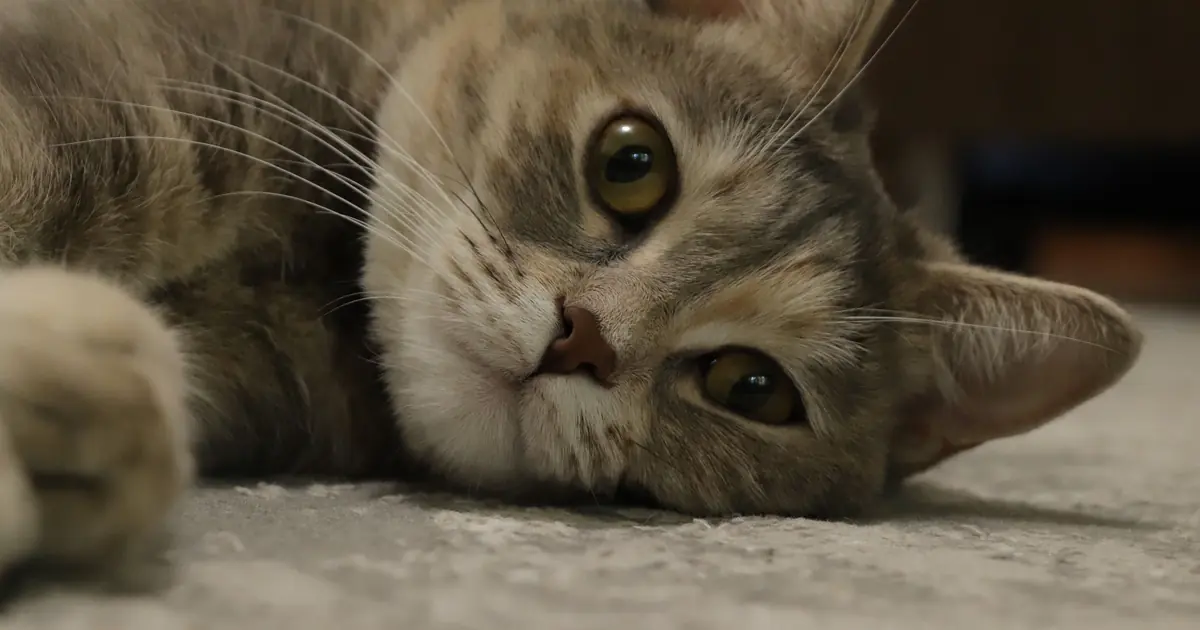
Picture this: you walk into the room and your cat is flat on her back, paws in the air, belly on full display like she owns the place. It’s one of those moments that makes you stop and go “aww” out loud, even if nobody’s around to hear it.
It’s also confusing. Is she asking for a rub? Is she just hot? Is this a trap? Cats aren’t dogs, and a belly-up cat isn’t always sending the same message a belly-up dog is. The good news is that once you know what to look for, reading the situation gets pretty easy.
- A cat lying belly-up around you is usually showing trust, not asking for a belly rub.
- The belly is a cat’s most vulnerable spot, so exposing it is one of the clearest signs of feeling safe.
- Cats also flip onto their backs to cool down, stretch out after a nap, or invite a play session.
- A cornered or frightened cat can roll onto its back defensively, to fight with all four clawed paws at once.
- Body language, like a loose tail and slow blinks versus flattened ears and hissing, tells you which one you’re seeing.
Why do cats lay on their backs?
Cats lay on their backs mainly because they feel relaxed and unguarded in that moment. In the wild, a cat’s belly has no fur protection to speak of, no thick skin, no bony shield, just soft tissue over important organs. A cat that rolls onto its back in front of you is telling you, in cat language, that it doesn’t see you as a threat.
But “trust signal” isn’t the only reason. Cats also flop over to cool off on a tile floor, to stretch out tight muscles, to invite a playmate to wrestle, or, in a very different mood, to defend themselves. Same posture, different meanings. The rest of this guide walks through each one.
What does an exposed belly actually mean for a cat?
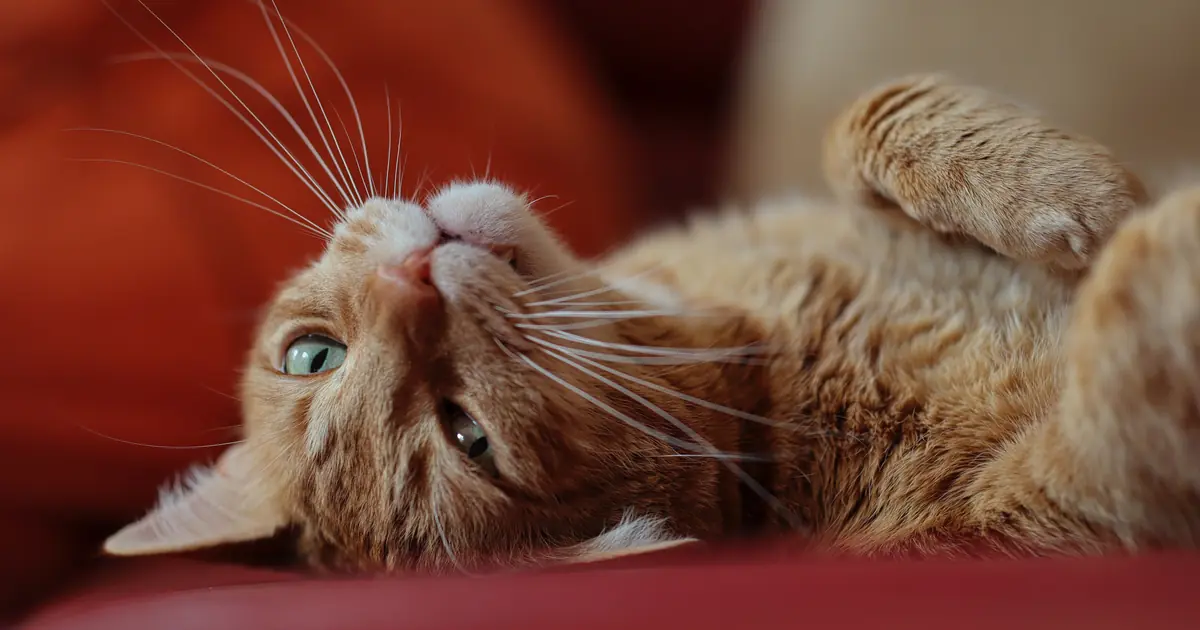
An exposed belly means a cat has dropped its guard completely. According to the International Cat Care, showing the tummy is one of the biggest compliments a cat can pay a person or another animal, because it leaves the animal’s most sensitive area open to attack. A cat only does this somewhere it feels genuinely secure.
You’ll usually see it paired with other relaxed signals: a loose, floppy body, half-closed eyes, and maybe a slow blink aimed right at you. Cat parents sometimes call that slow blink a “cat kiss,” and honestly, that’s a pretty good way to think about it.
Is a cat rolling onto its back an invitation for a belly rub?
Usually not. A belly-up cat is showing trust, not requesting a belly rub, and touching the stomach is one of the fastest ways to turn a peaceful moment into a grab-and-kick situation. Cats have thin skin and a lot of nerve endings around the abdomen, and many treat a hand reaching for that spot as playful prey to attack rather than an affectionate gesture.
Some cats genuinely do enjoy a light belly scratch, especially ones who are very bonded to their person, but they’re the exception, not the rule. If you’re not sure whether your cat is a fan, check out our guide on whether cats actually like belly rubs before you test the theory with your fingers.
Do cats lay on their backs to cool off?
Yes, stretching out belly-up is a simple way for a cat to dump excess body heat. Fur traps warmth, and a cat’s stomach has thinner, less insulated fur than its back and sides. Flattening out on a cool tile floor or a shaded patch of grass with the belly exposed lets more skin surface meet the cool air, which speeds up heat loss.
You’ll see this most in summer, or in any house that runs warm. If your cat suddenly starts sprawling belly-up on the bathroom floor every afternoon, she’s probably just found the coolest spot in the house and is making the most of it.
Is rolling onto their back part of stretching and relaxing?
Yes, a lot of belly-up moments happen right after a nap, as part of a full-body stretch. Cats sleep an average of 12 to 16 hours a day, and coming out of that much rest means muscles need a good lengthening. Rolling onto the back and stretching all four legs out is an easy way to work out the stiffness before getting up.
This kind of stretch tends to be brief. The cat flips, stretches, maybe yawns, and then either gets up or curls into a more compact sleeping position. It’s not usually an invitation for anything, just cat maintenance.
Can a belly-up roll be an invitation to play?
Sometimes, yes, especially in kittens and young, playful cats. A cat that rolls onto its back during a play session, paws batting at a toy or at your hand, is often inviting a wrestling match. This is common between littermates and bonded cats who play-fight together.
The tell here is energy. A playful roll comes with a wiggly body, dilated pupils, and quick little bats of the paws, not the loose, half-asleep stillness of a relaxed trust roll. If you reach in during a play roll, expect a gentle mouth grab or a paw wrap. It’s still worth being careful, since play can escalate fast if a cat gets overstimulated.
Why do cats roll onto their backs defensively?
A defensive back-roll happens when a scared or cornered cat wants access to all four clawed paws at once. Standing on all fours during a confrontation only gives a cat its front claws and teeth to work with. Rolling onto the back frees up the back legs too, which are strong enough to deliver serious rabbit-kicks. It’s a last-resort fighting position, not a friendly one.
This usually shows up during a tense standoff with another cat, a dog getting too close, or a person reaching for a cat that’s already stressed. The ASPCA notes that defensive aggression in cats often includes a crouched or rolled posture paired with hissing, flattened ears, and dilated pupils, which is nothing like the loose, relaxed belly-up flop of a happy cat.
How can you tell a relaxed roll from a defensive one?
You can tell them apart by reading the rest of the body, not just the belly. A relaxed cat looks loose and slow, while a defensive cat looks tense, fast, and loud. The table below breaks down the four most common back-lying situations side by side.
| Context | Body Language | What To Do |
|---|---|---|
| Relaxed trust | Loose, floppy body, soft eyes, slow blinks, purring, tail gently swaying | Enjoy the moment; pet the head or chin, skip the belly unless your cat has shown she likes it |
| Cooling off | Sprawled flat on a cool surface, calm face, no vocalizing | Leave her be, check the room isn’t too warm, offer fresh water |
| Play invitation | Wiggly body, dilated pupils, paws batting, playful growls or chirps | Use a wand toy instead of your hand to keep play safe |
| Defensive | Tense muscles, flattened ears, hissing or growling, dilated pupils, claws visible | Back away, give her space, remove the trigger (other pet, loud noise, stranger) |
Reading a cat’s full body, ears, tail, pupils, and posture together gives you a much clearer picture than the belly alone ever could. For a broader rundown of what different postures and tail positions mean, our guide to cat body language covers the signals worth knowing.
Should you ever rub the exposed belly?
Only if your specific cat has already shown you she’s okay with it. Since a belly-up roll is a trust signal rather than a standing invitation, the safest approach is to let the cat make the next move. Offer a hand near her chin or cheek instead, and watch how she reacts.
If she leans into a light belly touch, purrs, and stays loose, she may be one of the cats who genuinely enjoys it. If she stiffens, grabs your hand with her front paws, or thumps you with a back leg, that’s your answer too, and it’s not personal. Wondering whether the flop is really about you at all? Our piece on how cats show they love you covers the fuller range of affection signals cats use, including plenty that don’t involve their stomach.
A belly-up flop is usually a good sign and nothing to worry about on its own. This article is meant to help you understand normal cat behavior, not replace veterinary advice. If your cat suddenly changes her resting posture, seems reluctant to move, or pairs unusual laying positions with hiding, appetite loss, or vocalizing in pain, it’s worth a call to your vet. A cat rolling defensively out of fear isn’t asking for affection either, and pushing the interaction can end in a scratch or bite for you and more stress for her.
Frequently Asked Questions
Q: Why does my cat show me her belly but bite when I touch it?
Showing the belly is a trust display, not a request to be touched there. Many cats have sensitive, nerve-rich skin on the stomach and instinctively grab or kick at a hand that reaches in, even while otherwise relaxed.
Q: Do all cats hate having their belly touched?
No, some cats genuinely enjoy it, especially ones with strong bonds to their owner. Most cats are more cautious about it, so it’s best to test with a light touch and stop if the cat tenses up or grabs your hand.
Q: Is it normal for cats to sleep on their backs?
Yes, sleeping belly-up is a completely normal position for a relaxed cat, especially during deep sleep. Cats average 12 to 16 hours of sleep a day, and a loose, exposed sleeping posture is a good sign the cat feels safe in its environment.
Q: Why does my kitten flip onto its back during play?
Kittens often roll onto their backs mid-play to grab at a toy or a sibling’s paws with all four legs. It’s a normal wrestling move, common in litters, and usually comes with dilated pupils and a wiggly, energetic body.
Q: How do I know if my cat’s back-roll is aggressive?
Look at the rest of the body. A defensive roll comes with tense muscles, flattened ears, hissing, growling, and visible claws, which is very different from the loose, quiet posture of a relaxed or playful roll.
Q: Why does my cat roll on her back and meow at me?
A cat rolling and meowing is often greeting you or trying to get attention, similar to a stretch-and-chirp combo after waking up. It’s usually a friendly signal, especially if paired with a relaxed body and a raised tail.
Q: Can laying on the back mean my cat is in pain?
A normal, comfortable back-lying position is not a pain sign. If a cat suddenly avoids its usual resting spots, struggles to get up, or pairs unusual postures with crying or hiding, that’s a reason to see a vet rather than a behavior question.
Q: Why does my cat only show her belly to me and not to other people?
Cats tend to reserve the belly-up trust display for people and animals they feel most secure around. A cat who only rolls over for one household member is likely signaling that person is her safest bond.

Hello and welcome to The Ideal Cat!
We are some passionate cat owners from different professions. We love our cats and have a lot of experience in how to care for our pets. We are incredibly excited to share our knowledge, experience, and research with you. So you can take good care of your loving cat. We will answer most of the common questions about owning cats, taking care of them, etc. If you have any question contact with us. Thanks for visiting! Enjoy the content.
