You know the look. Your cat’s parked at the window, tail twitching, chattering at a robin like it’s personally offended her. She wants out. And you want her to have that fresh air, the sunshine, the smells. You just don’t want her hit by a car or hunting the neighborhood songbirds.
That’s exactly the gap a good outdoor cat enclosure fills. It gives your cat the sights and sounds of the outdoors while keeping her safely contained, and it keeps local wildlife safe too. We’ve rounded up 5 of the best outdoor cat enclosures below, from a roomy walk-in pen to a compact catio on wheels.
Here’s the thing: they’re not all the same. The right pick depends on your yard, your budget, and how many cats you’re trying to keep happy. Let’s find yours.
- An outdoor cat enclosure lets indoor cats enjoy fresh air, sunshine, and stimulation while staying safely contained away from traffic, predators, and toxins.
- The Aivituvin Catio is our best overall pick for its balance of sturdy build, weatherproofing, and reasonable price around 200 dollars.
- Size matters: one to two cats need a small catio, while three or more do better in a walk-in pen you can stand inside.
- Safety comes down to secure double latches, sturdy wire, and supervising your cat for the first few outings until she settles in.
- Enclosures protect birds and small wildlife too, since a contained cat can watch and stalk without ever making the catch.
Our Top Picks
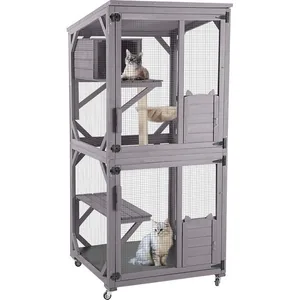
Aivituvin Catio Outdoor Cat House
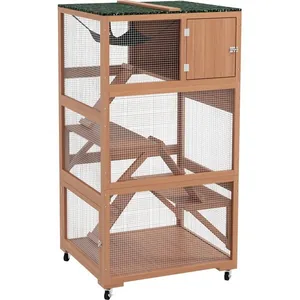
PawHut Catio Outdoor Cat House on Wheel, Orange
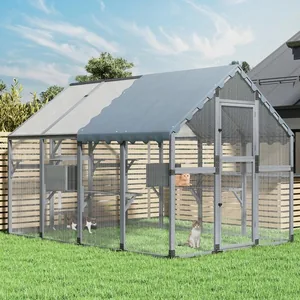
Coziwow Outdoor Walk-in Catio Cat Exercise Pen, Grey
Outdoor cat enclosure compared at a glance
| Enclosure | Best for | Type | Price |
|---|---|---|---|
| Aivituvin Catio Outdoor Cat House | Best overall | Compact catio | $199.99 |
| PawHut Catio Outdoor Cat House on Wheel, Orange | Best mobile on wheels | On wheels | $187.49 |
| Coziwow Outdoor Walk-in Catio Cat Exercise Pen, Grey | Best walk-in | Walk-in pen | $795.00 |
| PawHut Catio 3 Level Outdoor Cat House, Brown | Best multi-level | Multi-level | $339.99 |
| Petscosset 59-in Outdoor Wooden Catio Cat Enclosure with Platforms, Gray | Best wooden with platforms | Wooden with platforms | $289.99 |
The 5 best outdoor cat enclosure picks, reviewed
Aivituvin Catio Outdoor Cat House: best overall
The Aivituvin Catio Outdoor Cat House is the one we’d hand most cat parents first. Around 200 dollars, it hits the sweet spot: solid wood frame, weather-resistant finish, wire mesh that holds up, and enough height for a couple of jumping shelves inside. It’s roomy enough for one or two cats to lounge, climb, and nap in the sun without feeling cramped.
Who it’s for: small to medium yards, patios, or balconies, and homes with one or two cats. Who it’s not for: multi-cat households of three or more, or anyone who wants to walk inside with their cat. Assembly takes an hour or so with two people, and the roof sheds rain well, though we’d add a little extra sealant before the first storm for peace of mind.
PawHut Catio Outdoor Cat House on Wheel, Orange: best mobile on wheels
The PawHut Catio Outdoor Cat House on Wheels (in a cheerful orange) solves a problem a lot of us have: you want your cat in the sun, but the sun moves. This one rolls. At about 187 dollars, it’s a mid-height wooden catio on lockable casters, so you can chase the shade in summer and the warmth in winter, then tuck it against the house in a storm.
Who it’s for: renters, small paved yards, decks, and anyone who wants to reposition the enclosure without a workout. Who it’s not for: big multi-cat crews or rough, uneven grass where the wheels struggle. Assembly is fairly beginner-friendly. Just double-check the wheel locks engage fully before you trust it with your cat, and park it in shade on hot days.
Coziwow Outdoor Walk-in Catio Cat Exercise Pen, Grey: best walk-in
If you’ve got the space and the budget, the Coziwow Outdoor Walk-in Catio Cat Exercise Pen (grey) is the upgrade. At 795 dollars it’s the priciest pick here, and it earns it: this is a full walk-in pen you can stand up inside, with a proper door, generous floor space, and room for multiple climbing levels and cats. Cleaning is easy when you can just walk in.
Who it’s for: three or more cats, bigger yards, and parents who want to sit outside with their cats. Who it’s not for: tiny balconies, tight budgets, or anyone who moves often, since this is a stay-put structure. Assembly is the biggest job on this list, so plan a couple of hours and a helper. The frame and mesh are built for real weather, but shade cloth over part of the roof is a smart add.
PawHut Catio 3 Level Outdoor Cat House, Brown: best multi-level
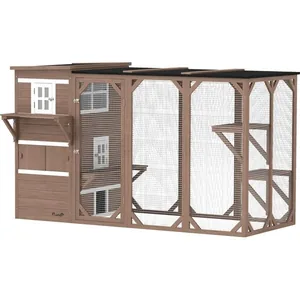
The PawHut Catio 3 Level Outdoor Cat House (brown) is built up, not out, which is exactly what cats want. Three connected levels with ramps mean your cat can climb, perch, and survey her kingdom from up high, all in a footprint that fits a modest yard or patio. At around 340 dollars it’s a fair deal for the vertical space you get.
Who it’s for: two to three cats, smaller yards where floor space is tight, and climbers who love a lookout perch. Who it’s not for: senior or arthritic cats who struggle with ramps, or anyone wanting a walk-in setup. Assembly has more pieces because of the levels, so give yourself time. The wood is treated for outdoor use, but check the ramp connections stay snug over time.
Petscosset 59-in Outdoor Wooden Catio Cat Enclosure with Platforms, Gray: best wooden with platforms
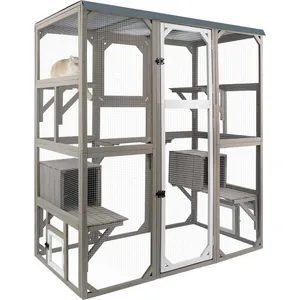
The Petscosset 59-inch Outdoor Wooden Catio Cat Enclosure (gray) leans into natural wood looks with built-in platforms at staggered heights, so it doubles as garden furniture that happens to hold cats. At roughly 290 dollars, the nearly five-foot height gives good climbing room, and the platforms give each cat a spot to claim.
Who it’s for: one to two cats, owners who care about how the enclosure looks in the yard, and folks who want ready-made perches without adding shelves later. Who it’s not for: large multi-cat households or anyone needing a walk-in door. Assembly is moderate. The wood benefits from a coat of pet-safe outdoor sealer, and positioning it with some natural shade keeps the platforms comfortable in summer.
How to choose the best outdoor cat enclosure
Buying an outdoor cat enclosure isn’t hard once you know what to weigh. Here’s what actually matters before you spend the money.
Match the size to your cats
One cat is happy in a compact catio. Two cats want a bit more floor and a couple of shelves. Three or more? Go for a walk-in pen where nobody’s crowded and you can get in to clean. As a rule, more cats means more vertical space, since cats share space better when they can stack up instead of spreading out.
Escape-proof it with secure latches
Cats are Houdinis with whiskers. Look for double-locking doors or latches a paw can’t nudge open, and check that the mesh has no gaps at the seams or floor line. A tight roof matters too, because a determined cat will climb and test the top. The ASPCA’s cat care guidance is a good reminder that safe containment protects your cat from cars, other animals, and toxins she’d meet roaming free.
Weatherproof roof, shade, and ventilation
Your enclosure needs a roof that sheds rain and a shaded corner your cat can retreat to. Full sun with no escape is dangerous in summer. Good airflow keeps it from turning into an oven, so mostly-mesh sides beat solid walls in hot climates. Add shade cloth if the enclosure sits in open sun.
Check the wire gauge and flooring
Thin, flimsy wire bends and rusts. Look for a sturdy welded galvanized mesh that resists chewing and holds its shape. For flooring, a raised or wire base keeps paws off wet ground, while a solid floor is easier to line and clean. International Cat Care notes that outdoor access should enrich a cat’s life without exposing her to unnecessary risk, and a solid build is part of that.
Assembly and placement
Read the assembly notes honestly before buying. Walk-in and multi-level units take longer and often need two people. Place the enclosure somewhere your cat can see interesting things (a bird feeder nearby is pure cat TV), with part-shade, level ground, and easy access from a window or door if you want a cat flap connection. Keeping cats contained also protects local birds, something the American Bird Conservancy’s Cats Indoors program has long championed.
Safety note: Never leave your cat in an enclosure during extreme heat or cold. Always provide fresh water and a shaded spot, and supervise the first few visits until your cat settles in and you’re sure the enclosure is secure.
Are outdoor cat enclosures safe for cats?
Yes, outdoor cat enclosures are safe for cats when they’re well built and used sensibly. A quality enclosure keeps your cat away from the biggest outdoor dangers: traffic, dogs, wild predators, fights with other cats, poisons, and disease. It gives her the enrichment of fresh air and real outdoor stimulation without the roaming risks.
- Choose secure, double-locking latches and gap-free mesh so your cat can’t slip out.
- Provide shade, fresh water, and a weatherproof roof so she’s never stuck in harsh sun or rain.
- Supervise the first few visits, then check in regularly rather than leaving her unattended all day.
- Skip the enclosure entirely in extreme heat or freezing cold, when even shade isn’t enough.
Done right, an enclosure is one of the safest ways to give an indoor cat the outdoor life she’s craving from the window.
Common mistakes to avoid
- Buying too small. A cramped catio bores a cat fast. Size up for the number of cats, and add vertical space so they can climb, not just sit.
- Trusting weak latches. Flimsy single latches and paw-friendly clips are an escape waiting to happen. Insist on secure, double-locking doors.
- No shade or water. An enclosure in full sun with no water bowl turns dangerous within minutes on a hot day. Always provide both.
- Leaving a cat out in bad weather. Extreme heat, cold, or storms are a no. Bring your cat in and don’t rely on the roof alone.
- Choosing flimsy wire. Thin, un-galvanized mesh bends, rusts, and can let a determined cat or a predator through. Pay for sturdy welded wire.
Related guides
Related guides: If you’re weighing your options, our roundup of the best cat catios goes deeper on catio styles, while the best outdoor cat houses guide covers cozier shelters. For supervised outdoor time on foot, pair a well-fitted cat harness with a sturdy cat leash. And to keep the climbing fun going indoors, see our picks for the best cat trees.
Frequently asked questions
Q: Are outdoor cat enclosures safe?
Yes, outdoor cat enclosures are safe when they’re sturdily built with secure latches and gap-free mesh. They protect cats from traffic, predators, poisons, and disease while still giving them fresh air. Supervise the first few visits and always provide shade and water.
Q: What is a catio?
A catio is a cat patio, an enclosed outdoor space that lets an indoor cat safely enjoy fresh air, sunshine, and outdoor sights. Catios range from small window boxes to large walk-in structures, and most connect to the house through a window or door.
Q: How big should an outdoor cat enclosure be?
Size to your number of cats. One or two cats are comfortable in a compact catio around 3 to 6 square feet of floor plus vertical shelves. Three or more cats do better in a walk-in pen with several feet of floor space and multiple climbing levels.
Q: Can you leave a cat in an outdoor enclosure all day?
It’s better not to leave a cat unsupervised all day. Short, checked-in sessions are safest, especially at first. Weather can change fast, so provide shade and water, monitor the temperature, and bring your cat inside during extreme heat, cold, or storms.
Q: Do outdoor cat enclosures keep predators out?
A well-built enclosure with sturdy welded wire, a secure roof, and a solid or raised floor keeps out most predators like dogs, coyotes, and birds of prey. Cheap, flimsy mesh is less reliable, so pay for a strong galvanized build if predators are a concern in your area.
Q: Is it cheaper to build a DIY catio or buy one?
A basic DIY catio can be cheaper if you already have tools and time, sometimes under 100 dollars in materials. But a ready-made enclosure saves labor, arrives engineered to be escape-proof, and often costs 200 to 800 dollars depending on size. Buy if you want it done right and fast.
Q: Do cats actually use outdoor enclosures?
Most cats take to an enclosure quickly, especially with perches, shade, and a view of birds or squirrels. Some shy cats need a few short, supervised sessions to warm up. Adding familiar bedding, toys, and a sunny nap spot helps a hesitant cat settle in.
Q: Can an outdoor enclosure connect to my house?
Yes, many catios are designed to attach to a window or door with a tunnel or cat flap, so your cat can come and go on her own. If you want this, check the enclosure’s placement and buy a compatible pet door before you install it.
The bottom line
The best outdoor cat enclosure for you comes down to space and budget. For most homes with one or two cats, the Aivituvin Catio is our top pick at a fair price. Tight on room or renting? The PawHut on wheels or the space-saving 3-level catio give height without a big footprint. Got a bigger yard, more cats, and room in the budget? The walk-in Coziwow pen is worth every dollar. Whichever you choose, a secure, shaded outdoor cat enclosure is one of the kindest upgrades you can give a window-watching indoor cat.

Hello and welcome to The Ideal Cat!
We are some passionate cat owners from different professions. We love our cats and have a lot of experience in how to care for our pets. We are incredibly excited to share our knowledge, experience, and research with you. So you can take good care of your loving cat. We will answer most of the common questions about owning cats, taking care of them, etc. If you have any question contact with us. Thanks for visiting! Enjoy the content.
)