It’s a cold, wet night. You flip on the porch light and there she is again, that skinny little tabby, curled up tight against your door trying to stay warm. You’ve been leaving food out for weeks. Now you’re wondering how to give her somewhere safe to sleep too.
A good outdoor cat house changes everything for a stray, a feral, or your own indoor-outdoor cat. It gets them off the freezing ground, out of the wind, and into a dry pocket of warmth that can genuinely save a life in winter. But the shelters vary a lot, and the wrong one is basically a cold, damp box.
We pulled together six of the best outdoor cat houses below: heated and unheated, wooden and insulated fabric, from budget picks to insulated cottages. Here’s what actually works, and who each one is for.
- A good outdoor cat house is insulated, waterproof, raised off the cold ground, and small enough that a cat’s own body heat warms the inside.
- Two exits matter: a second doorway gives a cat an escape route so it never feels trapped by a predator or a rival cat, which makes ferals far more likely to use the shelter.
- Heated outdoor cat houses are safe when they use low-voltage MET-listed or UL-listed heaters built for outdoor pet use; never run an indoor human heating pad inside a cat shelter.
- Straw, not blankets or hay, is the best bedding for an outdoor cat house because straw repels moisture and keeps trapping warmth even when it’s damp out.
- Smaller is warmer: an outdoor cat house sized for one or two cats holds heat far better than a big roomy one, which just fills with cold air.
Our Top Picks
K&H Pet Products Outdoor Heated Kitty House Cat Shelter, Cottage
Wagstro Cozy Polyester Outdoor Heated Cat House with Raised Deck, Rainproof Roof & Thermal Pad, Large, Black
Ownpets Coated-Metal Outdoor Heated Cat House, Olive Green, X-Large
Outdoor cat house compared at a glance
| Cat house | Best for | Type | Price |
|---|---|---|---|
| K&H Pet Products Outdoor Heated Kitty House Cat Shelter, Cottage | Best heated overall | Heated | $92.99 |
| Wagstro Cozy Polyester Outdoor Heated Cat House with Raised Deck, Rainproof Roof & Thermal Pad, Large, Black | Best insulated heated | Insulated heated | $179.99 |
| Ownpets Coated-Metal Outdoor Heated Cat House, Olive Green, X-Large | Best budget heated | Budget heated | $59.99 |
| FunXplore Wooden Insulated Outdoor Cat House, Grey | Best wooden unheated | Wooden insulated | $95.00 |
| Frisco Outdoor Wooden Cat House with Elevated Balcony Steps, Large | Best wooden with balcony | Wooden | $107.99 |
| Petsfit All-Round Foam Wooden Outdoor Cat House, White | Best foam-insulated | Foam insulated | $144.65 |
The 6 best outdoor cat house picks, reviewed
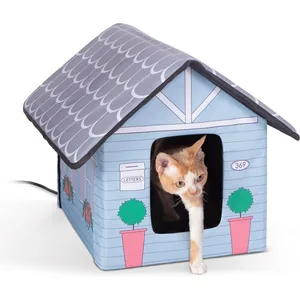
K&H Pet Products Outdoor Heated Kitty House Cat Shelter, Cottage: best heated overall
The K&H Outdoor Heated Kitty House is the shelter we point most people toward first. It’s a soft-sided insulated cottage with a low-voltage heated floor pad that warms to your cat’s body temperature, so it’s cozy without ever getting hot. The fabric is waterproof and it holds heat well for its size, which is the whole point of a heated house.
This one’s great for a regular porch cat, a semi-feral you’ve been feeding, or a senior indoor-outdoor cat who feels the cold more. The trade-off: it has one main door, so nervous ferals may want you to cut a small second exit. And you’ll need an outdoor-rated outlet nearby. For most cold-climate cat parents, it’s the best mix of warmth, weatherproofing, and price.
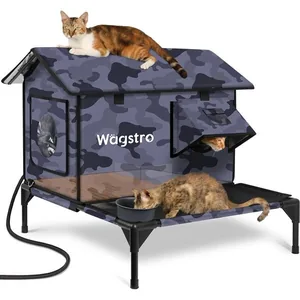
Wagstro Cozy Polyester Outdoor Heated Cat House with Raised Deck, Rainproof Roof & Thermal Pad, Large, Black: best insulated heated
The Wagstro Cozy Outdoor Heated Cat House is the upgrade pick, and you can feel where the extra money goes. It pairs thick polyester insulation with a rainproof pitched roof, a raised deck that lifts the whole thing off wet ground, and a thermal heating pad inside. For brutal winters or wind-blown yards, that combination keeps the inside dry and genuinely warm.
It’s a strong choice for people in the north, or anyone sheltering an older cat or a small colony member that needs real protection. It’s on the large side, so it’s best for one bigger cat or a bonded pair rather than a tiny kitten who’d struggle to heat all that space. Pricier than the rest, but built to last several seasons.
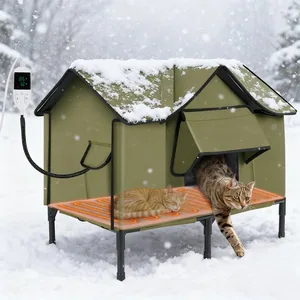
Ownpets Coated-Metal Outdoor Heated Cat House, Olive Green, X-Large: best budget heated
If money’s tight and winter’s already here, the Ownpets Coated-Metal Outdoor Heated Cat House gets a stray warm without wrecking your budget. It’s an X-large coated-metal shelter with a heated pad inside, and the hard shell shrugs off rain and wind better than you’d expect at this price. For under sixty dollars, it does the core job.
Honestly, this is the one to grab when you’re helping a community cat and can’t spend a fortune. The insulation isn’t as plush as the K&H or Wagstro, so in extreme cold you’ll want to pack straw around the pad. But as a first shelter for a feeder colony or a single porch visitor, it’s a caring, practical pick.
FunXplore Wooden Insulated Outdoor Cat House, Grey: best wooden unheated
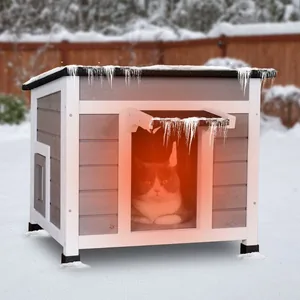
Not everyone wants an electric shelter, and the FunXplore Wooden Insulated Outdoor Cat House is our favorite unheated pick. It’s a solid grey wooden house with insulated walls and a raised floor, and it looks tidy enough that it won’t upset the neighbors or a picky HOA. Wood breathes, resists condensation, and holds up beautifully outdoors.
This one shines in milder climates, or anywhere you’d rather not run a cord. Add a thick bed of straw and a cat’s own body heat does the rest inside the insulated walls. It’s a great fit for a shy feral who prefers a sturdy, den-like box over soft fabric. Just seal any gaps and angle the door away from prevailing wind.
Frisco Outdoor Wooden Cat House with Elevated Balcony Steps, Large: best wooden with balcony
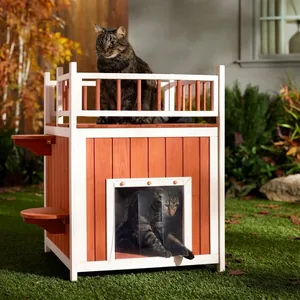
The Frisco Outdoor Wooden Cat House with Elevated Balcony is the charmer of the group, and there’s real function behind the cute. The elevated design and balcony steps keep the sleeping area off cold, wet ground, and cats love a raised perch where they can survey their turf before committing to a nap.
It suits a confident indoor-outdoor cat or a friendly regular who enjoys lounging outside more than hiding. The walls aren’t as heavily insulated as the FunXplore, so it’s best for mild to moderate climates, or a warmer-weather shelter you stuff with straw when nights dip. For a semi-social porch cat, that balcony earns its keep.
Petsfit All-Round Foam Wooden Outdoor Cat House, White: best foam-insulated
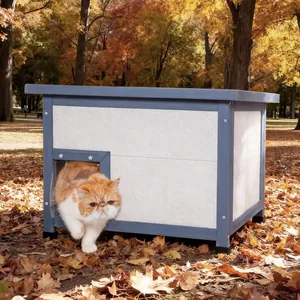
The Petsfit All-Round Foam Wooden Outdoor Cat House splits the difference beautifully: a wooden frame wrapped with all-round foam insulation, so you get the sturdiness of wood and the heat-trapping of foam without any electricity. The white finish looks clean, and the insulated shell keeps the inside noticeably warmer than plain wood on a frosty morning.
This is a smart pick for cold climates where you can’t run a cord, or for a cautious feral who won’t go near anything humming or plugged in. It costs more than the basic wooden houses, but the foam layer is doing genuine work. Pack it with straw, raise it on a pallet, and it becomes a serious winter shelter.
How to choose the best outdoor cat house
Picking an outdoor cat house isn’t complicated once you know what matters. Here’s what actually keeps a cat warm, dry, and safe outside.
Insulation and waterproofing come first
Insulation is the difference between a shelter and a cold box. Look for foam-lined walls, thick fabric, or insulated wood, and a waterproof roof and floor. A house that soaks through in the first storm is worse than nothing, because a wet cat loses heat fast. Check that seams are sealed and the door faces away from wind and rain.
Raise it off the ground
Cold ground pulls heat straight out of a cat. Set the house on a pallet, bricks, or built-in legs so there’s an air gap underneath. A raised floor also keeps rain runoff and snowmelt from pooling inside. The shelter guidance from Alley Cat Allies stresses getting cats up off the cold, wet earth as one of the biggest wins for outdoor warmth.
Size it snug, not roomy
This one surprises people. A smaller outdoor cat house is warmer, because the cat’s own body heat can actually warm the space inside. A big, roomy shelter just fills with cold air the cat can never heat. Aim for enough room to turn around and curl up, and no more. For two cats, a bonded pair snuggling actually helps.
Two exits give an escape route
A second doorway is a small feature that makes a huge difference, especially for ferals. With two exits, a cat can never be cornered by a dog, a raccoon, or a bully cat, so it feels safe enough to actually go inside. Position the second opening on a different wall, and keep both doorways small to block wind and larger animals.
Heated or unheated?
Heated houses are wonderful in hard winters, but only use ones built for the job: low-voltage, MET-listed or UL-listed heaters made for outdoor pet shelters. Never put an indoor human heating pad, an extension-cord space heater, or anything not rated for outdoor pet use inside a cat house. If you go unheated, insulation plus a deep bed of straw does remarkable work. The cold-weather tips from the ASPCA are a good sanity check on keeping outdoor cats safe as temperatures drop.
Bedding, placement, and cleaning
Line the floor with straw, not blankets or towels. Straw repels moisture and keeps insulating even when damp, while fabric soaks up water and freezes. Place the house against a wall or under an overhang, door facing away from prevailing wind, near where the cat already feels safe. Check the straw every few weeks, swap it when it flattens or gets damp, and give the shelter a quick clean between seasons.
For anyone caring for a colony, International Cat Care’s advice on feral cats is worth a read, since community cats have different needs than a pet who comes indoors. Straw, a quiet spot, and a low-stress approach go a long way.
How do you keep an outdoor cat house warm in winter?
You keep an outdoor cat house warm by trapping the cat’s own body heat and blocking every draft. The winning formula is insulation, a snug interior, a raised floor, and a deep bed of straw, with an optional low-voltage heated pad for the harshest nights.
- Fill it with straw. Pack the floor several inches deep with dry straw. The cat burrows in and the straw traps warm air around its body. Refresh it when it flattens.
- Line the inside with mylar. A reflective mylar blanket or emergency-blanket lining bounces the cat’s body heat back inside, adding real warmth for a few dollars.
- Keep it small. A tight interior warms up from one cat. If your house is huge, block off part of it or add more straw so there’s less cold air to heat.
- Raise and shelter it. Lift it off the ground and tuck it against a wall or under cover, door away from the wind. Cover the doorway with a clear vinyl flap to hold heat in.
- Add safe heat if needed. In deep cold, a low-voltage outdoor-rated heated pad helps, but straw and insulation handle most winters on their own.
Common mistakes to avoid
- Using blankets, towels, or fleece. Soft bedding feels cozy to us, but it soaks up moisture, gets cold and clammy, and can freeze solid. Straw stays warm even when damp. Always choose straw.
- Buying a house that’s too big. A roomy shelter fills with cold air the cat can’t warm. Size it snug so body heat actually does its job.
- Setting it on the cold ground. Skipping a raised floor lets cold and damp seep straight up. Put it on a pallet, bricks, or legs with an air gap underneath.
- Only one exit. A single doorway can trap a cat against a predator or bully, and many ferals simply won’t enter. Give it two exits so there’s always an escape route.
- Using an indoor heating pad. Human electric blankets and indoor pads are a fire and shock risk outdoors. Only use low-voltage, MET-listed or UL-listed heaters made for outdoor pet shelters.
Related guides
Related guides:
- Give your cat safe outdoor time with the best outdoor cat enclosure options.
- Want a permanent outdoor space? See our picks for the best cat catio setups.
- For indoor comfort, compare the best cat beds for every sleeper.
- Taking your cat outside safely? Start with the best cat harness guide.
Frequently asked questions
Q: How do you keep an outdoor cat house warm without electricity?
Fill the floor with several inches of dry straw so the cat can burrow and trap its own body heat. Line the inside with a reflective mylar blanket, keep the interior small and snug, raise it off the cold ground, and hang a vinyl flap over the doorway. Insulation plus straw handles most winters without any power.
Q: Are heated cat houses safe?
Heated cat houses are safe when they use low-voltage heaters that are MET-listed or UL-listed and built specifically for outdoor pet use. These warm to a cat’s body temperature rather than getting hot. Never use an indoor human heating pad, electric blanket, or space heater in an outdoor cat house, since those are a real fire and shock risk.
Q: What is the best bedding for an outdoor cat house?
Straw is the best bedding for an outdoor cat house. It repels moisture and keeps trapping warmth even when the weather is damp, and a cat can burrow into it. Avoid blankets, towels, and fleece, because fabric soaks up water, gets cold and clammy, and can freeze.
Q: What is the best shelter for feral cats?
The best shelter for feral cats is small, insulated, raised off the ground, and has two exits so the cat never feels trapped. An insulated wooden or foam house packed with straw works well, and many ferals prefer an unheated den-like box over anything plugged in. Keep it in a quiet, low-traffic spot near where the cat already feels safe.
Q: Where should you place an outdoor cat house?
Place an outdoor cat house against a wall or under an overhang, in a quiet spot away from foot traffic, with the door facing away from prevailing wind and rain. Raise it off the ground on a pallet or bricks. Positioning it near where the cat already eats or shelters makes it far more likely to be used.
Q: Straw or hay for a cat shelter?
Use straw, not hay. Straw is dry, hollow, and repels moisture, so it insulates well and stays warm even when damp. Hay absorbs water, breaks down, molds, and can irritate a cat, which makes it a poor and even risky choice for bedding.
Q: How big should an outdoor cat house be?
An outdoor cat house should be just big enough for a cat to step in, turn around, and curl up, and no larger. A snug interior lets the cat’s body heat warm the space, while an oversized house fills with cold air the cat can never heat. For two cats, a size that fits a bonded pair curled together works best.
Q: Do outdoor cats really need a house in winter?
Yes, outdoor and community cats benefit hugely from a shelter in winter. A dry, insulated house raised off the ground protects them from wind, rain, snow, and frostbite, and can genuinely save a cat’s life in freezing temperatures. Even a simple insulated box packed with straw makes a big difference.
The bottom line
If you’re in a cold climate and can reach an outdoor outlet, the K&H Outdoor Heated Kitty House is the outdoor cat house we’d buy first, with the Wagstro as the heavy-winter upgrade. On a tight budget, the Ownpets heated shelter gets a stray warm for under sixty dollars. Prefer no cords? The FunXplore insulated wooden house and the foam-lined Petsfit both hold heat beautifully with a deep bed of straw. Whichever outdoor cat house you choose, raise it off the ground, keep it snug, add two exits, and fill it with straw. That little tabby on your porch will thank you for it.

Hello and welcome to The Ideal Cat!
We are some passionate cat owners from different professions. We love our cats and have a lot of experience in how to care for our pets. We are incredibly excited to share our knowledge, experience, and research with you. So you can take good care of your loving cat. We will answer most of the common questions about owning cats, taking care of them, etc. If you have any question contact with us. Thanks for visiting! Enjoy the content.
)