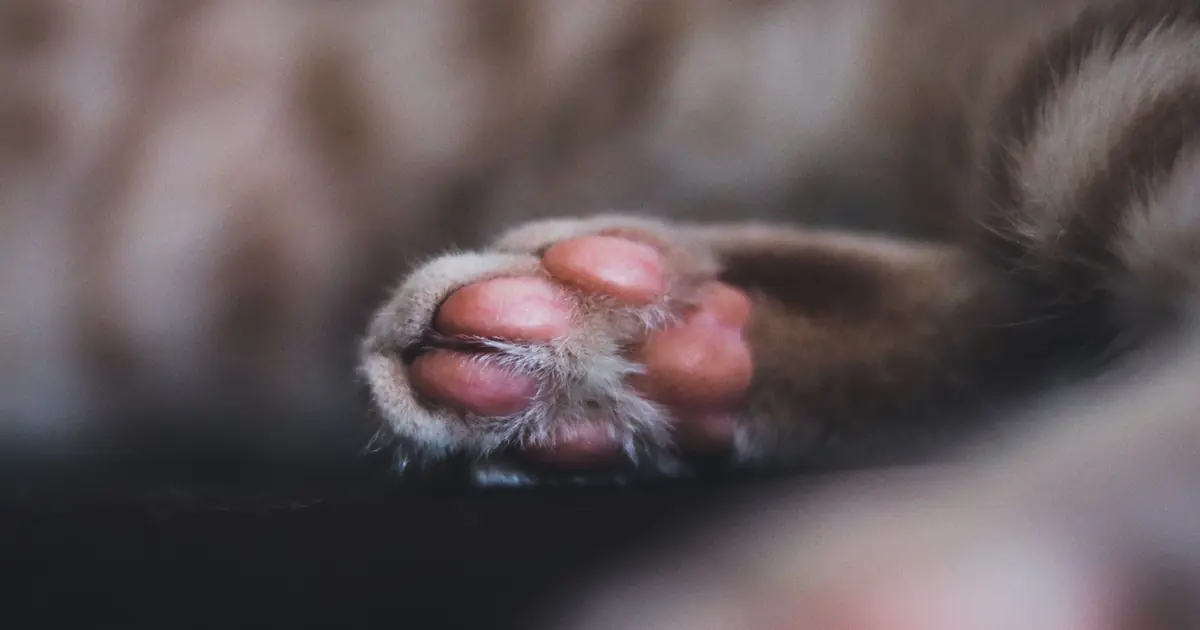
You’re vacuuming under the cat tree and you find it: a small, curved, hollow claw shell just lying there. Your stomach drops a little. Did your cat’s claw fall off? Is something wrong with her paw?
Or maybe it’s worse. Your cat snagged a claw on the carpet, yowled, and now there’s a spot of blood on her toe. Either way, you want to know the same thing: will that claw grow back, and does your cat need a vet? Let’s get you a straight answer.
- Cat claws grow continuously throughout a cat’s life, layer by layer, similar to how human nails grow.
- A claw that’s shed naturally or broken off usually regrows fully in about 2 to 3 months.
- Declawing amputates the last bone of each toe, so those claws do not regrow normally.
- If the nail bed (the growth base under the claw) is damaged, the new claw can come in crooked, thick, or not at all.
- A torn claw that’s bleeding, swollen, or has pus needs a vet visit, not just a wait-and-see approach.
Do cat claws grow back?
Yes, a healthy cat’s claws grow back on their own, because the claw is a living, growing structure attached to the bone and blood supply in the toe. Cats aren’t like people who grow one nail slowly from a single root. A cat’s claw grows in layers, and the outer sheath gets shed periodically to reveal a new, sharper claw underneath. So if a claw breaks, tears, or is scratched down to a shorter length, the claw itself keeps growing and will replace what was lost, as long as the base of the claw (the part attached to the bone) is still there and healthy.
How do cat claws actually grow and shed?
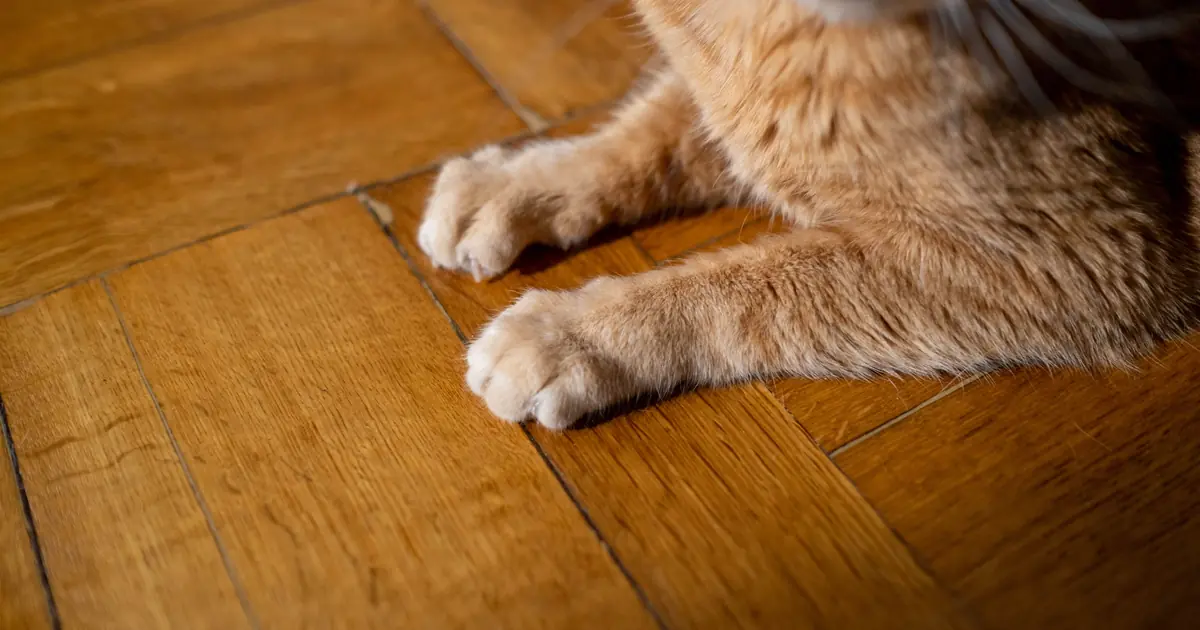
Cat claws grow continuously from the bone at the tip of each toe, and they shed their outer layer in sections rather than falling out completely. Think of a claw like an onion with several layers stacked one on top of another. As a new layer grows in underneath, the older, worn outer layer becomes loose and eventually comes off, either on its own or when your cat scratches, bites, or pulls at it. That’s why you sometimes find a perfectly intact, hollow, claw-shaped “shell” near the scratching post. It’s not an injury. It’s just your cat’s claw doing its normal maintenance routine, usually every few weeks to a couple of months depending on the cat.
This is also the biological reason cats need to scratch. Scratching helps peel away those old sheaths and keeps the claw underneath sharp. If you’ve ever wondered how cats retract their claws between scratching sessions, that same joint and tendon system is what lets the claw stay sheathed and protected most of the time, then extend when your cat needs it.
How long does it take for a cat’s claw to grow back?
A broken or naturally shed claw typically takes about 2 to 3 months to grow back fully. The exact timeline depends on the cat’s age, overall health, and how much of the claw was lost. A claw that just shed its outer sheath might look normal again within days, since the new layer was already there underneath. A claw that snapped off closer to the base takes longer, because it has to regrow from the toe outward. Older cats and cats with certain health conditions may regrow claws more slowly than a young, healthy cat.
My cat has a broken or torn claw. What now?
A torn or broken claw is common, especially in active cats or cats whose claws have gotten a little too long and snag on carpet, furniture, or cat trees. It looks scarier than it usually is, but it does need some care. The claw itself contains a blood vessel and nerve called the quick, and if the break reaches that part, it will bleed and hurt your cat quite a bit for a few minutes.
Here’s what to do if you find a broken claw:
- Stay calm and gently check the paw. A little blood looks like a lot on white fur, so don’t panic.
- If it’s bleeding, apply light pressure with a clean cloth or gauze for a minute or two.
- Keep the area clean and watch for swelling, limping, or your cat licking the paw excessively.
- Call your vet if the bleeding won’t stop after several minutes, if the toe looks swollen, or if your cat won’t put weight on that paw.
- Let the claw finish growing back on its own once any bleeding has stopped. Don’t pull at a partially attached claw fragment yourself, since that can damage the nail bed.
Most cats are back to normal within a day or two, and the claw regrows over the following weeks. According to VCA Animal Hospitals, a broken toenail is a common minor injury that usually heals well with basic care, though deeper breaks can be more painful and may need a vet’s help trimming away the damaged part.
Does the nail bed matter for regrowth?
Yes, the nail bed matters a lot, because it’s the living tissue at the base of the toe that actually produces the claw. If the break or injury only affects the hard outer claw, regrowth is usually smooth and the new claw looks normal. But if the injury goes deeper and damages the nail bed itself, such as from a severe tear, an infection, or trauma to the toe, the claw that grows back can come in thicker, crooked, split, or oddly shaped. In some cases, a badly damaged nail bed may not produce a normal claw again at all. This is one reason a vet should look at any claw injury that seems deep or isn’t healing within a week or two.
Do declawed claws grow back?
No, declawed claws do not grow back, because declawing (called onychectomy) doesn’t just remove the claw. It amputates the entire last bone of each toe, the same bone the claw grows from. Since the growth plate itself is gone, there’s nothing left to regenerate a new claw. This is very different from a claw that broke or shed naturally, where the growth base stays intact.
In rare cases where a declaw surgery was done incompletely, a small, deformed claw fragment called a regrowth can push up through the skin from leftover bone tissue. This isn’t a normal healthy claw. It’s usually painful, prone to infection, and needs a vet to remove the remaining bone fragment properly.
Groups like the International Cat Care and the American Veterinary Medical Association both discourage declawing except in rare medical cases, since it’s a major surgery that can cause lasting pain, changes in gait, and behavior issues. If your cat is scratching furniture and you’re tempted by declawing as a fix, it’s worth looking into humane alternatives first, like regular trims, nail caps, and appropriate scratching posts. If you’re dealing with a cat that scratches walls or furniture, there are much gentler ways to redirect that instinct.
| Type of claw loss | Does it grow back? | Typical timeline |
|---|---|---|
| Naturally shed outer sheath | Yes, it’s already replaced underneath | Ongoing, every few weeks |
| Broken or torn claw (nail bed intact) | Yes, usually grows back normally | About 2 to 3 months |
| Torn claw with damaged nail bed | May grow back deformed or not at all | Varies, vet care recommended |
| Declawed toe (amputated bone) | No, the growth base is removed | Does not regrow |
How do I take care of my cat’s claws day to day?
The best way to protect your cat’s claws is regular trims, good scratching options, and quick attention to any injury. Trimming the sharp tip every 2 to 4 weeks lowers the odds of a claw catching on carpet or fabric and snapping. If you’ve never done it before, our guide on how to cut cat nails walks through it step by step, including how to avoid the quick.
Giving your cat sturdy scratching posts, ideally both vertical and horizontal ones, lets her shed those old claw sheaths naturally instead of tearing them off on your couch. Cats also scratch to stretch and mark territory, which is a totally separate (and totally normal) behavior from claw maintenance, similar to why cats knead with their paws.
Watch for these red flags that mean it’s time to call the vet rather than wait it out:
- Bleeding that doesn’t slow down after a few minutes of gentle pressure
- A swollen, red, or hot toe
- Pus, a bad smell, or a claw that looks like it’s growing sideways or into the paw pad
- Your cat limping, refusing to walk on the paw, or constantly licking one foot
This article is meant to help you understand what’s normal, not replace a vet exam. Any claw or paw problem that looks painful, infected, or isn’t improving deserves a professional look. The Cornell Feline Health Center is a solid resource if you want to read more about feline paw and claw health from a veterinary source.
Frequently Asked Questions
Q: Do cat claws grow back after they fall off?
Yes, if a claw sheds naturally or breaks off but the nail bed stays intact, a new claw grows back within about 2 to 3 months. Finding a hollow claw shell near a scratching post is normal shedding, not an injury.
Q: How long does it take for a cat’s broken claw to heal?
Minor bleeding usually stops within minutes with gentle pressure, and most cats act normal again within a day or two. The claw itself takes about 2 to 3 months to fully regrow.
Q: Is it normal to find a whole claw on the floor?
Yes, cats shed the outer layer of their claws every few weeks as part of normal growth, and that shed layer can look like a complete tiny claw. As long as your cat isn’t limping or bleeding, it’s nothing to worry about.
Q: Do declawed cats’ claws grow back?
No, declawing removes the last bone of each toe along with the claw, so there’s no growth base left for a new claw to form. A rare exception is a botched declaw surgery, where a small deformed claw fragment can regrow and usually needs a vet to remove it.
Q: Why does my cat’s claw look thick or misshapen after breaking?
This usually means the nail bed, the living tissue at the base of the claw, was damaged when the claw broke. A damaged nail bed can produce a claw that’s thicker, curved, or split compared to before.
Q: Should I trim a broken claw myself?
You can gently clean the area, but avoid pulling or cutting a partially attached claw fragment, since that can injure the nail bed further. If the claw is hanging on by a thread or the toe is swollen, let your vet handle removing the damaged piece.
Q: How often do cats naturally shed their claw sheaths?
Most cats shed the outer layer of each claw every few weeks to a couple of months, though this varies by cat and how much they scratch. Regular scratching on a post speeds up shedding of the old, worn sheath.
Q: When should I take my cat to the vet for a claw problem?
See a vet if bleeding won’t stop after a few minutes, the toe is swollen or has discharge, or your cat is limping or won’t stop licking the paw. These signs can point to infection or a deeper injury that needs professional treatment.

Hello and welcome to The Ideal Cat!
We are some passionate cat owners from different professions. We love our cats and have a lot of experience in how to care for our pets. We are incredibly excited to share our knowledge, experience, and research with you. So you can take good care of your loving cat. We will answer most of the common questions about owning cats, taking care of them, etc. If you have any question contact with us. Thanks for visiting! Enjoy the content.
