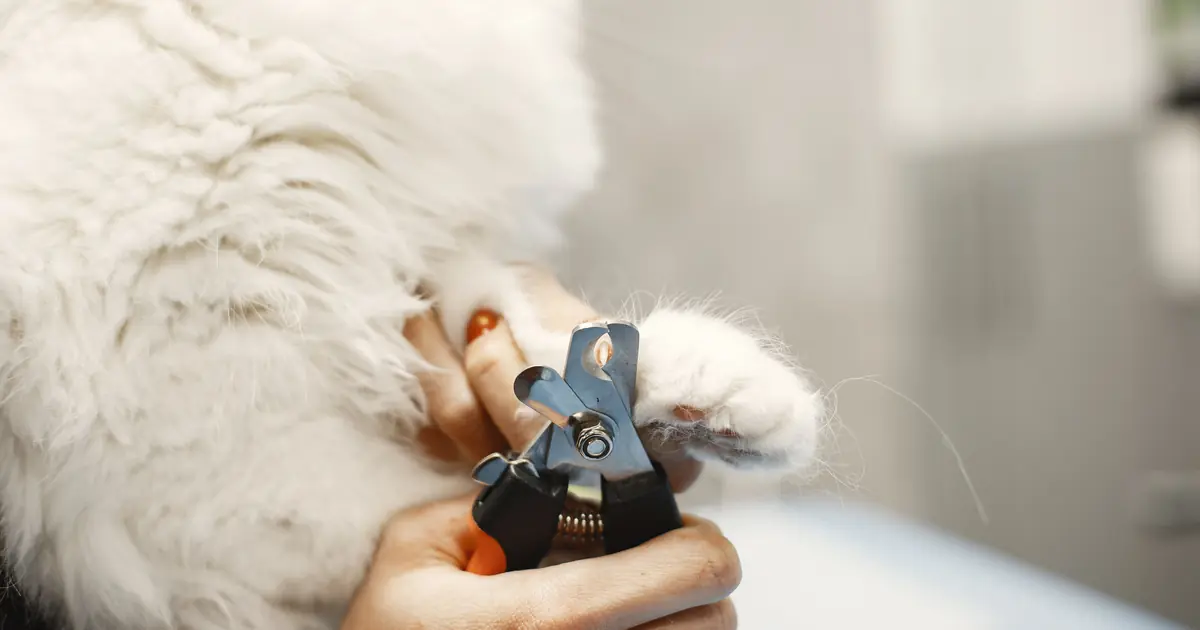
Watch a cat pad across the kitchen floor and you probably won’t hear a single click of nail on tile. Then, seconds later, that same cat sinks a claw straight through your favorite armchair. Same claws, two completely different jobs.
The trick is in the plumbing. A cat’s claws aren’t just fingernails that grow out and stay out. They’re built on a spring-loaded system of tendons and ligaments that pulls them in by default and only pushes them out when the cat actually needs them. Here’s exactly how that works, and why it matters for how you trim, scratch-proof, and understand your cat.
- A cat’s claws are retracted by default and only extended on purpose, using tendons and ligaments in each toe.
- Cats have 18 claws total: 5 on each front paw (including a dewclaw) and 4 on each back paw.
- The technical term is “protractible,” not retractable, because the resting state is pulled in and the claw has to be actively pushed out.
- Dogs cannot retract their claws at all, which is why you hear a dog’s nails clicking on hard floors and rarely hear a cat’s.
- Declawing does not just remove the claw. It amputates the last bone of each toe, which is why major veterinary groups discourage it.
How Do Cats Retract Their Claws?
Cats retract their claws through a system of elastic ligaments that hold each claw pulled back against the toe bone when the paw is relaxed. Extending the claw takes actual muscle work: a tendon called the digital flexor tendon contracts, which rotates the last toe bone forward and swings the claw out past the fur and skin.
This is why vets and anatomists actually call cat claws “protractible” rather than retractable. Retractable implies the claw’s natural state is out and the cat pulls it in. It’s the other way around. A relaxed cat, sleeping or walking normally, keeps its claws tucked away automatically, with zero effort. Extending them is the part that takes work.
What Does the Anatomy of a Cat’s Claw Look Like?
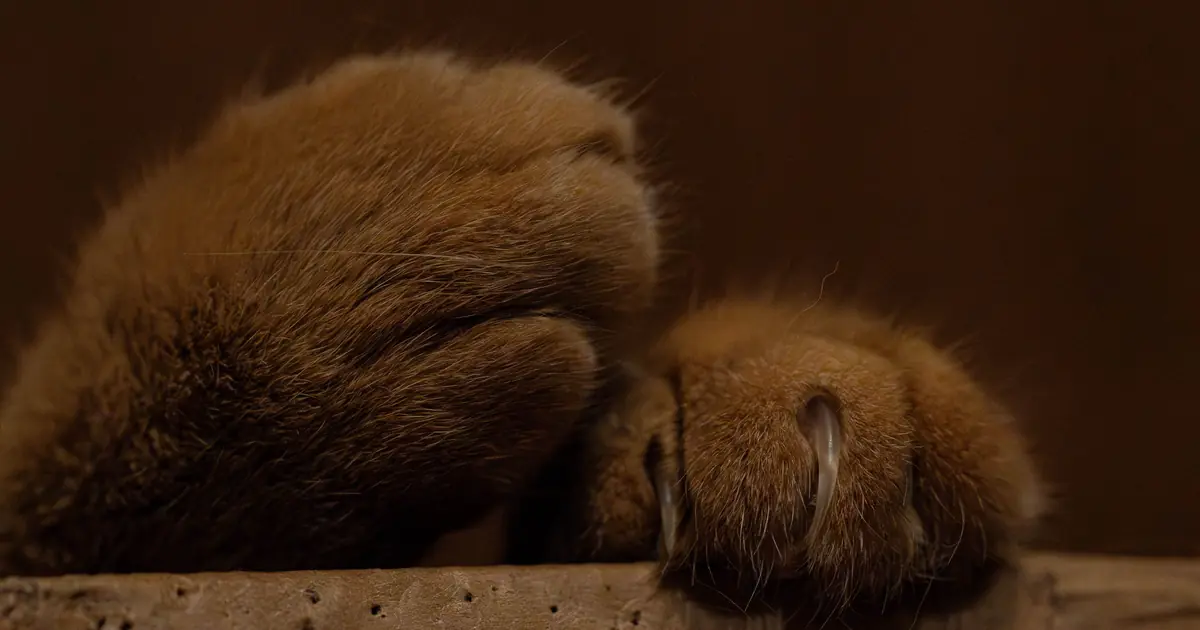
A cat’s claw sits on the last bone of the toe, called the distal phalanx, and is held in a retracted position by a pair of elastic ligaments running along the top of that bone. When the cat wants to extend the claw, the digital flexor tendon, which runs along the underside of the toe, pulls tight and rotates the distal phalanx downward and forward, unsheathing the claw.
Think of it like a pocketknife that closes itself automatically the moment you let go of the blade. The elastic ligament is the spring that closes it. The flexor tendon is the hand that has to actively pull it open. Underneath it all, the claw itself grows in layers from a bed of living tissue, which is also why cutting into the pink “quick” of a cat’s nail hurts and bleeds, and why trimming a cat’s nails correctly means avoiding that area.
Why Are Cats’ Claws Retracted by Default?
Cats keep their claws retracted by default to keep them sharp, quiet, and protected. A claw that dragged along the ground with every step would dull fast, wear down unevenly, and announce the cat’s location with every click on a hard floor.
Cats are ambush hunters, built to stalk small prey without being heard or seen. A silent approach only works if the tools built for the kill, those sharp claws, stay hidden until the last second. Keeping the claw tip off the ground also protects it from wear and breakage during ordinary walking, climbing, and jumping. According to International Cat Care, this hunting adaptation is closely tied to why cats also scratch objects to condition and sharpen their claws rather than to sharpen them through casual walking.
When Do Cats Extend Their Claws, and Can They Control It?
Cats extend their claws voluntarily whenever they need extra grip, traction, or a weapon, and yes, this is a conscious choice, not a reflex. A cat decides to flex that digital flexor tendon the same way you decide to make a fist.
Common moments a cat pushes its claws out on purpose include:
- Climbing: claws dig into bark, carpet, or furniture for grip on a vertical surface.
- Hunting or play: claws come out fast to grab, hook, or pin something moving.
- Kneading: many cats extend their claws slightly while kneading a blanket or your lap, a leftover kitten nursing behavior.
- Scratching: claws extend fully to grip a scratching post or, less conveniently, your couch. If your cat is going after furniture, it usually helps to understand why cats scratch walls and furniture in the first place.
- Defense or fear: claws snap out fast as a warning or a weapon when a cat feels cornered.
- Stretching: a big full-body stretch often comes with claws extended and toes fanned out, which is also a clue to why cats are so flexible in the first place.
Outside of these moments, a cat’s default resting state is claws in. There’s no muscle effort required to keep them hidden, which is exactly why a sleeping or calmly walking cat shows no claw at all.
How Are Cat Claws Different From Dog Claws?
Cat claws are protractible and stay sharp and hidden until needed, while dog claws are permanently extended and wear down naturally through everyday walking. That single anatomical difference explains a lot of the practical differences owners notice, from nail clicking on floors to how each species climbs.
| Feature | Cat Claws | Dog Claws |
|---|---|---|
| Retraction | Protractible, retracted by default | Cannot retract, always extended |
| Sharpness | Stays sharp since the tip rarely touches ground | Wears down and dulls with regular walking |
| Sound on hard floors | Silent when walking, claws are tucked | Clicks audibly with each step |
| Primary use | Climbing, hunting, gripping prey, defense | Traction while running and digging |
| Maintenance needed | Regular trimming and scratching posts, since claws don’t self-wear | Often wears down naturally, though trimming is still needed for some dogs |
The one exception worth knowing about is the dewclaw, a smaller claw set higher up the leg that doesn’t touch the ground. Both cats and most dogs have a front dewclaw, and in both species it works and wears differently from the main toe claws.
How Many Claws Does a Cat Have?
A typical cat has 18 claws in total: 5 on each front paw and 4 on each back paw. The fifth front claw is the dewclaw, sitting higher up on the inside of the leg like a thumb, and it doesn’t touch the ground when your cat walks.
Back paws only have 4 claws each because cats don’t have a rear dewclaw in the same way, though a small number of cats are born with one anyway. Some cats are polydactyl, meaning they carry extra toes and claws thanks to a genetic quirk, which is part of why some cats seem to have unusually large, almost thumb-like front paws. A polydactyl cat can have 20 or more claws total, but 18 is the standard count for most cats.
Why Is Declawing Harmful?
Declawing is harmful because it isn’t a nail trim, it’s an amputation of the last bone in each toe, done at the same joint where your fingertip ends. Since the claw grows directly from that bone, there’s no way to remove the claw permanently without removing the bone underneath it too.
That kind of surgery can lead to chronic pain, changed gait, and litter box avoidance in some cats, because the paw pad ends up bearing weight differently for the rest of the cat’s life. The American Veterinary Medical Association discourages declawing as a routine procedure and recommends it only be considered after other options, like regular trimming, scratching posts, and soft nail caps, have genuinely failed. The Cornell Feline Health Center notes the same thing: most scratching problems can be solved without surgery at all.
This article is educational and not a substitute for advice from your own veterinarian. If you’re struggling with a cat that scratches destructively or seems to be in pain around its paws, talk to your vet about trimming, posts, and nail caps before considering anything more permanent.
Frequently Asked Questions
Q: Are cat claws retractable or protractible?
Technically, they’re protractible, not retractable. A cat’s claws sit retracted by default with zero muscle effort, and the cat has to actively contract a tendon to push, or protract, the claw out when it needs it.
Q: Can a cat’s claws get stuck out?
Rarely, and usually only due to injury, arthritis, or nerve damage affecting the tendon or ligament. A cat with a claw that stays visibly extended all the time, especially if it looks swollen or the cat is licking at it, should see a vet.
Q: Do all of a cat’s paws retract claws the same way?
Yes, front and back paws both use the same tendon and ligament system. Front paws simply have one more claw each, the dewclaw, which also retracts but sits higher on the leg and never touches the ground.
Q: Why do I sometimes feel my cat’s claws when they knead or walk on me?
Kneading often triggers a slight, involuntary extension of the claws as the cat flexes its paws rhythmically, which is why you might feel a light prick through a blanket. During normal walking, claws stay fully retracted, so you shouldn’t feel them at all.
Q: How many claws does a cat have compared to a dog?
Cats have 18 claws (5 front, 4 back), while most dogs have 18 as well, though many dogs only carry front dewclaws and some breeds have rear dewclaws removed. The bigger difference isn’t the count, it’s that dog claws stay permanently extended.
Q: Do kittens retract their claws the same way adult cats do?
Yes, kittens are born with the same protractible claw system, though their control over it improves with age. Very young kittens tend to extend their claws more often and less precisely simply because their coordination is still developing.
Q: Does declawing remove more than just the claw?
Yes. Declawing surgically removes the last bone of each toe, not just the claw itself, since the claw grows directly out of that bone. This is why veterinary groups like the AVMA consider it a form of amputation rather than routine grooming.
Q: What’s a good alternative to declawing if my cat scratches too much?
Regular nail trims every 1 to 2 weeks, sturdy scratching posts placed near favorite scratching spots, and soft nail caps all work well for most cats. Combining a trim schedule with an appealing scratching post solves the majority of furniture-scratching complaints without surgery.

Hello and welcome to The Ideal Cat!
We are some passionate cat owners from different professions. We love our cats and have a lot of experience in how to care for our pets. We are incredibly excited to share our knowledge, experience, and research with you. So you can take good care of your loving cat. We will answer most of the common questions about owning cats, taking care of them, etc. If you have any question contact with us. Thanks for visiting! Enjoy the content.
