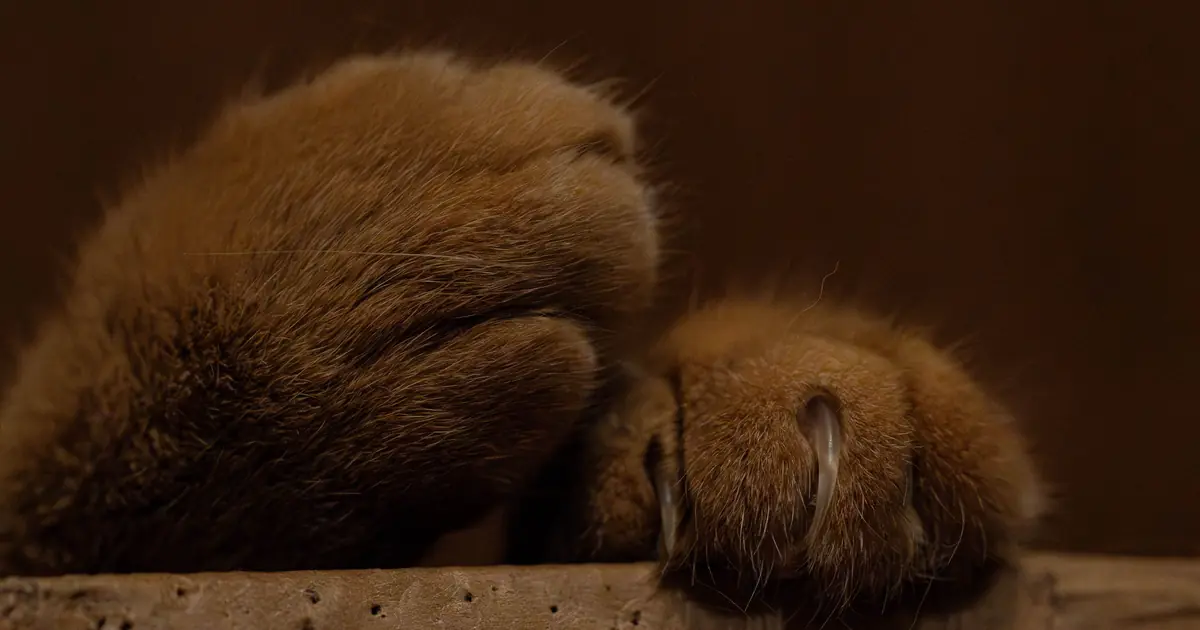
Ever watched your cat wrap both front paws around a toy mouse and squeeze it like a tiny wrestler? It’s easy to wonder if there’s a thumb in there somewhere doing the work. There isn’t, not exactly. But your cat’s paw is a lot more clever than it looks.
Between the dewclaw tucked up on the inside of the leg and the wild card of polydactyl cats born with extra toes, cats have their own version of a thumb. It’s just not built the way ours is. Let’s get into what’s actually going on down there.
- Cats don’t have opposable thumbs. Their dewclaw is a thumb-like toe, but it can’t rotate to meet the other toes the way a human thumb can.
- A normal cat has 18 toes total: 5 on each front paw and 4 on each back paw.
- Polydactyl cats carry a gene for extra toes and can have as many as 28 toes, sometimes with a distinct thumb-like extra digit.
- The polydactyl trait is passed down as an autosomal dominant gene, so a single copy from one parent is enough to produce extra toes.
- Polydactyl cats are nicknamed “Hemingway cats” after the nearly 60 six-toed cats living at the Ernest Hemingway Home in Key West, Florida.
Do cats have thumbs?
No, cats don’t have thumbs in the human sense. A human thumb is opposable, meaning it can rotate and press against the other fingers to grip small objects with precision. A cat’s paw doesn’t work that way. What cats do have is a dewclaw, a small toe positioned higher up on the inside of the front leg, and it’s the closest thing your cat has to a thumb.
The dewclaw doesn’t touch the ground when your cat walks, and it can’t oppose the other toes to pick things up the way your thumb and index finger can. Think of it less as a grabbing tool and more as a built-in grappling hook.
What is a cat’s dewclaw and what does it do?
A dewclaw is the extra toe set higher on a cat’s front leg, above the four toes that bear weight when walking. Most cats have one dewclaw on each front paw, and unlike the other claws, it stays elevated off the ground and doesn’t wear down naturally from walking.
Cats put that dewclaw to real use. It helps them:
- Get a better grip when climbing trees, cat trees, or furniture
- Hold onto prey or toys during play, sinking the claw in so the object can’t easily wriggle free
- Grab and steady objects while grooming, especially around the face
- Keep their balance during fast turns or sudden stops
Because the dewclaw never touches the floor, it doesn’t file itself down like the other nails do. That means it can grow long and curved if nobody checks on it. If you’ve noticed your cat shaking or flicking their paws more than usual, an overgrown dewclaw snagging on fabric is worth ruling out.
How many toes does a normal cat have?
A typical, non-polydactyl cat has 18 toes total: 5 on each front paw (4 weight-bearing toes plus the dewclaw) and 4 on each back paw. Back paws don’t usually grow a dewclaw, which is why the front and back counts differ.
Eighteen is the baseline you’ll see quoted by breed standards and vets everywhere. Any cat with a different number, more or occasionally fewer, has some variation on the standard paw layout, and extra toes are far more common than missing ones.
What are polydactyl cats?
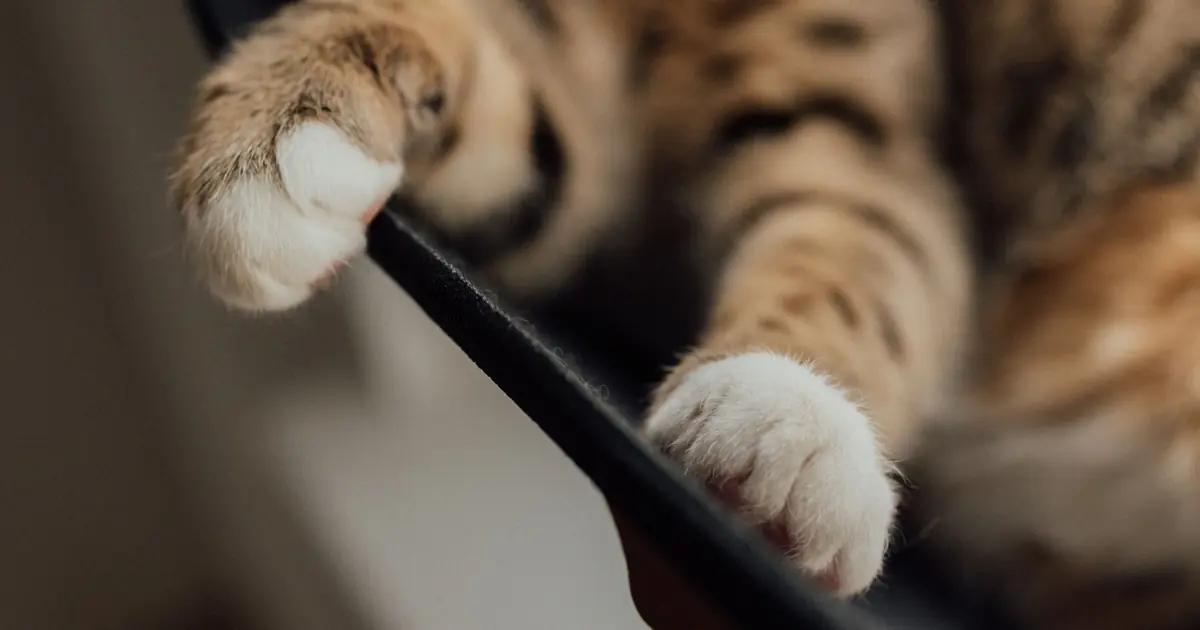
Polydactyl cats are cats born with more toes than the usual 18, sometimes with an extra digit on the front paw that looks and functions like a small thumb. The word breaks down simply: “poly” means many, “dactyl” means digit or toe.
The trait comes from a single dominant gene, which geneticists call autosomal dominant inheritance. That’s a fancy way of saying a kitten only needs to inherit the gene from one parent to be born polydactyl, not both. According to International Cat Care, the gene shows variable expression, so littermates can end up with wildly different toe counts even when they share the same polydactyl parent.
Most polydactyl cats carry one or two extra toes per paw, but the condition can go further. Some cats have been documented with as many as 28 toes total, according to PetMD. The extra toes usually have their own bone structure, claw, and nerve supply, so they’re fully functional, not just floppy skin.
| Feature | Normal cat | Polydactyl cat |
|---|---|---|
| Front paw toes | 5 (4 weight-bearing + dewclaw) | 6 to 9 |
| Back paw toes | 4 | 5 to 7 |
| Total toe count | 18 | Up to 28 |
| Dewclaw | Front paws only, usually one | May have two, or extras that look thumb-like |
| Cause | Standard genetics | Autosomal dominant gene |
What are Hemingway cats?
Hemingway cats are polydactyl cats named after the author Ernest Hemingway, whose Key West, Florida home is now famous for housing dozens of six-toed cats. Hemingway wasn’t the first person to keep polydactyl cats, but he’s the reason the nickname stuck.
The story goes back to a ship captain named Stanley Dexter, who gave Hemingway a white polydactyl kitten named Snow White. Nearly a century later, the Ernest Hemingway Home and Museum is home to close to 60 cats, many of them descendants of Snow White, and roughly half still show the visible extra-toe trait even though all of them carry the gene.
Sailors also have their own folklore tied to polydactyl cats, prizing them as good luck and better mousers aboard ship, thanks to that extra grip on a rolling deck.
Are extra toes bad for a cat’s health?
No, extra toes are usually completely harmless. Polydactyly isn’t linked to neurological problems or shortened lifespans, and most polydactyl cats live, run, and climb exactly like any other cat.
The one thing worth watching is nail care. Extra toes mean extra claws, and some of those claws sit at odd angles or barely touch the ground, so they don’t wear down naturally the way a normal claw does. Left unchecked, an extra claw can curl around and grow into the paw pad. Regular nail checks matter more for a polydactyl cat than an average one. If you’re not confident doing it yourself, our guide on how to cut a cat’s nails walks through it step by step, and a good nail trimmer makes the extra toes far less fiddly to manage.
Vets at VCA Animal Hospitals recommend checking a cat’s nails every two to four weeks, and that goes double for a cat carrying a few extra claws. It also doesn’t hurt to give your cat plenty of appropriate places to scratch, so read up on scratching posts built to help file nails naturally if you’ve got a polydactyl paw-ful on your hands.
Can cats grip or use their paws like hands?
Sort of, but not with the precision of a human hand. Cats can hold, pin, and manipulate objects using both front paws together, especially during play or while eating something they want to steady. Watch a cat hold a toy mouse or a piece of chicken and you’ll see real dexterity.
What cats can’t do is oppose a single digit against the others to pick up something small and delicate, the way you’d pinch a coin between thumb and finger. Their grip relies on curling several claws inward at once, more of a hook-and-hold move than a precision pinch. Breeds with a stronger polydactyl history, sometimes discussed alongside the folklore around the Maine Coon, are often described as unusually paw-dexterous, though any individual cat’s skill really comes down to genetics and personality more than breed alone.
Frequently Asked Questions
Q: Do cats have thumbs like humans?
No, cats don’t have opposable thumbs. They have a dewclaw, a thumb-like toe on the inner front leg that helps with gripping and climbing but can’t rotate to meet the other toes the way a human thumb can.
Q: What is a polydactyl cat?
A polydactyl cat is a cat born with more toes than the usual 18, sometimes as many as 28. The trait comes from a single dominant gene, so a kitten only needs to inherit it from one parent to be born with extra toes.
Q: How many toes do most cats have?
Most cats have 18 toes total: 5 on each front paw, including the dewclaw, and 4 on each back paw. Any cat with a different count is showing some form of the polydactyl trait.
Q: Why are polydactyl cats called Hemingway cats?
Polydactyl cats are nicknamed Hemingway cats because author Ernest Hemingway kept them at his Key West home. Nearly 60 cats live at the Hemingway Home and Museum today, many descended from his original polydactyl cat, Snow White.
Q: Is polydactyly bad for a cat’s health?
No, polydactyly is not linked to health problems or a shorter lifespan. The main thing to watch is nail care, since extra claws sit at odd angles and don’t wear down naturally, so they need more frequent trims.
Q: What is a cat’s dewclaw for?
A cat’s dewclaw helps with gripping surfaces while climbing, holding onto toys or prey, steadying objects during grooming, and keeping balance during quick turns. It doesn’t touch the ground, so it never files itself down naturally.
Q: Can polydactyl cats use their extra toes like thumbs?
Many owners describe polydactyl cats as noticeably good at holding toys, batting open cabinets, or manipulating objects, thanks to that extra thumb-like digit. It’s not a true opposable thumb, but the added surface area does give a stronger, more hand-like grip.
Q: Are polydactyl cats a specific breed?
No, polydactyly isn’t tied to one breed. It shows up across many breeds and mixed-breed cats, though it’s been documented especially often in cats along the New England coast and in Maine Coon lines, likely thanks to old ship-cat genetics carried over from sailing history.

Hello and welcome to The Ideal Cat!
We are some passionate cat owners from different professions. We love our cats and have a lot of experience in how to care for our pets. We are incredibly excited to share our knowledge, experience, and research with you. So you can take good care of your loving cat. We will answer most of the common questions about owning cats, taking care of them, etc. If you have any question contact with us. Thanks for visiting! Enjoy the content.
