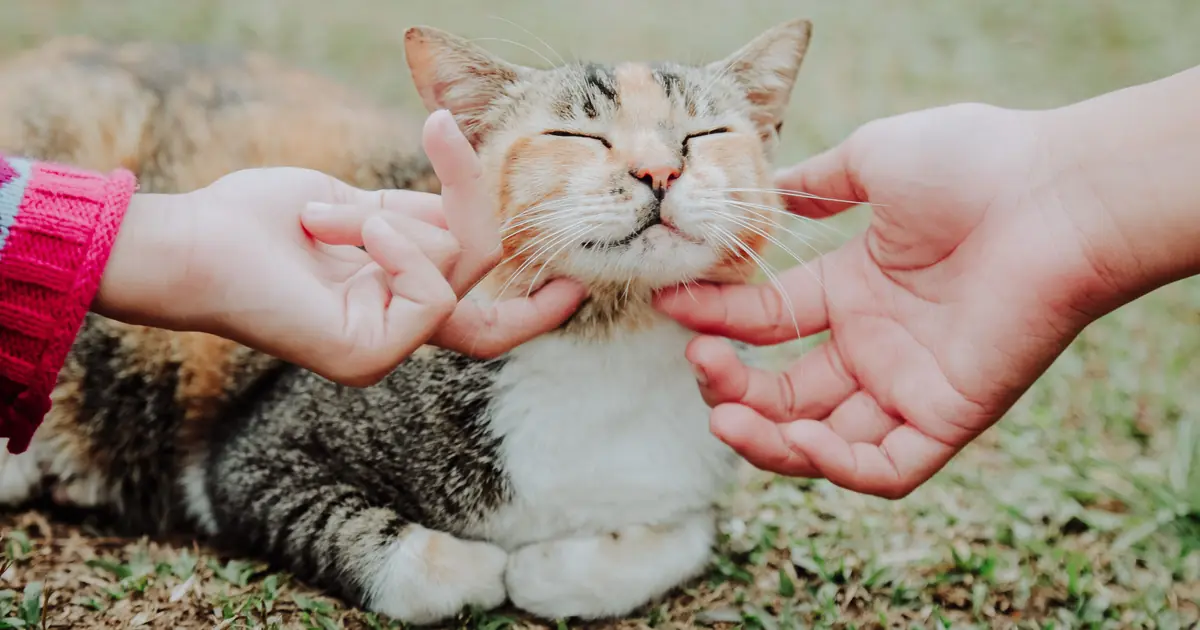
You’re sitting on the couch, minding your own business, and suddenly your cat marches over and bonks their forehead right into your chin. If you’ve ever wondered why your cat headbutts you, the short version is lovely: it’s one of the biggest compliments a cat can give. But there’s also a rare lookalike behavior that means the opposite, and you’ll want to know the difference.
- Cat headbutting is called bunting, the act of rubbing facial scent glands against a person or object to deposit pheromones.
- Cats headbutt you to share their scent, claim you as part of their group, show trust, ask for attention, and self-soothe.
- Bunting is a gentle, social, affectionate behavior, often paired with purring, slow blinks, or a vibrating tail.
- Head pressing is a different, serious behavior: a cat firmly pushing their head into a wall or floor and staying there, which is a veterinary emergency.
- Affectionate headbutting needs no treatment, but head pressing requires an emergency vet visit right away.
What Is Cat Bunting? The Real Name for Headbutting
Bunting is the technical name for cat headbutting: when a cat deliberately bumps and rubs the top of their head or cheeks against you, an object, or another animal to leave behind their scent. So when people ask why their cat headbutts them, they’re really asking about bunting. A cat who rubs his teeth on you is doing a close cousin of the same thing.
Cats have scent glands packed into their face: on the cheeks, the chin, the lips, and especially in the band of skin just in front of the ears. These glands release pheromones, which are chemical signals cats use to communicate. When your cat presses their face into you, they’re depositing those pheromones onto your skin and clothes. To a cat, scent is everything, and sharing it with you is a big deal.
Why Does My Cat Headbutt Me? The 7 Main Reasons
Cats headbutt you for a handful of friendly reasons, and most come down to scent, trust, and connection. Here are the seven most common ones.
1. They’re Marking You With Their Scent
The number one reason cats headbutt is scent-marking. By rubbing their facial pheromones onto you, your cat is essentially writing their name on you. This creates a shared “group scent” that makes their world feel familiar and safe. You’re now officially part of the family.
2. They Trust You
A cat will only bunt someone they feel safe around. Headbutting exposes the top of their head and brings their face close to yours, which is a vulnerable move. When your cat headbutts you, they’re telling you they trust you completely.
3. They’re Showing Affection and Bonding
Cats bunt the humans and animals they’re closest to. In multi-cat homes, friendly cats headbutt and cheek-rub each other to strengthen their bond. When your cat does it to you, they’re treating you like a trusted member of their inner circle.
4. They Want Your Attention
Sometimes a headbutt is a polite (or not so polite) request. Your cat may bunt you to ask for petting, play, food, or simply to say “notice me.” If you respond with affection, your cat learns that headbutting works, so they’ll do it again.
5. They’re Claiming Their Territory
To a cat, you’re part of their territory in the best possible way. Bunting marks you the same way they mark a doorframe or the corner of the couch. It quietly tells other cats, “this human is in my circle.”
6. They’re Greeting You
Many cats headbutt right after you walk in the door or wake up. After time apart, your scent fades from your cat’s point of view, so a quick bunt refreshes the shared smell and welcomes you back home.
7. They’re Self-Soothing
Rubbing and bunting can be calming for cats. A cat who’s a little anxious or settling into a new space may headbutt familiar people and objects to comfort themselves and make the environment feel like their own.
Bunting vs. Head Pressing: The One Difference You Must Know
Headbutting (bunting) and head pressing look related but mean completely opposite things. Bunting is affectionate and normal. Head pressing is a medical emergency. Head pressing is when a cat firmly pushes the top of their head against a wall, a corner, or the floor and holds it there, often standing still, looking dazed or “stuck.”
The difference matters because head pressing points to serious problems in the brain or nervous system, and catching it early can save your cat’s life. Use this table to tell them apart.
| Bunting (Headbutting) | Head Pressing (Emergency) |
|---|---|
| Gentle bump or rub against you | Firm, sustained push into a wall or floor |
| Brief and interactive | Prolonged and repetitive, cat seems “stuck” |
| Cat is alert and content | Cat looks dazed, disoriented, or unresponsive |
| Often paired with purring or slow blinks | Often paired with pacing, circling, or seizures |
| Aimed at people or pets | Aimed at hard, stationary surfaces |
| Normal and healthy | Sign of a neurological or liver problem |
Head pressing is usually caused by a forebrain disorder or by a buildup of toxins from a liver problem, including a portosystemic shunt (an abnormal blood vessel that lets blood bypass the liver) and hepatic encephalopathy. Infections such as FIP, FeLV, or rabies can also cause it. None of these resolve on their own, so don’t wait it out. This article is educational and isn’t a substitute for a licensed veterinarian’s care.
Why Does My Cat Headbutt Me Then Bite Me?
A headbutt that turns into a bite usually means your cat got overstimulated, not that they’re angry. Cats can flip from “this feels nice” to “that’s enough” quickly, especially during a long petting session. The headbutt was affection; the nip was your cat saying they’ve had their fill.
Watch for the warning signs that come just before the bite: a twitching or swishing tail, skin rippling along the back, flattened ears, dilated pupils, or sudden stillness. When you see those, pause the petting and give your cat space. Some bites are gentle “love bites” with no real pressure, which are simply part of how some cats show affection.
Why Does My Cat Headbutt Me When I’m Sleeping?
Cats often headbutt sleeping owners to wake them up for food, attention, or company. Cats are naturally most active at dawn and dusk, so your early-morning bonk is your cat’s way of saying “I’m up, and I think you should be too.” A headbutt to the face while you sleep is a request, usually for breakfast or cuddles.
If the early wake-up calls are wearing you out, try feeding your cat later in the evening, adding a hearty play session before bed, or using a timed feeder so you’re not the alarm clock. Punishing or pushing your cat away often backfires and can teach them that bunting gets a reaction.
Why Does My Cat Headbutt Me Hard?
A hard headbutt is usually just an enthusiastic one. The force of a bunt varies with your cat’s personality, mood, and how excited they are to see you. A firmer bonk often means stronger affection or eagerness, not aggression. As long as your cat seems relaxed and happy, a hard headbutt is a good sign.
The exception, again, is head pressing. If the “hard” contact is your cat pushing their head into a wall or the floor and staying there, that’s not a bunt and needs a vet. The key tells are whether your cat is interacting with you and whether they look content or dazed.
Should I Headbutt My Cat Back?
Yes, you can gently headbutt your cat back, and many cats love it. A soft press of your forehead against theirs, or a slow lean in toward their cheek rub, returns the social gesture and reinforces your bond. Keep it gentle and let your cat set the pace.
Not every cat enjoys forehead-to-forehead contact, so read their body language. If your cat leans in, purrs, or keeps rubbing, they’re enjoying it. If they pull back or tense up, a slow blink or a chin scratch is a friendlier way to say “I love you too.”
Frequently Asked Questions
Q: Is cat headbutting a sign of love?
Yes. Cat headbutting, or bunting, is a strong sign of trust and affection. Your cat rubs their facial pheromones onto you to mark you as part of their group and claim you as safe and familiar. Cats only bunt people they feel comfortable and bonded with.
Q: What is the difference between headbutting and head pressing in cats?
Headbutting (bunting) is a gentle, affectionate bump or rub against you and is completely normal. Head pressing is a cat firmly pushing their head into a wall or floor and holding it there, which is a medical emergency tied to brain or liver problems. Head pressing always needs an immediate vet visit.
Q: Why does my cat headbutt me and then walk away?
Your cat headbutted you to deposit their scent and check in, then went about their day. Bunting can be a quick “hello” or scent refresh, not always a request for a long cuddle. A bunt followed by walking off is normal and still a sign of trust.
Q: Why does my cat headbutt my face specifically?
Cats aim for your face because it’s where your scent is strongest and where their own facial glands make easy contact. Bunting your face mixes your scents and feels like an intimate, trusting greeting to your cat. It’s one of the closest gestures a cat can offer.
Q: Do cats headbutt other cats too?
Yes. Friendly cats bunt and cheek-rub each other to build a shared group scent and strengthen their bond. This is most common between cats who get along well in the same home. Headbutting between cats is a peaceful, social behavior.
Q: Should I be worried if my cat suddenly stops headbutting me?
A sudden drop in affection, hiding, or any new odd behavior can be worth a vet check, since cats often mask illness. On its own, less bunting may just reflect mood or routine. Pair the change with appetite, energy, and litter box habits, and call your vet if anything seems off.
Q: Why does my cat headbutt me when I’m petting another pet?
Your cat is likely scent-marking you and asking for attention to be redirected their way. Bunting in this moment refreshes their claim on you and gently nudges you to include them. It’s a normal, slightly possessive bid for your affection.
Q: Is head pressing in cats always an emergency?
Yes. Head pressing is a recognized neurological warning sign in cats and should be treated as an emergency. Causes include brain disorders, toxins, and liver disease such as hepatic encephalopathy, none of which resolve on their own. Contact a vet or emergency clinic right away.
So, why does your cat headbutt you? Because in cat language, you’re family. Bunting is your cat marking you with their scent and telling you they trust you, love you, and claim you as their own. Enjoy the bonks, headbutt back if your cat is into it, and just keep that one warning in mind: a gentle bunt is love, but a head pressed hard into the wall is a reason to call the vet.

Hello and welcome to The Ideal Cat!
We are some passionate cat owners from different professions. We love our cats and have a lot of experience in how to care for our pets. We are incredibly excited to share our knowledge, experience, and research with you. So you can take good care of your loving cat. We will answer most of the common questions about owning cats, taking care of them, etc. If you have any question contact with us. Thanks for visiting! Enjoy the content.
)