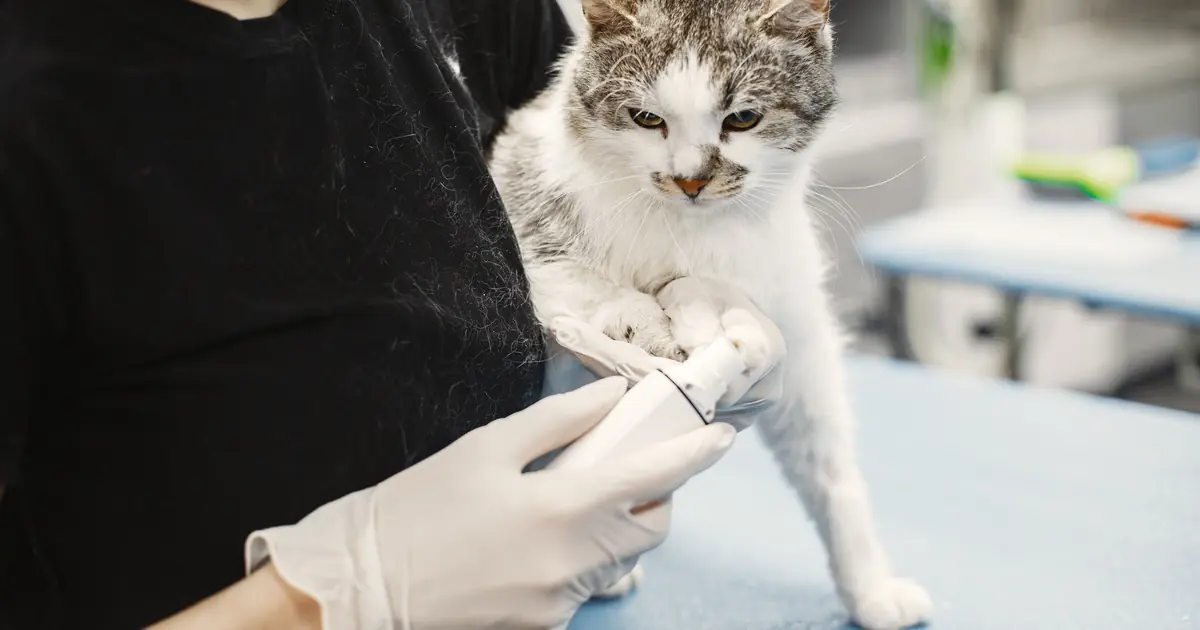
You bring your cat in for a checkup, the vet asks “Is she microchipped?”, and suddenly you’re wondering what that even costs. Good news: it’s one of the cheapest, most useful things you’ll ever do for your cat. So how much does it cost to microchip a cat? Usually less than a nice dinner out, and sometimes nothing at all.
Let’s break down the real numbers, where to get it done cheap, and the one step people forget that makes the whole thing worth it.
- Microchipping a cat at a private vet typically costs $25 to $60, a one-time fee that covers the chip and the quick injection.
- Low-cost clinics, shelters, and pet-store vaccine clinics often microchip cats for $10 to $25, and many shelters chip adopted cats for free.
- A cat microchip is a tiny RFID ID tag, about the size of a grain of rice, not a GPS tracker, so it cannot show your cat’s live location.
- Registering the chip in a database with your current contact info is free or low-cost and is what actually gets a lost cat home.
- Microchipped cats brought to shelters are returned to their owners about 38.5% of the time, versus under 2% for cats with no chip, according to an Ohio State University study.
How much does it cost to microchip a cat?
Microchipping a cat costs about $25 to $60 at most private veterinary clinics in the U.S., and it’s a one-time fee. The price usually covers both the chip and the quick injection that places it under your cat’s skin. Many cat parents pay far less, because shelters and low-cost clinics offer the same service for $10 to $25, and adoption groups often include a chip at no extra charge.
Here’s the thing: the chip itself is cheap. Most of what you pay covers the clinic’s time and overhead, not the chip. So a big chunk of your bill can be the office-visit or exam fee, especially if you book microchipping on its own. That’s why prices swing so much depending on where you go.
A few things nudge the price up or down:
- Where you live. Big-city vet clinics tend to charge more than rural ones.
- Type of provider. A private vet costs more than a nonprofit shelter or a mobile vaccine clinic.
- Bundling. Adding the chip during a spay/neuter or wellness visit is usually cheaper than a standalone appointment.
- Office-visit fee. If you book microchipping by itself, a separate exam or office-visit fee may apply on top of the chip price, so ask about it when you call.
- Registration. Some chip brands include lifetime registration; others charge a small fee.
What’s the full cost breakdown for microchipping a cat?
The full cost of microchipping a cat comes in two parts: the implant (a one-time charge) and the registration (often free, sometimes a small fee). Most cat parents spend between $0 and $60 total, depending on where the chip is placed and which database it’s registered with.
| Cost piece | Typical price | What it covers |
|---|---|---|
| Microchip + implant at a private vet | $25 to $60 | The chip and the injection, done in one quick visit |
| Microchip at a low-cost or mobile clinic | $10 to $25 | Same chip and injection at a nonprofit or vaccine clinic |
| Microchip with adoption | Often $0 | Many shelters chip the cat before you take them home |
| Registration in a pet recovery database | $0 to $30 one-time | Links the chip number to your contact info |
| Optional premium database membership | $0 to ~$20 per year | Extras like lost-pet alerts; never required for basic recovery |
| Office-visit or exam fee (if booked alone) | $0 to ~$60 | A separate vet visit charge that may apply when microchipping is the only service |
Notice that registration shows up as its own line. A lot of articles skip it, but the chip does nothing until your details are in a database. The good news is that basic registration is free with several providers, so you do not have to pay an annual fee just to keep your cat protected.
Where can you microchip a cat cheaply or for free?
The cheapest places to microchip a cat are animal shelters, nonprofit low-cost clinics, and mobile or pet-store vaccine events, where prices often run $10 to $25 or even free. Private vet clinics cost more but are convenient if your cat is already there for another reason.
Where to look for a budget-friendly chip:
- Local animal shelters and humane societies. Many run microchip days for $10 to $25, and most chip adopted cats for free.
- Low-cost or community vet clinics. Nonprofit clinics (like those run by The Animal Foundation, ASPCA, and similar groups) often bundle chips with cheap spay/neuter packages.
- Mobile vaccine clinics. Pop-up clinics at pet stores frequently add microchipping for around $15 to $30.
- Spay/neuter appointments. Since your cat is already sedated, many clinics will place the chip then for a small add-on fee.
If money is tight, call your nearest shelter and ask if they host low-cost microchip events. A lot of cities run them a few times a year.
What is a cat microchip and what does it actually do?
A cat microchip is a tiny radio-frequency ID tag, about the size of a grain of rice, that a vet places under the skin between your cat’s shoulder blades. The microchip stores one thing: a unique ID number. When a vet or shelter scans a lost cat, that number pops up, and they look it up in a database to find your contact info. The chip is the backup, though: a collar with an ID tag gets your cat home faster because anyone can read it.
So a microchip is permanent ID, not a tracker. It has no battery and no GPS. It only “wakes up” when a scanner passes over it, which is why it can last your cat’s whole life without ever needing a charge or replacement.
Think of it as a backup to a collar and tag. Collars slip off, break away, or get lost, especially on cats. A microchip stays put and can’t fall off.
Is a cat microchip a GPS tracker?
No, a cat microchip is not a GPS tracker, and it cannot show you where your cat is in real time. A microchip is a passive ID chip that only works when someone scans it up close. To track your cat’s live location, you need a separate GPS device that clips onto a collar.
This trips up a lot of new cat parents, so it’s worth being clear: a microchip helps a found cat get home, while a GPS collar tag helps you follow a wandering cat in the moment. They solve different problems. If your cat roams outdoors and you want live tracking, a collar-mounted GPS tracker is the tool for that, not a chip.
Why does registering the microchip matter so much?
Registering the microchip matters because the chip is useless without it. The chip only stores an ID number, so if that number isn’t linked to your name and phone in a database, a shelter that scans your lost cat has no way to reach you. Registration is the step that actually turns a chip into a ticket home.
The payoff is real. In an Ohio State University study led by Dr. Linda Lord, microchipped cats brought to shelters as strays were reunited with their owners about 38.5% of the time, compared with under 2% for stray cats with no chip. The big reason owners weren’t found in the remaining cases? Wrong, missing, or unregistered information in the database.
To keep your cat’s chip working for them:
- Ask the clinic to give you the chip number and the database it’s registered with.
- Create your account in that database and confirm your phone, email, and address are correct.
- Update your details every time you move or change your number.
- If you adopt or rehome a cat, transfer the chip into the new owner’s name.
This educational guide isn’t a substitute for veterinary advice. If you’re unsure whether your cat’s chip is registered or readable, ask your vet to scan it at the next visit.
Does microchipping a cat hurt, and is it safe?
Microchipping a cat is safe and only briefly uncomfortable, about like a routine vaccine. A vet uses a needle to place the chip under the skin between the shoulder blades, and it’s over in a couple of seconds. No anesthesia is needed, though many people time it with a spay/neuter so the cat is already asleep.
Microchips are made from biocompatible material, so they sit quietly under the skin for life without causing problems in the vast majority of cats. Serious reactions are extremely rare. If your cat ever seems sore or swollen at the spot afterward, mention it to your vet, but most cats walk away unbothered.
Indoor cats too: is microchipping worth the cost?
Yes, microchipping is worth the cost even for indoor cats, because indoor cats are the ones least prepared to find their way home if they slip out. A $25 to $60 one-time chip is cheap insurance against the worst day of your cat-parent life. An open door, a torn screen, or a contractor leaving a gate ajar is all it takes.
Indoor cats usually don’t wear collars, so a microchip may be their only permanent ID. And because indoor cats aren’t street-savvy, they often hunker down nearby and get scooped up by a neighbor or a shelter, exactly the people who can scan a chip. For a few dollars, you give your cat a way back home that a collar alone can’t promise.
When should you microchip a cat?
You can microchip a cat at almost any age, but the most common and convenient time is during the spay/neuter surgery, usually around 4 to 6 months old. Kittens can be chipped as early as a few weeks old as long as they’re big enough, and adult cats and seniors can be chipped at any regular vet visit. It’s never too late.
If you just adopted, ask whether your cat already has a chip before paying for a new one. Many already do. A quick scanner check at the vet settles it in seconds, and then you simply make sure the registration lists you as the owner.
Frequently Asked Questions
Q: Is microchipping a cat a one-time cost?
Yes, the microchip implant is a one-time cost of about $25 to $60 at a vet, and the chip lasts your cat’s entire life. The only thing that may recur is an optional premium database membership, which is usually under $20 a year and is never required. Basic registration is free or a small one-time fee with most providers.
Q: How much does it cost to register a cat microchip?
Registering a cat microchip costs anywhere from $0 to about $30 as a one-time fee, depending on the database. Several registries, including free pet chip registries, let you register and update your info at no charge. Always confirm your contact details are entered, because an unregistered chip can’t reunite you with a lost cat.
Q: Can I track my cat’s location with a microchip?
No, you cannot track your cat’s location with a microchip, because a microchip is a passive ID chip with no GPS or battery. It only works when a vet or shelter scans it up close. For live location tracking, you need a GPS device that attaches to your cat’s collar instead.
Q: How long does a cat microchip last?
A cat microchip lasts your cat’s entire lifetime and does not need to be replaced or recharged. It has no battery and is built to be durable under the skin. Chip failure is very rare, and if it ever happens, the manufacturer typically replaces the chip for free.
Q: Is microchipping a cat required by law?
Microchipping a cat is not required nationwide in the U.S., though some cities and counties have local rules, and a few countries (like the UK) require it. Even where it’s optional, most vets and shelters strongly recommend microchipping every cat. Check your local animal ordinance if you want to know the rules in your area.
Q: Does pet insurance cover the cost of microchipping a cat?
Most standard pet insurance plans do not cover routine microchipping, since it’s considered a preventive, one-time service. Some wellness add-on plans may reimburse part of the cost, so check your policy. Because microchipping a cat is usually only $25 to $60 (and often free with adoption), most owners simply pay out of pocket.
Q: What happens if I move after microchipping my cat?
If you move after microchipping your cat, log in to your microchip registry and update your address and phone number right away. The chip number never changes, but a shelter can only reach you using the contact info on file. Updating your details is usually free and takes just a few minutes online.
Q: Should an indoor-only cat be microchipped?
Yes, an indoor-only cat should be microchipped, because indoor cats can still escape through open doors, windows, or torn screens. Indoor cats often wear no collar, so a microchip may be their only permanent ID. For a one-time cost of about $25 to $60, it greatly improves the odds of getting a lost indoor cat back home.
The bottom line on cat microchip costs
So, how much does it cost to microchip a cat? Plan on about $25 to $60 at a private vet, $10 to $25 at a low-cost clinic, and often free with adoption or a spay/neuter. It’s a one-time cost that buys your cat a permanent way home, which makes microchipping a cat one of the best small investments you can make. Just remember the part that does the real work: register the chip and keep your contact info current. Ask your vet to scan and check it at the next visit, and your cat is covered for life.

Hello and welcome to The Ideal Cat!
We are some passionate cat owners from different professions. We love our cats and have a lot of experience in how to care for our pets. We are incredibly excited to share our knowledge, experience, and research with you. So you can take good care of your loving cat. We will answer most of the common questions about owning cats, taking care of them, etc. If you have any question contact with us. Thanks for visiting! Enjoy the content.
)