
Picture this: you’re standing at the pharmacy counter with your cat in a sling, and someone asks if she’s a service animal. You freeze. You’ve seen the videos online, cats in little vests, riding in shopping carts like they own the place. So is it actually legal? Can a cat wear a vest and walk into a restaurant with you the way a service dog can?
Here’s the honest answer: no, cats cannot be service animals under the Americans with Disabilities Act. That’s not an opinion, it’s federal law, and it surprises a lot of loving, capable cat parents who assumed “trained enough” would count. The good news is your cat can still play a real, legally recognized role in your mental health, just under a different label with different rules. Let’s break down exactly what a service animal is, why cats don’t qualify, and what your cat actually can be for you.
- Under the ADA, a service animal is legally defined as a dog (with a narrow exception for miniature horses) individually trained to do a specific task for a person with a disability.
- Cats are explicitly excluded from ADA service animal status, no matter how well trained or well behaved they are.
- Cats can qualify as emotional support animals (ESAs), which need no task training and provide comfort simply by being present.
- ESAs get housing protection under the Fair Housing Act with a letter from a licensed mental health professional, but they have no public access rights in stores, restaurants, or workplaces.
- Since a January 2021 rule change, airlines are no longer required to let ESAs fly in the cabin for free. Your ESA cat now flies under regular pet policy and fees.
- There is no official government registry for service animals or ESAs. Any website selling you a certificate, vest, or ID card is not conferring legal rights.
Can cats be service animals under the ADA?
No. The Americans with Disabilities Act (ADA) defines a service animal as a dog that has been individually trained to do work or perform a task directly related to a person’s disability, according to the U.S. Department of Justice’s official ADA.gov guidance. There’s a narrow, separate provision covering miniature horses in some situations, but that’s it. Cats, along with monkeys, rabbits, birds, and every other species, are not recognized as service animals under this law, regardless of training or behavior.
This isn’t a gray area or a “depends on the state” situation. It’s written directly into the federal regulation. A business owner is legally allowed to turn away a cat presented as a service animal, even if the cat is calm, harnessed, and clearly bonded to its owner.
Why doesn’t the ADA recognize cats as service animals?
The ADA’s service animal rule was built around task training and safe public handling, and cats generally aren’t suited to either in the way the law requires. Service animal status hinges on two things: the animal must be trained to perform a specific, disability-related task (like alerting to a seizure, retrieving dropped items, or guiding someone around obstacles), and it must be reliably manageable in crowded, unpredictable public spaces.
Dogs were bred over thousands of years for exactly this kind of cooperative, task-focused work. Cats weren’t. A cat can absolutely sense your mood, snuggle up when you’re upset, or comfort you just by being nearby, but that’s providing emotional comfort by presence, not performing a trained task on command. That distinction is the whole reason the ADA draws the line where it does. If you want a better read on how your cat actually communicates comfort or stress, learning your cat’s body language goes a long way.
What’s the difference between a service animal, an ESA, and a therapy animal?
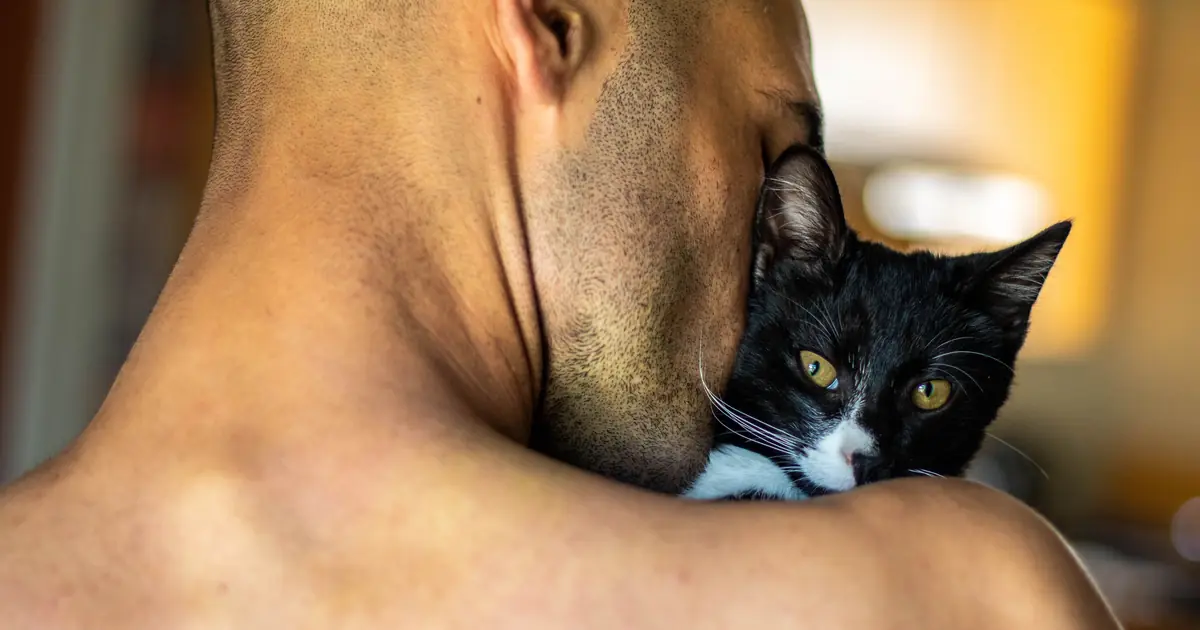
These three terms get mixed up constantly, and mixing them up is exactly how people end up in an awkward standoff at a store entrance. Each one has a different legal status, different training requirements, and different access rights.
| Category | Legal definition | Training required | Public access rights | Can a cat qualify? |
|---|---|---|---|---|
| Service Animal | ADA-defined, task-trained animal for a person with a disability | Extensive, task-specific | Yes, broad public access (stores, restaurants, workplaces) | No, dogs only (rare miniature horse exception) |
| Emotional Support Animal (ESA) | Provides comfort through presence, prescribed by a licensed mental health professional | None required | No general public access; housing protection under FHA | Yes |
| Therapy Animal | Visits hospitals, schools, or facilities to comfort groups of people, not one handler | Basic obedience and temperament certification through a therapy org | Only where invited (facility-specific, not a legal right) | Yes, some cats do this work |
What can a cat legally be, if not a service animal?
Your cat can be a legitimate emotional support animal, and that status comes with real (if limited) legal protection. An ESA is an animal that eases symptoms of a mental health condition, like anxiety, depression, or PTSD, just by being around. No task training required, no obedience test, just a genuine bond and a documented need.
To make it official, you need a letter from a licensed mental health professional (a therapist, psychiatrist, or psychologist) stating that you have a diagnosed condition and that your cat’s presence helps manage it. We’ve got a full walkthrough on how to register a cat as an emotional support animal if you want the step-by-step version. That letter is what actually matters legally, not a certificate or a vest.
Here’s what an ESA letter gets you: protection under the Fair Housing Act. A landlord generally has to make a reasonable accommodation, waiving no-pet policies and pet deposits, for a legitimate ESA. What it does not get you: the right to bring your cat into a restaurant, a grocery store, or your workplace. Those public access rights belong to ADA service animals only, and as we covered, that’s dogs.
Do airlines have to let my ESA cat fly for free?
No, not anymore. As of January 2021, the U.S. Department of Transportation changed the rule so airlines are no longer required to accommodate emotional support animals as anything other than regular pets. Before that date, ESAs flew free in the cabin under a special designation. Now your ESA cat travels under the airline’s standard pet policy: an airline-approved carrier, a pet fee (often somewhere between $75 and $200 depending on the airline and route), and whatever size or breed restrictions apply.
Your ESA letter still matters for housing. It just doesn’t carry weight at the gate anymore. If flying with your cat is in your plans, a snug, airline-compliant cat carrier is worth sorting out well before your trip, not the morning of.
Are online “service animal” or “ESA” registries legit?
No. There is no official government registry for service animals or emotional support animals, full stop. Any website offering to sell you a certificate, an ID card, or a “registration” for your cat is selling you a piece of paper with zero legal weight. The ADA itself doesn’t require any certification or paperwork for a legitimate service dog, and for ESAs, the only document that actually matters is a real letter from a licensed mental health professional who has evaluated you.
These registry sites prey on people who genuinely want to do things the right way. Skip them. If you need an ESA letter, work with an actual licensed provider, not a $70 online form that emails you a badge. Misrepresenting a pet as a service animal is also illegal in many states and can carry fines, so it’s not worth the shortcut even if you’re tempted.
How does a cat actually help with mental health at home?
A cat supports your mental health through routine, touch, and quiet companionship, not through trained tasks. A steady feeding schedule gives your day structure. A cat settling into your lap slows you down and, for a lot of people, is genuinely calming. There’s real, if still developing, research suggesting a cat’s purr (typically in the 25 to 150 Hz range) may have soothing effects on the person hearing it.
None of that requires public access rights to matter. Most of the benefit happens at home anyway: the greeting at the door, the warm weight on your chest at 2am when your brain won’t quiet down, the fact that something depends on you and shows up for you in return. If you’re wondering whether your particular cat is cut out for a support role, watching for signs of stress in cats matters here too. A cat who’s anxious or overwhelmed by a lot of handling or new environments isn’t going to thrive as an ESA, and forcing the role helps nobody. The ASPCA’s general cat care guidance and International Cat Care’s advice hub are both solid places to check on your cat’s wellbeing before leaning on her for emotional support duty.
Frequently Asked Questions
Q: Can a cat be a service animal in the US?
No. The ADA defines service animals as dogs (with a rare exception for miniature horses) individually trained to perform a task for a person with a disability. Cats are explicitly not covered, no matter their training or temperament.
Q: Can a cat be an emotional support animal?
Yes. Cats can be emotional support animals with a letter from a licensed mental health professional. ESAs need no special training and provide comfort through their presence rather than trained tasks.
Q: Do emotional support cats have public access rights?
No. ESAs, including cats, do not have the legal right to enter restaurants, stores, or workplaces the way ADA service dogs do. Their main legal protection is in housing under the Fair Housing Act.
Q: Can I bring my ESA cat on a plane for free?
Not anymore. Since January 2021, U.S. airlines are no longer required to accommodate emotional support animals as anything but regular pets, meaning your cat needs an approved carrier and you’ll likely pay a standard pet fee.
Q: Is there an official registry for service animals or ESAs?
No official government registry exists for either category. Websites selling “certification,” vests, or ID cards for service animals or ESAs have no legal authority, and buying one doesn’t grant your cat any rights.
Q: What’s the difference between an ESA and a therapy cat?
An ESA supports one specific person and is documented through a mental health professional’s letter. A therapy cat, by contrast, visits places like hospitals or schools to comfort multiple people and typically needs a temperament evaluation through a therapy animal organization.
Q: Can a landlord refuse my emotional support cat?
Generally, no, if you have a legitimate ESA letter from a licensed mental health professional. The Fair Housing Act requires landlords to make reasonable accommodations, including waiving no-pet policies, in most residential housing situations.
Q: Why are dogs allowed as service animals but not cats?
The ADA’s definition centers on task training and reliable public behavior, which dogs were bred for over thousands of years. Cats can offer real comfort and companionship, but that’s considered emotional support rather than a trained, task-based service under the law.
None of this is legal advice, and rules can shift or vary by state and airline, so when something specific is riding on it (a lease dispute, a flight booking, a workplace accommodation), it’s worth checking the current rule directly or talking to a professional. But the core fact isn’t going anywhere: your cat isn’t going to qualify as an ADA service animal, and that’s fine. As an emotional support animal, she’s still doing something real for you, just under a different name and a different set of rules.

Hello and welcome to The Ideal Cat!
We are some passionate cat owners from different professions. We love our cats and have a lot of experience in how to care for our pets. We are incredibly excited to share our knowledge, experience, and research with you. So you can take good care of your loving cat. We will answer most of the common questions about owning cats, taking care of them, etc. If you have any question contact with us. Thanks for visiting! Enjoy the content.
