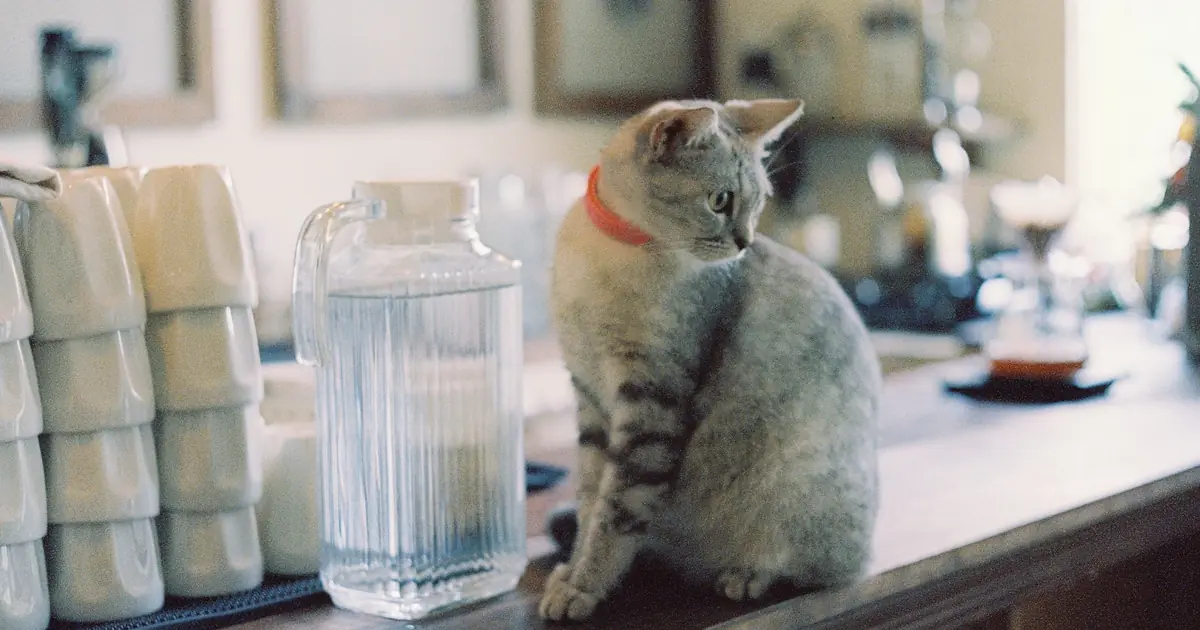
Picture this. You’re mixing a salad dressing, your cat hops onto the counter, and before you can react, they’ve had a lick of something splashed with vinegar. Now you’re standing there wondering if you need to panic. Or maybe you’ve read a blog swearing apple cider vinegar cures fleas, UTIs, and dull fur, and you’re tempted to try it.
So, can cats have vinegar? In tiny, well-diluted amounts, vinegar won’t poison your cat, but most cats hate the smell and taste, and there’s almost no good reason to give it to them. Here’s the honest breakdown, plus the one place vinegar actually earns its spot in a cat home.
- Vinegar is not toxic to cats, but a few drops heavily diluted in water is the absolute most that’s ever considered safe.
- Undiluted vinegar is acidic and can irritate a cat’s mouth, throat, and stomach, causing vomiting, diarrhea, or drooling.
- Popular claims that apple cider vinegar treats fleas, UTIs, or improves a cat’s coat are not backed by solid scientific evidence.
- A cat urinary tract infection needs a veterinarian, not vinegar, because delaying real treatment can be dangerous.
- Vinegar’s real value in a cat household is as a diluted, natural cleaner and deterrent, since most cats dislike the smell.
Is vinegar safe for cats to eat or drink?
Vinegar is not classified as toxic or poisonous to cats, so a small accidental lick usually won’t cause harm. The catch is that “not toxic” is not the same as “good for them.” Vinegar is highly acidic (most household vinegars sit around a pH of 2 to 3), and cats have sensitive stomachs and a strong dislike of sour, sharp smells. Even a modest taste can trigger drooling, a grumpy face, and a fast exit from the kitchen.
If your cat swiped a tiny splash off a plate, they’ll almost certainly be fine. What you want to avoid is deliberately adding vinegar to their food or water. For the record, cats do great on a proper feline diet, and if you’re rethinking meals, start with what cats should actually eat instead of home remedies.
Why is undiluted vinegar a problem for cats?

Undiluted vinegar is a problem for cats because its acidity can irritate delicate tissue. Straight vinegar in the mouth or gut can inflame the lining, and cats simply aren’t built to process concentrated acids well. The result is often an unhappy stomach and a mess for you to clean up.
Common reactions when a cat swallows too much vinegar include:
- Vomiting and nausea
- Diarrhea or loose stool
- Excessive drooling and lip-smacking
- Loss of appetite for a while
- General discomfort or hiding
Cats with kidney disease or other chronic conditions are especially poor candidates for any vinegar, since their bodies struggle to balance acids. If your cat has ongoing health issues, keep vinegar off the menu entirely. And if odd foods already upset your cat, you’ll want to read up on why a cat throws up after eating.
Does apple cider vinegar cure fleas, UTIs, or improve a cat’s coat?
No, apple cider vinegar does not reliably cure fleas, UTIs, or fix a dull coat, despite what plenty of blogs claim. These are among the most repeated cat myths online, and the science just isn’t there. Apple cider vinegar (ACV) is fermented apple juice, and while it’s a fine kitchen ingredient, it’s not a feline medicine.
Here’s the reality on each popular claim:
- Fleas: Vinegar may make fleas temporarily unhappy, but it does not kill fleas or their eggs. It’s not a treatment, and it won’t clear an infestation. A vet-approved flea product will.
- UTIs and bladder issues: There’s no good evidence ACV treats a feline urinary tract infection, and messing with your cat’s urine pH can backfire. Urinary problems in cats can become emergencies fast, so this is a see-your-vet situation.
- Coat and skin: A shiny coat comes from good nutrition and grooming, not from acid on the fur, which can sting broken skin and dry things out.
The single most important point: a cat straining to pee, going outside the box, or crying at the litter box needs a veterinarian right away, not a home remedy. A blocked cat is a life-threatening emergency. Vinegar is not on the list of things that helps here.
What are the safe ways to use vinegar around cats?
The safe and genuinely useful way to use vinegar around cats is as a diluted household cleaner and deterrent, not as food or medicine. Cats dislike the sharp smell, which is exactly why a vinegar-water mix can gently discourage them from scratching or peeing in a spot. Once it dries and the odor fades, the deterrent effect fades too, which is fine for keeping the smell out of your home.
Good, cat-friendly vinegar uses include:
- A 1:1 white vinegar and water spray to wipe down counters and surfaces (keep cats off until dry).
- A diluted vinegar rinse to help neutralize odors on hard floors.
- A light deterrent spray on areas you want your cat to avoid, tested first on a hidden patch so it doesn’t stain.
One honest caveat: for cat urine specifically, vinegar helps with fresh smells but doesn’t fully break down the odor-causing compounds the way an enzyme cleaner does. For set-in accidents, reach for an enzymatic cleaner instead.
Vinegar as food vs vinegar as a cleaner: which makes sense?
Feeding vinegar to a cat rarely makes sense, while using vinegar as a diluted cleaner or deterrent often does. The table below sums up the difference so you can see why we land firmly on “clean with it, don’t feed it.”
| Use | Verdict for cats | Why |
|---|---|---|
| Feeding vinegar in food or water | Skip it | No proven benefit, most cats hate it, and too much irritates the gut |
| ACV for fleas or UTIs | Don’t rely on it | Not supported by evidence; real problems need a vet |
| Diluted vinegar spray to clean surfaces | Useful | Cheap, natural, low-toxicity once dry |
| Diluted vinegar as a scratch or spray deterrent | Useful | Cats dislike the smell, so it nudges behavior |
| Vinegar on set-in urine stains | Limited | Masks fresh odor but won’t fully break down urine like enzyme cleaners |
What should you do if your cat drank vinegar?
If your cat drank a small amount of diluted vinegar, stay calm and watch them, because a tiny taste rarely causes real harm. Offer fresh water and let them rinse the flavor out. Most cats just look offended and move on.
Take it more seriously if your cat swallowed a larger amount of undiluted vinegar, or if you see any of these signs:
- Repeated vomiting or ongoing diarrhea
- Heavy drooling that doesn’t settle
- Refusing to eat or drink for more than a day
- Lethargy, hiding, or acting clearly unwell
When any of those show up, or if your cat has kidney disease or another chronic condition, call your veterinarian. This article is educational and not a substitute for professional care, so when in doubt, a quick call to your vet or a pet poison line is always the safe move.
What are better choices than feeding your cat vinegar?
Better choices than vinegar are simple: feed a proper cat diet, use vet-approved products for health issues, and pick rewards your cat actually enjoys. Vinegar solves a problem your cat doesn’t have, so there’s rarely a reason to reach for it as food.
If you were hoping vinegar might be a healthy little extra, redirect that instinct toward things cats genuinely benefit from, like quality food and appropriate reward options. And if you’re just curious which sharp, acidic human foods cats dislike or should avoid, our guide on whether cats can have lemon covers similar ground. For anything health-related, lean on your vet and trusted resources like the ASPCA’s people-foods guidance and the Cornell Feline Health Center.
The bottom line on cats and vinegar
Cats can technically have vinegar in a tiny, heavily diluted amount without being poisoned, but there’s no real payoff and plenty of downside. Undiluted vinegar is acidic enough to upset your cat’s mouth and stomach, and the popular health claims don’t hold up. Keep vinegar out of your cat’s bowl, hand real problems to your vet, and let vinegar do what it’s actually good at: cleaning and gently deterring. For more on feline nutrition basics, PetMD’s nutrition section is a solid place to keep reading.
Frequently Asked Questions
Q: Can cats have apple cider vinegar in their water?
Adding apple cider vinegar to a cat’s water isn’t recommended without your vet’s guidance. Most cats dislike the smell and taste, so they may refuse to drink, which risks dehydration. There’s also no proven benefit to justify it, so plain fresh water is the better choice.
Q: Is vinegar toxic to cats?
Vinegar is not classified as toxic or poisonous to cats. However, it’s highly acidic, so a large or undiluted amount can irritate a cat’s mouth and stomach and cause vomiting or diarrhea. A small accidental lick usually causes no lasting harm.
Q: Does apple cider vinegar kill fleas on cats?
No, apple cider vinegar does not kill fleas or their eggs. It may briefly repel some fleas, but it won’t clear an infestation. Effective flea control comes from vet-approved treatments, not vinegar rinses or sprays.
Q: Can I give my cat vinegar for a UTI?
No, you should not treat a cat’s UTI with vinegar. There’s no solid evidence it works, and altering urine pH can make things worse. Feline urinary problems can become emergencies quickly, so a cat with UTI signs needs a veterinarian right away.
Q: What happens if my cat licks vinegar?
If your cat licks a small amount of vinegar, they’ll likely react to the sour taste with drooling or lip-smacking and then walk away unharmed. Offer fresh water. Watch for repeated vomiting or diarrhea, and call your vet if those persist.
Q: Is white vinegar or apple cider vinegar safer for cats?
Neither white vinegar nor apple cider vinegar is meant for feeding cats, and both are acidic. For cleaning, white vinegar is the practical, low-cost pick. Neither should be added to food or water without your veterinarian’s approval.
Q: Can I use vinegar to clean my cat’s litter box or spray areas?
Yes, diluted vinegar is a reasonable natural cleaner for hard surfaces and can deter cats from certain spots because they dislike the smell. Rinse well and let it dry before your cat returns. For soaked-in urine, an enzyme cleaner works far better.
Q: Is vinegar safe for kittens?
Kittens are smaller and more sensitive, so vinegar is best kept away from them entirely as food or medicine. Even diluted amounts can upset a tiny stomach. If you have any concern about a kitten’s health, contact your veterinarian rather than trying home remedies.

Hello and welcome to The Ideal Cat!
We are some passionate cat owners from different professions. We love our cats and have a lot of experience in how to care for our pets. We are incredibly excited to share our knowledge, experience, and research with you. So you can take good care of your loving cat. We will answer most of the common questions about owning cats, taking care of them, etc. If you have any question contact with us. Thanks for visiting! Enjoy the content.
