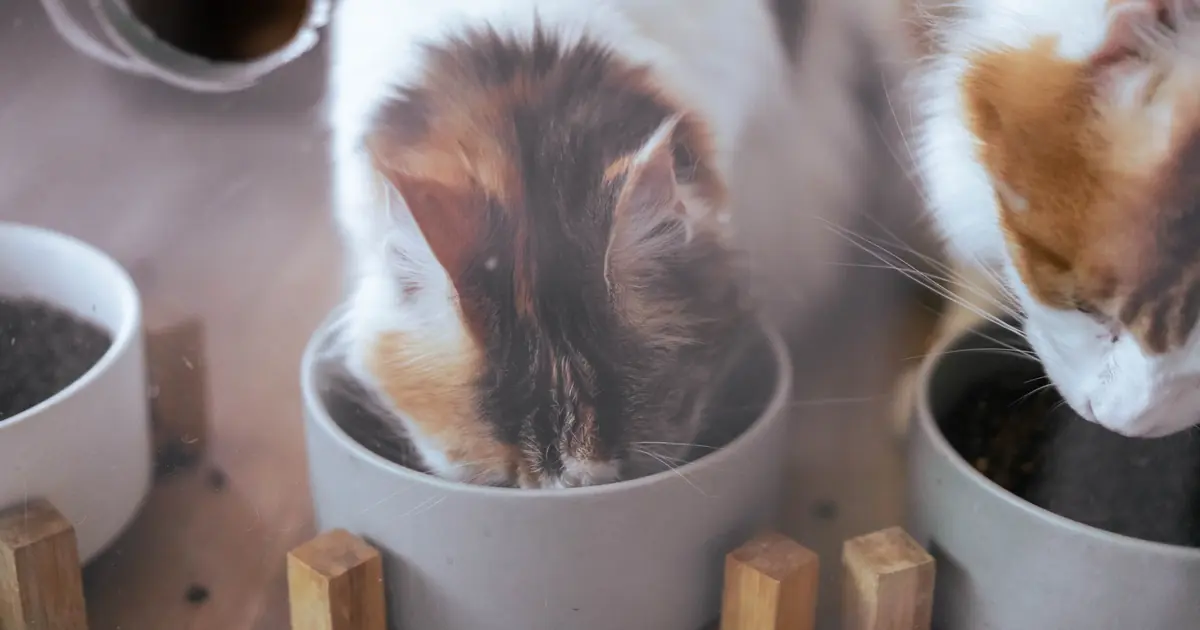
You just filled the bowl. Your cat inhaled it like they hadn’t eaten in a week. And thirty seconds later, there it is on the floor: a neat little pile of undigested kibble, still shaped like the food that went down.
Sound familiar? Cat parents even have a nickname for it: “scarf and barf.” Here’s the good news. When a cat throws up right after eating, it’s usually regurgitation, not real vomiting, and it’s often an easy fix. It’s not the same as an eating disorder either, so it’s worth knowing whether cats can be bulimic. But sometimes it’s a signal worth paying attention to. Let’s sort out which is which.
This article is educational and isn’t a substitute for veterinary care. When something feels off, call your vet.
- Food that comes up seconds after eating, undigested and tube-shaped, is usually regurgitation, a passive process with no heaving.
- True vomiting involves obvious retching and heaving, and it brings up digested food or yellow bile, sometimes hours after a meal.
- Eating too fast is the number one reason a healthy cat throws up right after eating.
- Slow-feeder bowls, puzzle feeders, and smaller, more frequent meals solve most “scarf and barf” cases.
- See a vet if the throwing up is frequent, contains blood, or comes with weight loss, lethargy, or a cat that stops eating.
Is my cat vomiting or regurgitating?
Telling vomiting apart from regurgitation is the single most useful thing you can do, because they point to different causes. Regurgitation is passive: food that never made it past the esophagus slides back up quickly and effortlessly, with maybe a small cough or gag. Vomiting is active: your cat heaves, their belly contracts, and you hear that unmistakable retching sound before anything comes up.
The clue is in the timing and the mess. Regurgitated food comes up within seconds to a couple of minutes, looks undigested, and is often tube or sausage-shaped from the esophagus. Vomit usually appears more digested or comes with yellow bile, and it can happen minutes to hours after eating. The veterinary team at PetMD notes that regurgitation is passive while vomiting is a forceful, muscular event, which is exactly why the two look so different on your floor.
| Sign | Regurgitation | True vomiting |
|---|---|---|
| Timing | Seconds to minutes after eating | Minutes to hours after eating |
| Effort | Passive, effortless, quick cough or gag | Active heaving, belly contractions, retching sound |
| What comes up | Undigested food, often tube-shaped | Partly digested food or yellow bile |
| Warning first | Little to no warning | Drooling, lip-licking, restlessness before |
| Usual cause | Eating too fast, hairball, full stomach | Illness, food sensitivity, or gut irritation |
Not sure which one you’re seeing? Snap a quick phone photo before you clean up. It genuinely helps your vet. For the bigger picture on both, our guide on why cats vomit walks through every common trigger.
Why does my cat throw up right after eating?
Most cats that throw up right after eating are eating too fast, too much, or both. When food goes down faster than the stomach can handle, it comes straight back up before digestion even starts. That’s the classic “scarf and barf,” and it’s the most common reason by far. But a handful of other causes can look the same.
Eating too fast (scarf and barf)
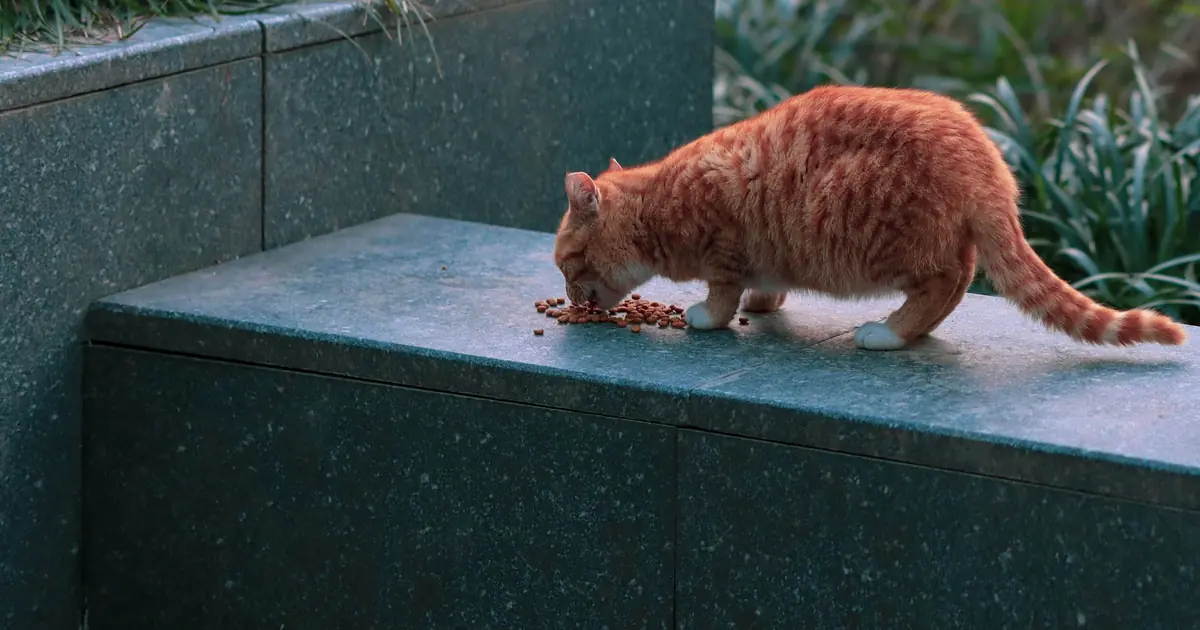
Eating too fast is the top reason a healthy cat throws up right after a meal. Gulping food fills the stomach quickly and swallows a lot of air, and dry kibble can swell once it’s down. The stomach says “nope” and sends it back up, whole. Cats often bolt their food out of competition in multi-cat homes, boredom, or plain enthusiasm at dinnertime.
Eating too much at once
A stomach that gets overfilled in one sitting can reject the extra. Cats are grazers by nature, built for small prey-sized meals, not one giant bowl. Free-feeding a big pile or doubling up portions is an easy way to trigger a bring-back.
Sudden food changes
Switching foods too quickly can upset the gut and cause throwing up along with loose stool. A cat’s digestive system needs about a week to adjust to new ingredients. Our guide on how to choose cat food covers picking the right one, and the trick is always to transition slowly.
Food sensitivity or allergy
Some cats react to a specific ingredient, often a protein like chicken, beef, or fish, or dairy. When the gut can’t handle something, it may bring the food back up before digesting it. This tends to repeat with the same food or treat, which is your clue.
Hairballs
A cat working up a hairball often brings food with it, especially right after eating. Grooming sends swallowed hair into the stomach, and the retching to clear it can eject a fresh meal too. If hairballs are a regular thing, our tips on helping a cat with hairballs can cut them down.
Spoiled food or eating something they shouldn’t
Rancid food, a raided trash can, or a nibbled houseplant can all trigger throwing up soon after. Cats are curious, and their stomachs are quick to reject anything off. Sudden, one-off episodes with a clear trigger usually fall here.
An underlying illness
Ongoing or frequent throwing up after eating can point to a medical issue rather than a bad habit. Inflammatory bowel disease (IBD) is a leading cause of chronic vomiting, where an inflamed gut lining disrupts digestion. Intestinal parasites, hyperthyroidism (common in middle-aged and senior cats), and kidney disease can all cause it too. These usually come with other clues: weight loss, a bigger or smaller appetite, more thirst, or a rougher coat. This is exactly when a vet visit matters.
How do I stop my cat from throwing up after eating?
If your cat is otherwise healthy and the cause is fast or greedy eating, a few simple changes fix most cases. The goal is to slow the meal down and shrink the portions so the stomach isn’t overwhelmed. Here’s what actually works.
- Use a slow-feeder bowl or puzzle feeder. These have ridges, bumps, or compartments that force your cat to work for each bite, which naturally slows things down. It’s the single most effective fix for scarf and barf.
- Feed smaller, more frequent meals. Split the daily portion into 3 to 5 small meals instead of one or two big ones. A less-full stomach is far less likely to send food back up.
- Portion carefully. Measure meals instead of free-feeding a heaping bowl. Follow the food’s feeding guide for your cat’s weight, and ask your vet if you’re unsure.
- Try spreading food out. A flat plate, a lick mat, or scattering kibble across a clean tray or muffin tin all slow a gulper down without any special gear.
- Consider wet food. Canned food doesn’t swell in the stomach the way dry kibble can, so it may sit better for a fast eater.
- Separate cats at mealtime. In multi-cat homes, competition makes cats bolt their food. Feeding them in different spots takes the pressure off.
- Transition foods over about a week. Mix in a little new food and increase it every couple of days so the gut can adjust.
People often ask about raised or elevated bowls. A slightly elevated bowl can make swallowing more comfortable for some cats, and it’s worth a try, but slowing the eating down does the heavy lifting. For senior cats who bring food back up regularly, a gentler recipe can help, and our roundup of the best cat food for older cats that vomit is a good place to start.
When should I worry about my cat throwing up after eating?
Worry when the throwing up is frequent, comes with blood, or shows up alongside weight loss, low energy, or a cat that stops eating. An occasional bring-back in a bright, playful cat that goes right back to the bowl is usually just fast eating. Repeated episodes, or any of the red flags below, need a vet.
Call your vet if you notice:
- Throwing up more than once a week, or several times in a day
- Blood in the vomit, or material that looks like coffee grounds
- Weight loss, or a coat that’s gotten dull or unkempt
- A cat that’s lethargic, hiding, or acting unwell
- Refusing food, or a big change in appetite or thirst
- Diarrhea along with the throwing up
- Repeated heaving that brings up nothing, or a bloated, painful belly
Here’s why the combo matters: a cat that’s both throwing up and having diarrhea can dehydrate quickly, and that turns serious faster than most people expect. The Cornell Feline Health Center points out that repeated vomiting can lead to dehydration and signals a problem that needs veterinary attention. If your cat also keeps heaving with nothing coming up, or seems in pain, treat it as urgent. There’s a fuller checklist in our guide on when to worry about cat vomiting. And if you think your cat ate something toxic, call your vet or the ASPCA Animal Poison Control Center at (888) 426-4435 right away.
Cat throwing up after eating FAQ
Q: Why does my cat throw up undigested food right after eating?
Undigested, tube-shaped food that comes up seconds after eating is almost always regurgitation from eating too fast, not true vomiting. The food never reached the stomach, so it looks exactly like it did in the bowl. Slow-feeder bowls and smaller meals usually fix it.
Q: Is my cat vomiting or regurgitating?
Regurgitation is passive and quick, with undigested food and little or no heaving. Vomiting is active, with obvious retching, belly contractions, and food that’s partly digested or mixed with yellow bile. Timing helps too: regurgitation happens within minutes, vomiting can happen hours after eating.
Q: How do I stop my cat from eating too fast?
Use a slow-feeder bowl or puzzle feeder, split meals into several small portions a day, and separate cats at mealtime if they compete. Spreading kibble on a flat tray or lick mat also slows a gulper down. These simple changes solve most scarf-and-barf cases.
Q: Should I be worried if my cat throws up after eating but acts normal?
An occasional bring-back in a cat that’s bright, playful, and eating well is usually just fast eating and not an emergency. Watch for a pattern. If it happens more than once a week, or you spot weight loss, blood, or low energy, book a vet visit.
Q: Can changing my cat’s food cause throwing up after eating?
Yes. Switching foods too fast can upset the gut and cause throwing up, often with loose stool. Transition over about a week by mixing in a little new food and increasing it every couple of days. Some cats also react to a specific ingredient, which repeats with the same food.
Q: My cat throws up after eating and then eats it again. Is that normal?
It’s common and usually harmless with regurgitation, since the food is undigested and still smells like a meal. It’s not a health problem on its own, but it does mean your cat is eating too fast. Slowing meals down stops both the bring-back and the re-eating.
Q: When is throwing up after eating an emergency?
Treat it as urgent if there’s blood, repeated heaving with nothing coming up, a bloated or painful belly, or your cat is weak, hiding, or refusing food. These can signal a blockage or serious illness. Frequent throwing up plus diarrhea also needs prompt care because of dehydration.
Bottom line: most of the time, a cat that throws up right after eating is just eating like the food might get taken away. Slow the meals down, shrink the portions, and the floor stays clean. But keep an eye on the pattern, because frequent throwing up, blood, or weight loss is your cat’s way of asking for a vet. When in doubt, make the call.

Hello and welcome to The Ideal Cat!
We are some passionate cat owners from different professions. We love our cats and have a lot of experience in how to care for our pets. We are incredibly excited to share our knowledge, experience, and research with you. So you can take good care of your loving cat. We will answer most of the common questions about owning cats, taking care of them, etc. If you have any question contact with us. Thanks for visiting! Enjoy the content.
