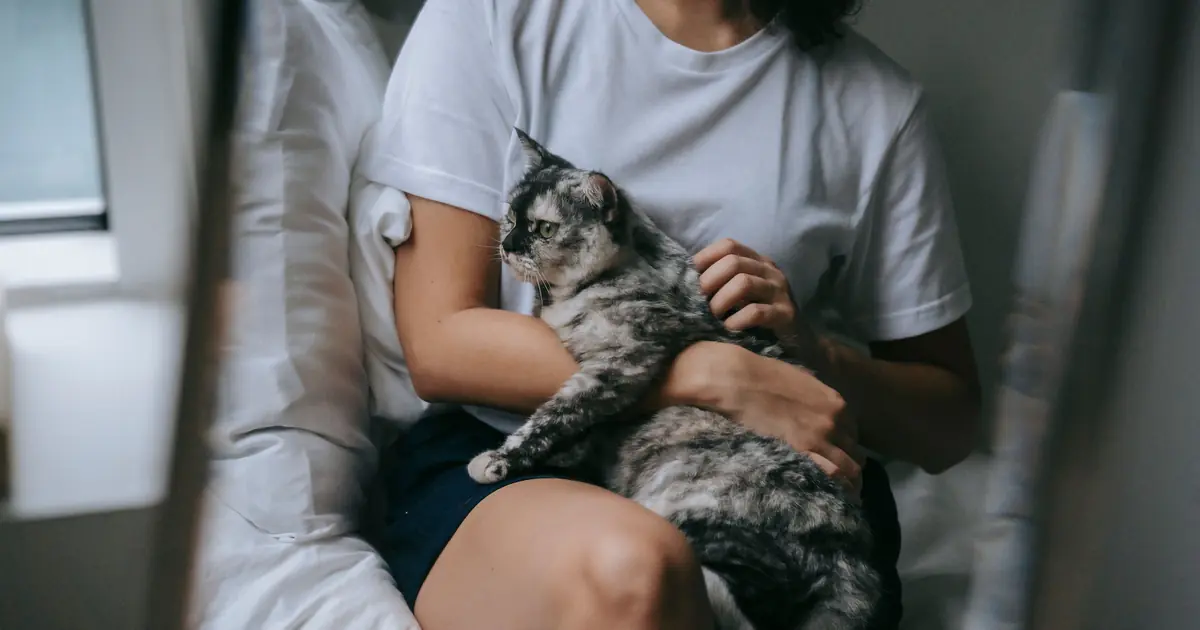
You know the walk. You’re headed down the hallway, coffee in hand, and suddenly there’s a cat-shaped obstacle course between you and the kitchen. Your cat weaves left, cuts right, loops back around your ankles, and somehow you’re still upright. Barely.
It happens on stairs. It happens at 6am when the food bowl is empty. It happens the second you walk in the door after work. And if you’ve ever nearly gone down because your cat decided your feet were the perfect place to be, you’ve probably wondered whether this is affection or a genuine plot against you. Good news: it’s almost always the former.
- Cats weave between your legs and walk in front of you mainly to greet you, get attention, or lead you toward something they want, like food.
- Rubbing against your legs (called bunting) deposits your cat’s scent from glands on their cheeks and body, marking you as part of their territory.
- This behavior is a sign of trust and affection, not aggression or an attempt to trip you.
- Cats can’t see well directly under their own chin, so a cat walking in front of you isn’t misjudging distance, it’s choosing to be exactly there.
- A sudden spike in clingy, underfoot behavior paired with excessive meowing can signal hunger, stress, or an underlying illness worth mentioning to your vet.
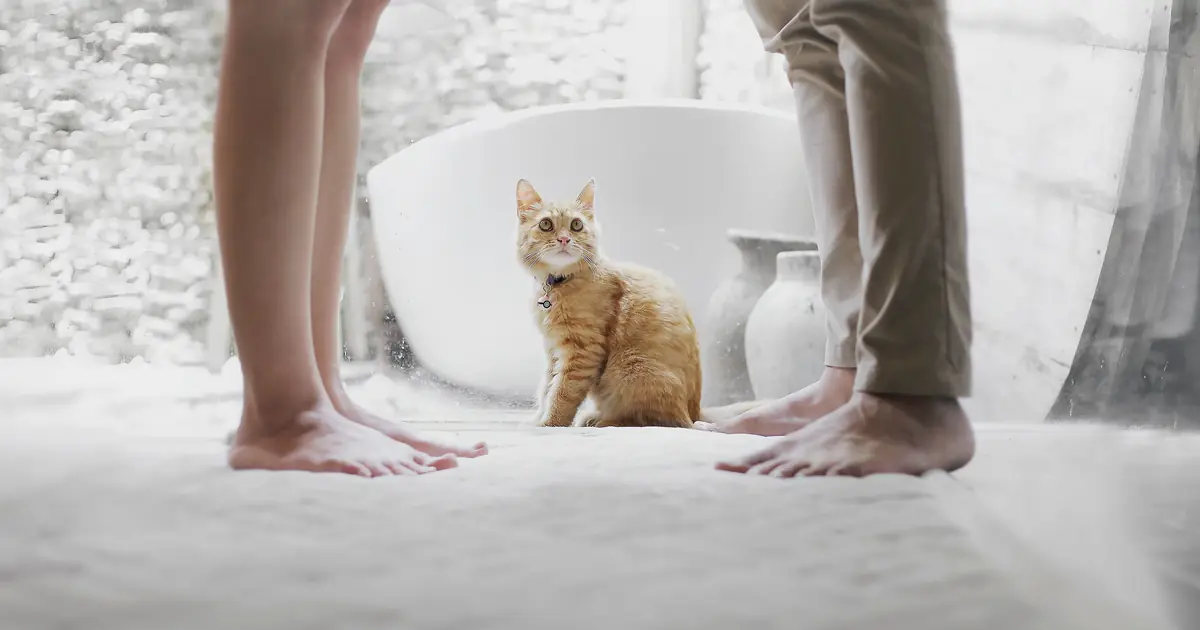
Why Do Cats Walk in Front of You?
Cats walk in front of you because they want something from that interaction: your attention, a greeting, a scent exchange, or a nudge to follow them somewhere. It’s a compact, effective piece of communication. Rather than meow from across the room, your cat closes the distance and puts their whole body in your path so you physically can’t ignore them.
Cats are built for this kind of close-contact signaling. According to International Cat Care, cats rely heavily on body posture, tail position, and physical contact to communicate with the humans and animals they trust. Walking in front of you, weaving, and rubbing are all part of that toolkit, and none of it is random. Your cat is choosing this specific behavior because it works.
Is My Cat Trying to Get My Attention?
Yes, in most cases, that’s exactly the point. A cat walking directly in your path, especially while looking up at you or meowing, is asking to be noticed. Cats figure out fast that standing in the one spot you can’t walk through gets a reaction every time.
It’s rarely random. It happens right when you get home, right before mealtime, or after you’ve been on your laptop for two hours ignoring the cat completely (we’ve all done it). Your cat has learned that a well-timed leg-weave gets you to look down and stop what you’re doing. It’s a cat’s version of tapping you on the shoulder.
If your cat does this constantly, not just around mealtimes, it’s worth reading up on why your cat follows you everywhere, since both behaviors usually come from the same place: your cat treating you as their main source of comfort and stimulation.
Why Do Cats Rub Against Your Legs and Mark You With Scent?
Cats rub against your legs to transfer scent from glands on their cheeks, chin, and the base of their tail, a behavior called bunting. This isn’t just affection, it’s a form of scent-marking that tells other cats, and honestly your cat too, that you belong to their territory.
When your cat rubs against your shins or winds figure-eights between your ankles, they’re depositing pheromones that mix with your own scent. The ASPCA notes this scent exchange is a normal, healthy part of how cats bond with the people and animals they live with. In multi-cat households, it’s also how cats build a shared “family scent” among everyone in the home, including you.
So when your cat walks in front of you and rubs against your leg on the way, they’re not just saying hello. They’re re-marking you as theirs. Claiming, but the sweet kind.
Is My Cat Trying to Lead Me Somewhere?
Often, yes. A cat that walks in front of you, glances back, and keeps moving forward is usually trying to lead you toward something specific: an empty food bowl, a closed door, or a favorite play spot. It’s one of the clearest, most goal-directed versions of this behavior.
Picture this: it’s 7am, the bowl is empty, and your cat isn’t wandering near you, they’re power-walking toward the kitchen, cutting in front of you at every turn like they’re herding you there. That’s a cat with a plan and zero patience for you finishing your coffee first.
This “lead and check back” pattern shows up around food most often, but cats do it for a closed door or playtime too. If your cat suddenly starts doing this a lot more than usual, take a look at our guide on why your cat is so clingy to rule out a change in routine or health behind it.
Is This a Sign of Affection and Trust?
Yes. A cat walking in front of you, weaving around your legs, or blocking your path is showing trust, not aggression. Cats are careful about who they get physically close to, and putting their body directly against yours, somewhere you could easily step on them, is a clear vote of confidence.
Cats don’t do vulnerable things around animals or people they don’t trust. A tail held high, sometimes with a little curl or quiver at the top, generally signals a happy, confident cat, according to VCA Animal Hospitals. If you want to get better at reading these signals overall, our cat body language guide breaks down what tails, ears, and posture really mean.
Want the fuller answer this behavior always leads to? Check out does my cat love me, weaving is just one piece of the picture.
Is It Dangerous When Cats Walk in Front of You? (And How to Stay Safe)
It can be, especially on stairs or for anyone with balance issues, because cats are fast, low to the ground, and often directly under your feet before you notice. The behavior isn’t dangerous or aggressive in intent, but a badly timed leg-weave on a staircase is a real fall risk.
This is one of the more common ways cat parents get hurt at home, not from anything malicious, just bad timing. A few things actually help:
- Pause and look down before your next step if you sense your cat nearby, especially on stairs.
- Keep a consistent feeding schedule so your cat isn’t frantically leading you to the bowl at odd hours.
- Turn on a light before heading downstairs at night. Cats see well in low light, but you don’t.
- Consider a small bell on the collar if falls have happened before or you have mobility concerns.
- Redirect with a quick chin scratch or a toy toss when you first walk in, so your cat gets attention without planting themselves under your feet.
None of this means your cat is doing anything wrong. It just means two different-sized bodies in the same hallway need a little management, especially for older adults or anyone unsteady on stairs.
Could Excessive Leg-Weaving Ever Be a Sign of a Problem?
Usually not, but a sudden, sharp increase in this behavior, especially with a lot of extra meowing, can signal hunger, stress, or an underlying health issue. If your normally independent cat suddenly can’t stop pacing in front of you and yowling about it, that’s worth noticing, not just brushing off as extra affection.
A few things that can ramp this behavior up beyond normal:
- A change in feeding schedule or a diet leaving your cat hungrier than usual.
- Stress from a new pet, a move, or a change in household routine.
- Hyperthyroidism, a common condition in older cats that can cause increased vocalizing, restlessness, and clinginess, according to Cornell Feline Health Center.
- Cognitive changes in senior cats, which can show up as increased neediness and vocalizing, especially at night.
This article is educational, not a substitute for a real exam. If your cat’s underfoot behavior changes suddenly, especially alongside more meowing or anything that feels off, it’s worth a call to your vet. It’s probably nothing dramatic, but it’s easy to rule out.
What Does Each Behavior Actually Mean?
Cats use a handful of related but distinct behaviors around your legs and feet, and each one leans toward a slightly different message. Here’s how to tell them apart:
| Behavior | What Your Cat Likely Wants |
|---|---|
| Weaving between your legs while you walk | Attention, a greeting, or an escort toward the food bowl |
| Cutting directly in front of you and stopping | A demand for immediate attention, often paired with a meow |
| Walking ahead of you, glancing back repeatedly | Leading you somewhere specific, usually food, a door, or a favorite spot |
| Rubbing their cheek or side against your leg | Scent-marking you as part of their territory and bonding with you |
| Sitting directly on your feet | Comfort-seeking and closeness, especially if your cat is anxious or cold |
Do Kittens Do This More Than Adult Cats?
Kittens and younger cats tend to weave and walk in front of you more than older cats, mainly because they’re more energetic, more food-motivated, and still learning how to get your attention effectively. As cats age, many settle into calmer ways of asking for things, like sitting and staring or a single well-placed meow.
Plenty of adult and senior cats keep doing this their whole lives, though, especially food-motivated ones or cats who were hand-raised and bonded closely with their humans early on. If a senior cat suddenly starts doing it far more than before, flag it to your vet since it can overlap with the health causes above.
Frequently Asked Questions
Q: Why does my cat walk in front of me and stop?
Your cat is asking for your full attention, usually because they want food, playtime, or a scratch. Stopping directly in your path is a deliberate move to make sure you can’t keep walking past them without noticing.
Q: Why does my cat weave between my legs when I walk?
This is a mix of greeting behavior and scent-marking called bunting, where your cat rubs their cheek and body glands against you. It’s also a common way cats try to herd you toward the food bowl.
Q: Is it bad for a cat to walk in front of you?
The behavior itself isn’t harmful to your cat, but it can create a real fall risk for you, especially on stairs. Slowing down, using stair lights, and keeping a predictable feeding schedule all help reduce the risk.
Q: Why does my cat cut me off on the stairs specifically?
Stairs are a high-attention moment for cats because you’re moving in a confined space they can easily block. Many cats also associate stairs with mealtime routines, like following you down to the kitchen in the morning.
Q: Does walking in front of me mean my cat loves me?
It’s a strong sign of trust and comfort, yes. Cats don’t put themselves in vulnerable, close-contact positions around people or animals they don’t feel safe with.
Q: Why does my cat only do this right before feeding time?
Cats quickly learn that walking in front of you and blocking your path toward the kitchen gets a fast response. It’s a learned behavior reinforced every time it successfully gets them fed sooner.
Q: Can I train my cat to stop weaving between my legs?
You can reduce it by rewarding calmer greeting behaviors, like sitting or a single meow, with attention, and by keeping feeding times consistent so there’s less urgency. You likely won’t eliminate it completely, since it’s a natural feline greeting behavior.
Q: Should I worry if my cat suddenly starts doing this way more than usual?
A sudden increase, especially with more meowing than normal, can point to hunger, stress, or a health issue like hyperthyroidism in older cats. It’s worth mentioning to your vet if the change is sudden and sticks around for more than a few days.

Hello and welcome to The Ideal Cat!
We are some passionate cat owners from different professions. We love our cats and have a lot of experience in how to care for our pets. We are incredibly excited to share our knowledge, experience, and research with you. So you can take good care of your loving cat. We will answer most of the common questions about owning cats, taking care of them, etc. If you have any question contact with us. Thanks for visiting! Enjoy the content.
