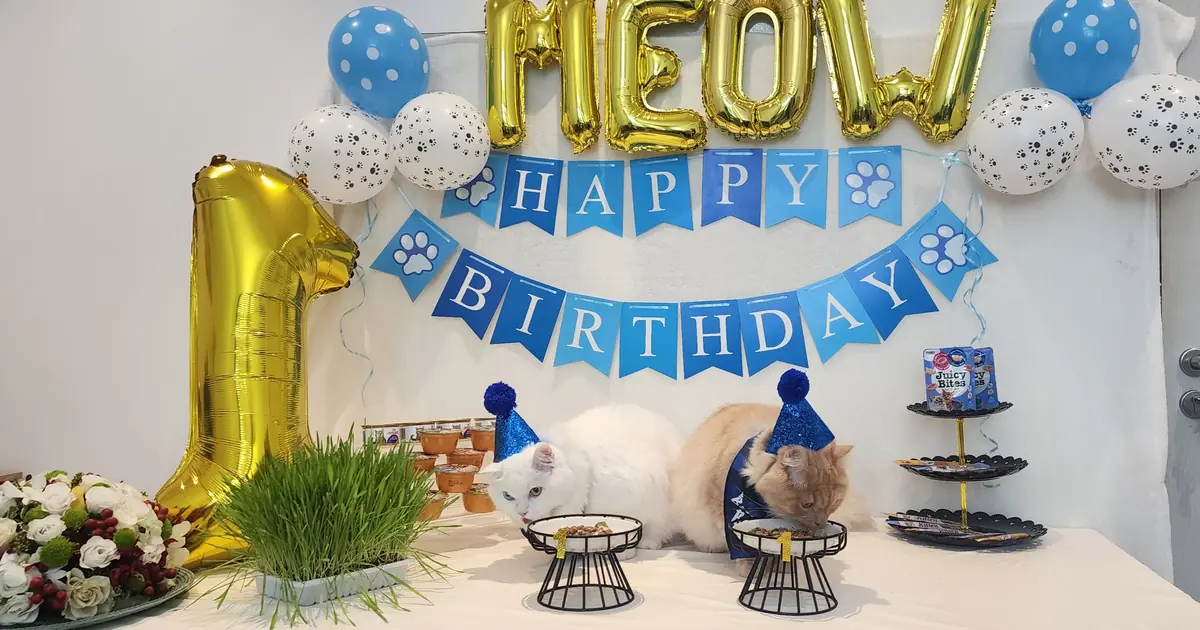
Picture this. You blow up a birthday balloon, let it bob toward the ceiling, and your cat freezes mid-step. Ears flat. Pupils huge. One paw up like the floor turned into lava. Then the balloon squeaks against the wall and your cat is gone, a gray blur down the hallway.
If you’ve wondered whether cats are scared of balloons, you’re in good company. Plenty of cats are wary of them, and a fearful reaction is completely normal. Some cats ignore balloons. A few bold ones will even bat at them. But for most, that floating, squeaking, popping thing sets off every alarm bell they’ve got. Here’s why it happens, and how to keep party day safe.
- Many cats are scared of balloons because they move unpredictably, squeak, shine, and can pop with a loud bang that triggers the startle reflex.
- Being afraid of balloons is normal cat behavior, not a sign of a problem, and it varies a lot from cat to cat.
- Latex balloons build up static electricity that can zap a cat’s nose or cling to fur, adding to the fear.
- The genuine risk is not fear but ingestion: no balloon breaks down in a cat’s stomach, and swallowed pieces or string can cause a life-threatening intestinal blockage.
- If your cat swallows balloon string, never pull a piece hanging from the mouth or rear, and call your vet right away.
Why are cats scared of balloons?
Cats are scared of balloons because a balloon breaks almost every rule a cat’s brain uses to size up the world. It floats without wings, drifts on air currents, squeaks against walls, shines unnaturally, and can burst into a deafening pop. To a predator wired to read movement and sound, that combination reads as a possible threat.
A balloon bobbing across the ceiling moves like nothing your cat has hunted or been hunted by. It’s silent, then suddenly loud. It hovers at eye level, then darts sideways on a breeze. Cats trust patterns, and a balloon is pure chaos. That instinct isn’t a flaw. It’s exactly what kept wild cats alive, and your indoor cat is running the same ancient software on a party decoration.
Is the pop the real reason cats hate balloons?
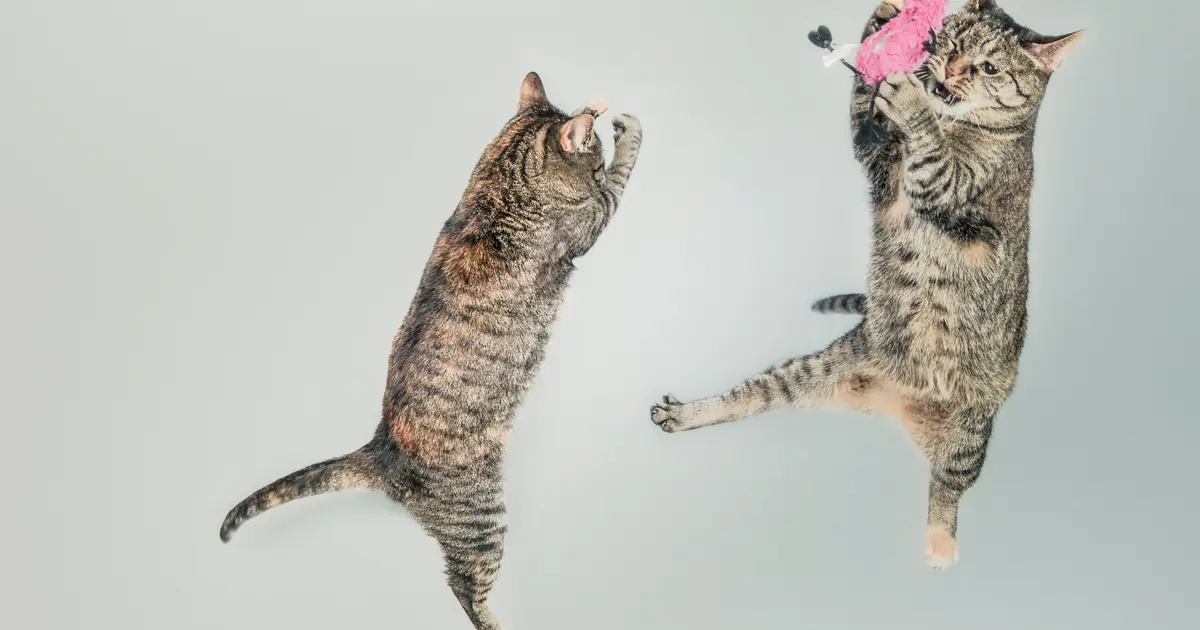
The pop is a huge part of why cats hate balloons. A balloon bursting produces a sharp, sudden bang, and cats have far more sensitive hearing than we do, picking up a much wider range of frequencies. A noise that startles you can feel genuinely alarming to your cat, and it comes with zero warning.
Two things make the pop especially rough. It’s unexpected, and cats hate surprises they can’t trace to a cause. And once your cat links balloons with that scary bang, the fear sticks. A single pop can teach a cat to flee the next time a balloon appears. This is the same startle-and-avoid learning behind the classic cucumber scare. Behavior experts at the ASPCA note that sudden loud noises and unfamiliar objects are common fear triggers for cats, so a startled response to a popping balloon fits right in.
Can balloons actually shock or hurt my cat?
Yes, balloons can give your cat a small static shock, and that adds to the fear. Latex balloons build up static electricity easily, especially in dry indoor air. When a curious cat approaches and touches a balloon with a wet nose, that static can discharge in a tiny zap.
To your cat, that unexpected little jolt feels like the balloon bit back. Static can also make a balloon cling to fur and follow your cat around, which is its own special nightmare for an animal that likes to be in control. Pair the zap with the squeak and the shine, and you’ve got a decoration that seems to attack from several directions at once.
Is it normal for my cat to be scared of balloons?
It’s completely normal for a cat to be scared of balloons, and it’s nothing to worry about on its own. Fear of a strange, moving, noisy object is a healthy survival instinct, not a behavior problem. A confident, well-socialized cat might sniff a balloon and lose interest, while a naturally timid cat may bolt the second one enters the room. A few things shape how strongly your cat reacts:
- Personality: bold cats investigate, shy cats retreat.
- Past experience: a cat that once heard a balloon pop nearby often stays wary for life.
- Early socialization: kittens exposed to lots of everyday sights and sounds tend to handle novelty better.
- General anxiety: a cat who is suddenly scared of many things may need broader support, not just balloon management.
So if your cat is terrified of balloons, don’t read it as a fault. Read it as your cat being a cat. The one time to look deeper is if the fear is part of a bigger pattern of jumpiness around the house.
Balloon reactions and what they mean: a quick guide
Cat reactions to balloons fall into a few clear buckets, and each one calls for a slightly different response from you.
| What your cat does | What it usually means | What you should do |
|---|---|---|
| Freezes, flattens ears, then flees | Startle and fear response | Remove the balloon; give a quiet escape route |
| Stares, crouches, tail twitching | Wary and on alert | Don’t force interaction; let the cat leave |
| Bats, chases, bites | Playful or curious | Supervise closely; ingestion risk is real |
| Sniffs once, walks away | Unbothered | Nothing needed, just keep pieces cleaned up |
Notice the twist. The scared cat and the playful cat both need your attention, just for different reasons. Fear is uncomfortable, but a cat happily chewing a balloon is closer to the actual danger.
Are balloons dangerous to cats?
The bigger danger from balloons isn’t the fear, it’s what happens if your cat swallows part of one. No balloon, whether latex, nylon, or foil, breaks down in a cat’s stomach. Pieces of a burst balloon can travel down the throat and gut, flatten out, and form an effective plug that blocks the intestines. In many cases that kind of blockage needs surgery.
String and ribbon are worse. Vets consider string a linear foreign body, and it’s one of the most dangerous things a cat can swallow. String can bunch the intestines like a drawstring, which can be life-threatening. So the curled ribbon tying your balloons down deserves as much caution as the balloon itself.
The Cornell Feline Health Center and other veterinary sources stress that swallowed foreign objects, especially string and rubber, are a common cause of intestinal obstruction in cats.
Safety note: popped balloon pieces and balloon string are a real choking and intestinal-blockage hazard. Pick up every scrap after a party, and never leave a cat alone with an intact or burst balloon. If you see string hanging from your cat’s mouth or rear, do not pull it, because it may be wrapped around the intestines. Call your vet right away. Watch for vomiting, no appetite, straining, or a suddenly quiet, hiding cat, and treat those as reasons to get help fast. This article is educational and isn’t a substitute for advice from your own veterinarian.
How can I help a cat that’s scared of balloons?
The kindest fix for a cat scared of balloons is usually the simplest: remove the balloons and lower the pressure. You don’t need to train your cat to love balloons. You just need to make the room feel safe again.
- Take the balloons away. If your cat is genuinely frightened, get them out of sight. There’s no benefit to leaving a scary object around to “get used to.”
- Give an escape route. Make sure your cat can retreat to a quiet room, a high perch, or a cozy hideout. A cat with an exit calms down faster.
- Stay calm yourself. Don’t laugh, chase, or bring the balloon closer as a joke. Your cat reads your energy, so act like nothing’s wrong.
- Don’t force it. Never hold your cat near a balloon to prove it’s harmless. That breaks trust and can make the fear worse.
- Use calming tools if needed. For an anxious cat, a calming pheromone diffuser can take the edge off during a party. General tips on soothing a frightened cat work here too.
Planning a party? Keep balloons in a room your cat can’t access, skip the ceiling-full-of-helium look if your cat is sensitive, and clean up fast when one pops. A little planning means your cat can hide out in peace while you celebrate.
International Cat Care offers helpful, welfare-focused advice on reducing stress for nervous cats, and giving your cat control and hiding spots is a core theme.
The bottom line on cats and balloons
So, are cats scared of balloons? Many are, and that fear is normal, harmless, and very cat. The unpredictable movement, the squeak, the shine, the static, and above all the pop add up to something your cat would rather avoid. You don’t need to fix the fear. Just respect it, give your cat space, and keep balloons away when they cause stress. The one thing to take seriously is the cleanup, because popped pieces and string are the real hazard, not the scare itself.
Frequently asked questions about cats and balloons
Q: Why is my cat so scared of balloons?
Your cat is scared of balloons because they move unpredictably, squeak, shine, hover at eye level, and can pop with a sudden loud bang. Cats are wired to be cautious of strange, fast-moving objects, so a balloon triggers a natural startle and threat response.
Q: Is it normal for cats to be afraid of balloons?
Yes, it’s completely normal. Fear of a strange, noisy, floating object is a healthy survival instinct, not a behavior problem. Reactions vary a lot: some cats flee, some stare warily, and a few confident cats bat at balloons or ignore them entirely.
Q: Can a balloon actually hurt my cat?
A balloon can give your cat a small static shock, which startles more than harms. The serious risk is ingestion. No balloon breaks down in a cat’s stomach, so swallowed latex, foil, or string can cause a choking incident or a life-threatening intestinal blockage that may need surgery.
Q: What should I do if my cat ate balloon string?
Call your veterinarian right away. Do not pull any string hanging from your cat’s mouth or rear, because it may be wrapped around the intestines and pulling can cause serious internal damage. Watch for vomiting, loss of appetite, straining, or lethargy, and treat those as urgent.
Q: Do all cats hate balloons?
No, not all cats hate balloons. Many cats are wary or scared, but some sniff a balloon and walk away, and a few playful cats will chase and bat at them. Personality, past experiences, and early socialization all shape how strongly a cat reacts.
Q: Are foil balloons safer for cats than latex?
Neither foil nor latex balloons are safe for cats to chew or swallow, since no balloon material breaks down in the stomach. Foil balloons don’t build up static the way latex does, but the ingestion risk is similar. Keep both types away from cats and clean up any pieces immediately.
Q: How do I keep my cat calm during a party with balloons?
Keep balloons in a room your cat can’t reach and give your cat a quiet hideout with food, water, and a litter box. A calming pheromone diffuser can help anxious cats. Clean up popped pieces fast, and never force your cat near a balloon to prove it’s harmless.
Q: Why does my cat run away when a balloon pops?
Your cat runs away because a popping balloon makes a sudden, sharp bang, and cats have very sensitive hearing. The noise is loud, unexpected, and impossible for your cat to trace to a cause, so fleeing is a normal protective reaction. One bad pop can make a cat wary of balloons for good.

Hello and welcome to The Ideal Cat!
We are some passionate cat owners from different professions. We love our cats and have a lot of experience in how to care for our pets. We are incredibly excited to share our knowledge, experience, and research with you. So you can take good care of your loving cat. We will answer most of the common questions about owning cats, taking care of them, etc. If you have any question contact with us. Thanks for visiting! Enjoy the content.
