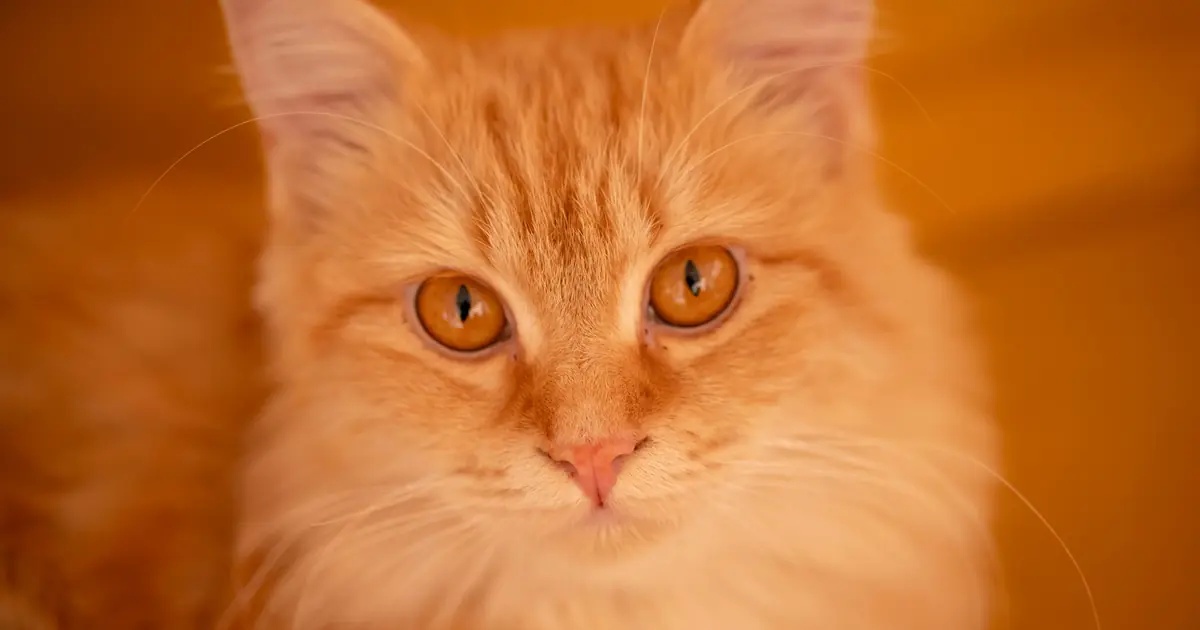
There’s something about a cat with orange eyes that stops you mid-scroll. That deep, glowing copper stare looks almost too vivid to be real, like someone turned up the saturation. But it’s not a filter. It’s biology, and a pretty simple one at that.
If you’ve got a kitten with cloudy blue eyes right now and you’re wondering whether they’ll turn that warm amber-orange, or you just fell in love with a cat at the shelter whose eyes look like they’re lit from the inside, this guide covers what actually causes that color, which breeds tend to have it, and when an eye color change is nothing to worry about versus when it’s worth a vet visit.
- Orange, copper, amber, and gold cat eyes all come from melanin, the same pigment that colors skin and fur, concentrated in the iris.
- British Shorthairs, Bombays, Persians, Maine Coons, and Devon Rex cats are known for commonly having orange or copper eyes.
- Kittens are born with blue eyes and their adult eye color, including orange, usually shows up by around 3 to 4 months of age.
- Eye color and coat color are controlled by mostly separate genes, so an orange-eyed cat can have almost any coat color.
- A sudden change in eye color, cloudiness, or one eye turning a different shade than the other can signal a health problem and is worth a vet check.
What Makes a Cat’s Eyes Turn Orange?
A cat’s eyes turn orange because of melanin, the same pigment responsible for coat color, skin color, and eye color in almost every mammal. In a cat’s iris, cells called melanocytes deposit melanin into the front layers of the eye. The more melanin packed in there, the deeper and warmer the eye color, ranging from pale gold all the way to a rich, saturated copper-orange.
This is different from how most coat colors work. Orange fur comes from a pigment called pheomelanin working through a completely different genetic pathway. Orange eyes come from eumelanin density in the iris. They’re related in the sense that both are pigment-driven, but they’re not the same switch, which is why cat eye color varies so much across breeds regardless of coat.
What Is the Full Range of Cat Eye Colors?
Cat eye colors run on a spectrum from the palest yellow to the deepest copper, plus green and blue, which come from a different mechanism entirely. Here’s how the range breaks down and what tends to produce each shade.
| Eye Color | What It Means | Common Breeds |
|---|---|---|
| Copper / Orange | Very high melanin concentration in the iris | Bombay, British Shorthair, Persian (in certain colors) |
| Amber | High melanin, slightly warmer and less saturated than copper | Abyssinian, Maine Coon, many domestic shorthairs |
| Gold / Yellow | Moderate melanin concentration | Devon Rex, many mixed-breed cats |
| Green | Low melanin plus light scattering in the iris structure | Russian Blue, Egyptian Mau, Oriental Shorthair |
| Blue | Little to no melanin in the iris (light scatters and reflects blue) | Siamese, Ragdoll, all kittens under about 6 to 8 weeks old |
Some cats also have odd eyes, one blue and one orange or green, which shows up most often in white cats and is linked to a gene that limits melanin unevenly. If that’s the coloring you’re curious about, this piece on unusual cat eye colors and whether purple eyes are real covers it in more depth.
Which Cat Breeds Commonly Have Orange or Copper Eyes?
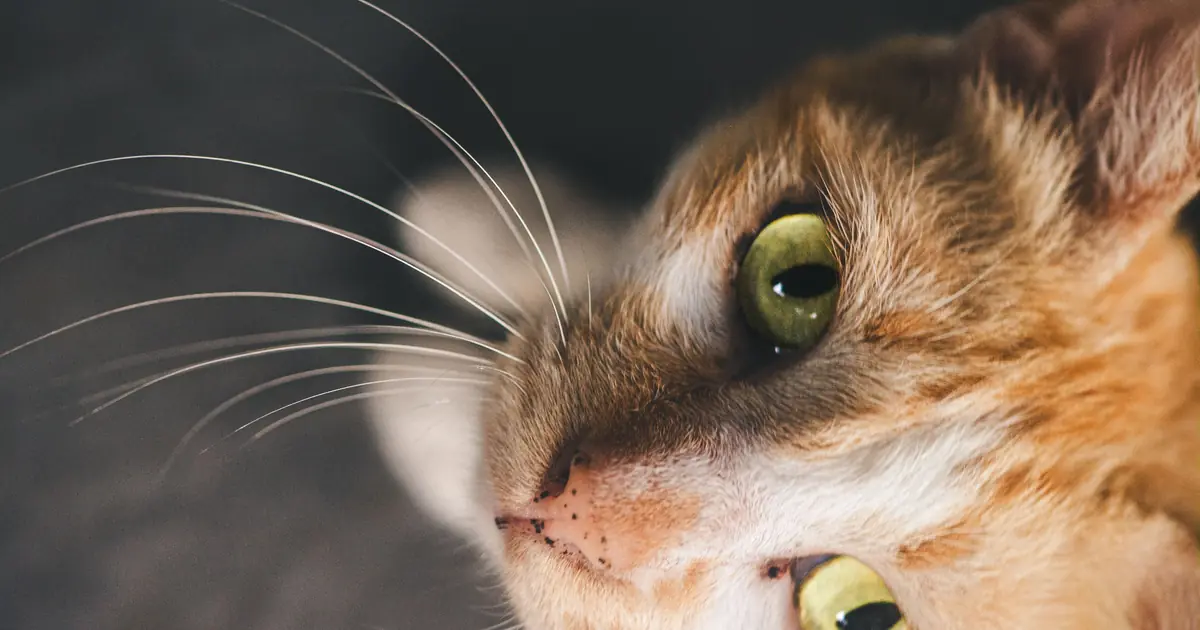
Several breed standards specifically call for copper or orange eyes, and breeders select for it. The top five are the British Shorthair, Bombay, Persian, Maine Coon, and Devon Rex.
- British Shorthair: The classic “British Blue” with gray-blue fur is famous for its striking copper eyes, a defining feature in the breed standard.
- Bombay: Bred to look like a miniature black panther, the Bombay’s glowing gold-to-copper eyes are considered essential to the breed’s look.
- Persian: Copper eyes show up frequently in solid-colored Persians, especially black, blue, and red varieties.
- Maine Coon: Known more for gold and green, but many individual Maine Coons carry deep amber to copper eyes, especially in darker coat colors.
- Devon Rex: Often shows gold to orange eyes that pair with its curly coat and pixie-like face.
Mixed-breed cats can absolutely have orange eyes too. It’s more common in breeds selected for it, but plenty of everyday domestic shorthairs and longhairs land somewhere on the gold-to-copper end of the spectrum without any pedigree at all. For more on one of the breeds most associated with this coloring, see this complete Maine Coon breed guide.
Is Orange Eye Color Linked to Coat Color?
Eye color and coat color in cats are controlled mostly independently, so an orange-eyed cat can come in nearly any coat color, not just orange fur. It’s a common assumption that orange cats have orange eyes because the names match, but the genetics don’t actually work that way. A black cat, a gray cat, or a white cat can all have copper eyes if their melanin levels in the iris happen to run high.
Still, there’s a loose real-world pattern: darker, more heavily pigmented coats (black, brown, dark tabby) show up alongside orange or copper eyes more often than very pale or dilute coats, simply because cats with more melanin overall tend to deposit more of it in the iris too. It’s a tendency, not a rule. If you’ve ever wondered whether that connection is stronger than it looks, this guide on how common certain cat coat colors actually are is a useful companion read.
When Do Kittens’ Eyes Change to Their Adult Orange Color?
Kittens are born with blue eyes, and their true adult eye color, including orange, usually starts developing around 6 to 7 weeks and is typically settled by 3 to 4 months of age. All kittens start out blue because their irises haven’t developed enough melanin yet. As melanocytes mature and start depositing pigment, the color gradually shifts, sometimes passing through a hazy gray-green stage before landing on its final shade.
If you’ve got a young kitten and you’re trying to guess their grown-up eye color, patience is really the only tool. Genetics set the ceiling, but you usually can’t tell exactly where a kitten will land until that pigment finishes filling in.
Does Orange Eye Color Affect a Cat’s Vision or Health?
No, orange eye color itself has no effect on a cat’s vision or health. It’s purely cosmetic, the result of pigment density and nothing more. An orange-eyed cat sees the world the same way any other cat does, with the same night vision, motion detection, and general visual range.
The one exception worth knowing: deafness in white cats is sometimes linked to blue eyes (not orange), due to a gene that affects both pigment and inner-ear development. Orange-eyed cats aren’t part of that particular risk group. According to International Cat Care, that congenital deafness link is specific to certain white cats with blue eyes, not to eye color in general.
When Does an Eye Color Change Mean It’s Time to See a Vet?
A sudden change in an adult cat’s eye color, new cloudiness, or one eye looking noticeably different from the other can signal a real health problem, so it’s worth getting checked by a vet. Normal adult eye color is stable. Once a cat is past kittenhood, their eyes shouldn’t be gradually or suddenly shifting shade on their own.
Watch for these red flags:
- One eye turning a different color or shade than the other (anisocoria of color, not just pupil size)
- A rusty, hazy, or cloudy tint appearing over the iris
- Redness, squinting, or visible discomfort along with the color change
- A dark, irregular spot appearing on the iris that wasn’t there before
These can point to conditions like uveitis (inflammation inside the eye), iris melanosis, or in rarer cases, a growth on the iris. None of these are something to diagnose or treat at home. According to the Cornell Feline Health Center, uveitis can be linked to infections, trauma, or immune issues, and it needs a vet’s eyes on it, not a wait-and-see approach. This article is educational, not a substitute for veterinary care, so if you notice any of these changes, book an appointment rather than guessing at the cause.
Frequently Asked Questions About Cats With Orange Eyes
Q: What breed of cat has orange eyes?
The British Shorthair, Bombay, Persian, Maine Coon, and Devon Rex are the breeds most known for orange or copper eyes, with the British Shorthair’s copper gaze being a specific part of its official breed standard.
Q: Are orange eyes rare in cats?
Orange or copper eyes aren’t considered rare overall, but they’re less common than green or gold in random-bred domestic cats and show up most reliably in specific breeds selected for that trait, like the Bombay and British Shorthair.
Q: Do all orange cats have orange eyes?
No. An orange cat’s fur color and eye color are controlled by separate genes, so orange cats can have green, gold, amber, or copper eyes, and orange-eyed cats can have any coat color at all.
Q: At what age do kittens’ eyes turn orange?
Kittens are born with blue eyes, and adult eye color, including orange, usually starts appearing around 6 to 7 weeks of age and is typically fully settled by 3 to 4 months.
Q: Can a cat’s eye color change as an adult?
Healthy adult cats have stable eye color that doesn’t change. A sudden shift in color, new cloudiness, or an eye turning a different shade than the other can point to inflammation or another eye condition, so it’s worth a vet visit rather than something to watch and wait on.
Q: Is orange eye color linked to any health problems?
No, orange and copper eye color on its own isn’t linked to any health condition. The one documented eye-color health link in cats involves blue eyes in certain white cats, which is sometimes associated with congenital deafness, not orange eyes.
Q: What causes gold versus orange eyes in cats?
Gold and orange eyes both come from melanin in the iris, just at different concentrations. Gold eyes have a moderate amount of pigment, while orange and copper eyes have a much higher, denser concentration, producing that deeper, richer color.
Q: Do British Shorthairs always have orange eyes?
Not always. Copper eyes are the standard and most prized color for solid gray “British Blue” Shorthairs, but the breed also comes in colors and patterns where green, blue, or odd eyes are correct and expected, like colorpoint or bicolor varieties.

Hello and welcome to The Ideal Cat!
We are some passionate cat owners from different professions. We love our cats and have a lot of experience in how to care for our pets. We are incredibly excited to share our knowledge, experience, and research with you. So you can take good care of your loving cat. We will answer most of the common questions about owning cats, taking care of them, etc. If you have any question contact with us. Thanks for visiting! Enjoy the content.
