
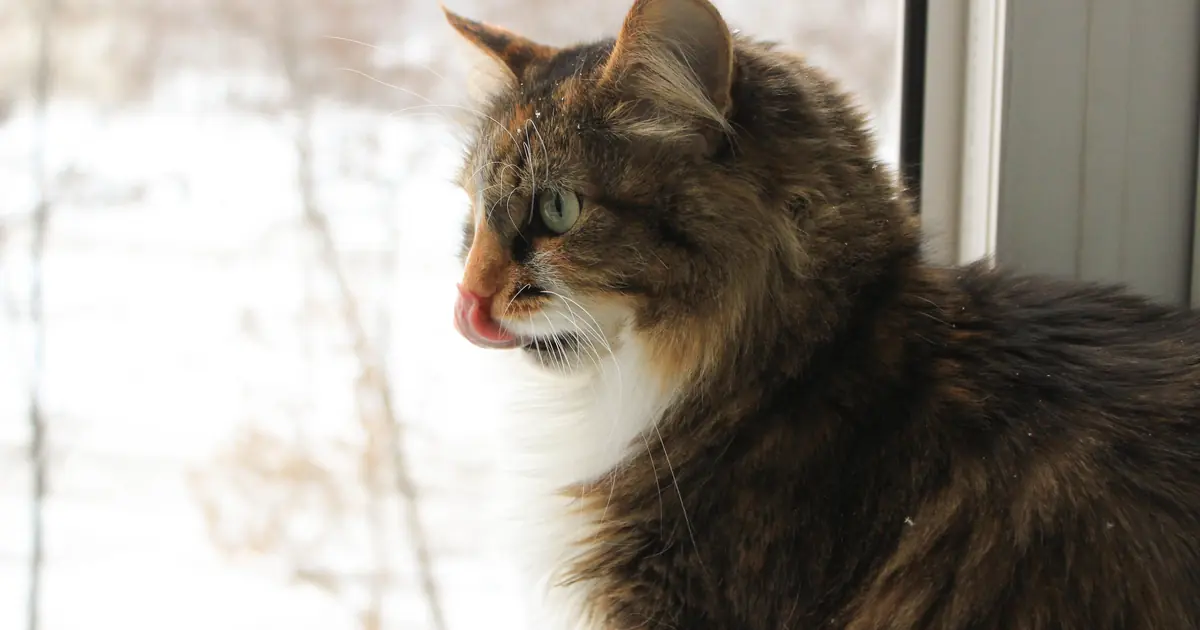
You catch your cat giving the window a slow, deliberate lick, like it’s tasting a fine wine. Weird? Sure. Concerning? Almost never. Here’s what’s going on.
Let’s break down why cats lick glass, and the rare times it’s worth a second look.
- Cats lick windows to taste condensation, salt, dust, or fingerprints, and to explore smells.
- The cool, smooth texture of glass is novel and appealing to a curious cat.
- It’s usually harmless, a quirky sensory habit, not a health problem.
- Excessive surface-licking can occasionally point to boredom, stress, or pica.
- See a vet if licking is obsessive or paired with weight loss, appetite changes, or nausea.
Why do cats lick windows?
Cats lick windows mostly to investigate taste, texture, and smell. Glass often carries a thin film of condensation, salty residue, dust, cooking grease, or fingerprints, all of which give a cat something to taste and explore. The cool, smooth surface also feels interesting under a cat’s rough tongue. For most cats, window-licking is simple curiosity or a harmless quirk, the feline version of “what does this thing taste like?” It rarely means anything is wrong.
Is it the taste, the texture, or the smell?
It’s often all three at once. Cats have a strong sense of smell and use taste and touch to explore their world, so a window offers a little sensory buffet. Condensation provides moisture and dissolved minerals; salt from hands, food, or cleaning products adds flavor; and smells from outside or the room cling to the glass. The cool, glassy texture then makes the whole experience novel. This is closely related to why cats fixate on and love windows in general, as we cover in why cats like windows.
Is licking windows harmful to cats?
Occasional window-licking is generally harmless, but a few practical risks are worth managing. The main concern isn’t the licking itself but what’s on the glass: residue from window cleaners and chemical sprays can be mildly toxic if regularly ingested. Keep glass clean using pet-safe products, and wipe away any chemical cleaner thoroughly. As long as your cat isn’t swallowing harmful substances, a lick of the window now and then won’t hurt. Cats explore many surfaces with their tongues, similar to why cats lick their paws.
When could window-licking signal a problem?
Excessive or compulsive licking of windows and other non-food surfaces can occasionally indicate an underlying issue. Possible causes include boredom and under-stimulation, stress or anxiety, or a condition called pica, the urge to lick or eat non-food items, which is sometimes linked to nutritional deficiencies, digestive issues, or other medical problems. This overlaps with cats that also mouth or chew on plastic. If your cat’s licking becomes frequent, frantic, or all-consuming, it’s worth investigating rather than ignoring.
Normal quirk vs worth a vet visit
Here’s how to tell casual licking from something more.
| Likely harmless | Worth a vet check |
|---|---|
| Occasional, casual licks | Frequent, compulsive, or frantic licking |
| Cat is otherwise happy and playful | Also licking or eating other odd surfaces (pica) |
| No other symptoms | Weight loss, appetite change, vomiting, or nausea |
| Stops easily when distracted | Seems anxious, stressed, or under-stimulated |
What should you do about it?
For casual window-licking, just keep the glass clean with pet-safe products and don’t worry. If it seems excessive, add enrichment, more play, climbing, window perches, and interactive toys, to relieve boredom and stress, and make sure your cat is on a complete, balanced diet. This article is educational and not a substitute for veterinary care; if the licking is obsessive or comes with symptoms like weight loss, vomiting, or eating non-food items, see your vet to rule out pica or a medical cause. Trusted background on feline behavior and pica comes from the ASPCA and Cornell Feline Health Center.
Frequently Asked Questions
Q: Why does my cat lick the window?
Usually to taste condensation, salt, dust, or fingerprints and to explore smells on the glass, plus the cool, smooth texture feels novel. It’s typically harmless curiosity. Keep the glass clean with pet-safe products for safety.
Q: Is it bad for cats to lick windows?
Occasional licking is generally harmless. The main risk is chemical residue from window cleaners, so use pet-safe products and wipe glass thoroughly. As long as your cat isn’t ingesting harmful substances, the odd lick won’t hurt.
Q: Why does my cat lick condensation off the window?
Condensation offers moisture and dissolved minerals that cats find appealing to taste. Some cats also simply enjoy licking the cool, wet glass. It’s usually a harmless quirk, though very thirsty cats should have fresh water always available.
Q: Can window-licking be a sign of illness?
Rarely. Excessive or compulsive licking of surfaces can point to boredom, stress, or pica, sometimes linked to nutritional or medical issues. If licking is frequent or paired with weight loss, vomiting, or eating odd items, see your vet.
Q: What is pica in cats?
Pica is the urge to lick or eat non-food items like plastic, fabric, or surfaces. It can stem from boredom, stress, or nutritional and medical issues. Compulsive window-licking alongside eating odd objects is worth a vet evaluation.
Q: How do I stop my cat from licking windows?
Keep glass clean with pet-safe cleaners, and if it seems excessive, add enrichment like play, climbing, and window perches to ease boredom. Ensure a balanced diet. If it’s obsessive or paired with symptoms, consult your vet.

Hello and welcome to The Ideal Cat!
We are some passionate cat owners from different professions. We love our cats and have a lot of experience in how to care for our pets. We are incredibly excited to share our knowledge, experience, and research with you. So you can take good care of your loving cat. We will answer most of the common questions about owning cats, taking care of them, etc. If you have any question contact with us. Thanks for visiting! Enjoy the content.
