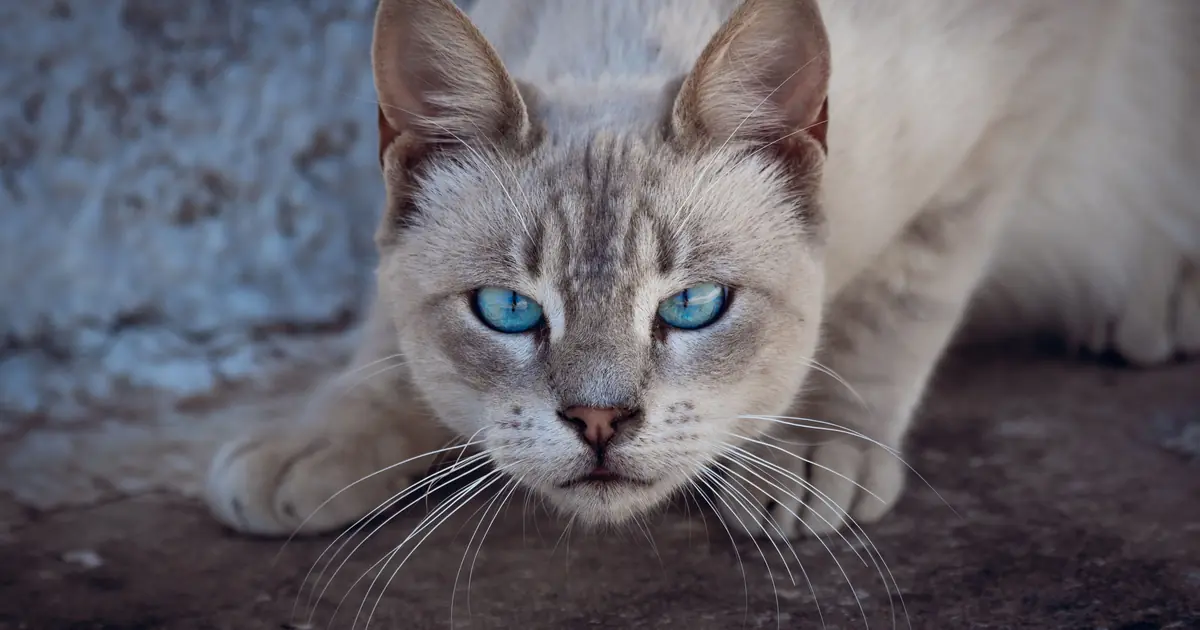
You’re watching your cat stare down a moth on the window, and their head starts doing this slow, weird bob side to side. It looks almost robotic. For a second you wonder if something is wrong.
Relax. Most of the time, this is your cat’s built-in rangefinder at work. Cats bob and weave their heads to measure distance before they leap, pounce, or swat. It’s a hunting tool, not a red flag. But there’s a second kind of head bobbing that does matter, a rhythmic tremor that shows up when your cat is just sitting still, and that one is worth paying attention to. Here’s how to tell the two apart.
- Cats bob their heads to create parallax, shifting their viewpoint slightly to judge exactly how far away an object is.
- Purposeful head bobbing happens most before a pounce, during hunting, or while studying a new object, sound, or bug.
- Kittens and highly playful or predatory cats tend to bob their heads more often than calm, older cats.
- A head tremor that happens at rest, in a steady rhythm, unrelated to focusing on anything, can point to idiopathic head tremor syndrome, an ear or vestibular problem, or another neurological cause.
- A head tilt, stumbling, circling, or disorientation alongside head movement is a sign to call your vet, not wait it out.
Why do cats bob their heads?
Cats bob their heads to fine-tune their depth perception before they commit to a jump, swat, or pounce. A cat’s eyes sit at the front of its face, giving it strong binocular vision, but judging exactly how far away a fast-moving target is still takes extra work. Shifting the head from side to side, even a small amount, gives the brain two slightly different views of the same object to compare.
That comparison is the whole trick. It’s the same reason you might tilt your head to line up a tricky parking job. Your cat is doing a feline version of that, just faster and cuter.
How does head bobbing help a cat judge distance?
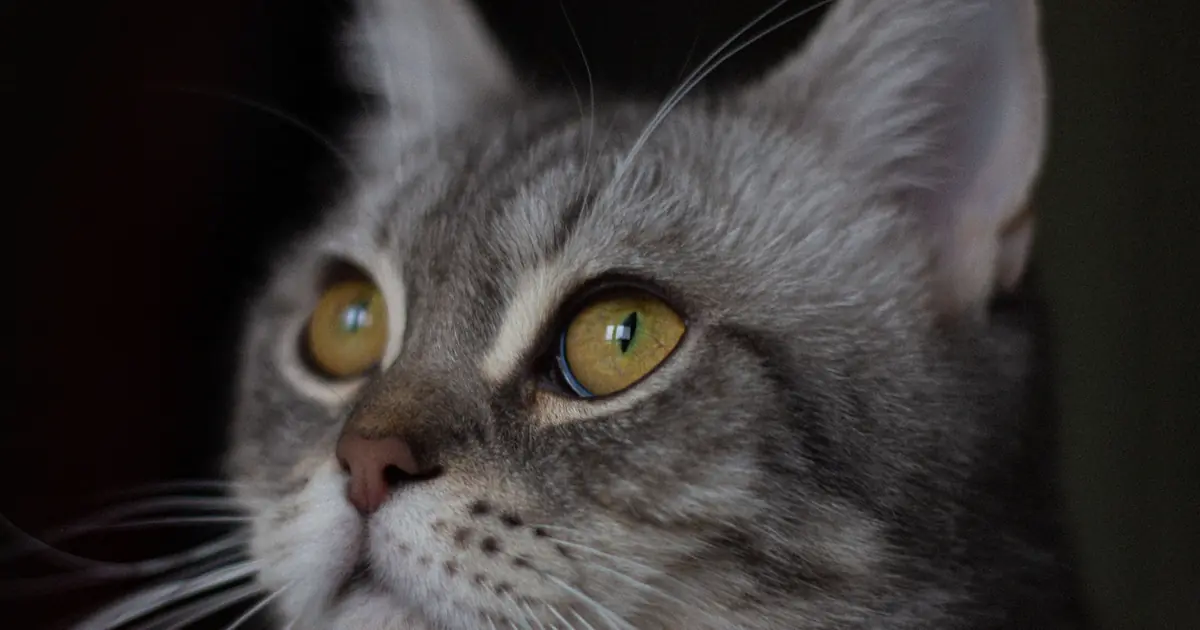
Head bobbing works through a visual trick called motion parallax, where closer objects appear to shift more than distant ones as the viewpoint moves. When your cat weaves its head side to side, nearby objects seem to jump around more in its field of view than things farther away. The brain reads that difference in movement and uses it to estimate exact distance.
This matters most in the split second before a pounce. A cat that misjudges distance by even an inch can miss a jump or, worse, misjudge a landing spot. According to International Cat Care, cats rely heavily on movement and depth cues rather than fine detail, which is exactly why this bobbing motion is such a useful tool for a hunter that needs to strike accurately.
Why does my cat bob its head when it’s curious?
Cats also bob their heads when something new grabs their attention, using the same distance-judging trick to study an unfamiliar object, sound, or bug. You’ll often see this when a cat spots a fly on the ceiling, a bird outside the window, or a toy that just appeared out of nowhere. The head bob helps them figure out exactly where the thing is in space before deciding whether to chase it, ignore it, or back away.
This kind of bobbing usually comes with other classic “interested cat” signs: forward-perked ears, dilated pupils, and a still, low body. If your cat’s pupils are also blown wide open during this, that’s a normal part of the same focus response, and you can read more about why cats’ pupils get big when they’re locked onto something.
Is head bobbing the same as the pre-pounce wiggle?
No, head bobbing and the pre-pounce wiggle are two different parts of a cat’s hunting sequence, even though they happen close together. Head bobbing is about the eyes, fine-tuning distance before the strike. The butt wiggle is about the body, loading the hind legs with tension right before launch. Cats often do both back to back: bob the head to lock onto the target, then wiggle the hips to build spring-loaded power for the pounce.
If you want the full breakdown of that hip-wiggling behavior, our guide on why cats wiggle before pouncing covers exactly what’s happening in those hind legs and why some cats skip the wiggle entirely.
Do certain cats bob their heads more than others?
Yes, kittens and cats with a strong prey drive tend to bob their heads more often than laid-back, older cats. Kittens are still calibrating their depth perception and practicing hunting mechanics, so you’ll catch them bobbing at almost anything that moves, a dust speck, a shoelace, a sibling’s tail. Breeds and individuals known for high energy and hunting instinct, like many Bengals, Abyssinians, and outdoor or barn cats, also show this behavior more frequently simply because they’re hunting or play-hunting more often.
A quiet senior cat napping on the couch all day just won’t have as many chances to show off the behavior. Less activity, less bobbing. It doesn’t mean anything is wrong, it’s just a numbers game.
When is a head tremor a medical problem instead of normal bobbing?
A head tremor is a medical concern when it happens rhythmically, at rest, without your cat focusing on anything at all. This is very different from the purposeful, stop-and-start bobbing tied to hunting or curiosity. A true tremor looks more like a steady, involuntary shake or nod, sometimes described as a “yes” or “no” motion, that can last seconds to a couple of minutes and then stop just as suddenly.
Possible causes include a condition called idiopathic head tremor syndrome (tremors with no identified cause, often seen in young cats and breeds like Siamese), inner ear infections, vestibular disease affecting balance, low blood sugar, exposure to toxins, or other neurological issues. The VCA Animal Hospitals notes that vestibular disease specifically can cause head tilting, loss of balance, and abnormal eye movements in cats, which is why any tremor paired with those signs deserves a vet visit rather than a wait-and-see approach.
How can I tell playful head bobbing from a worrying tremor?
The clearest difference is context: playful bobbing always happens while your cat is focused on something specific, while a concerning tremor happens at rest with no target at all. A hunting or curious cat bobs its head while staring intently at a toy, bug, or bird, then stops the moment it looks away or pounces. A tremor shows up out of nowhere, often while your cat is just sitting or lying around doing nothing in particular.
Watch for these extra warning signs alongside the head movement:
- A head tilt to one side that doesn’t go away
- Stumbling, wobbling, or a loss of balance
- Circling in one direction repeatedly
- Disorientation or seeming “checked out”
- Rapid, jerky eye movements
If your cat is also stumbling or seems off-balance, our guide on a wobbly cat walks through the most common causes. And if you’re noticing a head tilt specifically, we cover that in detail in our piece on why cats tilt their heads.
| Type of Head Movement | When It Happens | Other Signs | What To Do |
|---|---|---|---|
| Purposeful head bob (focusing/hunting) | While staring at a toy, bug, bird, or new object | Forward ears, dilated pupils, still crouched body | Nothing, this is normal behavior |
| Concerning head tremor | At rest, with no target, comes on suddenly | Head tilt, stumbling, circling, disorientation | Call your vet, especially if it repeats or lasts |
When should I take my cat to the vet for head bobbing?
Call your vet if your cat’s head movement happens at rest, repeats often, or comes with a head tilt, stumbling, circling, or disorientation. A single, brief episode of idiopathic head tremor in an otherwise happy, eating, playing cat is sometimes not an emergency, but it still deserves a vet conversation to rule out other causes. Any tremor combined with balance problems, vomiting, or a sudden change in behavior needs prompt veterinary attention.
This article is educational and isn’t a substitute for an actual exam. If you’re ever unsure whether what you’re seeing is playful bobbing or something more, a licensed veterinarian can check your cat’s ears, reflexes, and neurological signs and tell you for sure.
Vet Note
Purposeful head bobbing during play, hunting, or focused staring is normal and not something to worry about. But a constant, rhythmic head tremor at rest, or bobbing paired with a head tilt, stumbling, or disorientation, is different and needs a licensed veterinarian to look into it. Trust your gut: you know your cat’s normal behavior better than anyone.
Frequently Asked Questions
Q: Why does my cat bob its head at bugs?
Your cat is using motion parallax, shifting its head slightly to compare views and pinpoint exactly where the bug is before pouncing. This is a normal hunting behavior seen in cats of all ages.
Q: Is head bobbing in cats normal?
Yes, head bobbing tied to focusing on an object, sound, or prey is completely normal and helps cats judge distance. It only becomes a concern when it happens at rest, in a steady rhythm, with no target in sight.
Q: What is idiopathic head tremor syndrome in cats?
Idiopathic head tremor syndrome causes brief, involuntary head shaking episodes with no identified underlying cause, often in young cats. Episodes typically last seconds to a couple of minutes and stop on their own, but a vet should still rule out other conditions.
Q: Can ear infections cause head bobbing or shaking in cats?
Yes, ear infections and vestibular disease can cause head shaking, tilting, and balance problems in cats. If your cat is shaking its head and also tilting it or seems off balance, an ear exam from your vet is a good next step.
Q: Do kittens bob their heads more than adult cats?
Yes, kittens bob their heads more often because they’re still developing depth perception and practicing hunting skills through play. You’ll notice it especially when they’re stalking toys, string, or moving shadows.
Q: Why does my cat wiggle its butt and bob its head before pouncing?
The head bob fine-tunes distance judgment while the butt wiggle loads tension into the hind legs for a powerful launch. Cats often do both together as part of the same hunting sequence, though not every cat does the wiggle.
Q: Should I worry if my cat’s head bob happens while they’re just sitting still?
Yes, head movement that happens at rest without your cat focusing on anything is different from normal hunting behavior and is worth a vet visit. This is especially true if it’s rhythmic, repeats often, or comes with a head tilt or stumbling.
Q: What other symptoms mean I should call the vet right away?
Call your vet if head movement comes with a head tilt, stumbling, circling in one direction, disorientation, or rapid eye movements. These signs can point to vestibular disease or another neurological issue that needs prompt evaluation.

Hello and welcome to The Ideal Cat!
We are some passionate cat owners from different professions. We love our cats and have a lot of experience in how to care for our pets. We are incredibly excited to share our knowledge, experience, and research with you. So you can take good care of your loving cat. We will answer most of the common questions about owning cats, taking care of them, etc. If you have any question contact with us. Thanks for visiting! Enjoy the content.
