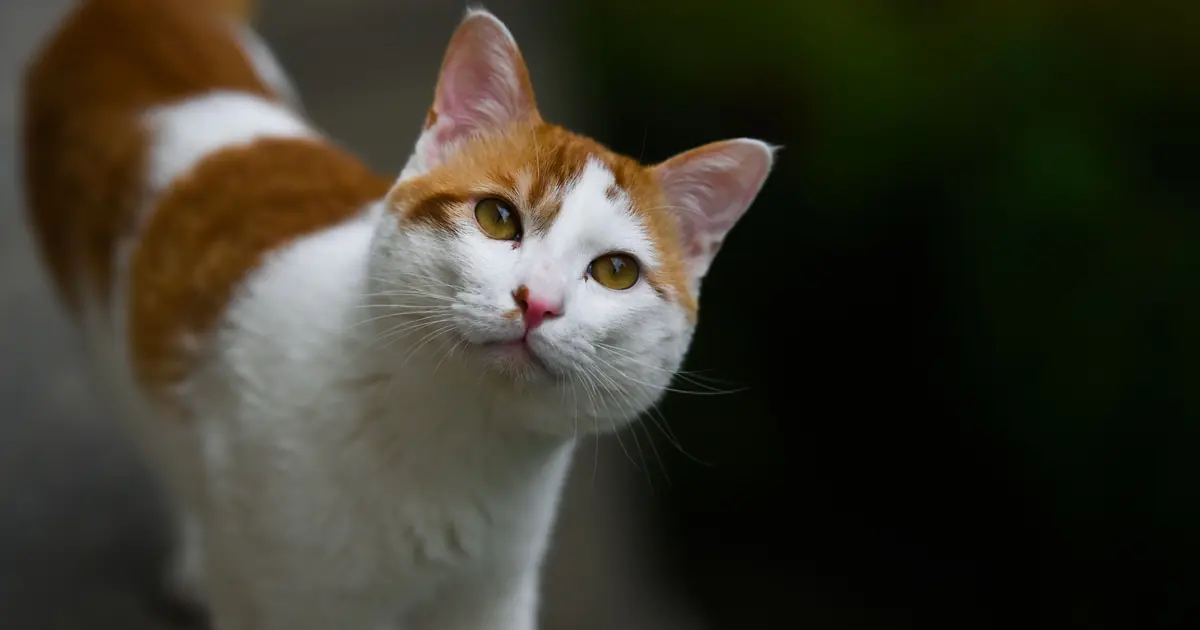
You say “treat” in your softest voice and your cat’s head cocks sideways like you just asked a fascinating question. It’s one of the most charming things a cat does, and honestly, it works on us every time. Cue the phone camera.
Most head tilts are just your cat fine-tuning their senses: adjusting their ears to catch a sound better, or shifting their eyes for a wider view. But there’s a second, much more serious kind of head tilt worth knowing about too, one that doesn’t come and go, and one that means something is wrong inside your cat’s ear or nervous system. Let’s go through both, so you know exactly which one you’re looking at.
- A quick, occasional head tilt is a normal way cats localize sound and sharpen their focus on something new.
- Cats have 32 muscles in each ear, letting them rotate their ears independently to zero in on a noise, which often triggers the tilt.
- A head tilt your cat holds constantly, rather than one that comes and goes in seconds, points to a medical problem like an ear infection or vestibular disease.
- Vestibular disease affects the balance system in the inner ear or brain and can cause a head tilt along with stumbling, circling, or flicking eye movements (nystagmus).
- Any persistent head tilt, or one paired with loss of balance, vomiting, or falling to one side, needs a same-day or next-day vet visit.
Why do cats tilt their heads?
Cats tilt their heads mainly to gather better information through their ears and eyes. A tilted head changes the angle and position of both ear canals, which helps a cat figure out exactly where a sound is coming from. It can also shift how a cat’s eyes take in a shape or movement, especially something new or oddly positioned. Add in a strong dose of curiosity, and you get that classic sideways cock of the head whenever something catches your cat’s attention.
This behavior shows up most during play, when you’re talking to your cat directly, or when an unfamiliar noise, smell, or object appears in the room. It’s a sign of active, engaged listening and looking, not confusion or distress.
Why do cats tilt their heads to hear better?
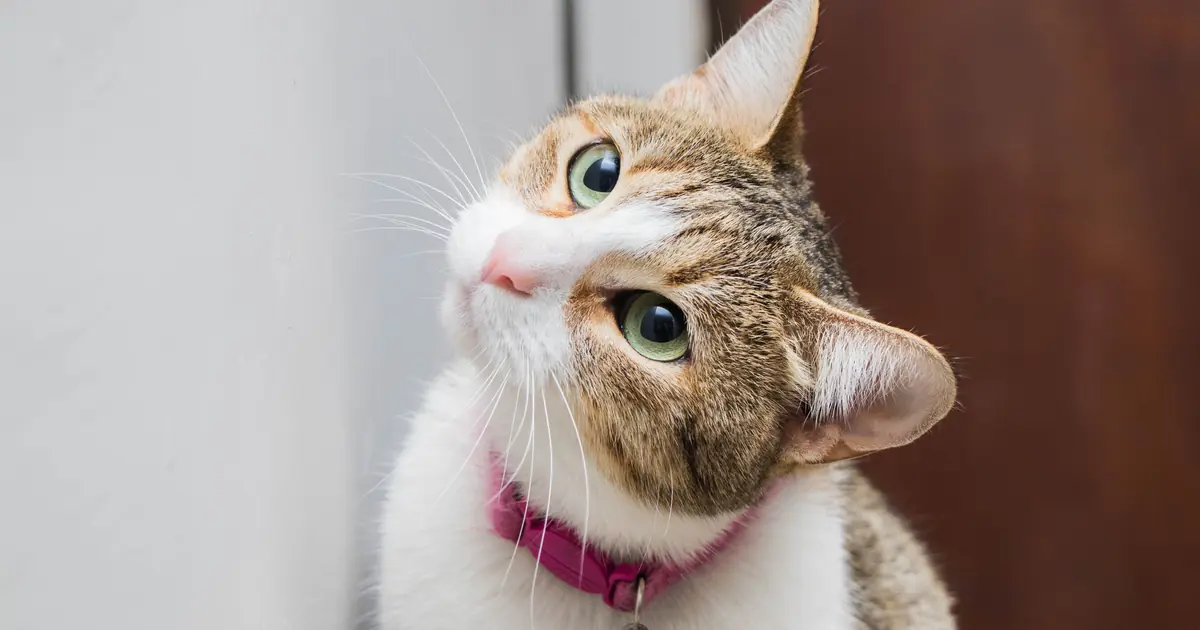
Cats tilt their heads to help pinpoint the exact source and direction of a sound. A cat’s outer ear, called the pinna, can rotate up to 180 degrees, and each ear moves independently of the other. Combine that with 32 muscles per ear, far more than the six muscles humans have, and you get an incredibly precise built-in sound locator.
Tilting the head slightly changes the timing and volume of a sound as it reaches each ear. That tiny difference is exactly what a cat’s brain uses to triangulate where a noise is coming from, whether it’s a crinkling treat bag two rooms away or a mouse rustling behind the wall. This is a hunting adaptation first and a communication quirk second. Wild cats rely on this same skill to locate prey they can’t yet see, according to International Cat Care, which notes how sharply tuned a cat’s hearing is compared to ours.
Why do cats tilt their heads when they look at things?
Cats tilt their heads to get a clearer visual angle on something unusual or partly obstructed. A cat’s nose and muzzle sit right in the middle of their face, and that can actually block part of their central field of view, especially up close. Tilting the head shifts the object slightly off to one side, letting your cat use more of their peripheral vision to study it.
This is why you’ll often see the head tilt when your cat is staring at a new toy, an odd-shaped object, or your face while you’re talking. They’re not just being cute (though they are), they’re actually working to see and process what’s in front of them more clearly.
Is a cat’s head tilt a form of communication?
Yes, a head tilt is often part of how a cat engages with you, not just a sensory tool. Many cat parents notice their cat tilts their head specifically during one-on-one interaction, like when you talk in a high-pitched voice or ask a question. Some behaviorists believe this is partly learned: cats notice that a head tilt gets an enthusiastic reaction from their favorite human, and repeat it because it works.
It can also be a sign of active attention, similar to how a dog perks its ears at a new word. Your cat isn’t just listening, they’re locked in on you specifically, trying to read your tone and body language the way they’d read another cat’s body language signals.
Is a head tilt normal, or should I be worried?
A head tilt is completely normal when it’s brief, happens during clear triggers like sounds or play, and your cat can straighten their head back out easily. This kind of tilt usually lasts a few seconds, maybe up to a minute during an especially interesting moment, and your cat moves normally the rest of the time.
What is not normal is a head tilt your cat holds all the time, one that shows up out of nowhere with no obvious trigger, or one paired with stumbling, circling, or trouble walking. That kind of tilt is a symptom, not a personality quirk, and it deserves a vet visit rather than a video for social media.
When is a cat’s head tilt a medical emergency?
A head tilt is a medical concern when your cat holds it constantly and can’t straighten their head on their own. This constant tilt is called torticollis, and it’s most often linked to a problem in the ear or the vestibular system, the part of the inner ear and brain that controls balance. According to the Merck Veterinary Manual, vestibular disease in cats can come from ear infections, inner ear polyps, head trauma, exposure to certain toxins, or in some cases an unknown cause called idiopathic vestibular disease.
Watch for these signs alongside a persistent tilt:
- Stumbling, wobbling, or falling to one side
- Walking in circles
- Rapid, flicking eye movements (called nystagmus)
- Nausea or vomiting
- Not wanting to eat
- Rubbing or scratching at one ear, or head shaking
- A visibly dirty, red, or smelly ear canal
An ear infection is one of the most common causes of a sudden, ongoing head tilt in cats, and it’s often accompanied by a bad smell or discharge from the ear. If your cat’s ear looks inflamed or dirty, it’s worth learning the signs of a cat ear infection and checking for ear mites, since both can trigger a lasting tilt if left untreated. Left untreated for too long, some inner ear infections can also lead to head pressing, another neurological sign that always warrants a same-day vet call.
What should I do if my cat’s head tilt won’t go away?
See a vet promptly if your cat’s head tilt lasts more than a few minutes, keeps coming back, or shows up alongside any balance problems. Don’t wait it out at home. A vet will typically check your cat’s ears, run a neurological exam, and may recommend bloodwork or imaging to find the cause, according to VCA Animal Hospitals.
Treatment depends entirely on the cause. An ear infection usually clears up with the right veterinary treatment, while idiopathic vestibular disease often improves gradually on its own over one to three weeks with supportive care. Either way, a vet needs to make that call, not a guess at home. This article is educational and isn’t a substitute for a real diagnosis. If your cat’s ears seem hot to the touch along with the tilt, it’s also worth reading about why a cat’s ears feel hot, since fever and inflammation often travel together.
What’s the difference between a normal head tilt and a medical one?
A normal head tilt is brief, triggered by something specific, and disappears the moment your cat loses interest. A medical head tilt is constant, unprovoked, and paired with other signs of illness. Here’s how to tell them apart at a glance:
| Sign | Normal curious tilt | Medical head tilt |
|---|---|---|
| Duration | A few seconds to about a minute | Constant, held all day |
| Trigger | A sound, your voice, a new object | No clear trigger, appears suddenly |
| Other signs | None, cat acts totally normal otherwise | Stumbling, circling, flicking eyes, vomiting |
| Ear appearance | Clean, normal | Red, dirty, smelly, or painful to touch |
| What to do | Nothing, just enjoy it | Call your vet promptly |
If you’re ever unsure which category your cat falls into, treat it as the medical version and get it checked. A quick vet visit costs you an afternoon. Ignoring a real inner ear problem can cost your cat permanent balance issues.
Frequently Asked Questions
Q: Why does my cat tilt their head when I talk to them?
Your cat is likely tilting their head to hear your voice more clearly and to get a better visual read on your face. Cats can rotate each ear independently and use head tilts to triangulate sound, so a high-pitched or unfamiliar tone often triggers the response.
Q: Is it normal for a cat to tilt its head a lot?
Frequent, brief head tilts during play, conversation, or new sounds are normal cat behavior. It only becomes a concern if the tilt turns into a constant, held position your cat can’t straighten out on their own.
Q: What does it mean when a cat’s head is permanently tilted?
A permanently tilted head, known as torticollis, usually points to a problem in the ear or the vestibular system that controls balance. Common causes include ear infections, ear mites, inner ear polyps, head trauma, or vestibular disease, and it needs a veterinary exam to diagnose.
Q: Can ear infections cause a cat’s head tilt?
Yes, ear infections are one of the most common causes of a sudden, lasting head tilt in cats. An infected inner ear disrupts the balance system, and cats often tilt their head toward the affected side along with scratching, head shaking, or a smelly ear.
Q: What is vestibular disease in cats?
Vestibular disease affects the inner ear and brain structures that control balance and spatial orientation. It can cause a head tilt, stumbling, circling, and rapid eye movements, and it may stem from an ear infection, trauma, toxin exposure, or an unknown cause in older cats.
Q: How long does a normal head tilt last in cats?
A normal, curiosity-driven head tilt usually lasts just a few seconds, sometimes up to a minute if your cat stays interested. If a tilt lasts longer than that or keeps recurring throughout the day, it’s worth mentioning to your vet.
Q: Should I worry if my cat tilts its head and falls over?
Yes, a head tilt combined with stumbling or falling is a medical emergency and needs prompt veterinary attention. This combination often points to vestibular disease or a serious inner ear or neurological problem that requires diagnosis and treatment.
Q: Can old age cause a cat’s head to tilt?
Yes, older cats can develop a sudden head tilt from a condition called idiopathic vestibular disease, sometimes called feline vestibular syndrome. It has no identified cause, often appears overnight, and frequently improves on its own within one to three weeks with supportive veterinary care.

Hello and welcome to The Ideal Cat!
We are some passionate cat owners from different professions. We love our cats and have a lot of experience in how to care for our pets. We are incredibly excited to share our knowledge, experience, and research with you. So you can take good care of your loving cat. We will answer most of the common questions about owning cats, taking care of them, etc. If you have any question contact with us. Thanks for visiting! Enjoy the content.
