
You walk into the room and your cat bolts like you’re the mailman delivering bad news. It stings a little, especially when all you wanted was a cuddle. You start wondering if your cat secretly doesn’t like you.
Here’s the thing: a cat that runs from you is almost never making a judgment about your character. Cats are wired to react fast to anything that feels sudden, loud, or unpredictable, and sometimes you’re just the closest moving object when that instinct kicks in. Once you know what’s actually driving the dash, you can fix most of it.
- Cats most commonly run from people out of fear or startle reflex, not dislike, especially in response to loud sounds or fast movement.
- A single bad experience, like being grabbed for a nail trim or a vet visit, can create a lasting negative association with hands or a specific room.
- Some cats run to invite a game of chase rather than to escape, especially young or high-energy cats.
- A cat that suddenly starts fleeing when it never used to may be in pain or feeling unwell, which is worth a vet visit.
- Letting a cat approach you on its own terms, using slow blinks and treats, rebuilds trust faster than chasing or cornering ever will.
Why does my cat run from me?
Your cat runs from you because something about the moment feels unsafe, overwhelming, or unpredictable to their nervous system, not because they’ve decided they don’t like you. Cats are both predator and prey in the wild, and that prey instinct means their default response to anything sudden is to flee first and assess later. According to International Cat Care, fear in cats is a normal survival response, and a cat that bolts is protecting itself, not rejecting you.
The running usually falls into one of a few buckets: fear or startle, a learned bad memory tied to you or a specific action, needing space after too much attention, wanting to play chase, or adjusting to a new home. Pain and illness can also show up as sudden avoidance. We’ll walk through each one, because the fix is different depending on which one is happening.
Is my cat scared of loud noises or sudden movement?
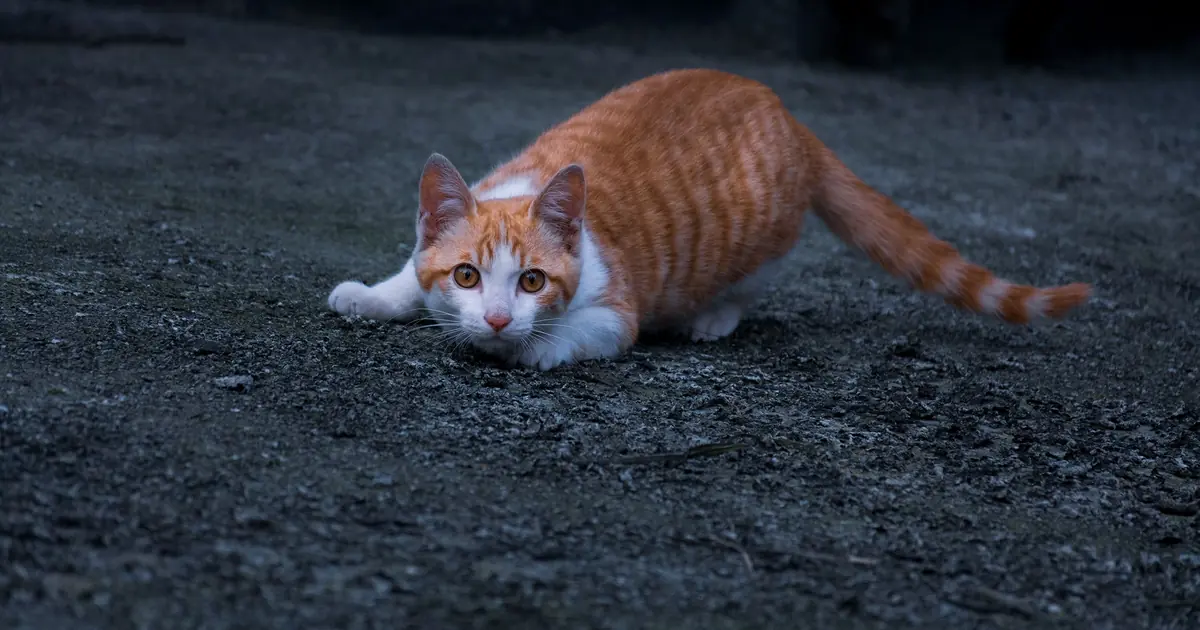
Yes, loud noises and sudden movement are two of the most common reasons a cat bolts, and it has nothing to do with you personally. A cat’s hearing is far sharper than a human’s, picking up frequencies up to roughly 64,000 Hz according to VCA Animal Hospitals, so a dropped pan, a vacuum, or even a loud sneeze can feel jarring to them in a way it never would to you.
Fast, unpredictable movement reads the same way. If you tend to swoop in for a hug, tower directly over your cat, or make prolonged direct eye contact (which cats often read as a challenge or threat), that’s enough to send a nervous cat sprinting for the nearest hiding spot. Slowing down, staying lower to the ground, and approaching from the side instead of head-on makes a real difference here.
Did my cat learn to run from me because of something I did?
Yes, cats form strong negative associations after a single bad experience, and that memory can outlast the event by months or years. If your cat has been grabbed suddenly, stuffed into a carrier, held down for a nail trim, given medication, or picked up when they clearly wanted to be left alone, their brain quietly files “hands reaching for me” or “this person” under things to avoid.
This is one of the most common reasons a cat runs specifically from one household member and not another. The person who does most of the medicating, nail trims, or carrier duty often becomes the one the cat dodges, even though that person may also be the one who feeds and loves them the most. It’s not personal, it’s pattern recognition.
Does my cat just need space from me?
Often, yes, and overstimulation is a big part of it. Cats have a threshold for touch, and once you cross it, even gentle petting can flip from pleasant to irritating in seconds. Running away is one of the more polite ways a cat says “that’s enough,” compared to a swat or a bite. The ASPCA notes that overstimulation is a well-documented trigger for cats to disengage or become defensive during handling.
Watch the body language before the bolt: a swishing tail, flattened ears, or skin rippling along the back are all early warning signs. If you notice your cat is showing several signs of stress in cats around you, dialing back how often and how long you pet them usually helps.
Is my cat running away just to play chase?
Sometimes, yes, and this one is actually a good sign. Not every dash across the room is fear. Young cats and high-energy breeds especially will run a few feet, stop, glance back at you, and wait to see if you’ll follow. That pause-and-look-back move is basically an invitation to a game, not an escape attempt.
The tell is in the body: a play-run usually comes with a relaxed or slightly puffed tail, playful pouncing, and no flattened ears. A fear-run is a flat sprint with a tucked or low tail and ears pinned back. Curious whether your cat is asking for a chase game in general? Check out do cats like being chased for more on reading that behavior.
Could a new home or lack of socialization explain the running?
Yes, cats who are new to your home, were poorly socialized as kittens, or came from a feral or stray background often run from everyone at first, not just you. Cats are creatures of routine and territory, and a new environment strips away every familiar smell, sound, and hiding spot they relied on to feel safe.
This kind of running fades with time, consistency, and zero pressure. Cornell Feline Health Center points out that cats who missed proper handling and socialization between two and seven weeks of age may stay more cautious around people long-term, but most still warm up significantly with patient, low-pressure exposure. Give a new or shy cat weeks, not days, and let them set the pace.
Could pain or illness be why my cat suddenly started running from me?
Yes, and this is the one worth taking seriously. A cat in pain often avoids touch, especially anywhere near the sore spot, and will bolt rather than risk being handled there. Arthritis, dental pain, an injury, or an internal issue can all make a cat that used to enjoy petting suddenly flinch and flee from the same hands.
The red flag isn’t running itself, it’s a change in a previously affectionate cat. If your cat used to greet you at the door and now avoids you, especially alongside other changes like hiding more, eating less, or grooming less, it’s worth a vet visit. This article is educational, not a substitute for a licensed veterinarian, so when the behavior is new and sudden, get your cat checked out rather than guessing.
How do I stop my cat from running away from me?
You stop the running by making yourself predictable, slow, and low-pressure, and by letting your cat choose to approach you instead of the other way around. Here’s what actually works:
- Get down to their level. Crouch or sit instead of towering over them.
- Approach from the side, not head-on, and avoid direct staring; offer a slow blink instead.
- Let them come to you. Hold out a hand at cat-nose-height and wait.
- Use treats and a calm, quiet voice to build a positive association with your presence.
- Keep your movements slow and your routine consistent, especially around feeding and greeting times.
- Never chase, grab, or punish a fleeing cat. It confirms their fear was justified.
- Respect a “no” when they walk away, and try again later instead of pushing.
If you want a deeper, step-by-step plan, our guide on how to get a cat to come to you covers the exact approach and reward technique in more detail, and how to calm a scared cat is a good next stop if the fear runs deeper than just avoiding your hands.
| Reason | Signs | What to do |
|---|---|---|
| Fear or startle | Flat sprint, tucked tail, ears pinned back, triggered by noise or sudden movement | Move slowly, lower your body, avoid direct eye contact and looming |
| Learned association | Runs specifically from one person, or near the carrier, vet bag, or nail clippers | Rebuild trust with treats, keep scary tools out of sight until needed |
| Overstimulation | Tail swishing, skin twitching, ears back before bolting mid-pet | Shorten petting sessions, stop at the first warning sign |
| Play | Short run, pause, looks back, relaxed or puffed tail | Engage with a wand toy instead of your hands |
| Pain or illness | Sudden new avoidance, flinching, hiding, appetite or grooming changes | Schedule a vet visit, avoid forcing handling |
One more note on the medical angle, since it matters: a cat that suddenly starts running from you or hiding more, especially alongside other changes in appetite, energy, or grooming, may be in pain or unwell. This post is meant to educate, not diagnose, so if the behavior is new and out of character, a vet check is the safest next step.
Frequently Asked Questions
Q: Why does my cat run from me but not from other people?
Your cat likely associates you with something specific, like giving medication, nail trims, or carrier trips, even if you’re also the one who feeds and loves them most. Cats form strong memories around who performs which handling tasks, so the person doing the less pleasant jobs often gets avoided more.
Q: Why does my cat run away when I try to pet it?
This is usually overstimulation or a fear response building up over the petting session. Watch for a swishing tail or flattened ears right before the bolt, and try shorter, gentler petting sessions focused on the head and cheeks rather than the belly or base of the tail.
Q: Is it normal for a kitten to run from new people?
Yes, it’s very normal, especially for kittens who missed proper socialization between two and seven weeks of age, the key window Cornell Feline Health Center identifies for building comfort around people. Most kittens grow more confident with patient, low-pressure exposure over several weeks.
Q: Should I chase my cat when it runs away from me?
No, never chase a fleeing cat. Chasing confirms to your cat that you’re a threat worth running from, and it can deepen the fear instead of resolving it. Let your cat come back on their own terms, and reward that choice with a treat or calm attention.
Q: Does my cat running from me mean it doesn’t love me?
No, running is almost always about fear, overstimulation, or habit, not affection level. Plenty of cats who dash away from a sudden approach will still climb into the same person’s lap an hour later once things feel calm and predictable again.
Q: How long does it take to earn back a scared cat’s trust?
It varies widely, from a few days for a mildly startled cat to several weeks or months for one with a deeper negative association or a feral background. Consistency matters more than speed, so short, calm, low-pressure interactions every day tend to work better than one long session.
Q: Can a sudden change in running behavior mean my cat is sick?
Yes, a previously affectionate cat that suddenly starts avoiding touch or fleeing from you can be a sign of pain or illness, such as arthritis or dental disease. If this happens alongside hiding, appetite changes, or reduced grooming, it’s worth scheduling a vet visit.
Q: What’s the fastest way to get a scared cat to trust me again?
Stop initiating contact and let your cat approach you first. Sit at their level, offer a slow blink, and toss a small treat nearby without reaching for them. Repeating this daily, without any grabbing or forced petting, tends to rebuild confidence faster than any single trick.

Hello and welcome to The Ideal Cat!
We are some passionate cat owners from different professions. We love our cats and have a lot of experience in how to care for our pets. We are incredibly excited to share our knowledge, experience, and research with you. So you can take good care of your loving cat. We will answer most of the common questions about owning cats, taking care of them, etc. If you have any question contact with us. Thanks for visiting! Enjoy the content.
