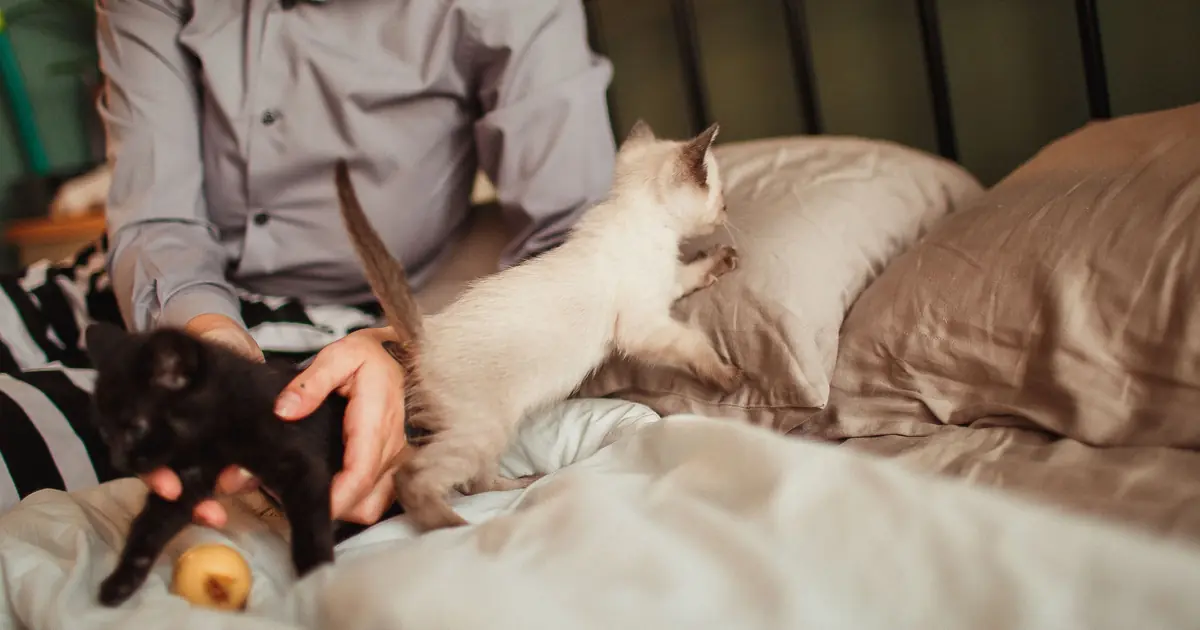
It’s 6am. You’re still half asleep. And somewhere around your ankles, or planted directly on your chest, a small motor has started running. Your cat is purring, headbutting your chin, and generally acting like you’ve been gone for a year, not eight hours.
If this is your daily wake-up call, you’re not imagining the pattern and you’re definitely not alone. Cats really do turn up the charm in the morning, and there are a few very real reasons behind it. Some of it is pure love. Some of it is a well-trained routine that works on you every single time. Let’s get into both.
- Cats are crepuscular, meaning they’re naturally most active at dawn and dusk, which lines up with your alarm clock more than you’d like.
- Morning affection is often tied to hunger: cats quickly learn that being sweet in the morning gets breakfast served faster.
- After sleeping apart overnight, cats reconnect through head bumps, rubbing, and purring, a mix of scent-sharing and genuine bonding.
- Morning cuddles are usually both real affection and a learned habit, cats are smart enough to do both at once.
- A sudden, new spike in clinginess or yowling, especially in an older cat, is worth mentioning to your vet if it’s a real change from normal.
Why Is My Cat So Affectionate in the Morning?
Your cat is affectionate in the morning because three things line up at once: their internal clock is telling them to be active, their stomach is empty, and they haven’t seen you in hours. Cats are natural early risers by biology, not by choice, and mornings are prime time for them to hunt, eat, and socialize.
Add to that the fact that you’ve been an unresponsive lump for six to eight hours, and a cat who wants breakfast and company has every reason to climb on your chest and start headbutting you awake. It’s not one single reason. It’s biology, hunger, and bonding, all showing up on your pillow at the same time.
What Does It Mean That Cats Are Crepuscular?
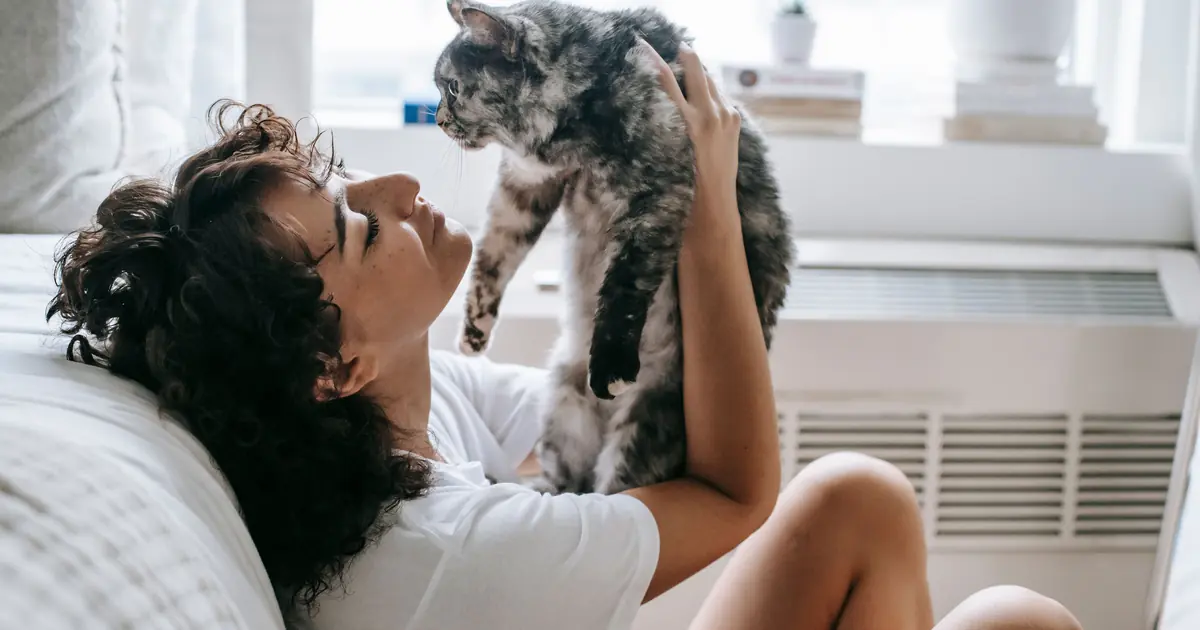
Crepuscular means a cat is naturally most active at dawn and dusk, not throughout the night and not in the middle of the day. This is different from nocturnal (active mainly at night) or diurnal (active mainly during the day), and it’s the biggest reason your cat seems to switch into high gear right around sunrise.
In the wild, dawn and dusk are when a cat’s typical prey, like mice and small birds, are also moving around. Low light gives cats an edge because their eyes are built for it, while still giving them enough visibility to hunt. VCA Animal Hospitals notes that this dawn-and-dusk activity pattern is completely normal cat behavior, even for cats who’ve never hunted a day in their life. Your indoor cat still runs on that same internal schedule, it just gets pointed at you instead of a mouse.
Is Morning Affection Really Just About Breakfast?
A big part of it, yes. Cats are fast learners, and if purring, meowing, and rubbing against your legs gets a bowl filled sooner, they’ll repeat that exact routine every single morning. This isn’t manipulation in a sneaky sense, it’s just cause and effect, the same way a dog learns that sitting gets a treat.
VCA Animal Hospitals points out that cats do best on a consistent feeding schedule, and the ASPCA recommends feeding adult cats twice a day, spaced eight to twelve hours apart. If breakfast reliably shows up the moment you’re semi-conscious, your cat has clocked that connection. Some cats get so good at this routine that they start their affection campaign five or ten minutes before your alarm even goes off, almost like they’ve memorized your schedule better than you have.
Is My Cat Simply Happy to See Me After a Night Apart?
Yes, in most cases your cat genuinely is glad to reconnect after a night spent mostly apart, even if you were both in the same room. Cats sleep an average of 12 to 16 hours a day, often in short stretches, and a lot of that sleep happens while you’re doing your own overnight shift of unconsciousness a few feet away.
When your cat headbutts you, rubs along your leg, or curls up next to you, they’re doing more than saying good morning. Rubbing spreads scent from glands on their cheeks and chin, a behavior called bunting, and International Cat Care explains that this scent-mixing is tied to comfort, trust, and social bonding between cats and the people they’re close to. It’s the same instinct behind curling up pressed against you overnight, just aimed at greeting you the moment you both wake up.
Is This Real Affection, or Is My Cat Manipulating Me?
Honestly, it’s both, and that’s not a contradiction. Your cat can genuinely love you and also know exactly which behaviors get them fed faster or get you to stay in bed for five more minutes of petting. Cats are smart, social animals, not calculators, so the affection is real even when the timing is strategic.
Think of it like a kid who gives you a hug right before asking for dessert. The hug isn’t fake just because good timing helps their odds. If you want a fuller picture of feline bonding, whether cats actually love their owners is worth reading, because the short version is: they show love differently than dogs do, but they show it.
What Do My Cat’s Morning Behaviors Actually Mean?
Each morning behavior your cat does has its own meaning, even though they usually show up together in one big 6am performance. Here’s a quick breakdown of the most common ones.
| Morning Behavior | What It Usually Means |
|---|---|
| Head bump / bunting | Scent-marking you as safe and familiar, a sign of trust and affection |
| Purring | Contentment, but also sometimes a request for attention or food |
| Meowing | Direct communication aimed at you, often “I’m awake, feed me” |
| Kneading | A comforting, kitten-like instinct linked to feeling safe and relaxed |
| Slow blink | A relaxed, trusting “I feel safe with you” signal, sometimes called a cat kiss |
If your cat leans hard into one behavior over the others, that’s worth paying attention to. A cat who mostly headbutts you every morning is showing trust and scent-bonding. One who kneads on your blanket or lap is often chasing that same safe, kitten-era comfort. And if you catch a long, slow blink over breakfast, that’s your cat’s version of a kiss, not a coincidence, per most feline behavior research on what a cat’s slow blink actually means.
How Do I Handle a Cat Who Turns Morning Affection Into a Demanding Wake-Up Call?
You handle a demanding morning wake-up by not rewarding the loudest or most disruptive version of it, and by giving your cat a predictable routine instead. Sweet head bumps are one thing. Yowling at 4am, pawing your face, or knocking a glass off the nightstand is your cat escalating because gentle cues stopped working.
A cat who’s learned that meowing at night or at dawn gets a response, even an annoyed one, will keep doing it. Here’s what actually helps:
- Feed at the same times every day, so your cat isn’t guessing or testing whether earlier begging works.
- Don’t get up and feed a cat who’s yowling at 4am, even once. One reward is enough to teach the habit all over again.
- Try a timed automatic feeder, so breakfast shows up on schedule whether or not your cat wakes you first.
- Add a solid play session before bed, ten to fifteen minutes of active chasing and pouncing tends to tire cats out and shift their energy later.
- If your cat wakes you gently, redirect instead of ignoring completely, a quick pet and then walking to the kitchen on your terms can reset the pattern.
Consistency is what actually works here. Cats don’t push through a boundary out of spite, they push because inconsistent responses taught them it’s worth trying.
Is a Sudden Increase in Morning Clinginess Something to Worry About?
Usually not, but a real, sudden change is worth watching. If your cat has always been a gentle morning greeter and suddenly becomes intensely clingy, starts yowling loudly overnight, or seems anxious rather than affectionate, that shift can sometimes point to stress, discomfort, or a health issue, especially in a senior cat.
This is general education, not a diagnosis, so please check with a licensed veterinarian if the change is new and sticks around for more than a few days. Conditions like hyperthyroidism or cognitive changes in older cats can show up first as increased night or early-morning vocalizing and neediness. If your cat’s new behavior looks more like distress than affection, or if you’re also noticing clinginess throughout the whole day, not just mornings, that combination is worth a vet visit rather than a wait-and-see approach.
Q: Why does my cat meow and headbutt me every morning?
Your cat combines meowing and headbutting because they’re hungry, want attention, and are naturally more active at dawn. The meow gets your attention, and the headbutt is a scent-based greeting that signals trust and familiarity.
Q: Should I feed my cat right away when it wakes me up in the morning?
Feeding immediately after waking teaches your cat that waking you up works, which reinforces the exact habit you may want to reduce. Feeding at a fixed time instead, regardless of when your cat starts begging, breaks that link over a week or two.
Q: Is it bad to let my cat sleep in my bed if it wakes me up too early?
No, bed-sharing itself isn’t the problem, timing and reinforcement are. Plenty of cats sleep in bed with their owners without waking them at dawn once feeding and play schedules are consistent.
Q: Why is my cat suddenly more affectionate in the morning than before?
A new increase in morning affection is often linked to a schedule change, like a new feeding time, more time apart during the day, or simply your cat getting older and more comfortable. If the change is sudden and paired with other new behaviors, a vet check rules out a medical cause.
Q: What is bunting in cats?
Bunting is when a cat rubs its head, cheeks, or chin against you or an object, releasing scent from glands in those areas. It’s a trust and bonding behavior, and it’s one of the clearest signs your cat considers you part of their territory and social circle.
Q: Do cats actually miss their owners overnight?
Cats don’t experience time the way people do, but many do notice and respond to a return to activity after hours of separate sleep. The burst of head bumps, purring, and following you around in the morning is a real reconnection behavior, not just a performance for food.
Q: How do I stop my cat from waking me up at 5am?
Keep feeding times consistent, avoid feeding the moment your cat wakes you, and add an active play session in the evening to shift their energy later in the day. A timed automatic feeder can also take you out of the equation entirely.
Q: Are cats nocturnal or crepuscular?
Cats are crepuscular, not nocturnal, meaning they’re naturally most active at dawn and dusk rather than throughout the full night. This is why mornings and early evenings tend to be when your cat has the most energy and the most enthusiasm for you.

Hello and welcome to The Ideal Cat!
We are some passionate cat owners from different professions. We love our cats and have a lot of experience in how to care for our pets. We are incredibly excited to share our knowledge, experience, and research with you. So you can take good care of your loving cat. We will answer most of the common questions about owning cats, taking care of them, etc. If you have any question contact with us. Thanks for visiting! Enjoy the content.
