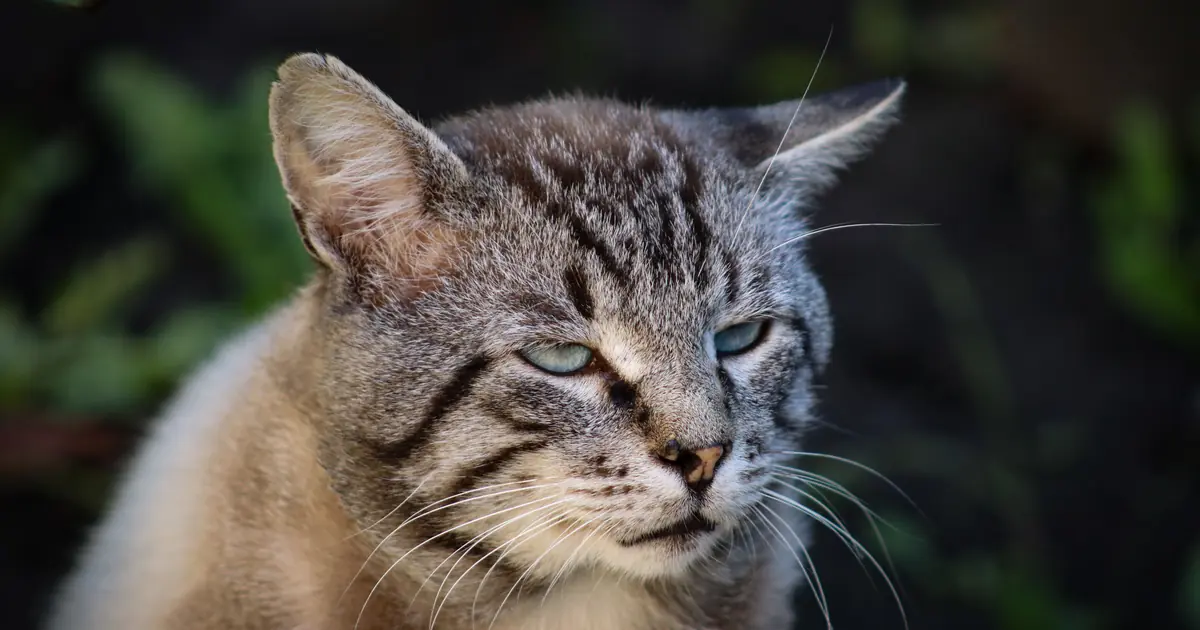
If you’ve ever pulled out old kitten photos of your Siamese and thought “wait, that’s not the same cat,” you’re not imagining things. Siamese cats really do start out nearly all white and slowly turn into the dark-masked, blue-eyed cats everyone recognizes.
It’s not magic, and it’s not a diet thing. It’s genetics, plain and simple, and once you understand the one gene behind it, the whole “why is my cat’s face getting darker” mystery clicks into place.
- Siamese cats change color because of a temperature-sensitive form of the tyrosinase enzyme, a type of partial albinism.
- Siamese kittens are born white or cream and develop their signature dark points over the first few weeks of life.
- The enzyme that makes pigment only switches on in cooler body areas, which is why the ears, face, legs, and tail run darker than the body.
- Cold weather, illness, fever, and even shaving can darken or lighten patches of fur on an adult Siamese.
- Color change on its own is completely normal for the breed and is not a sign of a health problem.
Why Do Siamese Cats Change Color?
Siamese cats change color because their fur pigment only develops in the cooler parts of their body. This happens thanks to a mutation in an enzyme called tyrosinase, which is the same enzyme that helps produce melanin, the pigment that colors fur, skin, and eyes, in most mammals.
In a Siamese cat, this enzyme is heat-sensitive. It works fine in cool spots like the ears, nose, paws, and tail, so those areas darken up. But near the warm core of the body, the enzyme barely works at all, so the fur there stays pale cream or white. That’s the whole trick behind the breed’s famous “color-point” look. Researchers at the UC Davis Veterinary Genetics Laboratory have mapped this mutation, and it’s the same underlying gene behind every pointed cat you’ve ever seen.
What’s the Science Behind the Siamese Color-Change Gene?
The science comes down to one mutated gene that makes a heat-sensitive version of tyrosinase, and vets classify this as a form of partial albinism. Full albinism means an animal can’t produce pigment at all, no matter the temperature. Siamese cats are different: they can make pigment, just only when their skin temperature drops below a certain point, generally accepted to be around 33°C (about 91°F), give or take.
Above that threshold, the enzyme folds up wrong and can’t do its job. Below it, the enzyme works and pigment gets deposited into the growing hair. This is sometimes called “Himalayan” or “pointed” albinism, and it shows up in more animals than just cats (some rabbits and mice carry a version too). International Cat Care, a UK-based feline welfare charity, notes that this temperature-linked pigment pattern is a defining trait of the whole pointed group of breeds, not just Siamese. You can read more from International Cat Care’s Siamese cat guide.
Why Are the Points Dark and the Body Pale?
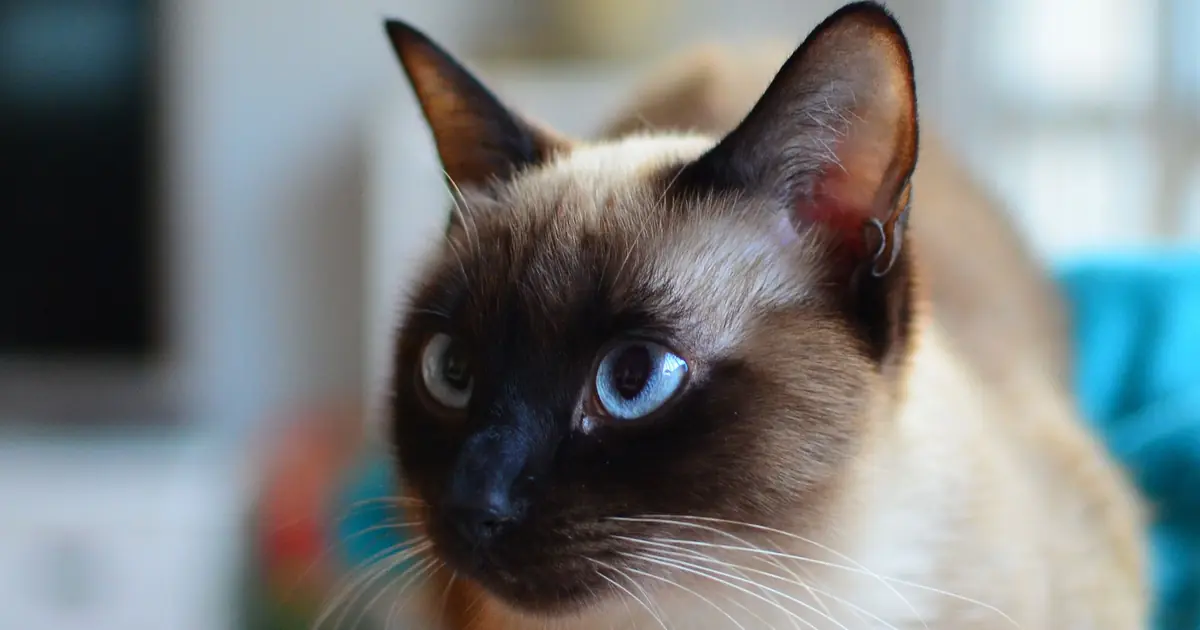
The points run darker than the body because they’re simply colder. A cat’s ears, nose, face mask, legs, paws, and tail sit further from the warm core and lose heat faster, especially the ear tips and tail, which have less muscle and fat insulating them. That coolness is exactly what flips the tyrosinase enzyme on.
Meanwhile, the belly, chest, and back sit close to internal organs and muscle that generate heat, keeping that skin warmer than the threshold the enzyme needs. So the body fur stays pale cream, fawn, or ivory, while the extremities darken into the classic “points.” It’s the same reason a Siamese cat’s mask often looks a little uneven: the exact shape depends on the microclimate of that one cat’s face.
Why Are Siamese Kittens Born White?
Siamese kittens are born white or pale cream because a mother cat’s womb is uniformly warm, well above the temperature threshold that triggers pigment production. With no cool zones anywhere on their tiny bodies, the tyrosinase enzyme has no chance to switch on before birth.
Once a kitten is out in the world and its skin starts cooling at the extremities, faint smudges of color appear on the nose, ears, and paws within the first week or two. By 3 to 4 weeks old you can usually see clear point color forming, and it keeps deepening over the following months. Most Siamese kittens don’t show their full, rich point color until they’re close to a year old.
Do Adult Siamese Cats Keep Changing Color?
Yes, adult Siamese cats keep changing color throughout their lives, just more subtly than the dramatic kitten-to-adult shift. Points tend to darken gradually with age, and a lot of senior Siamese end up with a much deeper, almost solid-looking coat compared to their younger years.
Temperature still runs the show. A Siamese who spends winter in a chilly house often develops richer, darker points than the same cat lounging through a warm summer. Fever or illness raises body temperature and can temporarily lighten new fur growth, since the enzyme works less efficiently when the whole body runs hot. And here’s a fun one: if you ever shave a patch of fur for surgery or a matted spot, that regrowth often comes in noticeably darker, because bare skin loses heat faster than a fur-covered patch while it grows back in.
| Life Stage or Condition | Effect on Color |
|---|---|
| Newborn kitten | Born white or pale cream, no visible points yet |
| Kitten, 3 to 4 weeks old | Faint point color starts appearing on nose, ears, and paws |
| Adult cat | Points deepen and darken gradually with age |
| Cold weather or a chilly home | Points and body fur can darken further |
| After shaving a patch of fur | Regrown fur often comes in darker than the surrounding coat |
Which Other Cat Breeds Change Color the Same Way?
Several other breeds carry the same temperature-sensitive gene and go through the same white-to-pointed transformation as kittens. If you’ve seen a Himalayan, Ragdoll, Birman, Balinese, Tonkinese, or a colorpoint shorthair darken with age, you’re watching the exact same tyrosinase mutation at work.
The Himalayan is essentially a Persian bred with this pointed gene, the Balinese is a long-haired cousin of the Siamese, and the Birman and Ragdoll both carry pointed patterns alongside white “gloves” on their paws from a separate gene. The Cat Fanciers’ Association breed standard for Siamese even lists this progressive darkening as a normal, expected trait judges account for at every age.
What Point Colors and Is Color Change a Health Concern?
Siamese cats come in four traditional point colors, seal, chocolate, blue, and lilac, plus popular variations like flame (red) point and lynx (tabby-striped) point. Each shade comes from the same tyrosinase mutation interacting with the cat’s base coat color genes, so a chocolate point Siamese and a seal point Siamese are working with the same “recipe,” just different underlying pigment.
Color change by itself is not a health problem. It’s simply how the breed’s genetics work, and every Siamese cat parent should expect it. A sudden, dramatic darkening paired with other symptoms, like lethargy, poor appetite, or a hot-feeling body, is still worth mentioning to your vet, since fever can speed up localized darkening as a side effect, not a cause on its own. This article is educational, not a substitute for veterinary advice, so if you’re ever unsure about your cat’s health, a licensed vet is the right call.
Curious what your kitten will look like as an adult, or which point shade you’re dealing with? Our Siamese cat breed guide and roundup of types of Siamese cats break down every recognized color and pattern in detail, including the flame point Siamese and the lynx point Siamese.
Frequently Asked Questions
Q: At what age do Siamese cats get their full color?
Most Siamese cats reach their full, rich point color by around 12 months old. Faint color starts showing at 3 to 4 weeks, but the deep, mature shade keeps developing gradually through the first year.
Q: Why is my Siamese cat getting darker as it ages?
Gradual darkening is completely normal and happens to nearly every Siamese cat over its lifetime. The temperature-sensitive pigment gene keeps depositing color in cooler areas year after year, so many senior Siamese look noticeably darker than they did as young adults.
Q: Can a Siamese cat’s color change back to lighter?
Yes, a Siamese cat’s points can lighten again if the cat spends time somewhere consistently warm, since heat suppresses the tyrosinase enzyme. This is why some Siamese living in warm climates or heated homes keep noticeably paler points than ones in cooler regions.
Q: Do all pointed cats have the same color-change gene as Siamese?
Yes, every pointed breed, including the Himalayan, Ragdoll, Birman, Balinese, and Tonkinese, carries the same heat-sensitive tyrosinase mutation. It’s the defining genetic trait of the whole color-point family, not something unique to Siamese cats alone.
Q: Is it normal for a Siamese kitten to be born completely white?
Yes, it’s completely normal. A mother cat’s womb stays uniformly warm, so no part of a kitten’s body gets cool enough before birth to trigger pigment, which is why Siamese kittens start out white or pale cream every time.
Q: Why did the fur grow back darker after my Siamese cat’s surgery?
Shaved skin loses heat faster than fur-covered skin while it regrows, which drops that patch below the temperature threshold that triggers pigment. That’s why regrowth after a spay, neuter, or other shaved procedure often comes in noticeably darker than the surrounding coat.
Q: What point colors can a Siamese cat have?
The four traditional Siamese point colors are seal, chocolate, blue, and lilac, with flame (red) point and lynx (tabby-patterned) point as popular additional variations. All of them come from the same tyrosinase mutation layered over different base coat colors.
Q: Should I worry if my Siamese cat’s color changes suddenly?
Gradual darkening with age, weather, or after shaving is normal and no cause for concern. But if sudden color change comes with lethargy, appetite loss, or signs of fever, check in with your vet, since illness can speed up localized darkening as a side effect.

Hello and welcome to The Ideal Cat!
We are some passionate cat owners from different professions. We love our cats and have a lot of experience in how to care for our pets. We are incredibly excited to share our knowledge, experience, and research with you. So you can take good care of your loving cat. We will answer most of the common questions about owning cats, taking care of them, etc. If you have any question contact with us. Thanks for visiting! Enjoy the content.
