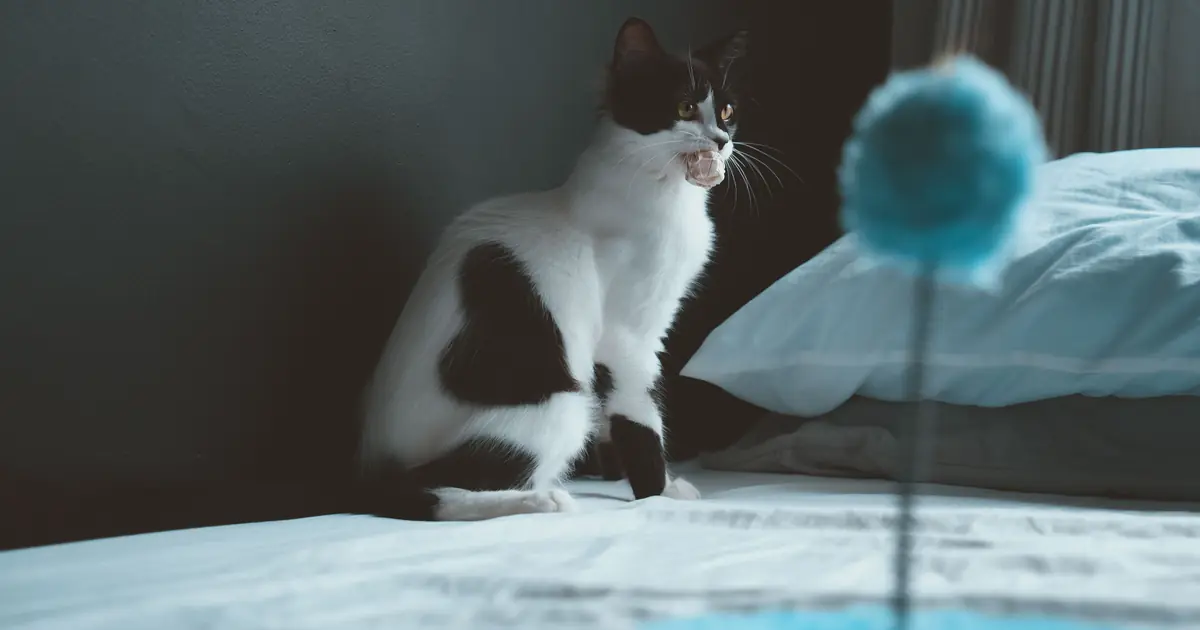
You crack one eye open at 3am and there they are: two round eyes staring straight at you from the end of the bed. Not blinking. Just watching. It’s a little unsettling the first time it happens, and plenty of cat parents wonder if their cat is protecting them, plotting something, or just bored. Some cats go further and walk right over you while you sleep.
Here’s the good news: a cat watching you sleep is almost always a sweet thing, not a strange one. It usually means your cat feels safe enough to stick around while you’re at your most vulnerable, and comfortable enough to treat your bed as part of their territory. Let’s get into the real reasons behind it, and the rare times it’s worth a second look.
- Cats watch their sleeping owners mainly out of affection, trust, and a desire to stay close during a calm, low-activity part of the day.
- Cats are crepuscular, meaning they’re naturally most active at dawn and dusk, which is exactly when you’re likely to catch them staring at you in bed.
- A 2019 study published in Current Biology found that roughly two-thirds of cats form secure attachment bonds with their owners, similar to how human infants bond with caregivers.
- Cats sleep 12 to 16 hours a day, so when they’re awake and staring at you, it’s often because they’re ready for food, playtime, or attention.
- A sudden change, like new nighttime staring, pacing, or vocalizing in a senior cat, can sometimes point to a health issue and is worth mentioning to your vet.
Why Do Cats Watch You Sleep?
Cats watch you sleep because it’s one of the few times you’re completely still, quiet, and predictable, which makes it a comfortable time to be near you. In the wild, sleep is a vulnerable state, both for cats and for the animals they’d naturally keep an eye on. A sleeping companion who isn’t moving around, talking, or handling them is easy to read and easy to relax next to.
On top of that, your bedroom is usually warm, quiet, and full of your scent, which cats find comforting. Add in the fact that cats often choose to sleep near their owners in the first place, and staring while you doze is really just an extension of wanting to be close to you.
Is It a Sign of Affection and Bonding?
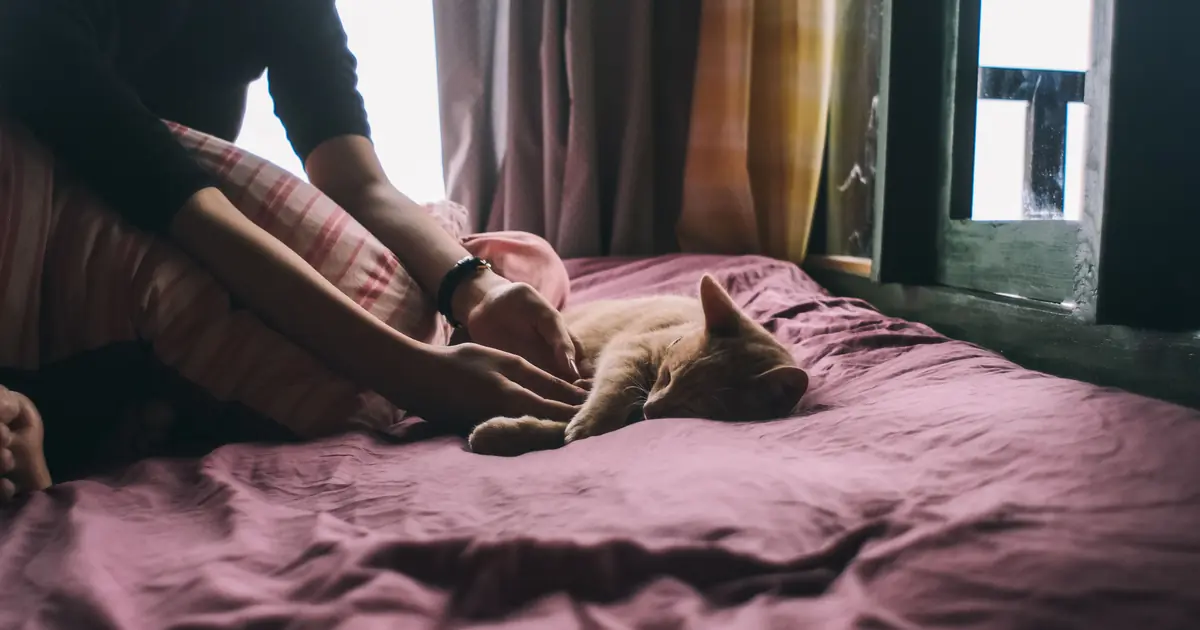
Yes, in most cases a cat watching you sleep is a genuine sign of affection and bonding, not suspicion or dislike. Cats build attachment to their people the same way they build attachment to a favorite napping spot: through repeated, low-stress time together. Watching you sleep is low-stress, up-close, and repeated every single night, which is exactly the kind of routine that deepens a bond.
A 2019 study published in the journal Current Biology found that about 64% of kittens and 66% of adult cats showed secure attachment to their human caregiver, a pattern similar to the attachment styles seen in human infants and dogs. The study suggests cats really do form emotional bonds with the people who care for them, not just a habit of sticking around for food. If you’ve ever wondered whether your cat actually loves you, this kind of quiet, close attention is one of the clearer signs. For more on that, see our guide on how to tell if your cat loves you.
Is My Cat Protecting Me While I Sleep?
Not in a bodyguard sense, but the instinct behind the behavior is related to awareness rather than affection alone. Cats are natural observers, and even indoor cats keep a strong instinct to monitor their environment, including a sleeping housemate. Watching you is partly about keeping tabs on things, not fending off threats.
Think of it as mutual comfort instead: your cat feels safer knowing where you are, and you’re part of their small, trusted social group. This is a bit different from daytime staring, which often leans more toward communication or curiosity. If your cat locks eyes with you a lot when you’re both awake, our article on why cats stare at you breaks down what that’s about.
Is My Cat Waiting for Breakfast or the Day to Start?
Very often, yes. Cats are crepuscular, meaning they’re biologically wired to be most active at dawn and dusk, which lines up almost perfectly with when you’re waking up. Vets note this dawn-and-dusk pattern is a leftover instinct from hunting, when prey animals were most active in that low light. Your cat isn’t watching a clock. They’re watching you, since you’re the one who fills the bowl and starts the day.
If your cat has learned that you waking up means breakfast, play, or a fresh litter box, staring at you up close is simply an efficient way to speed that along. Cats are smart about cause and effect, and a stare that gets results tends to become a nightly habit.
Is My Cat Guarding Its Favorite Warm Spot?
Sometimes the staring has less to do with you and more to do with your bed. Beds are warm, soft, elevated, and usually the coziest real estate in the house, which makes them prime cat territory. If your cat has claimed a corner of the mattress or the pillow next to your head, part of what you’re seeing is a comfortable animal keeping half an eye on a spot they don’t want to give up.
This isn’t aggressive territorial behavior in most homes. It’s closer to a cat quietly enjoying ownership of a good napping location, with you as a pleasant, warm bonus feature. Here’s a quick breakdown of the main reasons cats watch you sleep and what they’re usually after in each case:
| Reason | What Your Cat Wants |
|---|---|
| Affection and bonding | Closeness, comfort, and reassurance that you’re nearby |
| Protection or awareness | To keep track of you and their environment while resting |
| Hunger or routine | Breakfast, playtime, or the start of the daily schedule |
| Warmth or territory | A cozy, familiar sleeping spot they’ve claimed as their own |
| Habit or curiosity | Simple interest in what you’re doing, with no deeper motive |
Is It Creepy or Actually Sweet When Your Cat Stares at You Sleeping?
It’s sweet, not creepy, even though the unblinking stare can feel a little intense in the middle of the night. Cats don’t have the same social rules around eye contact that humans do. A long, still stare that would feel confrontational from a person is completely normal cat behavior, and it usually reflects comfort rather than anything sinister.
I get it, waking up to two glowing eyes a few inches from your face can be startling the first few times. But context matters here: a relaxed cat with soft eyes, a still body, and no tail flicking is just hanging out. A cat crouched low, ears back, or tail lashing while staring is a different story and worth paying attention to, though that combination is rare during quiet sleep-watching. Most of the time, this is your cat’s version of sitting quietly next to a friend.
Why Does My Cat Wake Me Up on Purpose, and Is It Ever a Concern?
Cats wake their owners on purpose because it works, usually to get food, attention, or access to a room. A soft meow, a paw tap on your face, or a stare followed by pawing are learned behaviors your cat repeats because, at some point, you responded. If your cat’s gotten more vocal specifically overnight, our guide to why cats meow at night covers the common triggers. The fix is simple: stop rewarding it at odd hours. Feed on a consistent schedule, add a play session before bed, and resist getting up the moment your cat starts staring or meowing. Most cats adjust within a couple of weeks once the payoff disappears.
As for whether it’s ever a concern, usually not. Occasional nighttime staring or a soft meow is normal. It’s worth a closer look if the behavior is brand new, especially in an older cat, or paired with increased clinginess or distressed-sounding vocalizing rather than routine attention-seeking. If your cat’s gotten noticeably clingier in general, our piece on why cats get clingy can help you figure out if it’s just personality or worth a vet mention.
A quick, honest note: this article is educational, not a substitute for veterinary care. A sudden shift to intense nighttime clinginess, staring, or waking you up far more than usual, particularly in a senior cat, can occasionally point to stress, hunger driven by an underlying illness like hyperthyroidism, or early cognitive changes. The Cornell Feline Health Center recommends regular checkups for aging cats since subtle behavior shifts are often the first sign something needs attention. Separately, VCA Animal Hospitals reports that about 35% of cats aged 11 to 15 show at least one sign of cognitive decline, rising past 50% in cats over 15, and disrupted sleep with more nighttime activity is one of the most common signs. If any of this sounds familiar and it’s new, a vet visit rules out a medical cause first.
Frequently Asked Questions
Q: Why does my cat sit and stare at me while I sleep?
Your cat is likely staying close because it feels safe and comfortable, not because something is wrong. Cats bond through proximity and quiet, repeated time together, and watching you sleep fits that pattern perfectly.
Q: Is it normal for a cat to watch you sleep every night?
Yes, it’s completely normal. Many cats develop a nightly routine of checking on their owner, staying nearby, or perching somewhere they can see you, especially since cats are naturally most active around dawn.
Q: Do cats actually protect their owners while they sleep?
Not in a literal guard-dog sense, but cats do monitor their environment, including you, out of instinct and social bonding. It’s more about mutual comfort and awareness than active protection.
Q: Why does my cat wake me up at the same time every morning?
Cats are crepuscular, meaning they’re naturally most active at dawn and dusk, so their internal clock often lines up with sunrise. If waking you up has led to food or attention before, that timing becomes a reinforced habit.
Q: Should I be worried if my cat stares at me intensely at night?
Usually not, especially if your cat looks relaxed with soft eyes and a still body. It’s worth mentioning to your vet only if the staring is brand new, paired with disorientation or distress, or shows up alongside other sudden behavior changes.
Q: Why does my cat sleep facing away from me but still seem to be watching?
Cats often position themselves to see the room and stay near you at the same time, which can look like they’re facing away while still keeping you in their peripheral vision. It’s a comfort choice, not a sign of distance.
Q: Can a senior cat’s nighttime staring or waking be a health issue?
It can be, occasionally. VCA Animal Hospitals reports that around 35% of cats aged 11 to 15 show at least one sign of cognitive decline, a figure that climbs past 50% in cats over 15, and disrupted sleep with more nighttime activity is a common early sign worth discussing with a vet.
Q: How do I get my cat to stop waking me up to stare or meow at night?
Keep feeding times consistent, add a play session before bed to use up some of that dawn-and-dusk energy, and avoid responding right away when your cat stares, paws, or meows overnight. Most cats adjust within a couple of weeks once the nighttime attention stops paying off.

Hello and welcome to The Ideal Cat!
We are some passionate cat owners from different professions. We love our cats and have a lot of experience in how to care for our pets. We are incredibly excited to share our knowledge, experience, and research with you. So you can take good care of your loving cat. We will answer most of the common questions about owning cats, taking care of them, etc. If you have any question contact with us. Thanks for visiting! Enjoy the content.
