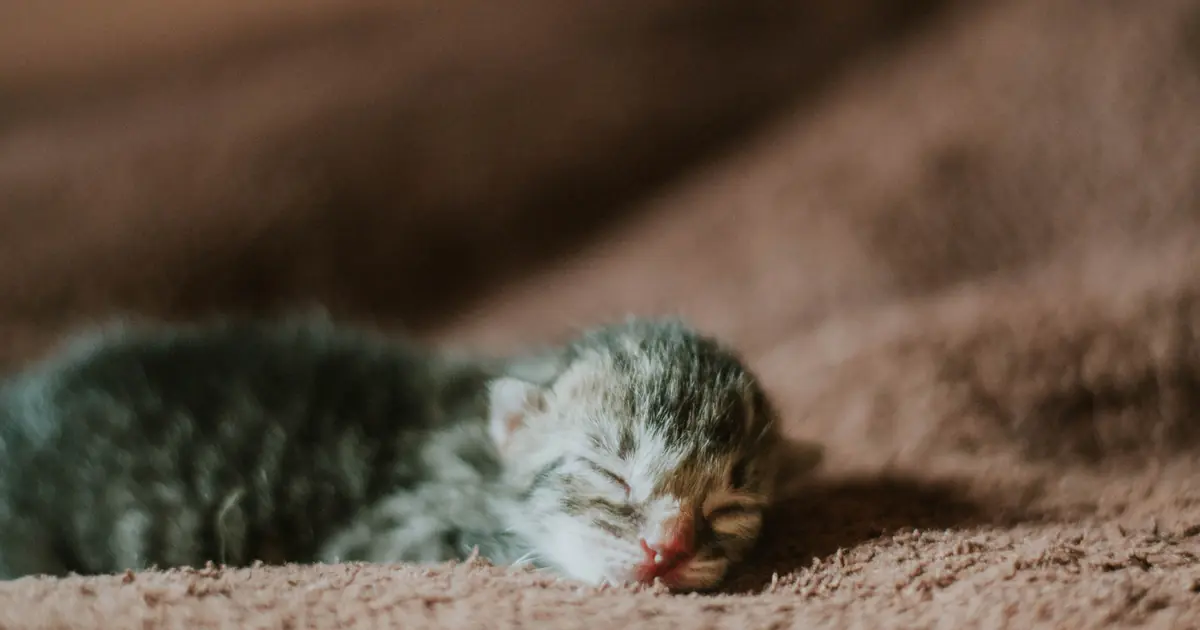
If a kitten in front of you seems too quiet, too cold, or too weak to nurse, stop scrolling and call an emergency vet first. You can come back to this page after. We’ll wait.
Watching a newborn kitten struggle is one of the hardest things a cat parent or foster can go through. It happens fast and it feels unfair. This guide explains what fading kitten syndrome is, the warning signs, what causes it, and what to do in the first critical minutes while you get a kitten to a vet.
- Fading kitten syndrome describes newborn kittens who decline and fail to thrive, most often in the first one to two weeks of life, before they’re weaned.
- The “big three” immediate threats are hypothermia (a dropping body temperature), hypoglycemia (low blood sugar), and dehydration.
- Healthy kittens should gain weight every single day and roughly double their birth weight by one to two weeks old.
- Causes range from infection and parasites to birth defects, low birth weight, and blood type incompatibility between a kitten and its mother.
- A fading kitten needs a veterinarian immediately. This is not a wait-and-see situation.
What Is Fading Kitten Syndrome?
Fading kitten syndrome is the name vets and shelters use for a newborn kitten who seems fine at birth and then rapidly weakens over hours or days. It isn’t a single diagnosis. It’s an umbrella term for a cluster of symptoms, usually weakness, poor nursing, low body temperature, and weight loss, triggered by many different underlying problems.
Most cases show up in the first one to two weeks of life, before a kitten is weaned, and the highest risk window is the very first week. A kitten’s body at this age can’t regulate its own temperature or fight off infection the way an adult cat can, which is why things can go downhill so fast.
What Are the Warning Signs of a Fading Kitten?
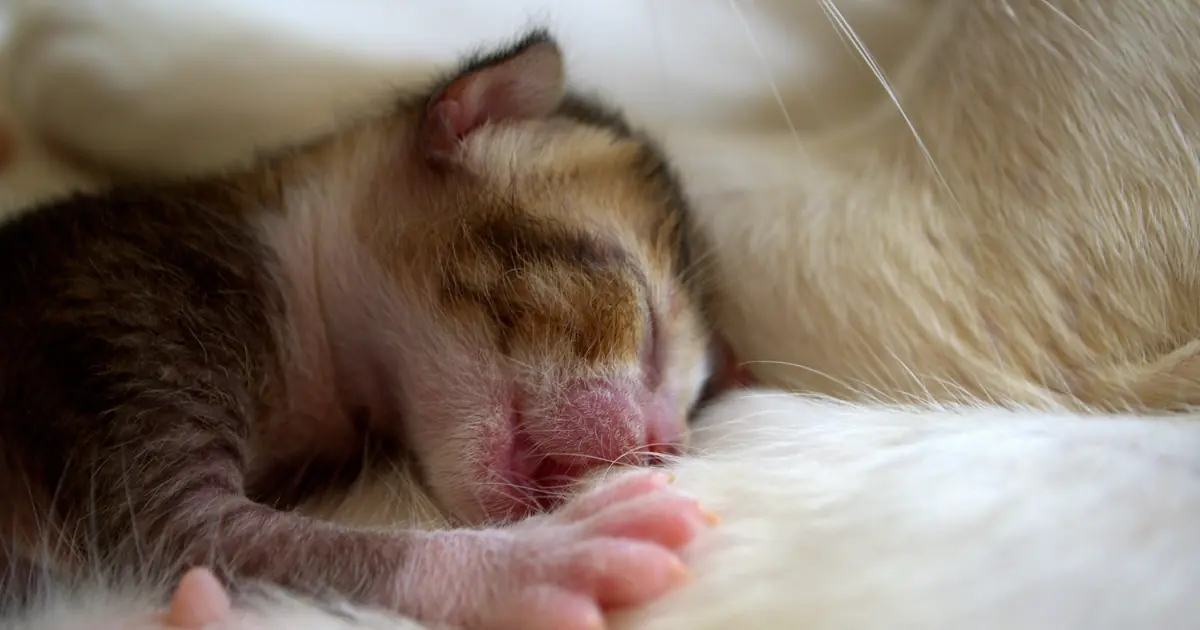
The warning signs of a fading kitten include weakness, refusing to nurse, feeling cold to the touch, crying constantly and then going unusually quiet, and not gaining weight. Any one of these on its own is worth a call to your vet. Several together mean it’s time to move fast.
- Weakness or limpness: can’t hold its head up, can’t right itself, or feels floppy when picked up.
- Not nursing: pushes away from the mother, has a weak suckle, or keeps getting shoved out of the nursing line.
- Cold to the touch: ears, paws, or the whole body feel cool, and the kitten may wander away from the littermate pile.
- Crying, then sudden silence: persistent crying that abruptly stops usually means the kitten has gotten weaker, not calmer.
- No weight gain: a kitten who isn’t gaining daily, or who is losing weight, isn’t thriving yet, even if nothing else looks obviously wrong.
- Pale or bluish gums, or labored breathing: both signal the kitten needs emergency care right now.
Healthy newborn kittens should gain weight every single day, typically 10 to 15 grams, and roughly double their birth weight by one to two weeks old. Weighing kittens on a kitchen gram scale at the same time each day is one of the simplest ways to catch a fade early.
| Warning Sign | What It May Mean | Urgency |
|---|---|---|
| Feels cold, ears and paws cool | Hypothermia, the kitten can’t regulate its own body temperature | Emergency, warm gently and call a vet now |
| Weak or absent suckle, pushed from the nursing line | Not getting enough milk, risk of low blood sugar and dehydration | Emergency |
| Crying nonstop, then suddenly quiet and still | Distress progressing to exhaustion or collapse | Emergency |
| No weight gain over 24 to 48 hours, or weight loss | Failure to thrive from any underlying cause | Urgent, vet exam within hours |
| Diarrhea or a swollen, red, or wet-smelling umbilicus | Possible infection | Urgent |
| Pale or bluish gums, gasping or labored breathing | Severe oxygen or circulation problem | Emergency, seek care immediately |
What Causes Fading Kitten Syndrome?
Fading kitten syndrome has many possible causes, and often more than one is at play in the same kitten. The most immediate threats are hypothermia, hypoglycemia, and dehydration, which vets sometimes call the “big three” because they spiral together and shut a kitten’s body down within hours.
- Hypothermia: newborn kittens can’t regulate their own body heat for their first couple of weeks. A cold kitten’s organs slow down, including its ability to digest milk.
- Hypoglycemia: low blood sugar from missed feedings or illness, which saps a kitten’s strength fast and can cause seizures.
- Dehydration: from not nursing enough, vomiting, or diarrhea.
- Infection: bacterial infections, including ones that start at the umbilical cord, and viruses like feline herpesvirus or calicivirus are common triggers. Sepsis, an infection that spreads through the bloodstream, is one of the most common causes of death in fading kittens.
- Low birth weight: kittens born smaller than average, often from large litters, start with fewer reserves.
- Birth defects: heart, brain, or other congenital abnormalities that limit how well a kitten can nurse, breathe, or grow.
- Parasites: intestinal parasites can drain a small kitten fast; this is one reason kittens can be born with worms passed from their mother before birth.
- Neonatal isoerythrolysis: a blood type mismatch between a mother cat and her kitten, where antibodies in her milk attack the kitten’s red blood cells. It’s uncommon but well documented, especially in certain purebred lines.
- Maternal or environmental factors: an unwell mother, a nest that’s too cold or crowded, or a difficult birth all raise the risk. It also helps to know how long cat pregnancies typically last and what a normal birth looks like.
According to PetMD, mortality risk is highest in the first week of life and drops as kittens get further past that window.
What Should You Do Right Now If a Kitten Is Fading?
Warm the kitten gently while you get emergency veterinary help on the phone, and do not try to feed a cold or unresponsive kitten. A cold kitten can’t digest milk properly, and forcing fluid into a kitten who can’t swallow normally risks it going into the lungs.
- Call an emergency vet or the nearest open animal hospital immediately. Describe exactly what you’re seeing so they can guide you on the way in.
- Warm the kitten slowly. Wrap it in a towel and hold it against your body, or use a heating pad on the lowest setting under half the towel so the kitten can move off it if needed.
- Do not feed a cold or limp kitten. Wait until it’s warm and more alert, and let your vet guide you on what and how to feed.
- Keep the kitten with its mother and littermates if she’s calm and accepting them, since her body heat and milk are hard to replace, unless your vet says otherwise.
- Get to the vet as fast as you safely can. This can turn fatal within hours, so it isn’t a “monitor overnight” situation.
Never give a kitten medication or a home remedy without your vet’s direction. Cow’s milk and other human foods aren’t built for kitten nutrition either, which is why giving kittens human breast milk isn’t a safe substitute for a proper kitten milk replacer.
Can Fading Kitten Syndrome Be Prevented?
You can lower the risk of fading kitten syndrome with good prenatal and newborn care, though not every case is preventable. Prevention centers on keeping the mother healthy, the nest warm and clean, and tracking each kitten’s weight daily so problems get caught early.
- Good care for the queen (mother cat) before and after birth, including proper nutrition and a vet check during pregnancy, gives kittens a stronger start.
- A warm, clean, draft-free nesting area matters enormously, since newborns can’t warm themselves for their first couple of weeks.
- Daily weigh-ins on a gram scale let you catch a stalled or dropping weight before a kitten looks sick.
- Limiting handling and stress in the first days lets the mother bond and nurse without disruption.
- An early vet check for the litter, often recommended within the first couple of days after birth, can catch congenital problems or infection risk early.
If you’re supporting a mother through a large litter, it helps to know what’s typical; see our guides on how many kittens a first-time mother cat usually has and normal postpartum recovery so you can spot when mom needs attention too.
Is It Your Fault If a Kitten Fades?
No, it is not your fault. Fading kitten syndrome is driven by biology, infection, genetics, and a newborn kitten’s extremely narrow margin for error, not by something a loving owner or foster did wrong. Even experienced breeders, shelters, and vets lose fading kittens despite doing everything right.
Newborn kittens are fragile in a way that catches a lot of people off guard. Their bodies have so little reserve that a small setback, a missed feeding, a chill, a mild infection, can snowball fast. If you did everything you could and it still wasn’t enough, that’s grief, not failure.
When Should You Call an Emergency Vet Now?
This article is educational and not a substitute for veterinary care. Fading kitten syndrome is a true medical emergency, and a kitten showing these signs needs a vet right away, not a wait-and-see approach. Do not medicate a kitten yourself, and do not feed a kitten who is cold, limp, or unresponsive; warm the kitten first and let a vet guide feeding and treatment.
Call an emergency vet immediately if a kitten:
- Feels cold to the touch or won’t warm up despite gentle warming
- Refuses to nurse or has a weak or absent suckle reflex
- Is limp, unresponsive, or can’t hold its head up
- Cries persistently and then suddenly goes quiet and still
- Has pale, gray, or bluish gums, or is struggling to breathe
- Hasn’t gained weight, or has lost weight, over 24 hours
- Has diarrhea, vomiting, or a swollen or discharging umbilical area
- Was born looking noticeably smaller or weaker than its littermates
For more on newborn kitten care, the Cornell Feline Health Center and International Cat Care both offer vet-reviewed guidance, useful reading once your immediate emergency is handled.
Frequently Asked Questions
Q: What is fading kitten syndrome exactly?
Fading kitten syndrome is a term for a newborn kitten who fails to thrive and declines rapidly in its first one to two weeks of life, before weaning. It isn’t a single disease but a group of causes, including hypothermia, low blood sugar, dehydration, infection, and birth defects, that produce a similar pattern of weakness.
Q: How fast does fading kitten syndrome progress?
It can progress within hours. A kitten who seems only mildly weak in the morning can become critically ill by evening, so any warning sign calls for an immediate vet visit, not a wait-and-see approach.
Q: What age are kittens most at risk for fading kitten syndrome?
Kittens are most at risk in their first one to two weeks of life, with the highest mortality in the very first week. Risk drops as a kitten grows stronger and gets closer to weaning age.
Q: Can a fading kitten be saved?
Yes, many fading kittens can be saved if they reach a vet quickly and the underlying cause is treated. Treatment often means warming the kitten and correcting blood sugar, hydration, and infection, so speed matters more than almost anything else.
Q: What are the first signs of fading kitten syndrome?
Early signs include a kitten who nurses weakly or not at all, feels cool to the touch, cries more than littermates, or isn’t gaining weight day to day. Daily weigh-ins on a gram scale catch problems before they become visible.
Q: Can I feed a weak or cold kitten to help it?
No, do not feed a kitten who is cold or unresponsive. A cold kitten can’t digest milk properly, and feeding it can send fluid into the lungs instead of the stomach. Warm the kitten gently first, then get it to a vet for feeding guidance.
Q: Is fading kitten syndrome contagious to other kittens in the litter?
It depends on the cause. If an infection such as feline herpesvirus is behind the fading, it can spread to littermates, which is why a vet should check the whole litter, not just the one struggling kitten.
Q: How can I tell if a kitten is gaining weight properly?
Weigh each kitten at the same time daily on a gram scale. Healthy kittens typically gain 10 to 15 grams a day and roughly double their birth weight by one to two weeks old. Any kitten who stalls or loses weight needs a vet check promptly.

Hello and welcome to The Ideal Cat!
We are some passionate cat owners from different professions. We love our cats and have a lot of experience in how to care for our pets. We are incredibly excited to share our knowledge, experience, and research with you. So you can take good care of your loving cat. We will answer most of the common questions about owning cats, taking care of them, etc. If you have any question contact with us. Thanks for visiting! Enjoy the content.
