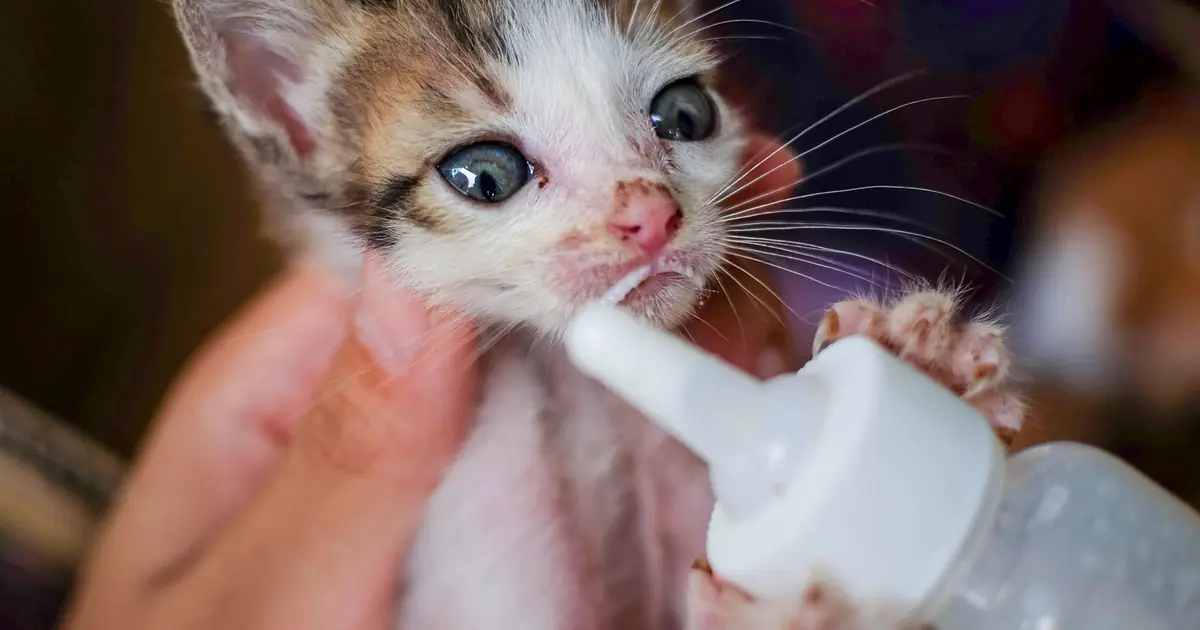
Picture this. You find a tiny orphaned kitten, eyes barely open, mewing for its mom. You’re nursing your own baby, and it feels almost natural to wonder: could a little human breast milk keep this kitten alive? It’s a kind, gut-level instinct. And I get why so many people ask it.
Here’s the honest answer, though. Kittens should not drink human breast milk. It seems gentle and nourishing, but human milk is built for human babies, not for a growing kitten. Feeding it can leave a fragile kitten hungry, sick, or dangerously dehydrated. The safe path is a kitten milk replacer and a quick call to your vet.
- Human breast milk is not safe for kittens because its protein, fat, and calorie balance is wrong for feline growth.
- Human milk contains about 7.5 grams of lactose per 100 mL, and many kittens can’t digest that sugar, which causes diarrhea.
- Diarrhea and dehydration can turn life-threatening in a small kitten within hours, so speed matters.
- Orphaned kittens should be fed a commercial kitten milk replacer (KMR), never human milk or cow’s milk.
- Always get a vet’s guidance on the right formula, amount, and feeding schedule for an orphaned kitten.
Can kittens drink human breast milk?
No, kittens should not drink human breast milk. Human breast milk is formulated for human infants, and its balance of protein, fat, and sugar is wrong for a kitten’s body. A kitten fed human milk misses the concentrated nutrition it needs and takes in lactose it often can’t handle.
Think of it like fuel. Human milk is the right fuel for a human baby’s slow, steady growth. A kitten grows fast and furious, doubling its birth weight in about the first week or two, so it needs a much richer, higher-protein formula. Human milk simply doesn’t deliver that. Even setting digestion aside, kittens also miss out on the feline antibodies that only a mother cat’s milk (or the right early care) provides.
Why is human breast milk wrong for kittens?
Human breast milk is wrong for kittens because it doesn’t match a kitten’s nutritional needs on almost any measure. Kittens need far more protein and fat per ounce than a human baby, plus specific nutrients like taurine that human milk isn’t designed to supply.
Here’s the short version. A mother cat’s milk is packed with protein to build a fast-growing body. Human milk is comparatively low in protein and fat and higher in sugar. That means a kitten on human milk can eat and eat and still not thrive, because the calories and building blocks just aren’t there in the right ratios.
Then there’s lactose. Human milk carries roughly 7.5 grams of lactose per 100 mL, similar to cow’s milk. Young kittens produce lactase to digest their mother’s milk, but human milk delivers sugar in the wrong package, and undigested lactose is where the trouble starts. Proper feline nutrition is species-specific for a reason, and milk is no exception. If you’ve ever wondered why cats seem to love milk yet get sick from it, lactose is the villain of that story too.
What happens if a kitten drinks human or cow’s milk?
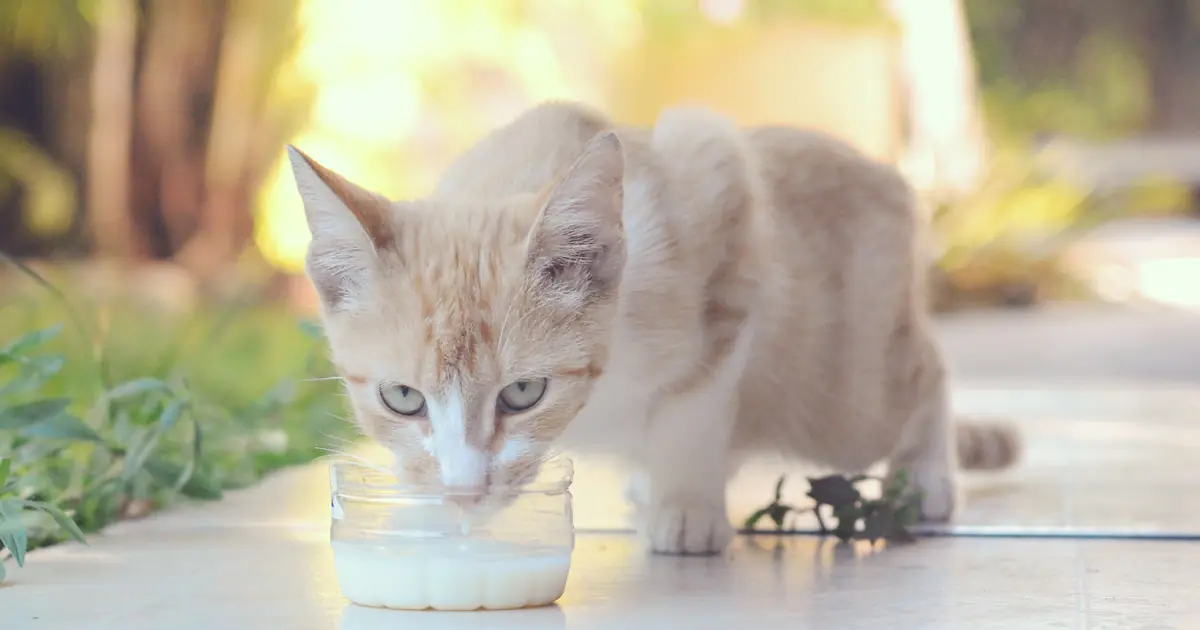
If a kitten drinks human breast milk or cow’s milk, the most common result is digestive upset that shows up as diarrhea. Undigested lactose ferments in the kitten’s gut and pulls water into the intestines, which causes loose, watery stool and rapid fluid loss.
In a kitten weighing just a few ounces, that fluid loss is a real emergency. Dehydration can set in within hours, not days. Watch for these warning signs after any milk feeding a kitten shouldn’t have had:
- Watery or persistent diarrhea
- A bloated, gassy, or uncomfortable belly
- Weakness, floppiness, or refusing to feed
- Dry gums, or skin that stays “tented” when gently pinched
- A cool body and low energy
Beyond the immediate mess, the long game is just as worrying. A kitten living on the wrong milk can fail to gain weight, grow slowly, and stay weak. Loose stool in a kitten is never something to shrug off, and ongoing diarrhea from the wrong milk can drain a tiny body fast. If it doesn’t stop quickly, call your vet.
What should an orphaned kitten drink instead?
An orphaned kitten should drink a commercial kitten milk replacer, usually labeled KMR. Kitten milk replacer is designed to mimic the composition of a mother cat’s milk, with the right balance of protein, fat, and vitamins that kittens need to survive and grow.
You can find KMR in powder or ready-to-feed liquid at pet stores, most vet clinics, and online. It comes with mixing and feeding instructions, but here’s my strong opinion: don’t wing it. Call your vet before the first feeding. They’ll confirm the kitten’s rough age, tell you the right amount and how often to feed, and check for problems you can’t see, like a low body temperature or hidden illness.
A few care basics that matter just as much as the milk:
- Keep the kitten warm. Chilled kittens can’t digest food safely, so gentle, steady warmth comes first.
- Feed KMR warmed to body temperature, with the kitten lying on its belly, never on its back.
- Never force milk or feed too fast, since milk in the lungs is dangerous.
- Burp and stimulate the kitten to toilet after feeds, the way a mother cat would.
Newborns come with their own surprises, from feeding rhythms to the fact that many kittens are born with worms, which is one more reason an early vet visit pays off. Reputable groups like the ASPCA and International Cat Care stress the same thing: orphaned kittens need proper replacer milk and hands-on help, not household milk.
Why isn’t cow’s milk a safe backup either?
Cow’s milk is not a safe backup for kittens, for many of the same reasons human milk isn’t. Cow’s milk is lower in protein, fat, and taurine than a mother cat’s milk, and higher in carbohydrates like lactose, so it feeds a kitten poorly and upsets its stomach.
A mother cat’s milk contains more than twice the protein of cow’s milk. That gap alone tells you cow’s milk can’t do the job. Add the lactose problem and you get the same fast slide toward diarrhea and dehydration. The Cornell Feline Health Center and vet teams everywhere say it plainly: skip the cow’s milk for kittens. It’s a myth that dies hard, but it’s a myth.
Human milk vs. cow’s milk vs. kitten milk replacer
| Milk type | Right for kittens? | Why |
|---|---|---|
| Human breast milk | No | Too little protein and fat, wrong calorie profile, and high lactose many kittens can’t digest. |
| Cow’s milk | No | Low in protein, fat, and taurine, high in lactose, so it causes poor growth and diarrhea. |
| Kitten milk replacer (KMR) | Yes | Made to mimic a mother cat’s milk, with the protein, fat, and nutrients kittens need. |
When should you rush an orphaned kitten to the vet?
You should get an orphaned kitten to a vet as soon as you can, ideally before the first feeding, and urgently if anything looks off. Tiny kittens go downhill fast, so it’s always better to call early than to wait and see.
Treat these as get-help-now signs:
- Ongoing or watery diarrhea, or any vomiting
- The kitten feels cold or won’t stay warm
- Weakness, limpness, or not waking to feed
- No urine or stool, or a swollen belly
- Refusing to eat over multiple feedings
This article is educational and isn’t a substitute for veterinary care. An orphaned or sick kitten should be seen by a licensed veterinarian, who can recommend the right kitten milk replacer and feeding plan for that specific kitten.
Frequently asked questions
Q: Can a kitten drink human breast milk in an emergency?
No, human breast milk isn’t a safe emergency food for a kitten. It’s too low in protein and fat and too high in lactose, which can cause diarrhea and dehydration. If you have nothing else, keep the kitten warm and hydrated and contact a vet right away for guidance.
Q: Why can’t kittens digest the lactose in human or cow’s milk?
Kittens make lactase to digest their mother’s milk, but human and cow’s milk deliver lactose in amounts and forms their gut isn’t built for. Human milk carries about 7.5 grams of lactose per 100 mL. Undigested lactose ferments in the intestines and pulls in water, which leads to diarrhea.
Q: What is kitten milk replacer (KMR)?
Kitten milk replacer, often labeled KMR, is a commercial formula made to mimic a mother cat’s milk. It supplies the right balance of protein, fat, and vitamins a kitten needs to grow. It comes as a powder or ready-to-feed liquid and is available at pet stores and vet clinics.
Q: Can I make homemade milk for an orphaned kitten?
Homemade milk mixes are a last resort and are not as safe or complete as commercial kitten milk replacer. They often miss key nutrients like taurine and can cause digestive upset. Use a vet-recommended KMR whenever possible, and ask your vet before feeding anything else.
Q: How do I know if a kitten is dehydrated?
Signs of dehydration in a kitten include dry or tacky gums, low energy, and skin that stays “tented” when gently pinched instead of springing back. A dehydrated kitten may also feel cool and refuse to feed. Dehydration is an emergency in small kittens, so call a vet quickly.
Q: When can kittens stop drinking milk replacer?
Kittens typically start weaning onto solid kitten food around four weeks of age and are usually fully weaned by about eight weeks. During weaning, kitten milk replacer is slowly reduced as solid food increases. Your vet can confirm the right timing for your kitten’s age and weight.
Q: Is goat’s milk safe for kittens?
Goat’s milk is not a proper substitute for kitten milk replacer. Like cow’s milk, it doesn’t match a kitten’s needs for protein, fat, and taurine, and it still contains lactose. Stick with a commercial KMR and check with your vet before offering any other milk.
Q: What should I do the moment I find an orphaned kitten?
First, keep the kitten warm, since chilled kittens can’t digest food safely. Then contact a vet or a local rescue for guidance before feeding. Have kitten milk replacer ready rather than reaching for human or cow’s milk, and never feed a cold kitten.

Hello and welcome to The Ideal Cat!
We are some passionate cat owners from different professions. We love our cats and have a lot of experience in how to care for our pets. We are incredibly excited to share our knowledge, experience, and research with you. So you can take good care of your loving cat. We will answer most of the common questions about owning cats, taking care of them, etc. If you have any question contact with us. Thanks for visiting! Enjoy the content.
