
Picture a fresh litter of kittens, eyes still shut, piled up and nursing away. They look about as clean and new as life gets. So the idea that they could already have worms feels almost unfair. But this is one of the most common questions new kitten parents ask, and the honest answer surprises a lot of people.
So, are kittens born with worms? Not exactly, at least not in the “already infected in the womb” way most folks imagine. The bigger issue is what happens right after birth. Roundworm larvae travel through the mother cat’s milk, which means kittens usually pick up worms during their very first meals. Infection happens so early and so reliably that vets simply assume it’s there.
- Most kittens are not born with an active worm burden, but they commonly get roundworms within days through their mother’s milk.
- Roundworm larvae (Toxocara cati) move to the queen’s mammary glands during nursing and pass into her milk, so nearly every nursing kitten is exposed.
- Because infection is so common and often invisible, vets deworm almost all kittens regardless of whether worms are visible.
- Kitten deworming usually starts around 2 to 3 weeks of age and repeats every 2 to 3 weeks until about 12 weeks, then monthly to 6 months, on a vet’s schedule.
- Tapeworms come from fleas and hookworms from milk or contaminated soil, so worms can keep arriving as a kitten grows.
Are kittens actually born with worms?
Kittens are not usually born already carrying a load of adult worms, but they get infected so early that the difference barely matters in practice. For the most common kitten worm, the roundworm, the main route isn’t the womb at all. It’s the milk. A mother cat can carry dormant roundworm larvae in her tissues for years, and pregnancy wakes them up.
Here’s the thing that trips people up. Those larvae migrate to the mammary glands as the queen prepares to nurse, then pass into her milk. So the kitten looks perfectly healthy at birth and picks up roundworms during its first few days of feeding. You’d never see it happen. The vast majority of nursing kittens are infected with roundworms this way, which is exactly why vets don’t wait for proof. If you want the full picture of how these parasites move between cats, our guide on how cats catch worms and parasites walks through the routes step by step.
How do kittens get roundworms from their mother?
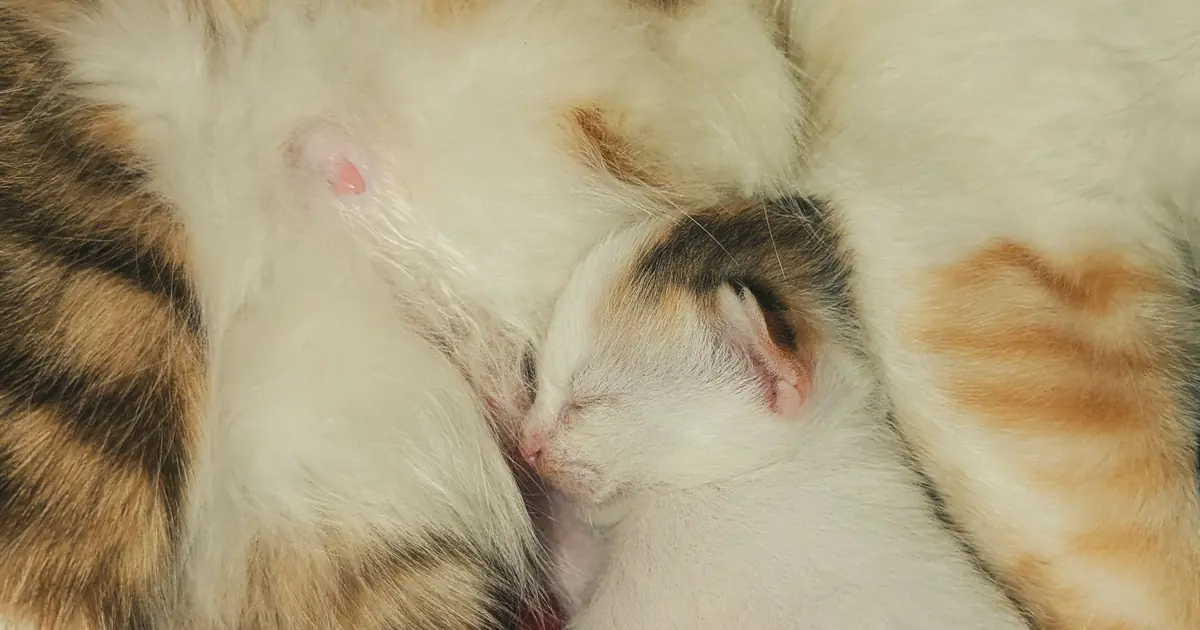
Kittens get roundworms mainly through their mother’s milk, in a process vets call transmammary transmission. The roundworm species behind this is Toxocara cati, the most common intestinal parasite in cats. When a queen becomes pregnant, larvae that were sitting dormant in her body reactivate and travel to her mammary tissue.
From there, the larvae pass into the milk. Every time a kitten nurses in those first days and weeks, it can swallow more. The larvae then grow into adult worms inside the kitten’s gut, lay eggs, and the cycle keeps going. A few larvae may also transfer around the time of birth, but milk is the big one for cats.
This is why treating the mother before and during pregnancy matters, and why the kittens still need their own deworming afterward. The milk route is quiet and efficient, and it doesn’t care how clean your home is.
Why do vets deworm almost every kitten anyway?
Vets deworm nearly every kitten because roundworm infection through milk is so common that assuming it’s present is safer than testing and hoping. A young kitten can carry a real worm burden without a single obvious sign at first. Waiting for symptoms, or for worms to show up in a stool sample, wastes time the kitten doesn’t have.
Roundworms steal nutrients from a growing body that needs every calorie. Left alone, they can stunt growth, cause a swollen belly, and in heavy infections even block the intestines. Routine deworming is cheap, safe, and effective, so the math is easy. Treat first, and you protect the kitten before worms ever cause harm. If you’re not sure what you’re even looking for, our guide on what cat worms look like shows the difference between roundworms, tapeworm segments, and the rest.
When should kitten deworming start, and why does it repeat?
Kitten deworming usually starts around 2 to 3 weeks of age and repeats every 2 to 3 weeks until about 12 weeks old, then shifts to monthly until roughly 6 months, all under a vet’s direction. That early start is deliberate. It catches roundworms before they mature and start shedding eggs.
The repeating part confuses people, so here’s the reason. A single dewormer kills the worms present that day, but it doesn’t kill larvae still migrating through the kitten’s tissues or newly swallowed from milk. Those mature later. Repeat doses catch each new wave as it grows up. Deworming schedules should always be vet-directed, since the right product and timing depend on the kitten’s age, weight, and worm type. For the products vets tend to reach for, see our overview of the best cat dewormers, but confirm any plan with your own vet first.
What other worms can kittens get, and how?
Beyond roundworms, kittens can pick up tapeworms and hookworms, and each arrives by a different route. Roundworms lead the pack in young kittens, but the others tend to show up a bit later as a kitten explores, grooms, and encounters fleas. Knowing the route helps you cut off the source.
| Worm type | How kittens usually get it | Typical timing |
|---|---|---|
| Roundworm (Toxocara cati) | Mainly through the mother’s milk while nursing | Very early, within the first days to weeks |
| Hookworm | Through milk, or from larvae in contaminated soil that penetrate skin or are swallowed during grooming | Early to mid kittenhood |
| Tapeworm | By swallowing an infected flea while grooming | Later, once a kitten has fleas or roams |
Tapeworms are the one you can often prevent yourself. Since a kitten has to swallow a flea to get them, good flea control breaks the chain. Our guide to the best cat flea treatments covers safe options, since keeping fleas off your kitten is one of the simplest ways to keep tapeworms away too.
What are the signs of worms in kittens?
The signs of worms in kittens include a pot-bellied or bloated look, poor growth despite eating, a dull coat, diarrhea, vomiting, and sometimes visible worms in the stool or vomit. Roundworms often look like spaghetti, while tapeworm segments look like tiny grains of rice near the tail or in bedding.
Not every wormy kitten shows obvious signs, especially early on. Some seem bright and playful while the worms quietly take a toll. That’s part of why routine deworming beats waiting and watching. If you do spot symptoms, don’t panic, but don’t sit on it either. A quick vet visit sorts it out fast.
Can kitten worms spread to people?
Yes, some kitten worms can spread to people, though the risk is low with basic hygiene and regular deworming. Roundworms and hookworms are the main concern. People, especially young children, can accidentally swallow or contact worm eggs and larvae from contaminated soil, litter, or unwashed hands.
There’s no need to be scared of your kitten. The risk is calm and manageable. Wash hands after handling litter, scoop the box daily, keep the kitten on its deworming schedule, and supervise kids around the litter area. Public health groups like the CDC’s guidance on cats and parasites back up these simple steps as the core of keeping the whole household safe.
When should you see a vet?
This article is educational and isn’t a substitute for veterinary care. Set up a deworming and checkup plan with your vet for every new kitten, and call sooner if your kitten shows a swollen belly, ongoing diarrhea or vomiting, blood in the stool, weakness, pale gums, poor appetite, or visible worms. Those signs, along with any kitten that seems to be fading, mean a vet visit now rather than later. Very young kittens go downhill fast, so err on the side of calling. For trusted background reading, the Cornell Feline Health Center and VCA Hospitals both publish solid, vet-reviewed parasite guides.
Frequently asked questions
Q: Are all kittens born with worms?
Not all kittens are technically born with worms, but the vast majority get infected with roundworms very early through their mother’s milk. Infection is so common that vets treat nearly every kitten as if it has worms and start deworming around 2 to 3 weeks of age.
Q: Can a kitten get worms if the mother was healthy?
Yes. A mother cat can look completely healthy while carrying dormant roundworm larvae in her tissues. Pregnancy reactivates those larvae, which then pass into her milk, so even a healthy-seeming queen can transmit roundworms to her nursing kittens.
Q: How early can you deworm a kitten?
Kitten deworming usually starts around 2 to 3 weeks of age. It then repeats every 2 to 3 weeks until about 12 weeks old, then monthly until roughly 6 months. Always follow a schedule set by your vet, since product and timing depend on the kitten.
Q: What do worms look like in a kitten’s poop?
Roundworms look like spaghetti or thin white noodles in stool or vomit. Tapeworm segments look like small grains of white rice, often near the kitten’s back end or in bedding. Not all worms are visible, so a clear stool doesn’t rule them out.
Q: Do indoor kittens still need deworming?
Yes. Indoor kittens still need deworming because roundworms usually arrive through the mother’s milk before the kitten ever goes outside. Fleas can also enter the home and bring tapeworms. Follow your vet’s deworming and flea-control plan even for strictly indoor kittens.
Q: Why does my kitten need more than one deworming dose?
One dewormer dose kills the worms present that day but not the larvae still migrating through tissues or arriving in milk. Those mature later, so repeat doses every 2 to 3 weeks catch each new wave until the kitten outgrows the highest-risk window.
Q: Can kitten worms make my child sick?
Some kitten worms, mainly roundworms and hookworms, can infect people, and young children are most at risk. The risk stays low with simple hygiene: wash hands after handling litter, scoop daily, and keep your kitten on its deworming schedule. Ask your vet or doctor if you have concerns.
Q: Will a kitten grow out of worms on its own?
No, kittens do not reliably grow out of worms on their own. Untreated worms can stunt growth, cause diarrhea and a pot belly, and in heavy cases become dangerous. Worms need proper deworming treatment on a vet-guided schedule to clear safely.

Hello and welcome to The Ideal Cat!
We are some passionate cat owners from different professions. We love our cats and have a lot of experience in how to care for our pets. We are incredibly excited to share our knowledge, experience, and research with you. So you can take good care of your loving cat. We will answer most of the common questions about owning cats, taking care of them, etc. If you have any question contact with us. Thanks for visiting! Enjoy the content.
