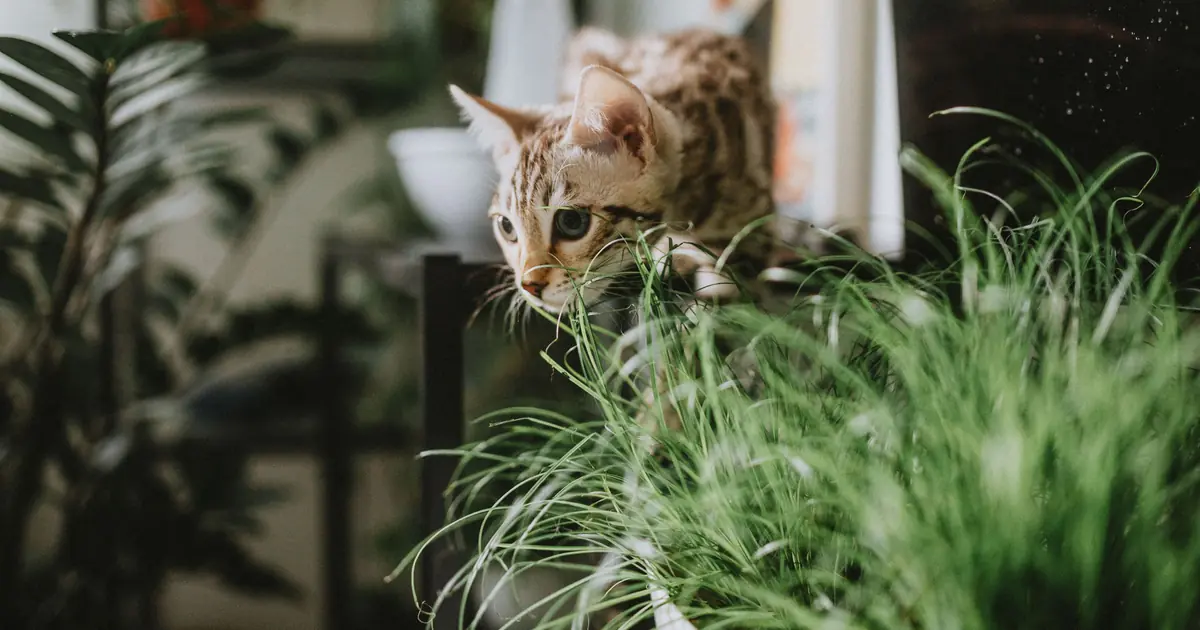
Picture a Bengal cat dipped in moonlight. That’s the effect a silver Bengal has walking across your living room floor. The warm gold and rust tones you’d expect on a typical Bengal are gone, replaced by a frosty gray-white coat with jet black markings that look almost hand-painted on.
If you’ve stumbled on photos of these cats and wondered whether “silver Bengal” means a whole different breed, you’re not alone. It’s one of the most common questions new Bengal fans ask. The short version: it’s the same wildly energetic, people-oriented cat you already know, just wearing a different coat. Let’s get into what actually makes a silver Bengal silver, what it’s like to live with one, and what to check before you bring one home.
- Silver Bengal is a coat color, not a separate breed. It’s still 100% Bengal cat, sharing the same size, structure, and temperament as any other color variety.
- The silver color comes from the inhibitor gene (also called the silver gene), which blocks the warm yellow and red pigment in the coat, leaving a cool gray-white background.
- The International Cat Association (TICA) granted silver Bengals full championship recognition in May 2004, after silvers spent years competing only in experimental classes.
- Silver Bengal kittens typically cost between $1,500 and $3,000 from a reputable breeder, though rare “glitter” or show-quality silvers can run higher.
- Like all Bengals, silvers are high-energy, highly intelligent, and often enjoy water, so they need daily play and vertical climbing space to stay happy.
What Is a Silver Bengal Cat?
A silver Bengal cat is a Bengal with a silver-based coat color, not a separate breed of cat. Every silver Bengal is registered by TICA simply as a Bengal, with “silver” noted as the color division. Underneath that frosty coat, you’re looking at the exact same breed developed in the 1980s by crossing domestic cats with the Asian leopard cat, a small wild feline native to South and Southeast Asia.
What changes with silver isn’t the cat’s build, bone structure, or personality. It’s purely a pigment difference, the same way a black Labrador and a yellow Labrador are still both Labradors. If you already love the Bengal cat’s muscular, leopard-like look and dog-like devotion to its people, a silver Bengal gives you that in a cooler, more monochrome palette.
What Do Silver Bengal Cats Look Like?
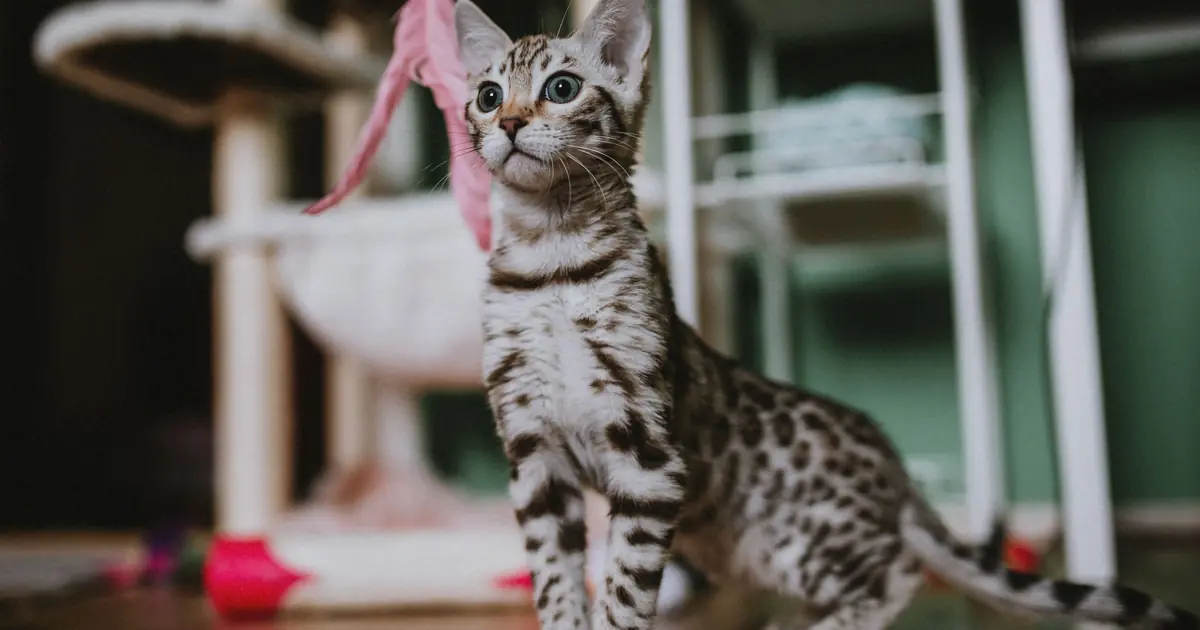
Silver Bengal cats have a pale silver-white to steel-gray base coat covered in bold black or dark charcoal rosettes, spots, or marbling. The background color should read as cool and neutral, closer to brushed pewter than cream or tan, and the contrast between the pale base and dark markings is part of what makes the color so eye-catching.
That cool, warm-free background comes from a dominant gene called the inhibitor gene, which suppresses the yellow and red pigment (pheomelanin) that gives standard Bengals their golden-tan color. A kitten only needs one copy of this gene, from either parent, to be born silver. TICA recognized silver Bengals for championship competition in May 2004, according to The International Cat Association’s Bengal breed page, after breeders spent close to two decades refining the color in experimental classes.
A few other features to look for on a well-marked silver Bengal:
- Rosettes or marbling: Rosettes are two-toned spots with a darker outline and lighter center, arranged in horizontal rows. Marbled silvers have swirling, marble-cake patterns instead of distinct spots.
- Eye color: Green or gold eyes are typical and preferred in the show ring, though blue eyes show up in snow-silver combinations.
- Glitter: Many Bengals, silvers included, carry a gene that makes each hair tip catch the light, giving the coat an almost metallic shimmer in the sun.
Silver Bengal kittens are born looking fuzzy and a bit muddy gray, a phase breeders call “fuzzies.” Their true silver-and-black contrast usually sharpens up between 8 and 16 weeks as the guard hairs come in.
What Is a Silver Bengal Cat’s Personality Like?
Silver Bengals have the same bold, athletic, and highly social personality as any other Bengal color, since coat color has no bearing on temperament. These are smart, curious cats that bond hard with their people and expect to be included in whatever you’re doing.
Bengals are famous for opening cabinets, learning to turn on faucets, and greeting you at the door like a small, spotted dog. Many genuinely enjoy water, batting at a dripping tap or hopping into an empty tub to investigate (a trait some owners compare to how Siamese cats also show more curiosity around water than the average house cat). They’re talkative too, with a chirpy, trilling voice they’ll use to narrate their day whether you asked or not.
Honestly, this isn’t a cat content watching the world from a windowsill. Skip the daily play sessions and you’ll likely get a bored, destructive Bengal instead of a happy one. Silver Bengals do best with owners who want an interactive cat, not a low-maintenance lap warmer.
How Much Do Silver Bengal Cats Cost?
Silver Bengal kittens typically cost between $1,500 and $3,000 from a reputable breeder, with pet-quality kittens at the lower end and show-quality or heavily glittered silvers pushing higher. Bengal prices in general run on the expensive side compared to most domestic breeds, largely because of the specialized breeding programs needed to maintain the wild-cat look safely, a topic covered in more depth in our guide on why Bengal cats cost so much.
On top of the kitten price, budget for the ongoing basics every cat needs: food, litter, vet visits, vaccines, and spay or neuter surgery if it’s not already done. Bengals also tend to go through toys and scratching posts fast, so factor a bit extra into your enrichment budget too.
How Do You Care for a Silver Bengal Cat?
Caring for a silver Bengal means prioritizing daily exercise and mental stimulation over grooming, since the short, dense coat needs very little upkeep. A quick weekly brush to catch loose hair is usually plenty, and you can check our guide on how much Bengal cats shed for the full breakdown.
Where silver Bengals really need investment is space and stimulation:
- Give them height. A tall cat tree or wall shelves near a window let a Bengal climb and perch, satisfying a lot of their wild-cat instincts.
- Play twice a day, minimum. Ten to fifteen minutes with a wand toy morning and evening burns off energy that would otherwise go into chasing your ankles at 3am.
- Rotate puzzle feeders. Bengals are quick learners and get bored of the same toy fast, so a treat-dispensing puzzle keeps their brain working.
- Feed a high-protein diet. Bengals are active and muscular, so a diet built around real animal protein supports their energy and lean muscle.
How Does Silver Compare to Other Bengal Colors?
Silver is one of five main color families recognized in Bengals, alongside brown, snow, charcoal, and blue, each with its own base coat and marking style.
| Color | Base Coat | Markings |
|---|---|---|
| Brown (standard) | Warm gold, tan, or rust | Black or dark brown rosettes and spots |
| Silver | Silver-white to steel gray, no warm tones | Black or dark charcoal rosettes and spots |
| Snow | Cream to ivory, born nearly white | Light to medium brown or gray points and spots |
| Charcoal | Darker, smoky brown-gray overlay | Very dark, heavily saturated rosettes and a dark “cape” over the back |
| Blue | Soft blue-gray to warm tan-blue | Blue-gray to slate rosettes, rarer and not yet TICA championship recognized |
Snow Bengals, by the way, come from a different gene entirely (related to the Siamese colorpoint pattern), which is why they’re born pale and darken slightly with age, unlike silvers who show their true contrast early.
Are Silver Bengal Cats Prone to Any Health Issues?
Silver Bengal cats face the same breed-specific health risks as any other Bengal color, since coat color genes are unrelated to the genes behind these conditions. The two most important ones to know about are progressive retinal atrophy (PRA-b) and hypertrophic cardiomyopathy (HCM).
- PRA-b: A recessive genetic mutation that causes the retina to break down slowly, leading to blindness by around age 2 to 3 if a cat inherits two copies. The UC Davis Veterinary Genetics Laboratory offers a simple DNA test breeders can use to confirm a kitten’s parents are clear or only carriers.
- HCM: Hypertrophic cardiomyopathy is the most common heart disease in cats and thickens the walls of the heart’s main pumping chamber. According to the Cornell Feline Health Center, HCM has a genetic component in several breeds, Bengals included, and is usually screened for with a heart ultrasound rather than a single DNA test.
- Pyruvate kinase deficiency: A less common but serious inherited anemia found in Bengal lines, also screened with a DNA test.
This article is educational and isn’t a substitute for veterinary advice. If your cat ever seems lethargic, has trouble breathing, loses vision suddenly, or stops eating, treat that as a reason to call your vet promptly rather than wait it out.
When you’re ready to bring one home, go through a breeder who health tests for HCM and PRA-b and can show you the paperwork, not just cute kitten photos. Ask to see where the kittens are raised, meet at least one parent cat, and steer clear of anyone selling “silver Bengals” for suspiciously low prices with no health guarantees. And be honest with yourself about energy level: a silver Bengal is a fantastic match for an active household ready for daily play, but it’s not the right pick if you’re hoping for a quiet lap cat.
Frequently Asked Questions About Silver Bengal Cats
Q: Is a silver Bengal a different breed from a regular Bengal?
No. A silver Bengal is still a purebred Bengal cat, just with a color variation. Silver refers only to the coat’s pigment, controlled by the inhibitor gene, not to a separate breed or lineage.
Q: What makes a Bengal cat’s coat turn silver?
A dominant gene called the inhibitor gene blocks the warm yellow and red pigment in the hair, leaving only cool gray and black tones visible. A kitten needs just one copy of this gene from either parent to be born silver.
Q: When did TICA recognize silver Bengal cats?
The International Cat Association granted silver Bengals full championship recognition in May 2004. Before that, silver Bengals could only compete in experimental classes for close to two decades while breeders refined the color.
Q: Do silver Bengal cats have green eyes?
Green or gold eyes are the most common and most preferred eye colors on a silver Bengal. Blue eyes can appear, but usually only when the cat also carries the snow color genes alongside silver.
Q: Are silver Bengal cats rarer than brown Bengals?
Yes, silver Bengals are less common than the standard brown Bengal, since brown was the original color developed when the breed started in the 1980s. That relative rarity is part of why silvers often carry a higher price tag.
Q: How much does a silver Bengal kitten cost?
Most silver Bengal kittens from a reputable breeder cost between $1,500 and $3,000. Show-quality kittens with strong contrast and heavy glitter can cost more, while kittens sold without health testing or papers are a red flag regardless of price.
Q: Are silver Bengal cats hypoallergenic?
No, silver Bengals are not hypoallergenic. No cat breed is truly allergen-free, and coat color has no effect on how much of the Fel d 1 protein, the main allergen in cat saliva and skin, a cat produces.
Q: Do silver Bengal cats need more grooming than other Bengals?
No, silver Bengals need the same low-maintenance grooming as any other Bengal color. A short, weekly brush is enough to manage loose hair, since all Bengals share the same short, dense, pelt-like coat regardless of color.

Hello and welcome to The Ideal Cat!
We are some passionate cat owners from different professions. We love our cats and have a lot of experience in how to care for our pets. We are incredibly excited to share our knowledge, experience, and research with you. So you can take good care of your loving cat. We will answer most of the common questions about owning cats, taking care of them, etc. If you have any question contact with us. Thanks for visiting! Enjoy the content.
