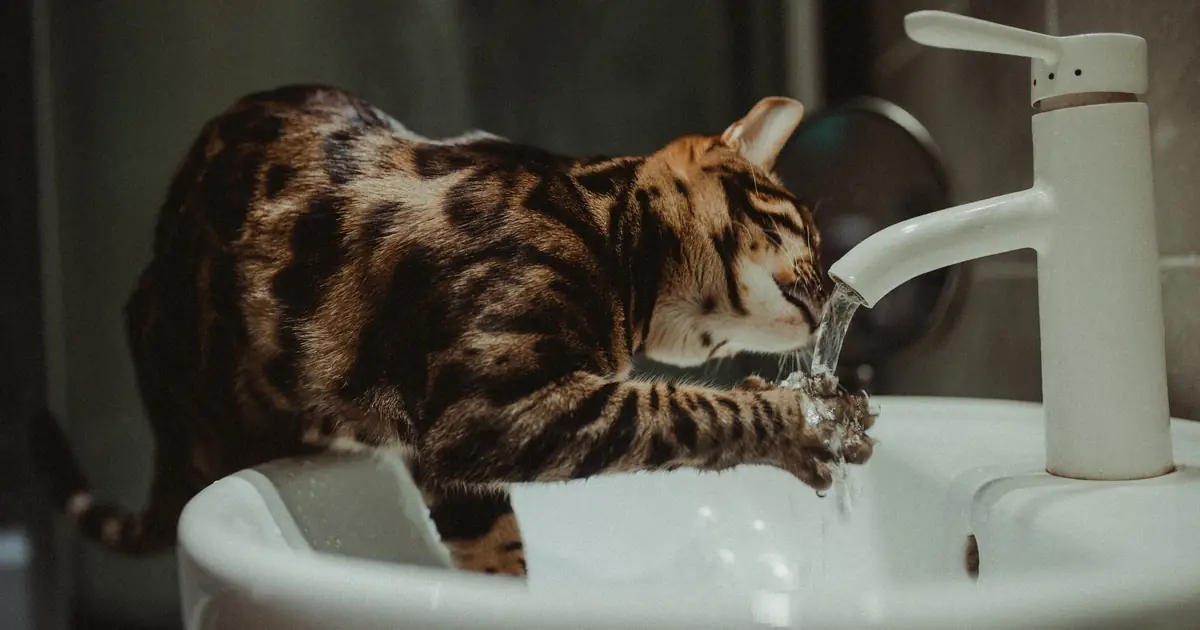
If you’ve ever walked into the bathroom and found your Siamese cat sitting in the sink, staring up at the faucet like it owes them money, you’re not imagining things. Most cats treat running water like a personal insult. Siamese cats, weirdly enough, often treat it like the best toy in the house.
Is your Meezer (the classic Siamese nickname) secretly part fish? Not quite. Let’s get into why this breed breaks the usual “cats hate water” rule, what that curiosity actually looks like day to day, and whether you should ever try giving one a real bath.
- Siamese cats are one of the breeds most often described as water-curious, thanks to their high intelligence, playfulness, and strong bond with their humans.
- Liking water usually means playing with a dripping tap or splashing a water bowl, not asking for a bath.
- The Turkish Van is the breed most known for actual swimming, earning it the nickname “the swimming cat.”
- Most cats avoid water because their fur soaks up moisture and gets heavy, and because their wild ancestors evolved in dry desert regions.
- Siamese cats are short-coated and self-groom well, so they rarely need baths at all, even the water-loving ones.
Do Siamese Cats Actually Like Water?
Yes, as a breed, Siamese cats tend to be more comfortable around water than most cats. That doesn’t mean every single Siamese wants a swim, and individual personality still plays a big role. But ask enough Siamese owners and you’ll hear the same stories again and again: cats perched on the sink edge, pawing at bathtub drains, or hopping into an empty tub just to investigate. Think of it less as “Siamese cats love swimming” and more as “Siamese cats are far less likely to run screaming from a dripping faucet than the average cat.”
Why Do Siamese Cats Like Water More Than Other Cats?
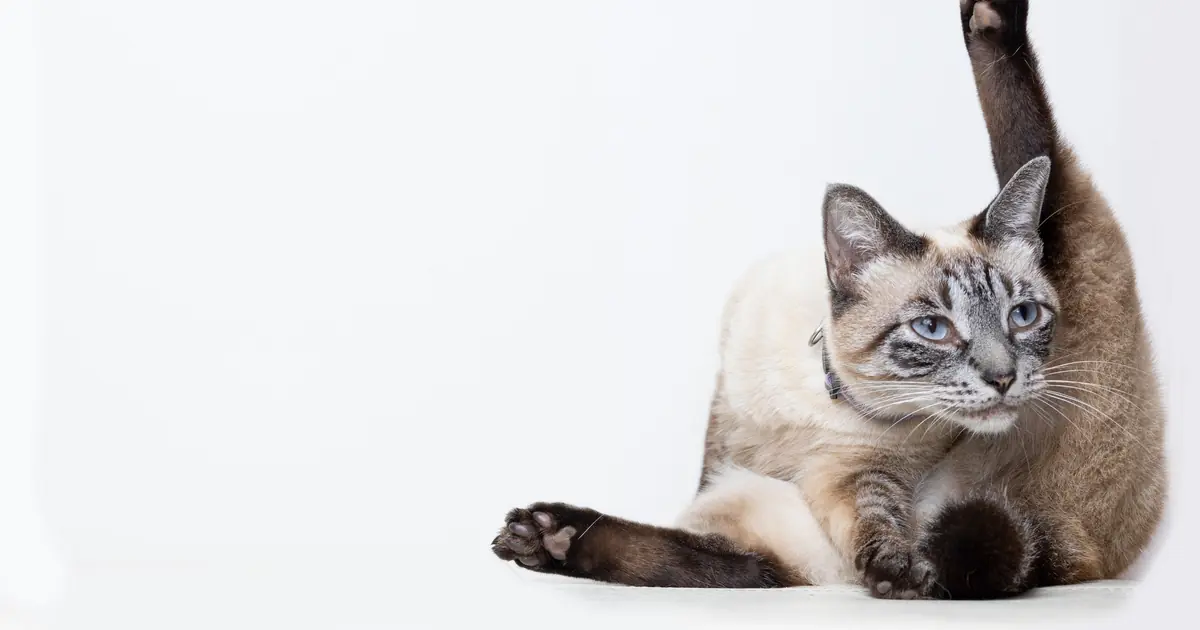
Siamese cats tend to like water because they’re unusually curious, high-energy, and obsessed with whatever their favorite human is doing. According to The International Cat Association’s breed profile, Siamese cats are “very intelligent” and have been known to entertain themselves for hours by “turning on faucets, opening cabinets, seeking out new hideaways.” A running tap isn’t scary to a cat like that. It’s a puzzle.
A few traits stack up in water’s favor here:
- Curiosity and intelligence: Siamese cats investigate anything new or moving, including dripping faucets and swirling drains.
- Extreme playfulness: This breed rarely outgrows kitten-style play, and moving water is basically an interactive toy.
- People-following behavior: Siamese cats want to be wherever you are. If that’s the shower or the kitchen sink, they’ll follow, water or not.
- Love of novelty: A new sound or sensation gets investigated, not avoided, in a breed this confident.
Some cat folks also point to the Siamese cat’s roots in Southeast Asia, a warmer and wetter region than the arid areas many other domestic cat lines trace back to. It’s a fun theory, but treat it as folklore, not the actual reason your cat is currently soaked to the elbows.
What Does It Actually Look Like When a Siamese Cat “Likes” Water?
For most Siamese cats, liking water means playing with it, not swimming in it. Owners typically describe one or more of these behaviors:
- Batting at a dripping faucet for minutes at a time
- Dipping a paw into the water bowl before drinking, or splashing it just to watch it move
- Hopping into an empty (or barely wet) bathtub to explore
- Sitting on the edge of the tub or perched on the toilet lid while you shower
- Drinking straight from a running tap instead of their bowl
- Occasionally jumping into a shallow puddle or a shower stream, uninvited
Notice what’s missing: asking for a bath. Watching, pawing at, or drinking from moving water is a very different thing from wanting to be dunked and lathered. Even the most water-curious Siamese can still hate an actual bath, and that’s completely normal. Pawing at the curtain one minute, then bolting at a filled tub the next? That tracks.
Which Other Cat Breeds Like Water, Besides Siamese?
Siamese cats aren’t the only breed with a reputation for being water-curious. A few others show up again and again in this conversation, each for slightly different reasons.
| Breed | How Water-Liking Shows Up |
|---|---|
| Siamese | Plays with running taps and bowls, follows owners into the bathroom, driven by curiosity and play |
| Turkish Van | Actually enjoys swimming; nicknamed “the swimming cat” for a genuine love of water |
| Bengal | Splashes in bowls and fountains, sometimes joins owners in the shower, drawn to movement |
| Maine Coon | Semi-water-resistant coat, often fascinated by dripping taps and running water |
| Abyssinian | Highly active and curious, will paw at and investigate water sources like a Siamese |
The Turkish Van earns its water reputation from something the others don’t have: a genuinely water-resistant coat. According to TICA’s Turkish Van breed profile, its semi-long coat has a cashmere-like texture that sheds water, which is why it can swim without ending up shivering and miserable. Siamese cats don’t have that coat advantage. Their love of water is pure personality, not fur engineering.
Bengal cats get lumped into this same “unusually water-tolerant” conversation a lot, thanks to their wild ancestry and love of movement. If the Bengal’s other traits interest you too, our Bengal cat breed guide covers the full personality picture.
Do Siamese Cats Need Baths?
No, most Siamese cats do not need regular baths. Siamese have a short, fine coat and are excellent self-groomers, so a bath is usually only necessary if your cat gets into something genuinely messy, like mud, grease, or something sticky that a tongue bath won’t fix. Routine bathing isn’t part of normal Siamese cat care.
That short coat is also low-shedding by cat standards, though it’s not shed-free. If you want the full picture on coat care and how much fur to expect around the house, our guide to how much Siamese cats shed breaks it down.
How Do You Safely Bathe a Siamese Cat If You Need To?
If you do need to bathe your Siamese, keep the water warm, the room calm, and the whole process short. Here’s the safe way to do it:
- Brush your cat first to remove loose fur before they get wet.
- Use warm water, never hot, tested against your wrist like you would for a baby.
- Fill the tub or sink only a few inches deep, just enough to wet the body.
- Use a cat-specific shampoo, never human shampoo, which can irritate a cat’s skin.
- Keep a non-slip mat under your cat’s paws so they feel steady, not like they’re sliding.
- Talk softly and praise your cat throughout instead of rushing or scolding.
- Rinse thoroughly, since leftover shampoo can irritate skin, then towel dry in a warm room.
- Never force a cat that’s panicking. Stop, let them calm down, and try again later or ask a professional groomer for help.
Even a water-curious Siamese can panic during an actual bath, and that’s a completely different experience from playing with a faucet. If your cat truly can’t tolerate baths, our step-by-step guide on how to bathe a cat that hates water covers extra tricks for a calmer, faster bath. When in doubt, ask your vet or a professional groomer before attempting a bath on a cat that’s fighting you hard.
Why Do Most Cats Hate Water, and Should You Worry If Yours Doesn’t?
Most cats dislike water because their fur soaks up moisture and turns heavy and cold, and because their wild ancestors evolved in dry, arid environments where swimming was never useful for survival. As PetMD explains, a wet coat weighs a cat down and takes a long time to dry, which understandably feels unpleasant to an animal that relies on quick, light movement. Cats are also creatures of control, and a bath takes that control away entirely.
Siamese cats buck this trend not because their coat is different (it isn’t especially water-resistant) but because their personality overrides the usual instinct. A cat that’s confident, endlessly curious, and obsessed with novelty is less likely to let “this feels weird” stop them from investigating a dripping tap. For more on the biology behind the general aversion, our article on why cats are afraid of water covers the full picture.
So no, a water-loving Siamese isn’t something to worry about. It’s normal, breed-typical curiosity, not a red flag. The one thing worth watching is access: keep toilet lids down, don’t leave a full sink unattended around a young kitten, and never leave your cat alone in a filled bathtub. Curiosity is charming right up until a cat can’t easily climb out of a slippery, deep tub on their own. And if a previously water-curious cat suddenly starts avoiding the bathroom, or starts drinking noticeably more water than usual, mention it to your vet, since shifts like that can sometimes point to a health issue rather than a personality change. This article is educational, not a substitute for veterinary care.
Curious about the breed beyond its water quirks? Our full Siamese cat breed guide covers personality and health needs, our guide to the different types of Siamese cats breaks down color points like seal, chocolate, and lilac point, and our piece on whether cats prefer cold water tackles the temperature question these curious drinkers often raise.
Frequently Asked Questions About Siamese Cats and Water
Q: Do all Siamese cats like water?
No, not all Siamese cats like water. As a breed they’re more water-curious than average, but individual personality still varies a lot. Some Siamese cats are just as water-averse as any other cat.
Q: Why does my Siamese cat play in the water bowl?
Siamese cats often paw at or splash their water bowl out of curiosity and boredom, since they’re a highly playful, high-energy breed. It’s usually harmless, though a spill-proof bowl or a pet fountain can cut down on the mess.
Q: Can I give my Siamese cat a bath?
Yes, you can bathe a Siamese cat when it’s genuinely necessary, using warm water, a cat-safe shampoo, and a calm, short process. Most Siamese cats never need a bath at all, since they groom themselves effectively and have a short coat.
Q: What cat breed likes water the most?
The Turkish Van is the cat breed most associated with loving water, nicknamed “the swimming cat” for its genuine enjoyment of swimming. Its semi-water-resistant coat sets it apart from breeds like the Siamese, whose water interest is driven by personality rather than fur type.
Q: Is it normal for a Siamese cat to follow me into the shower?
Yes, it’s completely normal for a Siamese cat to follow you into the bathroom or sit near the shower. This breed bonds closely with its people and dislikes being left out of any room you’re in, water included.
Q: Why do cats hate water in general?
Most cats dislike water because a wet coat becomes heavy and slow to dry, and because their desert-dwelling ancestors never needed swimming skills to survive. That inherited instinct sticks around even in cats that have never lived anywhere near a desert.
Q: Do Bengal cats like water more than Siamese cats?
Both breeds have reputations for being water-curious, though for different reasons. Bengals are often drawn to water because of their wild ancestry and love of movement, while Siamese cats are drawn to it mainly through curiosity and play.
Q: Should I worry if my Siamese cat drinks from the faucet instead of its bowl?
No, drinking from a running faucet is a common quirk and not a health concern by itself. It’s worth mentioning to your vet only if you also notice a sudden increase in overall thirst, which can sometimes signal an underlying health issue.

Hello and welcome to The Ideal Cat!
We are some passionate cat owners from different professions. We love our cats and have a lot of experience in how to care for our pets. We are incredibly excited to share our knowledge, experience, and research with you. So you can take good care of your loving cat. We will answer most of the common questions about owning cats, taking care of them, etc. If you have any question contact with us. Thanks for visiting! Enjoy the content.
